Top

Singapore’s Whampoa Plans Crypto-Friendly Bank in Bahrain

Web3 & Enterprise·May 19, 2023, 12:24 AM

Singapore-based privately held investment firm Whampoa Group has announced that it plans to open a crypto-friendly digital bank in the Kingdom of Bahrain in the Persian Gulf.
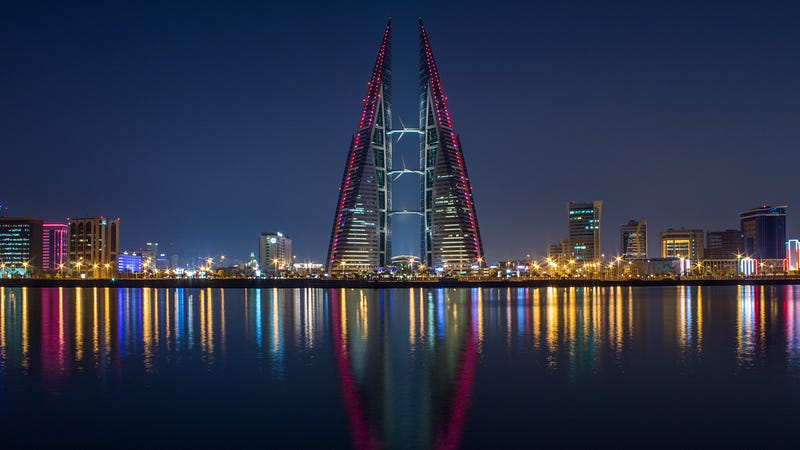
Photo by Charles-Adrien Fournier on Unsplash


Island state diversification

The island state has been looking to diversify from its predominantly oil-based economy into fintech and finance. Whampoa Group CEO Shawn Chan said that the company was “impressed by Bahrain’s solid reputation in the financial services sector, transparent regulatory framework, and ongoing pledge to collaborate and innovate.”

Chan added that Whampoa would commit to providing “secure and innovative digital financial solutions in line with global best practices” relative to the proposed digital bank, with an eye towards setting a benchmark for the industry where digitally-native banking is concerned.


Persian Gulf crypto hubs

The Persian Gulf is proving to be a crypto-friendly region in recent times. Bahrain is one of a number of Gulf Cooperation Council (GCC) countries vying for digital asset-related business. The country’s financial services sector contributes in excess of 17% to Bahraini gross domestic product (GDP). Bahrain has been one of the first in the region to establish a regulatory framework for digital assets, together with a crypto asset licensing system.

Its Persian Gulf neighbor, the United Arab Emirates, including the individual emirates of Dubai and Abu Dhabi, have followed a similar path, establishing a workable set of regulatory rules in relation to digital assets, alongside licensing of crypto businesses.

CEO of the Bahrain Economic Development Board, Khalid Humaidan welcomed Whompoa’s decision to establish the business in Bahrain, emphasizing the importance of crypto-friendly digital banking to support further development of crypto business in Bahrain, while bolstering the infrastructure available to existing digital asset businesses operating within the Kingdom.


Doors open in 2023

The bank is scheduled to open later this year, providing integrated financial services covering traditional banking, together with crypto-specific banking activity. That will include digital asset trading and custody, as well as asset management-based products and services.

Whompoa’s plan is to gear the bank towards meeting the needs of institutions, innovators and crypto start-up companies and sophisticated global investors. Crypto-friendly banking has been a perennial problem that has stymied the development of the digital assets sector since its emergence.

That problem has gotten worse rather than better more recently, with a mixture of banking failures and a crypto sector crackdown leading to the closure of crypto-friendly banks like Silvergate and Signature in the United States in recent months.

In East Asia, Hong Kong, while shaping up to compete on the global stage as a crypto-hub, has seen crypto businesses experience difficulty in terms of securing banking within the Chinese autonomous territory. Efforts are being made to alleviate that issue. Furthermore, Hong Kong’s largest virtual bank, ZA Bank, has set out to become the go-to bank for crypto start-up banking in the city.

Experiences elsewhere exemplify how crucial banking infrastructure is to the embryonic digital assets sector. It underscores the important role that Whompoa could play in boosting crypto sector business in the island state of Bahrain as digital asset innovation continues to be rolled out.

More to Read
View All
Policy & Regulation·

Jun 15, 2023

OKX Follows Path Towards Dubai Licensing

OKX Follows Path Towards Dubai LicensingSeychelles-headquartered OKX, one of the world’s largest cryptocurrency exchanges, has expressed its intention to seek regulatory approval for operating in Dubai as part of its expansion strategy in the Middle East.With that objective, the company has obtained a Minimum Viable Product (MVP) preparatory license, an interim step on its path towards full licensing. That’s according to a press release published on Thursday.Tim Byun, OKX’s Global Head of Government Relations, emphasized the growing trend of regulation within the industry. In an interview with Reuters, Byun stated: “We would like to get ahead of that curve and be regulated in a sound manner.” The move comes in the wake of recent legal action taken by the Securities and Exchange Commission (SEC) in the United States against Binance and Coinbase, two of the largest crypto exchanges, for alleged breaches of SEC rules.Photo by Marcus Herzberg on PexelsSwitching to DubaiByun believes that the SEC’s actions will compel more market participants to seek out innovative regulators such as Dubai’s Virtual Asset Regulatory Authority (VARA).To support its expansion plans, OKX intends to hire 30 staff members following the opening of an office last month in the Dubai World Trade Center, strategically located in the business and financial hub of the United Arab Emirates.Byun further explained that by expanding its services from Dubai to jurisdictions like Saudi Arabia or Bahrain, where no domestic regulatory framework is in place, the local populations would benefit significantly from OKX’s regulation under an international regulator.Following Bahamian regulationCurrently regulated in the Bahamas, OKX does not allow customers from the United States to utilize its platform due to regulatory concerns. Following the collapse of FTX in November of last year, the Bahamas has suffered reputationally.It’s seen as a jurisdiction with much looser regulation and as the FTX debacle demonstrated, one that proved to be totally ineffective in preventing the epic fraud that occurred in that instance.Effective regulatory frameworkIn contrast, Dubai and the United Arab Emirates (UAE) in general seem to be making a much better effort towards a workable yet effective regulatory framework. Established in March 2022, VARA serves as the regulatory authority overseeing the burgeoning virtual asset sector in Dubai, excluding the Dubai International Financial Centre financial free zone. The United Arab Emirates has been actively working towards positioning itself to become a global crypto industry hub.No company has yet obtained a license for VARA’s full market product (FMP) stage, which would grant permission to serve retail clients. Byun revealed that OKX intends to apply for such a license.Byun concluded by expressing OKX’s willingness to be regulated and licensed in jurisdictions that adopt a balanced, clear, and transparent approach to the industry. The exchange is committed to operating within frameworks that prioritize investor protection and promote market integrity.

news
Web3 & Enterprise·

Aug 06, 2024

Amber Group calls for crypto project transparency & accountability

At the end of last month, social derivatives trading platform ZKX, a protocol that runs on the Ethereum-centric Starknet layer-2 network, shut down blindsiding the project’s stakeholders. That event has led to Singapore-headquartered digital assets firm Amber Group speaking out, calling for cryptocurrency projects to be more accountable and transparent going forward. Not economically viableNews of the project shutdown emerged when ZKX founder Eduard Jubany Tur took to X on July 30 to outline the discontinuation of the protocol. Tur claimed that the project was “unable to find an economically viable path for the protocol.” In a long-form post, the ZKX founder outlined that user engagement had been minimal, resulting in disappointing trading volumes. By extension, Tur claimed that revenues didn’t come anywhere close to covering cloud server expenses. “The market is undervaluing the work done and infrastructure built by appchains and dApps coming from ecosystems like ours,” Tur added. Pseudonymous blockchain sleuth ZachXBT had a different take on the matter, claiming that the shutdown represented a rug pull. Amber Group chimed in on the subject on X on Aug. 3. Amber suggested that it wouldn’t break any contractual non-disclosure obligations it had with regard to ZKX but that aside, the firm took the opportunity to share its perspective more broadly in an effort to promote transparency.Photo by Markus Spiske on PexelsAmber Group criticismAmber Group criticized the ZKX team on the basis of a lack of transparency. It stated: “The last update we received was on July 30, when the project announced the cessation of operations. This decision was made without prior communication, highlighting the importance of transparency in our industry.” Staying with that theme, it claimed that clear communication and transparency are essential for fostering trust and collaboration within the crypto community, and that such principles would guide future projects. Amber Group had acted as a market maker relative to the ZKX project. It borrowed and purchased ZKX tokens in support of the launch of the token and in an effort to support token liquidity post-launch. It had secured two million ZKX tokens from the open market, with its overall holding totaling three million ZKX tokens. Project investor HashKey Capital also took to the X social media platform on the subject. Like Amber Group it too criticized the ZKX project for its lack of accountability and transparency. It described the project’s reluctance to communicate as “disappointing,” while it asserted that Tur’s handling of the situation had been “regrettable.” Ye Su, founding partner at ArkStream Capital, expressed a similar complaint, stating on X that “when ZKX shut down, as investors, we got zero heads-up.” He also singled out Tur, claiming that “Edward took the money from early supporters without any communication, showing no moral standards and losing his right to future entrepreneurship in the industry.”

news
Web3 & Enterprise·

Aug 11, 2023

BitKeep Changes Name to Bitget Wallet Following Acquisition

BitKeep Changes Name to Bitget Wallet Following AcquisitionContinuing the trend set by industry giants like Binance, KuCoin, and OKX, cross-chain wallet provider BitKeep has undergone a transformation, rebranding itself as Bitget Wallet. This strategic shift comes on the heels of the wallet’s acquisition by the prominent Seychelles-headquartered crypto exchange, which acquired a controlling stake for $30 million in March.Photo by Jon Tyson on UnsplashBitget Swap unveiledThe rebranding announcement, made on August 10, coincides with the unveiling of Bitget Swap, a novel cross-chain swap mechanism integrated into the wallet. This innovative feature draws liquidity from a network of approximately 100 decentralized exchanges spanning across 20 chains. The move positions Bitget Wallet as a versatile platform catering to traders seeking fluidity and efficiency across diverse cryptocurrencies.Bitget Wallet users are set to benefit from an enticing proposition as the exchange merges its offerings. A collective Bitget User Protection Fund, boasting a substantial $360 million pool, has been established.The fund is anchored by 6,500 Bitcoin, ensuring robust safeguards against security incidents. This initiative finds its origins in the wake of the FTX exchange collapse last November, with the fund’s value boosted by a subsequent $60 million capital appreciation due to the rally in Bitcoin prices.The synergy between the two businesses has already borne fruit for Bitget. Last month, it clarified that it had surpassed 20 million users, with the wallet integration believed to be responsible for a large part of that user growth.Growing painsBitKeep’s past wasn’t without its challenges. A security breach occurred in December when the wallet’s Android Package Kit (APK) was compromised by malware, causing losses of around $8 million among users who had installed the compromised package. In a commendable move, the company fully compensated the affected users on March 29, signaling its commitment to rectifying such setbacks.Moka Han, Chief Operating Officer of Bitget Wallet, underscored the wallet’s security-focused approach. Han revealed that cross-chain bridges are subject to stringent third-party security audits by notable entities like SlowMist and CertiK before deployment. Rigorous post-deployment monitoring further guarantees a resilient security environment.Payment channel integrationIn its recent evolution, Bitget Wallet has integrated five stable payment channels, including Banxa, Simplex, Alchemy Pay, MoonPay, and FaTPay. These integrations empower users to conveniently purchase cryptocurrencies within the wallet using methods such as credit cards, Google Pay, and Apple Pay. Additionally, the wallet has introduced a peer-to-peer marketplace, characterized by comprehensive security measures that protect both buyers and sellers.Bitget Wallet’s appeal extends far and wide across the Asia Pacific (APAC) region, boasting an impressive user base exceeding 10 million individuals. This figure constitutes nearly half of MetaMask’s user count, signifying the wallet’s considerable popularity.The company didn’t allow the rebrand milestone to pass without taking the opportunity to further promote its offering. On Thursday, it commenced a “Mystery Box Airdrop” event, offering new Bitget Wallet users the opportunity to claim individual rewards of up to 1,000 USDT.Biget’s wallet integration is in line with the changing landscape of crypto exchanges generally, with other prominent players such as OKX, KuCoin, and Binance having also ventured into the realm of self-custody wallets, enhancing their service offerings beyond traditional exchange operations.

news
Loading