Top

Bybit Extends Service Offering to Include Lending

Web3 & Enterprise·May 03, 2023, 1:29 AM

Dubai-headquartered crypto spot and derivatives trading platform Bybit announced on Tuesday that it has expanded the range of services it offers to now also encompass crypto lending.
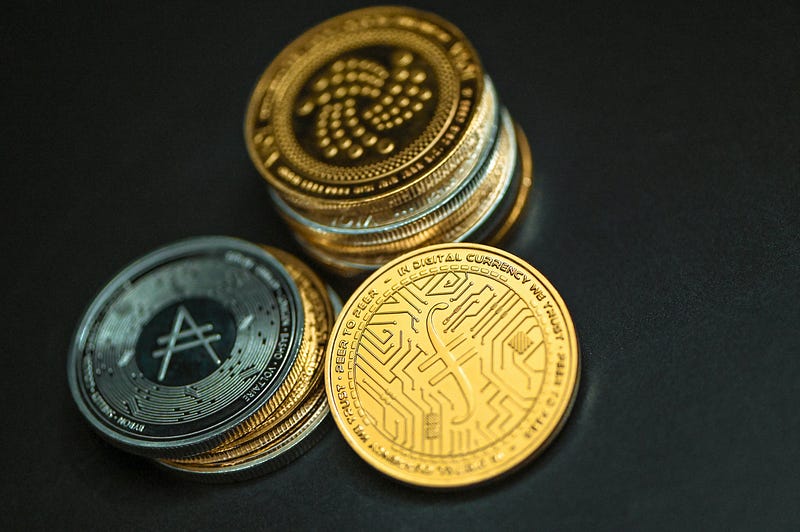
Photo by Traxer on Unsplash


Hourly interest

In the announcement which has been published to the platform’s website, the company set out the nature of the Bybit Lending product. “With Bybit Lending, users can deposit their unused cryptocurrencies into Asset Pools, which will be lent out to borrowers,” the service update outlines.

Expanding on the features that the new service offering brings with it, the crypto platform outlines that customers will have the ability to accrue interest on an hourly basis. That interest will be calculated at a variable rate, with a variance in the rate depending upon the level of borrowing activity. “In extreme cases where there are no borrowers at all, the interest rate could drop to 0%,” the company clarified.


Low risk claims

Bybit points out that “loaned assets are kept safe by Bybit’s strict risk management system, enabling you to earn returns with peace of mind.” While this is comforting to hear, it remains to be seen to what extent crypto market participants will take this statement at face value.

2022 proved itself to be a graveyard for most of the leading crypto lending firms, and with that, such failures also proved to be a graveyard for the hard earned funds of retail market participants in their hundreds of thousands. Many are dubious about the integrity and sustainability of the crypto lending model, at least at a retail level.


Withdrawal restrictions

Bybit added that the product facilitates flexible redemptions. However, in an accompanying note, it added that the withdrawal of funds is dependent upon “ the funds in the Asset Pool [not being] fully lent out and you have not exceeded your Daily Withdrawal Limit.”

It’s important to note that as many of the failed crypto lenders were getting further and further into difficulty in 2022, they added more arduous withdrawal limits and withdrawal conditions as a mechanism to stem the bleeding that was the outward flow of deposits against a backdrop of a deficit in customer funds held by these platforms.

In further marketing of the product on Twitter, the company is claiming that customers can benefit from interest rates of up to 16.46%. While one could take the view that limited promotion of exceptionally high interest rates is harmless, the lesson learned from recent crypto lender failures is that such platforms were offering excessive and unsustainable interest rates as a mechanism to reel in retail deposits, only to later proceed to mismanage those funds.


Competing offerings

Bybit is not alone in offering this service. While a plethora of lending services exited the market via bankruptcy, exchanges such as OKX and KuCoin have their own variations on lending. OKX extends a loan facility to platform users proportionate to digital assets the user has deposited on the platform. Seychelles-based KuCoin offers a lending service across a broad spectrum of crypto assets.

The intent of US based platforms Coinbase and Kraken in this regard has been retarded due to the actions of US regulators. Kraken fell foul of the Securities and Exchange Commission (SEC) relative to its staking service and paid a $30 million fine as a consequence. Meanwhile, Coinbase shelved plans to launch lending-based services in September 2021 having been warded off the idea by the SEC.


More to Read
View All
Policy & Regulation·

Nov 11, 2025

Japan to tighten crypto lending rules as regulator backs bank stablecoin pilot

Japan’s Financial Services Agency (FSA) is moving to close gaps in crypto regulation and support a new bank-led stablecoin pilot, as markets watch for a potential Bank of Japan rate hike. Tougher oversight of crypto lending and IEOsAccording to a CoinPost report, at the fifth meeting of its Digital Asset Working Group held last week, the FSA discussed introducing new requirements to bring crypto lending clearly within the regulatory framework. While firms managing or staking crypto must register as exchanges, some operators have avoided registration by structuring services as borrowing schemes, which are not legally treated as asset management.Photo by Possessed Photography on UnsplashThe FSA flagged that users face both credit and volatility risks, yet operators are not required to segregate customer assets or use cold wallets. Some services offer returns around 10% or tie up funds for several years, with weak risk management and exposure to re-lending defaults and staking slashing. Under the new policy direction, operators will need stronger risk management for re-lending and staking, tighter custody controls, and clearer risk disclosures and advertising. Institutional-only borrowing not offered to the public will remain exempt. Some members questioned whether the new requirements would be practical to implement for off-chain operators, noting that staking is fundamentally on-chain. The group also examined initial exchange offerings (IEOs) lacking financial audits, particularly those aimed at retail investors. Members discussed limits similar to equity crowdfunding: investments over 500,000 yen ($3,000) capped at 5% of annual income or net assets, up to 2 million yen ($13,000). Most past domestic IEOs were under 500,000 yen ($3,200). Some warned such caps could be bypassed through secondary trading, where tokens are immediately tradable. Major banks pilot stablecoinAlongside stricter rules, the FSA will support a stablecoin pilot led by MUFG Bank, Sumitomo Mitsui Banking Corporation, and Mizuho Bank. CoinDesk Japan noted the project, the first under the Payment Innovation Project, will include three additional participants. Mitsubishi Corporation will oversee operations, while Progmat and Mitsubishi UFJ Trust and Banking will handle issuance and custody. The pilot, launching this month with implementation targeted within the year, will test whether a joint stablecoin by major banks can navigate regulatory and operational challenges. Rate hike speculation mountsJapan’s calibrated digital asset push comes as speculation grows over a possible Bank of Japan (BOJ) rate hike next month. Minutes from the BOJ’s October meeting, cited by South Korean outlet Edaily, show one board member saying most conditions for a hike have been met and that financial conditions would stay easy even after an increase. The BOJ kept its rate at 0.5% at that meeting. A rate hike was described as likely if firms are seen committing to wage increases ahead of next spring’s labor talks and if no major global shocks emerge. Markets, however, remain cautious, citing uncertainty over U.S. tariff effects and whether newly elected Prime Minister Sanae Takaichi will endorse such a hawkish stance. 

news
Web3 & Enterprise·

Aug 21, 2023

KT and Iron Mountain Forge Alliance to Propel Blockchain-Powered E-Document Ecosystem

KT and Iron Mountain Forge Alliance to Propel Blockchain-Powered E-Document EcosystemSouth Korean telecommunications giant KT has entered into a strategic partnership with global information management company Iron Mountain to leverage blockchain technology in expanding the certified electronic document ecosystem.Photo by ron dyar on UnsplashFrom paper to digitalUnder this collaboration, KT and Iron Mountain will utilize the Korean telecom firm’s blockchain-based electronic document platform to digitize Iron Mountain’s physical documents. The partnership extends beyond digitization, with plans to explore diverse business prospects across various markets. It’s worth noting that Iron Mountain has an extensive global presence, operating across 54 countries.KT has been operating the Paperless platform since 2020, providing services such as contract writing, registered document delivery, and document storage. This initiative has been particularly beneficial for small and medium-sized enterprises, as well as sole proprietorship businesses, eliminating the need to establish individual systems.Asia-Pacific market as a priorityBoth companies are united in their objective to capture the Asia-Pacific market, a region where conventional paper documentation remains deeply ingrained. Given the extensive usage of paper documents in this market, the anticipated demand for digital transformation is substantial.Song Jae-ho, Vice President of KT’s AI/DX Convergence Business Division, emphasized the promising prospects of combining KT’s technological expertise with Iron Mountain’s global business capabilities. He highlighted the potential for a significant positive impact that their collaboration could bring to the global document market. Song expects the partnership will help KT position as a leader in driving digital transformation within the document management sector.Joyce Housien, Vice President of Commercial at Iron Mountain, echoed these sentiments, underlining the broader scope of their collaboration. She noted that their joint efforts are not only focused on achieving digital transformation within South Korea but also on generating new value within the wider Asian digital industry landscape.

news
Web3 & Enterprise·

Nov 30, 2023

IOTA accelerates Middle East expansion with $100M foundation launch

IOTA accelerates Middle East expansion with $100M foundation launchIn a move aimed at catalyzing the adoption of its distributed ledger technology (DLT) in the Middle East, the Berlin-headquartered IOTA Foundation, the developmental force behind the IOTA-directed acyclic graph-based ledger network, unveiled a $100 million foundation in Abu Dhabi on Wednesday.Photo by Imtiyaz Ali on UnsplashTokenizing real-world assetsThe IOTA Foundation announced details of the initiative, known as the IOTA Ecosystem DLT Foundation, via a blog post published on its website on Wednesday. The new foundation is designed to facilitate the transformation of tangible assets into digital entities, marking a significant stride in the convergence of real-world assets with the digital realm, according to IOTA Co-founder and Chairman Dominik Schiener.Taking to the X platform, Schiener wrote:”We will double down on our efforts to bring the real world to Web3. We will pave the way to tokenize RWA [Real World Assets] assets on #IOTA and work with the governments in the UAE, across the Middle East and Africa to digitize their trade infrastructure and tokenize assets. We will make Blockchain real, with real use cases, real adoption, real yield and real assets.”IOTA is not a blockchain, but a related distributed ledger technology. DLT has garnered attention for its diverse applications over the past decade. IOTA’s digital tokens will serve as the financial backbone for this substantial investment, signaling a strategic move amidst recent setbacks in the cryptocurrency sector.Regulatory first in Abu DhabiThe IOTA Ecosystem DLT Foundation stands out as the first blockchain-focused foundation sanctioned by the regulatory authorities of the Abu Dhabi Global Market (ADGM), a key financial hub within the United Arab Emirates (UAE). The ADGM solidified its blockchain regulations in early November, creating a conducive environment for innovative blockchain-focused entities. The regulatory framework was crafted to offer a comprehensive structure specifically for DLT foundations and decentralized autonomous organizations (DAOs).Schiener expanded further on plans for the DLT Foundation:”With a new headquarter in the UAE, we are positioning IOTA from being an Enterprise Blockchain in Europe, to becoming one of the largest, global Crypto ecosystems. We will fully support Web3 and DeFi use cases on IOTA with the #EVM launch in Q1.”Endowed with over $100 million in IOTA tokens, the foundation’s funds will be gradually vested over the next four years.The financial infusion is earmarked for the development and expansion of the IOTA network. Additionally, IOTA will embark on asset “tokenization,” a process involving the representation of ownership rights for land or buildings as digital tokens stored on a blockchain. These tokens, akin to digital certificates of ownership, extend to virtually any valuable object.IOTA launched in 2015, and within its first two years, it rose to be a top-ten crypto project on the basis of market capitalization. Over the course of the last six years, the project has struggled to make the network less centralized. There have also been internal conflicts, which resulted in a number of the project’s co-founders stepping away from the project. With this latest development, Schiener suggested that IOTA could work its way back to being a top-ten project once again.

news
Loading