Top

Shapella Upgrade to Have limited Impact on ETH’s Selling Pressure

Markets·April 13, 2023, 6:06 AM

The Shapella upgrade on the Ethereum network scheduled to take place on Wednesday will only have a limited impact on the selling pressure on ETH, according to a report by the research center at Korean cryptocurrency exchange Korbit.
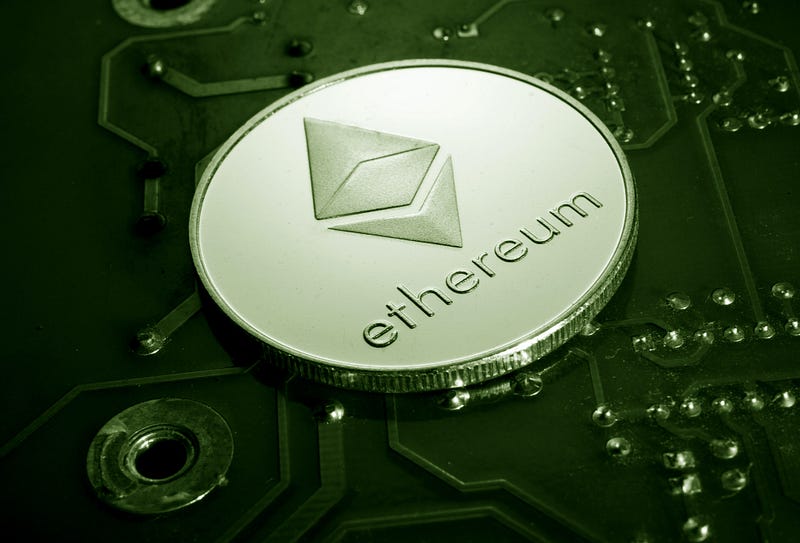
Ethereum coin
©Pexels/Jievani


Shapella upgrade

One of the key features of the Shapella upgrade is to allow withdrawal of staked ETH. This upgrade follows September’s Merge upgrade that switched the Ethereum network’s consensus algorithm from Proof of Work to Proof of Stake, significantly reducing electricity consumption.


Impact on selling pressure

To predict the impact of the Shapella upgrade on the selling pressure on ETH, the analysts at Korbit Research calculated the amount of time it takes for all the ETH staked as of March 22 to be withdrawn. They believe this calculation is relevant because withdrawals of staked ETH could trigger bulk sales, potentially imposing a greater selling pressure on ETH.

According to the findings, the daily sell volume for the first three days is expected to be 300,700 ETH, 0.254% of the circulating supply. This volume will gradually decrease to 43,000 ETH for the next six months and to 29,000 ETH for the following six months, each corresponding to 0.035% and 0.024% of the circulating supply, respectively.

All in all, bulk selling of ETH is not likely, considering it will take about a year and five months for all the staked ETH to be withdrawn and that the amount of withdrawable ETH will stay relatively low for each period. Furthermore, since this analysis assumes an extreme case, the market will be able to effectively handle the volume over the six month to 18 month period.


4 other reasons

In addition, Korbit Research outlined four other aspects that limit the selling pressure on ETH.

Firstly, there is some concern that the selling volume of ETH may increase due to unstaking resulting from the cessation of staking services at American crypto exchange Kraken. However, a decrease in the number of validators on the Ethereum network will raise the base reward. This may prompt those who unstaked ETH to stake them on other platforms, rather than selling them.

Second, ETH locked up at liquidity staking protocols such as Lido Finance and Rocket Pool provide liquidity for representations of staked ETH. These platforms allow users to stake fewer than 32 ETH for rewards. According to a February Binance Research report, 57.7% of ETH stakers enjoy liquidity and rewards. Therefore, there may be a limited impetus to divest of staked ETH.

Third, since only 41.1% of ETH stakers are seeing profits as of the time of writing the report, the remaining stakers would have to risk losses when withdrawing ETH. This suggests that those not yet seeing profits are more likely to keep ETH staked. Furthermore, Dune Analytics data shows that most of the ETH stakers with gains staked ETH when its price was relatively low, which indicates that they participated in staking in early days. Shivam Sharma, the author of the aforementioned Binance report, states that these ETH stakers are likely “some of the strongest Ethereum believers.”

Lastly, despite the Shapella upgrade, ETH withdrawals at different staking pools may not be initiated immediately. This could limit the circulation of withdrawable ETH, which in turn would hinder the selling pressure on ETH.


Macroeconomic factors

The Korbit researchers concluded their paper with a note that the selling pressure on ETH will be more influenced by macroeconomic factors than technical factors. They added that a possible downturn in the overall economy and corrections in risky asset markets might lead investors to sell ETH.

More to Read
View All
Web3 & Enterprise·

Oct 16, 2024

Solv raises $11M to bring overall funding to $25M

Singapore-based decentralized liquidity infrastructure and on-chain funding project Solv Protocol has raised $11 million in funding, bringing its total inward investment to date to $25 million. Taking to Medium on Oct. 14, the project outlined that in this most recent funding round, $11 million had been raised with participation from Nomura subsidiary Laser Digital, Blockchain Capital, gumi Cryptos Capital, OKX Ventures and CMT Digital. Angel investors associated with a number of blockchain projects such as Berachain, Ethena, Mezo, Core, GMX, Curve and EigenLayer also invested. $200 million valuationThis latest funding round was carried out while placing a $200 million valuation on the company. Going forward, the company plans to roll out additional products over the course of the next few weeks, with a view towards further expanding yield opportunities for Bitcoin (BTC) holders. Solv Protocol’s leading product, SolvBTC, was introduced to the market last March as the world’s first-ever yield-bearing Bitcoin. The protocol initially ran on Ethereum, Arbitrum, BNB Chain and Merlin Chain. Since launch, it has been expanded across 10 blockchain networks. The product claims to enable BTC holders to earn additional BTC all the while maintaining Bitcoin exposure. In excess of 20,000 BTC is currently staked within Solv Protocol’s SolvBTC product, accounting for around $1.3 billion in value. The project claims to have 400,000 users, with 80% of their assets allocated to yield-generating strategies.Photo by Traxer on UnsplashMarket opportunitySolv Protocol’s Co-Founder Ryan Chow spoke to the market opportunity that Bitcoin staking presents. Chow stated: “With a market cap of over $1.2 trillion, Bitcoin holds immense growth potential, Bitcoin’s staking rate is currently much lower than Ethereum’s 28%. If we can unlock similar levels of participation, Bitcoin staking could unlock $330 billion in value. We believe BTCFi will drive the next wave of innovation in the blockchain space.” In a series of X posts published on Oct. 14, the project pointed out that the lack of a native yield, limited integrations with core DeFi primitives and fragmented BTC liquidity relative to DeFi are key challenges for Bitcoin, which Solv claims to have resolved. Staking Abstraction Layer (SAL)Earlier this month, Solv, alongside BNB Chain, Ceffu and Chainlink, launched the Staking Abstraction Layer (SAL). SAL is a framework which has been designed to simplify and standardize Bitcoin staking across a number of blockchain networks. Key SAL features include cross-chain compatibility with Ethereum Virtual Machine (EVM) compatible chains, support for liquidity staking tokens (LSTs) and a focus on security and custody with the involvement of crypto custodian Ceffu deemed to ensure that the user’s underlying Bitcoin is secure. Solv has launched three LSTs. These include SolvBTC.BBN, an LST representing staked Bitcoin on Babylon, another Bitcoin staking platform. SolvBTC.ENA is a trading strategy involving Ethena’s basis trading. Meanwhile, SolvBTC.CORE focuses on providing Bitcoin liquidity on CoreDAO, a Bitcoin-aligned EVM-compatible layer-1 blockchain. Bitcoin staking is a more recent development which appears to have considerable potential. As Solv pointed out on X, Ethereum has a 28% staking rate right now, with Bitcoin not coming anywhere close to this figure. Staking platforms on Ethereum like Lido has $23.7 billion in total value locked (TVL) while EigenLayer weighs in at $10.9 billion.

news
Web3 & Enterprise·

Jun 20, 2023

Mars Program Sees Huobi Venture into Space

Mars Program Sees Huobi Venture into SpaceHuobi, the Seychelles-headquartered global crypto exchange platform, has embarked on an extraordinary journey with the launch of Phase I of the Huobi Mars Program, making it the first cryptocurrency exchange to explore the vastness of space.Photo by Ju Guan on UnsplashIntergalactic interestsThe Huobi Mars Program, outlined by the company in a recent blog article, signifies Huobi’s interest in space exploration and an expansion beyond the confines of Earth. With aspirations to venture far into the universe, Huobi is inviting its users to join them on this unique and unprecedented journey, becoming pioneers in the Web3 field to enter space.The first phase of the Huobi Mars Program, scheduled from June 2023 to June 2024, consists of 12 rounds of themed activities. Each round requires participating users to complete specific tasks and mint space-themed non-fungible tokens (NFTs).Throughout each round, one lucky user will be selected as the monthly reward winner and stand a chance to become a potential candidate for space travel. In the subsequent phase, the 12 candidates will undergo a rigorous evaluation process, including assessments of physical fitness, training, preparation, and community contribution. Ultimately, one candidate will be chosen to embark on a space journey alongside Justin Sun, a member of the Huobi Advisory Board. The space flight is anticipated to take place after July 2024.Mars Program commencedThe first round of the Huobi Mars Program opened for participation from June 14 to July 5, 2023. To earn space NFT rewards, users must complete specific tasks in spot trading, peer-to-peer (P2P) transactions, futures trading, and Huobi Earn transactions. Each completed task grants users the opportunity to mint a space NFT, with no upper limits.Space NFTs will be issued on the TRON Network and can be traded on various NFT platforms. Users need to link their TRON addresses on the event page to receive the minted NFTs. It is advised to mint the NFTs promptly as there will be a daily cap on NFT minting, and qualification does not carry over to subsequent rounds.The lucky user selected as the monthly reward winner and shortlisted as a candidate space passenger will have their space flight broadcasted worldwide via a live-stream. Huobi will conduct thorough verifications, including checking the winner’s TRON address, UID, and KYC verification, to ensure the authenticity of the winner. The winning space NFTs are non-transferable, and any attempt to transfer them will result in the forfeiture of the reward.Spot trading fee exemptionIn addition to the opportunity of becoming potential space passengers, the lucky users shortlisted during the first round of the Huobi Mars Program will enjoy the privilege of a 180-day exemption from spot trading fees on Huobi.Huobi isn’t the only crypto market participant with an interest in the intergalactic. It emerged last week that Charles Hoskinson, Founder of layer one blockchain Cardano, is funding The Galileo Project, an expedition to recover an interstellar object from the floor of the Pacific Ocean.Crypto memes boast of the likelihood of digital asset prices “going to the moon,” but Huobi’s Mars Program aligns with the pursuit of exploring the unknown and appears to amount to a noble intergalactic endeavor.

news
Web3 & Enterprise·

Jul 15, 2023

Dtcpay Looks to Extend Crypto Payment Services to Hong Kong

Dtcpay Looks to Extend Crypto Payment Services to Hong KongDtcpay, a Singapore-based payment processor catering to both fiat and cryptocurrencies, has set its sights on expanding into Hong Kong by the end of this year. The company also has plans to establish an office in Dubai, another prominent crypto hub, by 2024.Photo by Jonas Leupe on UnsplashNorth Asia potentialIn an interview with Tech in Asia, Kanny Lee, the group CEO of Dtcpay, expressed optimism about the North Asia market, citing clear regulations and rules for digital assets and the recent opening up to retail participants. Lee believes that the region holds significant potential for growth over the course of the coming years.Dtcpay generates revenue through crypto conversion rates on transactions and has already acquired approximately 12 merchants. The company aims to onboard up to 100 merchants by the end of 2023. Since the beginning of this year, the firm has experienced a fourfold increase in transaction volume.Seamless regional paymentsLee acknowledged that most consumers view tokens primarily as investments. Dtcpay’s objective is to unify various payment methods across different countries, including Indonesia, Malaysia, India, Vietnam, and Singapore, providing a seamless experience for both merchants and consumers.As an example, Dtcpay enables users to purchase cars using cryptocurrencies, significantly reducing transaction fees from approximately 4% to just 0.5% compared to cash payments. Notable partnerships in Singapore include Cars and Coffee and DM Autohaus.In June, Dtcpay secured a pre-series A funding round, raising $16.5 million from Kwee Liong Tek. Tek, the chairperson of the Pontiac Land Group, which owns renowned hotels such as the Ritz-Carlton and Conrad Hotels in Singapore, has enabled Dtcpay to target the hospitality sector. At the time Lee said that there are an increasing number of businesses expressing interest in collaborating with regulated entities in the digital assets space and combined with an increase in the adoption of digital payments, that’s turbocharging DTCpay’s business.RebrandThat focus on digital payments led to the company rebranding back in April from Digital Treasures Center to Dtcpay. It appears that Hong Kong was already on the company’s radar back then as Lee stated at the time that “in Asia, particularly the key tier 1 financial capitals such as Singapore, Hong Kong and Tokyo, [they] have experienced a rapid rate of digital adoption primarily due to transparent regulatory frameworks for digital financial inclusion.”Additionally, Dtcpay obtained a major payment institution license from the Monetary Authority of Singapore in August 2022. The company plans to launch a debit card in Q4 2023. That product will allow cardholders to convert their cryptocurrencies into multiple currencies without incurring foreign exchange fees.The company was co-founded in 2019 by Sam Lin, Band Zhao, and Alice Liu, with Lee joining the company earlier this year with a view towards expanding its area of operations beyond Singapore.With its expansion plans into Hong Kong and its focus on innovation, Dtcpay is certainly aiming to establish itself as a leading player in the crypto payment services industry, catering to the evolving needs of merchants and consumers alike.

news
Loading