Top

OKX NFT Marketplace hits the front on trading volume

Web3 & Enterprise·December 19, 2023, 2:19 AM

In the non-fungible token (NFT) space, OKX’s NFT marketplace has emerged as the leader in daily trading volume, surpassing long-standing frontrunners such as OpenSea, Blur and Magic Eden.

According to data from decentralized applications (DApp) tracker DappRadar, on Dec. 18, the OKX NFT Marketplace had recorded a 24-hour trading volume of $50 million. In more recent trading, that has reduced to around $35 million. Nevertheless, it maintains its lead over its main competitors, whose combined 24-hour trading volume stands at approximately $24 million.
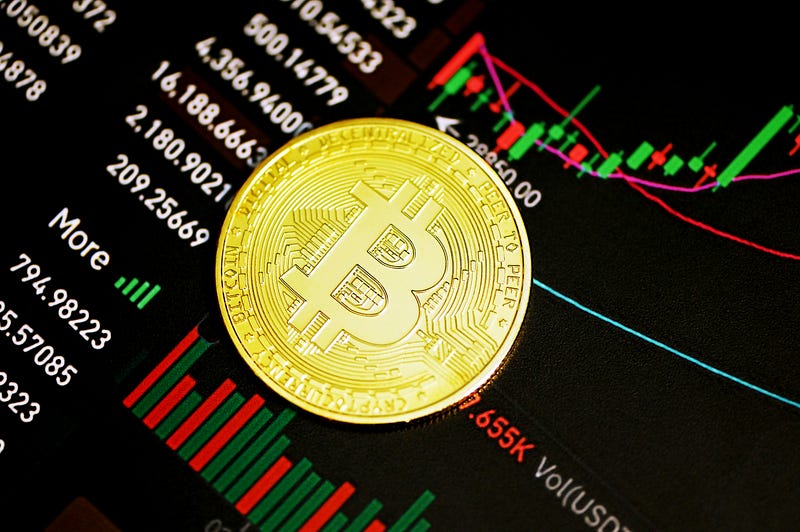
Photo by Kanchanara on Unsplash


Ordinals driving volume uptick

The surge in trading volume can be attributed to OKX’s support for Bitcoin Ordinals NFTs and BRC-20 tokens. Notably, the NFT transaction volume on Bitcoin experienced a substantial increase, reaching $121.8 million between Dec. 10 and Dec. 17.

Unlike traditional NFTs, Ordinals do not rely on smart contracts pointing to a digital asset. Described as digital artifacts by developer Casey Rodarmor, they lack smart contract features, making their trading reliant on decentralized exchanges and wallets.

The Ordinals protocol has been made possible by the Bitcoin Taproot upgrade, which was implemented in November 2021. The upgrade allows digital files to be inscribed on satoshis, the smallest monetary denomination on the Bitcoin network, each with a unique number or ordinal.


Strategic focus on BRC-20

The OKX NFT Marketplace’s strategic focus on the BRC-20 token standard has also played a role in its success. Collaborating with UniSat, a developer of Ordinals wallets, OKX created an indexing mechanism for BRC-20 transactions built on ordinal inscriptions, further solidifying its position in the market.

The Ordinals protocol has not been without controversy, with some, including Adam Back, CEO of Blockstream, criticizing it as a misuse of Bitcoin transaction blockspace. Despite the controversy, Ordinals have gained momentum, contributing to $367 million in sales volume on the Bitcoin network, surpassing Ethereum and Solana.

Ordinals and the BRC-20 standard have generally been a boon for Bitcoin miners, boosting their revenues through increased fees. This incentivizes miners to secure the network. Over 49 million transactions have resulted in over 2,250 BTC in transaction fees. Around 6 p.m. UTC on Monday, bitcoin fees are averaging out at $38.43 per transaction.

Beyond Bitcoin Ordinals, the broader NFT space has seen a resurgence, with the collective volume nearing $1 billion in November. During that month, the average value of NFT transactions experienced a notable 114% increase, rising from $126 to $270. This suggests a willingness among users to engage in higher-value trades compared to previous months.

Speaking with The Block, Nick Ruck, COO of ContentFi Labs, a community-owned Web3 tool suite, had this to say on the development:

“OKX has become the number one NFT marketplace after enabling trading of BTC Ordinals NFTs. Blur and OpenSea have not yet allowed trading of these Bitcoin-based NFTs, so they’ve started to fall behind in terms of volume due to the huge demand of Ordinals.”

More to Read
View All
Web3 & Enterprise·

Jun 02, 2023

First Digital to Introduce USD-Backed USD Stablecoin

First Digital to Introduce USD-Backed USD StablecoinFirst Digital Trust, a Hong Kong-based qualified custodian and trust company, is set to introduce a new stablecoin called “First Digital USD,” with the short-code $FDUSD. This stablecoin will be pegged to the US dollar but regulated within Asia.Photo by Alexander Grey on UnsplashIntroducing $FDUSDAccording to First Digital, $FDUSD will be backed by one US dollar or an asset of equivalent fair value on a one-to-one basis. The reserves supporting FDUSD will be held in segregated accounts at institutions in Asia.$FDUSD aims to provide stability and will be programmable, enabling the execution of financial contracts, escrow services, and insurance without the need for intermediaries. In a statement published on Thursday, First Digital emphasized its commitment to full compliance with current and future laws and regulations. The company also expressed its intention to participate in shaping the regulatory landscape for $FDUSD and First Digital itself.The announcement of $FDUSD is particularly significant in light of the new “Guidelines for Virtual Asset Trading Platform Operators” set to take effect in Hong Kong on June 1. These guidelines outline rules for safe asset custody, client asset segregation, conflict of interest avoidance, and cybersecurity standards, as mandated by Hong Kong’s Securities and Futures Commission (SFC).Hosted on BNB Smart ChainFDUSD will operate on the BNB Smart Chain and will be issued by First Digital Labs, a subsidiary of First Digital Trust, a regulated digital asset custodian under the Hong Kong Trustee Ordinance. The law ensures that $FDUSD will be fully backed by US dollar reserves or highly liquid, high-quality assets held in regulated Asian financial institutions, with no commingling with other assets of First Digital.Vincent Chok, CEO of First Digital, emphasized the company’s commitment to regulatory compliance and setting a new standard for legitimacy in the industry. First Digital intends to comply with all applicable laws and regulations and actively contribute to the shaping of regulatory regimes for $FDUSD and First Digital in the future.The $FDUSD stablecoin will be redeemable for US dollars, providing users with a reliable bridge between the digital and fiat currencies.Biden administration's own goalAs regulatory uncertainty persists in the United States, some industry players are expressing concerns about losing the country’s leadership position in the crypto sector. They warn that the industry may be offshore to more favorable jurisdictions.News of First Digital Trust’s US dollar stablecoin intentions brought scathing criticism of US policy from US commentators within the crypto space. Austin Campbell, Managing Partner at Zero Knowledge Consulting, a firm that advises on crypto payments and stablecoins, stated that the US government and US regulators had created a paradigm where they now have less control over distribution and regulation while the product they were suppressing continues to exist and scales elsewhere.Nic Carter, Partner at venture capital firm Castle Island Ventures, wrote that “the wise sages in US government took one look at the onshore registered stablecoin market and decided they’d much prefer unaccountable offshore crypto-eurodollars.”Macro-economist Luke Gromen described this consequence of US policy as the “monetary equivalent of deciding they would prefer making their goods in China rather than paying US workers and deal with union labor.” Meanwhile, Caitlin Long, Founder and CEO of digital asset-focused Custodia Bank, suggested that US federal regulators “thought they could kill USD stablecoins” but that “they miscalculated.”

news
Policy & Regulation·

May 15, 2023

Crypto Oasis Founder Thinks UAE Set Up For Crypto Success

Crypto Oasis Founder Thinks UAE Set Up For Crypto SuccessAs the dust settles on 2023's Dubai Fintech Summit, which took place last week, one takeaway offered by the Co-Founder of blockchain ecosystem firm Crypto Oasis is that the United Arab Emirates (UAE) has set itself up for success where crypto business is concerned.In speaking with crypto publication CoinTelegraph on the fringes of the Dubai Fintech Summit, Crypto Oasis Co-Founder and Managing Partner Saqr Ereiqat suggested that the regulatory infrastructure that the UAE has put in place provides an ideal foundation upon which crypto companies can develop and prosper.Photo by Mo Ismail on PexelsRegulatory infrastructureEreiqat pointed to some key fundamentals that crypto entrepreneurs and start-up founders should look at when deciding on the location that will best meet their needs and help to optimize their route to market and ultimate success. This includes the regulatory infrastructure.The UAE authorities and regulators at a national level, together with their colleagues within the regulatory agencies in the Emirates of Dubai and Abu Dhabi, have been doing some heavy lifting in this regard over recent months.They’ve all been working on establishing a workable regulatory framework, and as part of that, a licensing process. In the case of Dubai, its Virtual Assets Regulatory Authority (VARA) has started to issue preliminary or Minimum Viable Product (MVP) license approvals that enable crypto startups to get started, while providing them with a pathway towards obtaining Full Market Product (FMP) licensing at a later stage.Talent poolThe other key requirements that Ereiqat set out were digital infrastructure alongside an ability to attract and provide a pool of talent relative to the crypto assets space. In respect of these key considerations, Ereiqat believes that the UAE hits the target in each case.“The UAE’s regulatory framework is more streamlined and business-friendly compared to the complex and fragmented regulatory environment in the US,” he told the crypto media firm.To enhance these fundamentals, Ereiqat also alluded to a depth of capital that could potentially find its way into UAE-based crypto businesses, easing these start-ups’ efforts in executing on funding rounds as they look to achieve growth.Ereiqat maintains that the interest in the region is already evident, citing a data-point that suggests there are 1,800 Web3-centric businesses already operating in the region, with more than 8,000 people working for those start-up businesses. Speaking to that reality further, he said:“The Dubai FinTech Summit was a significant event that brought together stakeholders from the fintech industry […] The presence of crypto and Web3 leaders and projects at the event is an important indicator of the growing interest and adoption of these technologies in the region.”This enthusiasm and belief in the existence of the right Web3 business environment in the UAE was echoed at that event by both Coinbase Founder and CEO Brian Armstrong and Ripple Founder and CEO Brad Garlinghouse. Both industry figures featured as keynote speakers at the event. Armstrong alluded to the potential of Coinbase establishing a base in Abu Dhabi while Garlinghouse announced the opening of a Ripple office in Dubai.

news
Web3 & Enterprise·

Jun 04, 2025

OSL set to acquire Indonesia’s Evergreen Crest

OSL Group, a publicly-listed digital asset and blockchain platform company headquartered in Hong Kong, is set to acquire Indonesia’s Evergreen Crest Holdings.Photo by Kelly Sikkema on UnsplashAs the proposed acquisition of Evergreen Crest, a business that includes a virtual assets exchange platform, will involve a share transaction, OSL filed details of the acquisition with the Hong Kong Stock Exchange on June 2. OSL will take a 90% stake in Evergreen Crest in return for $15 million worth of consideration shares, which will be issued by OSL to the seller. This share issuance will account for 1.48% of the total issued shares in the company. Once the acquisition goes through, Evergreen Crest will become a subsidiary of OSL Group, with Evergreen’s financial results consolidated into the overall financial statements of OSL going forward.  ‘Strategic benefits’The filing suggests that OSL management believe that the acquisition “will bring substantial strategic benefits to the Group,” as it opens up access for the company to the Indonesian digital asset market. The company is optimistic about the outlook for the Indonesian crypto market. It stated: “Indonesia possesses key attributes conducive to growth in this sector, including a substantial and youthful demographic, robust economic growth fundamentals, and a rapidly increasing rate of cryptocurrency adoption.” Acquiring licensesOne interesting aspect of the acquisition is that Evergreen Crest has acquired the requisite licensing to operate within the Indonesian market. Those cryptocurrency and futures trading licenses are likely to be of significant value to OSL as it means that through the acquisition, OSL can now enter the Indonesian market in a fully compliant manner. Using the existing compliant platform, OSL intends to expand the range of services offered within the Indonesian market. It indicated that it would do so in respect of payment finance (PayFi) and tokenized real-world asset (RWA)-related products and services, subject to acquiring the necessary licensing. OSL is encouraged by the opportunity that exists within Indonesia as far as tokenized RWAs are concerned. It claimed that the country has already demonstrated significant tokenized RWA-related activity. PT Multikripto Exchange Indonesia (also known as Koinsayang), the exchange business owned by Evergreen Crest, was awarded a virtual asset trading license by the Indonesian regulator, the Financial Services Authority (OJK), in March. At the time, the exchange outlined that it intended to expand its service reach, while creating a better trading experience for users located within Indonesia and overseas. In September 2024, the exchange was awarded a license to offer crypto asset perpetual futures contracts by Indonesia’s Commodity Futures Trading Supervisory Agency (Bappebti).  OSL expanding its reachOSL appears to be making a concerted effort to expand beyond its Hong Kong base. In February it acquired CoinBest, a Japanese crypto exchange, rebranding the business as OSL Japan. At the time it was reported that the company was also looking at opportunities to expand in European markets. OSL was amongst the first digital asset exchange platforms to be licensed in Hong Kong, receiving Type 1 and Type 7 licenses from the Securities and Futures Commission (SFC) in December 2020.

news
Loading