Top

Digital asset insurer funds Middle East expansion

Policy & Regulation·December 16, 2023, 12:10 PM

OneDegree, a Hong Kong-based InsurTech startup is expanding its area of engagement to the Middle East, funded through an undisclosed investment from Dubai Insurance.


Fresh funding round to finance growth

The seven-year-old startup announced on Friday that it has secured further funding, solidifying its commitment to Middle East expansion while building upon the success of OneDegree’s $55 million Series B round in June. Total funds raised are believed to be in the region of $100 million.

The Series B round was required to expand its digital assets insurance portfolio. Similarly, the partnership with Dubai Insurance is aimed at facilitating OneDegree’s expansion into the digital asset insurance sector within the United Arab Emirates (UAE) and the Gulf region. The startup firm will now proceed to establish a new entity in Dubai and hire staff locally to take on new business in the region.

Among its notable investors are Alibaba Entrepreneurs Fund (AEF) Greater Bay Area Fund, Sun Hung Kai & Co and Cathay Venture, the venture capital arm of Taiwanese billionaire Tsai Hong-tu’s Cathay Financial Holdings. OneDegree’s CEO, Alvin Kwock, has stated that the company is on track to achieve profitability by the second half of 2024.
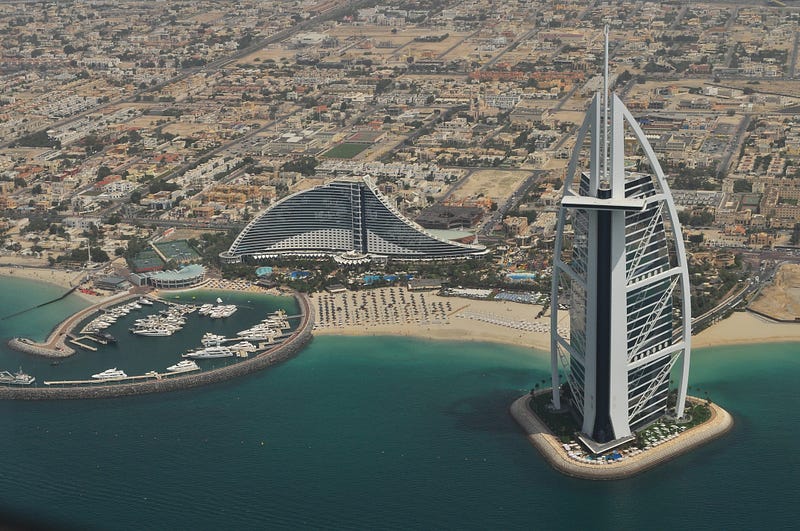
Photo by Roman Logov on Unsplash


Ministerial interest

It’s understood that the UAE’s economy minister, Abdulla bin Touq Al Marri, had outlined his interest in OneDegree bringing its service offering to the UAE when he met with representatives from the company at the Belt and Road Summit in Hong Kong in September.

Given that OneDegree is planning to service the digital assets sector in the UAE, the move aligns with Dubai’s new crypto regulatory framework implemented earlier this year, which mandates insurance coverage for licensees engaged in crypto-related businesses to safeguard users’ funds. Major players in the crypto industry, such as Binance, Crypto.com and OKX, have already established a presence in Dubai.


Only digital asset insurer in Asia

In a video interview from Dubai on Friday with Forbes, Alvin Kwock emphasized OneDegree’s unique position as the first and only licensed insurer in Asia capable of providing digital asset insurance.

Kwock revealed that approximately half of the world’s top 20 crypto exchanges have approached OneDegree for its digital asset insurance, with some of them already being clients. The startup has extended its services to around 30 companies, including Cactus Custody, the custodian unit of Singapore’s Matrixport; Rakkar Digital, backed by Thailand’s Siam Commercial Bank; and Hashkey, one of Hong Kong’s licensed crypto exchanges.

In July it penned a deal with blockchain infrastructure firm Blockdaemon. Meanwhile, it has been underwriting digital assets for crypto custodian METACO since November 2022.

Anticipating substantial growth, Kwock expects the number of OneDegree’s digital asset insurance customers to surpass 100 by the end of 2024. He foresees this segment constituting about half of the company’s total business in the coming year, up from the current level of 30%. Kwock underscored the evolving dynamics in the crypto market, emphasizing the increasing importance of risk management and the essential role of insurance in the digital asset industry.

OneDegree’s expansion into the UAE aligns with the nation’s crypto-friendly policies, actively attracting firms to leverage its supportive regulatory environment. Indirectly, it also serves the Hong Kong government’s strategy to deepen business ties with the Middle East.


More to Read
View All
Policy & Regulation·

Jun 26, 2023

Korea’s Chungcheongbuk-do to Foster Regional Blockchain Ecosystem

Korea’s Chungcheongbuk-do to Foster Regional Blockchain EcosystemChungcheongbuk-do, a South Korean province located 117km south of Seoul, has entered into a partnership with the Korea Internet and Security Agency (KISA) to launch a regional blockchain initiative. The province won the bid for this initiative, proposed by the Ministry of Science and ICT, with the goal of fostering a thriving blockchain ecosystem within the region. Spearheading this project will be the Chungbuk Innovation Institute of Science and Technology (CBIST).Photo by Suzi Kim on UnsplashComprehensive supportWith a budget of 1.4 billion KRW ($1.07 million), CBIST will spearhead the initiative by providing support to startups and creating a business-friendly environment. The province of Chungcheongbuk-do will offer consulting services to assist startups in exploring innovative blockchain solutions. They will also provide comprehensive support, including accommodations, infrastructure, equipment, and access to cloud computing platforms.Blockchain into other industriesFurthermore, Chungcheongbuk-do will extend funding opportunities and implement educational programs to nurture skilled individuals and develop a self-sustaining blockchain sector within the province. The goal is to catalyze the emergence of innovative business models that incorporate blockchain technology into various industries such as storage batteries, semiconductors, and parts and materials. This initiative is expected to boost the region’s economy and enhance its competitive advantage.Since the establishment of the Chungbuk Blockchain Promotion Center at CBIST in 2018, the provincial government has been actively involved in discovering and planning various blockchain projects and raising awareness. With the current blockchain initiative, Chungcheongbuk-do aims to build a comprehensive support system that will facilitate the growth of the regional blockchain sector.Kim Jin-hyung, Chief of the Science and Talent Bureau of the Chungcheongbuk-do government, expressed that this blockchain initiative aligns with the strategic vision of the elected local government to establish a high-tech region. The provincial government is dedicated to identifying software-focused projects that can strengthen startup ecosystems and empower young entrepreneurs.

news
Policy & Regulation·

Mar 28, 2025

Central Asian republics work towards crypto bank & crypto hub development

News emanating from the Central Asian republics of Kyrgyzstan and Kazakhstan in recent days points to further rollout and development of cryptocurrency sector infrastructure. A press release published on March 26 outlined that Kyrgyzstan is working on various initiatives in order to copper-fasten its position as a regional crypto hub. Those efforts include the advancement of digital asset regulation, enabling the launch of licensed crypto platforms and ongoing trials of legal frameworks relative to crypto. Photo by Steve Johnson on UnsplashA7A5 stablecoinOne initiative that may aid in the development of the digital assets sector in Kyrgyzstan is the rollout of the A7A5 stablecoin. A7A5 is pegged to the Russian ruble, with the token having been issued by Kyrgyz company Old Vector. The product was first launched in February, with the intention for it to be used on the A7 cross-border payment platform of Russian state-owned bank Promsvyazbank. Garantex, a Russian crypto exchange which had been sanctioned by U.S. and European authorities and was recently shut down, announced on Feb. 19 the listing of the A7A5 stablecoin. The stablecoin’s backers claim that it was issued “in complete accordance with the new national legislation - under the control of regulatory authorities and directed to an officially registered, regulated broker.” The stablecoin is being promoted on the basis of an annual yield of up to 20%, which has been established due to its link to the refinancing rate of the central bank of the Russian Federation. Kazakhstan crypto bank proposalMeanwhile, lawmakers in Central Asian neighbor Kazakhstan have proposed the creation of a national crypto bank. According to The Times of Central Asia, an English-language daily newspaper, Azat Peruashev, leader of the Ak Zhol political party within Kazakhstan’s lower house of parliament, put forward the proposal, which would implicate the involvement of the National Bank of Kazakhstan and a number of the country’s commercial banks. Peruashev addressed the proposal to Kazakhstani Prime Minister Olzhas Bektenov. However, the Central Asian country may have some fundamental issues to address before a crypto bank can become a reality. Currently, Kazakhstan has yet to establish a legal framework for the use of digital assets.  Last year, the authorities shut down 36 cryptocurrency exchanges which were deemed to have been operating illegally. In total, 3,500 illegal crypto exchanges have been shut down in Kazakhstan. Leading American crypto exchange business Coinbase faced a setback in the Central Asian country in November 2023 when the government cut access to its website within the country. While these crypto businesses have struggled to operate in Kazakhstan, Binance Kazakhstan successfully obtained a trading license from the Astana Financial Services Authority (AFSA) in September of last year. Earlier this month, the company added options trading and futures copy trading to the platform. Blockchain industry pioneer Kyle Chasse took to X to report on this most recent development. He suggested that given that 90% of crypto activity in Kazakhstan is off the books, the authorities are interested in launching a crypto bank so as to bring it all under their control. 

news
Markets·

May 29, 2024

Mt. Gox moves $9B in Bitcoin for first time in years

Wallets belonging to the defunct Japanese Bitcoin exchange Mt. Gox have transferred over 140,000 Bitcoin (BTC), valued at approximately $9 billion, to an unknown address.  Sell-off fearsThis significant movement began in the early hours of Tuesday morning in Asia, marking the first such transfer from Mt. Gox’s cold wallets in over five years. Julio Moreno, head of research at CryptoQuant, initially confirmed that 12,239 Bitcoin had been transferred from Mt. Gox over the course of an hour. A short time later, he provided an update on X, stating:"All coins have been transferred to a new address." Despite market disquiet, the prevailing view which subsequently emerged is that the transfer is believed to be part of a plan to distribute assets back to creditors before the October 31, 2024 deadline. Alex Thorn, head of research at Galaxy Digital, shared his perspective on X, suggesting that most of the transferred Bitcoin would likely be held by creditors rather than being sold on the open market. Despite these reassurances, the market reacted negatively for a time. Bitcoin's price dropped by 1.4% since the start of Asian trading hours, falling to a low of $67,680 from a Monday high of over $70,000.Photo by Kanchanara on UnsplashNo Bitcoin FiresaleTo quell fears of a massive Bitcoin sell-off, Mark Karpeles, the former CEO of Mt. Gox, addressed the situation on X. He stated: “As far as I know, everything is fine with MtGox. The trustee is moving coins to a different wallet in preparation for the distribution that will likely happen this year. There is no imminent sale of bitcoins happening." Rehabilitation trustee Nobuaki Kobayashi also issued a press release, clarifying that no sale of Bitcoin or Bitcoin Cash (BCH) had taken place. He assured that the group was "managing bitcoin and bitcoin cash in a secure manner." Wallet activity reveals that these movements were executed through thirteen transactions. A test transaction worth $3 was made on May 20, followed by another smaller transaction of $160 early Tuesday. The remaining transactions varied from $1.2 million to $2.2 billion worth of Bitcoin. Bitinfocharts data shows that all of Mt. Gox's Bitcoin has now been consolidated into a single wallet. A long road to repaymentIn September 2023, Mt. Gox’s trustee announced that the repayment deadline had been extended by 12 months to October 31, 2024. It looked like repayments were imminent in November. However, those communications referenced cash repayments rather than the distribution of Bitcoin and Bitcoin Cash. Some cash repayments had started in December 2023. Speculation in January that the bankruptcy estate would begin the distribution of Bitcoin led to market fears of the impact that would have on the Bitcoin unit price. The extension provided a longer timeframe for preparing the distribution of assets to creditors. Mt. Gox, launched in 2010, quickly rose to prominence, becoming the largest Bitcoin exchange by 2013, handling 70% of all Bitcoin trades worldwide. However, the exchange faced a dramatic downfall in early 2014.  It suspended trading and stopped all withdrawals after losing hundreds of thousands of Bitcoin in a hack. Subsequently, the site went offline, and the company filed for bankruptcy protection after losing over 800,000 Bitcoins. Creditors have been waiting for repayment ever since.

news
Loading