Top

Coinone’s recent addition of USDT/KRW trading pair expected to reduce Kimchi premium

Markets·December 01, 2023, 9:01 AM

Coinone, a major South Korean cryptocurrency exchange, listed USDT, a stablecoin pegged to the US dollar on the platform’s Korean won-denominated market on Thursday (local time). Its listing price was KRW 1,289.

Tether Limited, the company behind USDT, asserts that their stablecoin is “backed 100% by Tether’s reserves.” These reserves comprise a variety of real-world assets such as U.S. Treasuries, overnight reverse repurchase agreements, corporate bonds and precious metals. According to CoinMarketCap, USDT’s market capitalization stands at $89 billion, ranking it third in the cryptocurrency market, just behind Bitcoin and Ethereum.
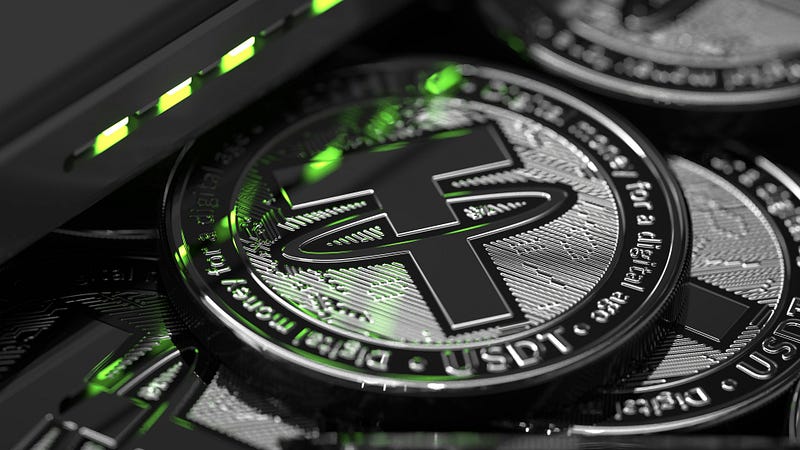
Photo by DrawKit Illustrations on Unsplash


First to list USDT/KRW trading pair

Despite the significance of USDT in the cryptocurrency market, Korean exchange users have faced the limitation of not being able to purchase the stablecoin using Korean won, although these exchanges did offer markets denominated in USDT. This limitation has prompted Koreans to turn to foreign cryptocurrency services for acquiring USDT. With Coinone’s latest move, the platform has become the first to facilitate USDT/KRW trading among the nation’s five fiat-to-crypto Korean exchanges — Upbit, Bithumb, Coinone, Korbit and Gopax.

Regarding this development, Kwon O-hoon, Managing Partner at the law firm Cha and Kwon, told local news outlet Decenter that there seem to be no particular legal concerns with the crypto exchange’s engagement in USDT transactions. This perspective stems from the absence of stablecoin regulations in the country.


Reducing the Kimchi premium

According to Decenter, crypto experts anticipate that the introduction of USDT/KRW trading will help in reducing the Kimchi premium, a term referring to the discrepancy in cryptocurrency prices on South Korean exchanges compared to those in foreign exchanges.

For instance, according to data from CoinNess, the average price of BTC on Korean exchanges is around KRW 51,177,250. This is about 2.34% higher than its average price on foreign exchanges, which stands at KRW 50,005,909. This difference means that users on Korean exchanges need to pay an additional KRW 1,171,340 to buy one BTC, compared to what they would pay on international platforms.

However, the newly added trading pair will streamline transactions between exchanges, making it simpler for investors to engage in arbitrage. This ease of transfer is expected to lead to more balanced pricing across different markets, reducing the Kimchi premium.

In light of this development, Jo Dong-hyeon, CEO of blockchain company Undefined Labs, said various institutions and blockchain projects will likely find USDT increasingly useful as a store of value, given USDT facilitates easy transfers between different exchanges.


More to Read
View All
Web3 & Enterprise·

Oct 11, 2023

Incheon Partners with Daehong to Implement Web3-Driven Urban Marketing Strategy

Incheon Partners with Daehong to Implement Web3-Driven Urban Marketing StrategyIncheon Metropolitan City, renowned for its international airport in South Korea, has partnered with Daehong Communications, a marketing solutions subsidiary of the country’s retail giant Lotte Group, to leverage Web3 technology for the purpose of promoting the city.Daehong has established an extensive global network within the blockchain industry. Among its notable partners are layer 1 blockchain Aptos, Metaverse company Animoca Brands, and decentralized social protocol CyberConnect. One of Daehong’s primary initiatives is the NFT project associated with Bellygom, a pink bear character of Lotte Homeshopping, a media commerce affiliate of Lotte Group.Photo by Daesun Kim on UnsplashHarnessing blockchain for city promotionThrough this collaborative effort, Incheon aims to harness blockchain technology to explore innovative ways of promoting the city and building stronger connections with its residents.Incheon has recently been very dedicated to Web3 initiatives in promoting the city. Last month, it worked with The Sandbox, the virtual gaming platform of Animoca Brands, to create a metaverse representation of the Incheon Landing Operation to commemorate the 70th anniversary of the Korean War Armistice Agreement. More recently, the city unveiled its NFT membership program named “Incheon Heroes,” demonstrating its commitment to pioneering its unique path in the era of Web3.Daehong’s role in Web3 adoptionIn the private sector, Daehong has been working towards the widespread adoption of Web3. The marketing firm introduced business models that integrate NFTs into areas that have significant public engagement, such as ticketing, memberships, and brand characters. Daehong has been actively working to facilitate many brands’ entry into the Web3 space.Lee Se-woong, Brand Manager of Incheon City, anticipates that the collaboration with Daehong will serve as a fresh catalyst for Incheon, expressing excitement about the potential synergies between Incheon’s public infrastructure and Daehong’s industrial expertise.Incheon is set to initiate a range of projects by leveraging the Incheon Heroes NFT membership program and the Incheon Universe, a virtual space that allows visitors to immerse themselves in various facets of the city. Furthermore, the city is in the process of establishing collaborations with enterprises, brands, and artists who share a common interest in promoting the sustainability of both the planet Earth and the city itself.

news
Web3 & Enterprise·

Dec 04, 2023

Web3 chatting app Beoble launches beta version with 50,000 users

Web3 chatting app Beoble launches beta version with 50,000 usersWeb3 social messaging app Beoble has secured over 50,000 users in just one day since the beta version of the app was released on Saturday (KST), according to a post on its official X account. This comes after pre-registration applications closed on Nov. 30, which saw over 100,000 sign-ups.Photo by Andrej Lišakov on UnsplashEmpowering Web3 connectivityBeoble is a Web3-based social messenger platform that employs a decentralized encryption network called the Communication Delivery Graph. It allows users to engage in end-to-end encrypted chatting between their digital wallets and offers a communication toolkit for integrating decentralized applications (dApps). The app currently supports all EVM-compatible blockchains like Ethereum and Polygon and plans to add others like Solana, Aptos and Sui in the future.“Beoble is essentially the first Web3 messaging app with the complete user experience,” said Cho Sung-min, CEO of Beoble.In particular, Beoble has gained attention for having a low barrier to entry due to its user-friendly user interface and experience (UI/UX). Notably, the platform facilitates direct communication between Web3 wallet owners and allows them to conduct non-fungible token (NFT) and peer-to-peer (P2P) transactions.Incentivizing community engagementThe Beoble team explained that the ongoing beta test will be an opportunity to incorporate user feedback and improve services. It will also be a period during which users can receive rewards based on their chat room engagement.“The more active users are in the community, the higher their rewards. Rewards can be obtained through activities like completing quests, following others, reacting to messages and logging in,” the firm explained. The Beoble rewards system distributes “cat points” to users based on their participation and contribution to the ecosystem, which are then used to determine their eligibility for rewards like token airdrops.Beoble also previously raised $2 million in pre-seed funding, backed by investors like Digital Currency Group, HashKey Capital and Genesis Blockchain Ventures. The platform’s public launch is scheduled for Q1 2024.

news
Policy & Regulation·

Oct 17, 2023

Former PBOC Governor: CBDC Development Must Focus on Security

Former PBOC Governor: CBDC Development Must Focus on SecurityZhou Xiaochuan, a former governor of the People’s Bank of China (PBOC), has issued a call for China to prioritize security and vigilance against potential misuse as it advances the development of its central bank digital currency (CBDC), known as the e-CNY.Photo by FLY:D on UnsplashSafeguarding the CBDC ecosystemXiaochuan made this appeal during the Digital Finance Forum, which was held in Beijing last week. He emphasized the necessity of safeguarding the CBDC ecosystem.The PBOC has been actively engaged in trials and innovations related to the e-CNY, even rolling out a pilot application in January 2022. The digital yuan’s journey, however, comes with significant responsibilities, particularly in terms of security and prevention of misuse.Thwarting potential abuseZhou acknowledged that in the realm of finance, security has always been a paramount concern, and this sentiment couldn’t be more accurate when applied to the realm of digital currency. He stressed that, as technology costs continue to decline and systems become more user-friendly, the risks associated with misuse also decrease. In this context, it becomes imperative for China to adopt stringent security measures and robust regulatory frameworks to thwart any potential abuse.Zhou underscored the illicit utilization of cryptocurrencies and stablecoins in facilitating various activities, including arms trafficking and drug trade. He pointed out that addressing these issues necessitates a concentrated effort, making it clear that a proactive approach to prevention is essential.The development of the e-CNY has seen impressive progress, with pilot projects initiated in 2019 and later expanded to 26 locations across 17 provincial-level cities and regions, including major metropolitan areas like Beijing, Shanghai, Shenzhen, and Suzhou.Last month another official from the PBOC spoke to the need to make the e-CNY accessible in all retail payment scenarios within China at a trade forum in Beijing. Digital yuan use is also being broadened to facilitate its availability in the special Chinese administrative area of Hong Kong.Proposing two-tier systemZhou advocated for a two-tier system in the operation of e-CNY, a structure already in place. The People’s Bank of China presides over the first tier, responsible for issuance and regulation, while the second tier comprises commercial institutions such as commercial banks, internet platforms, and telecommunications operators.This dual-layered design promotes dynamic evolution within the digital currency landscape, enhancing service quality and fostering innovation through healthy competition. Zhou stressed the importance of exploring cross-border transactions, an area that entails both technological advancements and policy orientation.Hong Kong has actively embraced e-CNY for cross-border payments, advancing into the second phase of technical testing and preparing to incorporate it into its predominantly local payment system.On a related note, Lu Lei, the deputy administrator of the State Administration of Foreign Exchange (SAFE), highlighted the programmable features of CBDCs as tools for enhancing monetary policy effectiveness.While current CBDCs are positioned as M0 currencies, strictly currency in circulation plus commercial bank reserve balances, he proposed that central banks could evolve them into M2 currencies. M2 is a measure of money supply that incorporates checking deposits and other forms of deposits that are readily convertible to cash, alongside cash itself.

news
Loading