Top

Tether bites back on UN report criticism

Policy & Regulation·January 17, 2024, 2:38 AM

A United Nations (UN) report published on Monday pointed fingers at USDT for its alleged role in money laundering and scams in Southeast Asia, prompting the stablecoin’s issuer, Tether, to respond.
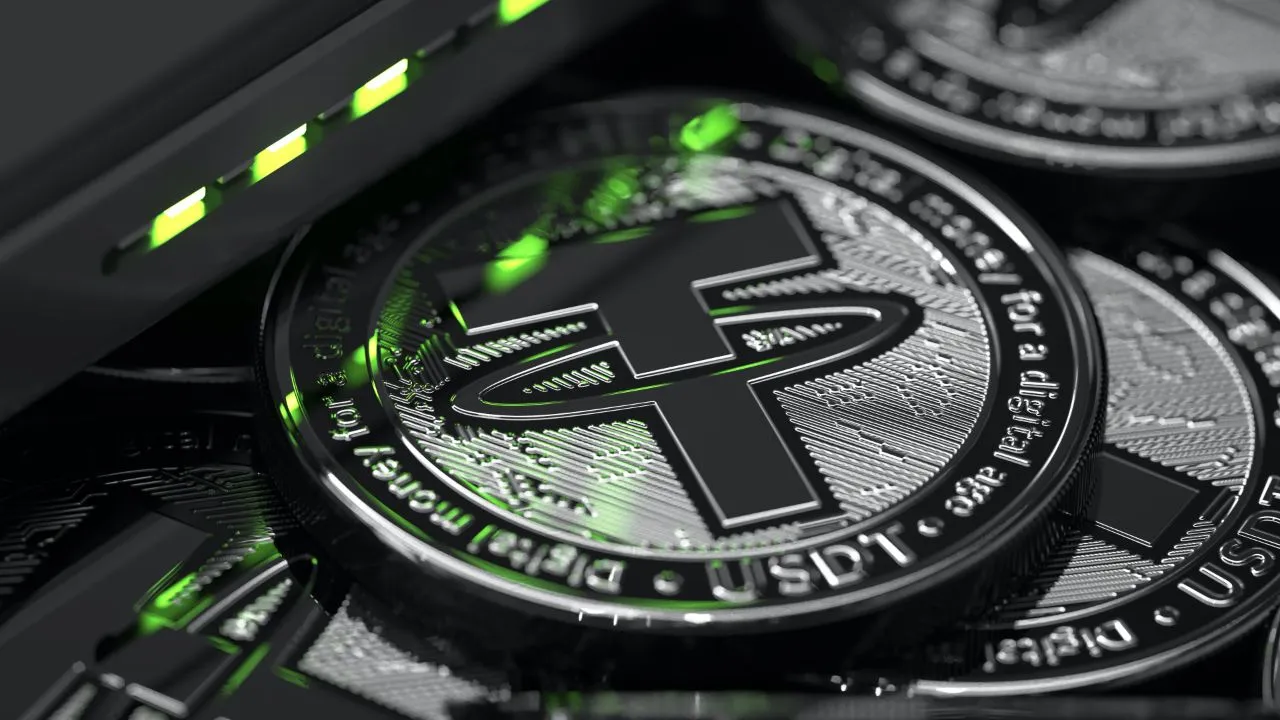
https://asset.coinness.com/en/news/88531fff58ac8d4add71c7e6cea87920.webp
Photo by DrawKit Illustrations on Unsplash

Fighting back

The stablecoin issuer finds itself under the spotlight once again, facing intense scrutiny over its association with illicit activities, according to the UN report. Responding by way of a blog post, Tether expressed disappointment and pushed back against the accusations.


The firm asserted that the report disproportionately focuses on USDT's alleged connection to illicit activities, neglecting to acknowledge the positive impact it has had on developing economies in emerging markets.


Collaborating with law enforcement

Tether defended its position by highlighting its collaborative efforts with global law enforcement agencies, such as the Department of Justice (DOJ), the Federal Bureau of Investigation (FBI) and the recently onboarded United States Secret Service (USSS). The company expressed disappointment with the UN's assessment and stressed that its monitoring measures surpass those of traditional banking systems, historically implicated in money laundering cases.


Having frozen over $300 million in recent months to combat the criminal use of crypto assets, Tether emphasized the traceability of its tokens and its established track record of collaboration with law enforcement. In its blog post, Tether urged the UN to shift the conversation from concentrating solely on risks to discussing how centralized stablecoins like USDT could contribute to the fight against financial crimes.


The UN Office for Drugs and Crime (UNODC) division responsible for Southeast Asia and the Pacific released the report, specifically highlighting USDT as a significant instrument for money laundering in the region, notably on the Tron blockchain. Tether's response came soon after the release of the UNODC report, where the company emphasized the need for a broader discussion with the UN on addressing financial crimes within blockchain platforms.


Tether acknowledged that there are still numerous opportunities to combat financial crimes on blockchain platforms and encouraged the UN to engage with the industry to comprehend and implement contemporary strategies. The company expressed a willingness to collaborate on initiatives aimed at enhancing the understanding of blockchain technology and its potential in fighting financial crime.


A perennial controversy

Tether has been the subject of a perennial controversy inside and outside the crypto space over the years. Its critics have long accused the company of not having the asset backing to reflect the U.S. dollar stablecoins it issues.


The issue has been compounded by Tether’s inability to produce fully fledged audits as opposed to attestation reports to verify its holdings. Speaking on the edges of the World Economic Forum’s annual meeting in Davos, Switzerland, on Tuesday, Howard Lutnick, CEO of leading global financial services firm Cantor Fitzgerald spoke positively about Tether. He said that his firm has held and managed large quantities of Tether’s assets. Lutnick confirmed that “they have the money they say they have.”


Off the back of Lutnick’s comments, Nic Carter, partner at venture capital and private equity firm Castle Island Ventures, outlined that Tether’s critics have been proven wrong. Carter wrote:


“Tether truthers spent 6 years trying to convince everyone tether would collapse and drag down the industry. it didn't. . . . Not sure anyone has ever been more wrong about anything.”

More to Read
View All
Policy & Regulation·

May 17, 2023

Cross Trading of LUNA Tokens Uncovered on Three Korean Crypto Exchanges

Cross Trading of LUNA Tokens Uncovered on Three Korean Crypto ExchangesAccording to a report by the Maeil Business Newspaper on Wednesday, it was discovered that cross trading of LUNA tokens took place on three South Korean cryptocurrency exchanges: Bithumb, Coinone, and GoPax.Three crypto exchangesAn indictment by the Seoul Southern District Prosecutors’ Office against Terraform Labs co-founders Do Kwon and Daniel Shin, along with interviews conducted within the cryptocurrency industry, revealed that Bithumb, Coinone, and GoPax were involved in cross trading LUNA tokens with a combined value of $598 million. Specifically, Bithumb accounted for $224 million, Coinone for $299 billion, and GoPax for $74 billion.The prosecution has confirmed that cross trading continued until the end of February 2022, a period marked by significant demands for virtual asset legislation from both the market and academia. Despite widespread calls for regulations to curb unfair trading practices, these instances of cross trading went undetected.Classification of LUNAMoreover, it is reported that legal punishment for the $598 million worth of cross trading is challenging unless LUNA tokens are officially recognized as securities by the court. Under the Korean Capital Markets Act, only cross trading involving tokens identified as securities can be subject to penalties as a form of market manipulation.During a plenary session of the National Assembly’s Legislation and Judiciary Committee on Tuesday, Justice Minister Han Dong-hoon made a statement suggesting that LUNA tokens could be considered securities due to their backing by real-world assets. However, he said that this distinction might not apply to other tokens.On April 25, the Seoul Southern District Prosecutors’ Office indicted Shin and others as accomplices to Kwon, assuming that LUNA tokens were indeed securities. This case now revolves around whether the prosecution can successfully establish the classification of LUNA tokens as securities during the trial, making it the central issue in the case.Photo by Kanchanara on UnsplashCrypto investor protection legislationLast Thursday, the National Assembly’s National Policy Committee approved a bill known as the “Virtual Assets User Protection Act,” signaling an accelerated legislative process. However, there are arguments suggesting that the definition of cross trading should be further clarified in either the legislation or enforcement decree.A representative of a law firm specializing in virtual assets stated that the implementation of the User Protection Act would take another year even after its promulgation, making it challenging to retrospectively penalize cross trading practices that had already occurred.

news
Web3 & Enterprise·

Nov 07, 2025

Hana Financial Group bets on stablecoins and AI as crypto adoption surges in South Korea

Hana Financial Group, one of South Korea’s largest financial institutions, plans to establish a new task force focused on digital assets, according to a report by News1. The move comes as the cryptocurrency market continues to expand and institutional adoption grows worldwide.Photo by POURIA 🦋 on UnsplashGroupwide crypto task forceThe company intends to use the task force to develop a coordinated response system linking its banking, card, and securities subsidiaries. It also plans to introduce crypto-related products, services, and infrastructure in line with forthcoming legislation on digital assets. As its first initiative, the task force will focus on stablecoin-related projects, including issuance and reserve management. Another key objective is to build a merchant network that enables customers to make payments using stablecoins. Beyond its crypto initiatives, Hana Financial Group also aims to expand the use of artificial intelligence (AI) to advance its digital finance capabilities. Ongoing AI research at the Hana Institute of Technology will serve as the foundation for integrating AI across the group’s subsidiaries, with a particular focus on enhancing sales divisions. Commenting on the initiative, Chairman Ham Young-joo said the group will strengthen its capabilities in both crypto and AI, underlining the transformative potential of digital assets in capital markets and payment networks. Paycoin expands retail acceptanceThe rising adoption of cryptocurrencies in South Korea is reflected in Paycoin’s (PCI) recent expansion into the convenience store chain Emart24. Operated by Danal Fintech, the blockchain affiliate of Danal, Paycoin now allows customers to make purchases with its PCI tokens at Emart24 locations, according to a report by Etoday. With 7-Eleven scheduled to start accepting PCI later this month, the digital asset will soon be usable across all four major convenience store chains in the country, joining CU and GS25, which already support it. Building on this momentum, Paycoin aims to expand its utility across a wider range of sectors, including restaurants, sports facilities, shopping malls, and accommodations. The platform has already established a presence at well-known eateries such as Domino’s and Pizza Hut, as well as at Dal.Komm, Danal’s coffee chain. Market manipulation probesHowever, the growing acceptance of digital assets has also brought side effects—specifically, a rise in crypto-related crimes. Amid stricter oversight, South Korea’s Financial Supervisory Service (FSS) has voted to refer alleged cryptocurrency market manipulators to law enforcement. The decision concerns two separate cases, Edaily reported. In the first case, a suspect is accused of generating illicit profits by artificially inflating the price of a particular cryptocurrency. The individual reportedly accumulated tokens worth billions of Korean won before placing a series of sell orders at higher prices. Using an application programming interface (API), the suspect repeatedly executed these orders, prompting ordinary investors to buy in and drive prices even higher—ultimately securing profits for the manipulator. The second case involves multiple individuals accused of employing similar methods across various tokens. They allegedly used APIs to automate trades, creating false impressions of high trading volumes and inflated prices to reap unlawful gains. These developments offer a broader view of how South Korea’s nascent digital asset industry is taking shape. The growing presence of cryptocurrencies in everyday life reflects Seoul’s push to align with the global trend of embracing crypto as both a new payment method and an emerging asset class. While crime prevention and investor protection remain key concerns, forthcoming legislation is expected to give regulators clearer guidelines. Ranked 15th worldwide in crypto adoption in this year’s Chainalysis study, South Korea continues to stand out as a market that merits close attention from investors and industry observers alike. 

news
Policy & Regulation·

Jun 10, 2023

US DOJ Charges Two Russians With Mt. Gox Hack

US DOJ Charges Two Russians With Mt. Gox HackTwo Russian nationals have been charged by the US Department of Justice (DOJ) for their involvement in hacking of the Japanese cryptocurrency exchange Mt. Gox, and in causing the collapse of the infamous exchange.Photo by Tingey Injury Law Firm on UnsplashCulpable for collapseThe indictment, which has been unsealed, was originally filed on June 7, and identifies the individuals as Alexey Bilyuchenko, 43, and Aleksandr Verner, 29. They are accused of not only hacking the exchange but also conspiring to launder approximately 647,000 bitcoins, which is valued at around $17.1 billion based on Bitcoin’s unit price on Friday.Additionally, Bilyuchenko has been charged with collaborating with Alexander Vinnik to operate the illicit exchange known as BTC-e between 2011 and 2017. BTC-e was shut down by U.S. law enforcement in 2017, and Vinnik was later extradited from Greece to the U.S. in 2022 on charges of running BTC-e and engaging in money laundering.Mt. Gox, which experienced a major theft, declared bankruptcy and closed its operations in 2014. Bilyuchenko and Verner played a significant role in the theft, leading to the exchange’s insolvency, according to Assistant Attorney General Kenneth A. Polite, Jr. of the Justice Department’s Criminal Division. The indictment states that “in or about September 2011, [the defendants] and their co-conspirators gained and caused others to gain unauthorized access to the Mt. Gox server in Japan.”BTC-e exchange money launderingFurthermore, it is alleged that Bilyuchenko utilized his ill-gotten gains from the Mt. Gox theft to establish the BTC-e exchange, which facilitated global money laundering activities for criminals. US Attorney Ismail J. Ramsey for the Northern District of California stated that Bilyuchenko and his co-conspirators operated a digital currency exchange that enabled criminal entities, including hackers, ransomware actors, narcotics rings, and corrupt officials, to launder billions of dollars.In March, there were reports from CoinDesk about movements of BTC-e funds on the blockchain. An exchange wallet linked to BTC-e made its first transaction since 2017, transferring approximately 3,299 bitcoins to a crypto wallet in November 2022. Additionally, six years ago, the exchange wallet sent around 10,000 bitcoins to two unidentified recipients. However, the recent DOJ filing does not specify whether these recipients were Bilyuchenko and Verner.Slow processMeanwhile, the long-suffering creditors of the hacked exchange are only beginning to reach the final stages of the bankruptcy process. Japan’s bankruptcy process is incredibly slow and it’s taken the best part of ten years for it to reach the distribution phase. It became apparent in April that the bankruptcy estate was moving to distribute $4.5 billion in cash and digital assets to creditors. It’s understood that the process will be completed in October.While creditors are taking a haircut in bitcoin terms, on a US dollar basis, they are not fairing out badly given that the leading cryptocurrency has seen massive dollar price appreciation in the intervening years.

news
Loading