Top

Korean banks cooperate with Polish counterparts in digital finance and blockchain

Policy & Regulation·March 26, 2024, 3:51 AM

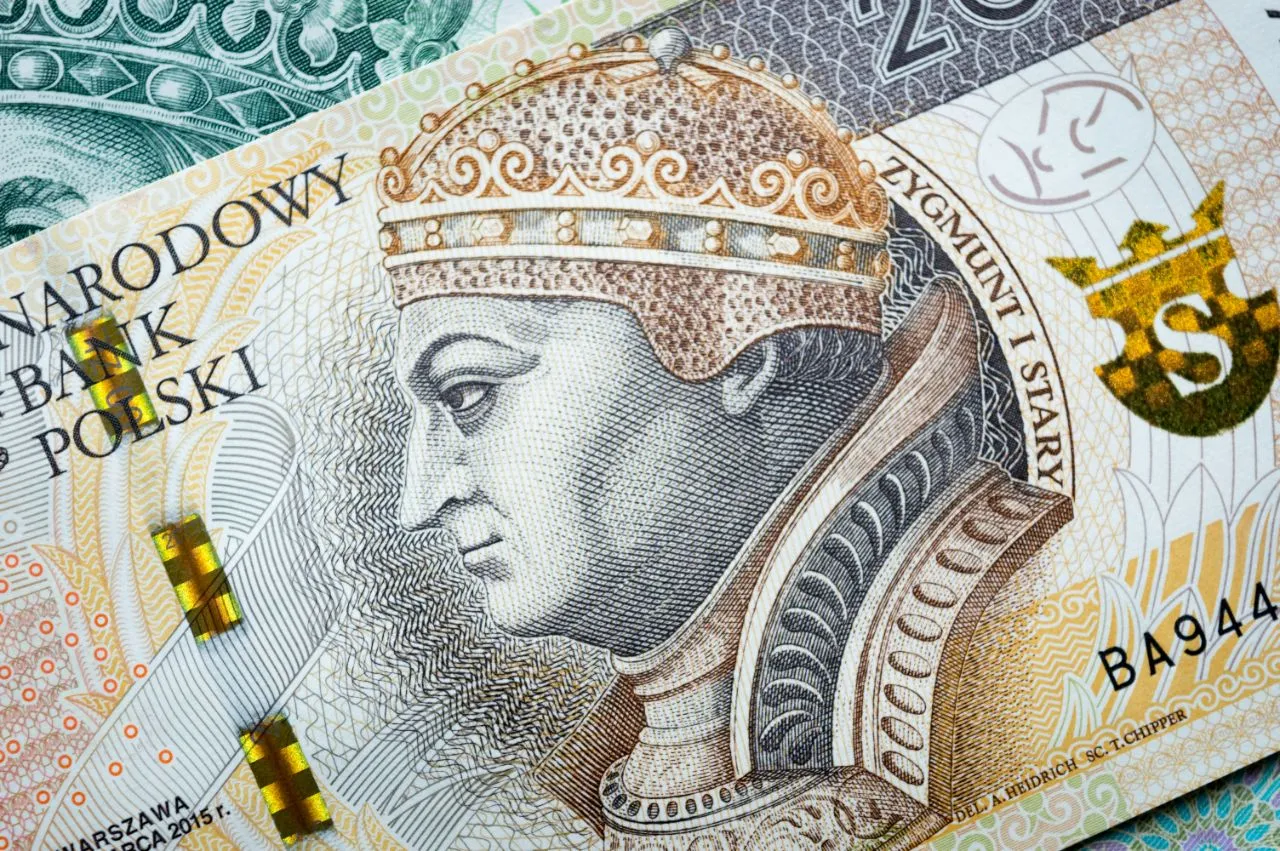
The Korea Federation of Banks (KFB) Chairman Cho Yong-byoung paid a visit to Poland yesterday to sign a memorandum of understanding (MOU) on financial cooperation between South Korea and Poland, Korean news media The Korea Economic Daily reported. The MOU was signed by Chairman Cho and the Polish Bank Association (ZBP) President, Tadeusz Białek.


The partnership aims to strengthen bilateral financial collaboration, which will be backed by holding joint financial conferences, sharing information on financial regulations and training financial experts. 
https://asset.coinness.com/en/news/dc56fd07b6f3e124cc4378bbfc1a5175.webp
Photo by Lukasz Radziejewski on Unsplash

Joint seminar on digital finance, blockchain and AI 

Following the MOU signing ceremony, the two associations conducted a joint seminar on digital finance, economy and the banking industry. The event was attended by Korea's Financial Services Commission (FSC) Chairperson Kim Joo-hyun, representatives of KFB members, President Białek and executives of Polish banks. 


Among the mainly discussed topics were Korea's digital financial landscape and its digital banking industry, along with the Polish economy and its banking industry. In particular, the participants focused on innovative changes in the financial industry brought by cutting-edge technology such as blockchain, AI and big data. 


During the conference, Chairman Cho expressed his commitment to bolstering the bilateral partnership, stating that the Korean banking industry will support local companies in expanding their businesses in Poland. 

 

More to Read
View All
Web3 & Enterprise·

Apr 19, 2023

Upbit Operator Doubles Down on ESG Management

Upbit Operator Doubles Down on ESG ManagementDunamu, the operator of the popular Korean crypto exchange Upbit, issued a press release on Friday stating it will donate 500 million KRW (~$385,000) to the Korean Red Cross in support of recovery efforts for the recent wildfire damage in Gangneung, a city located east of Seoul.©Pexels/Matthias ZomerESG managementThis is part of its efforts to double down on its environmental, social, and governance (ESG) management, according to Korean economic media Biz World.Wildfire recovery effortsLast year, Dunamu also donated 3 billion KRW (~$2.3 million) to Hope Bridge, a disaster relief association in Korea, to support the swift recovery from wildfires that ravaged areas near the cities of Uljin and Samcheok.Metaverse and NFTs for plant conservationUnder the slogan “climate change action,” Dunamu is engaging in various projects. Last month, the exchange operator launched the 2nd foRest campaign in collaboration with the Korea Forest Service and the Korea Forest Welfare Institute.The purpose of this campaign was to encourage citizens to participate in recovering wildfire-affected areas. Every tree planted in Dunamu’s metaverse platform 2nd Block led to the actual planting of two trees in the ravaged areas. More than 30,000 trees were planted through the project, and moreover, 10,000 of the participants were rewarded with coupons that can be exchanged for saplings.Dunamu has also made endangered plant conservation efforts with the Korea Arboreta and Gardens Institute. Upbit NFT Marketplace showcased ten endangered plants in NFT editions.Veronica Star Light, one of the editions revealed during the first airdrop, sold out within a day, reflecting its popularity. Dunamu will use the fees collected from these transactions to establish a fund for endangered plant conservation.Protecting plant diversityDunamu Chairman Song Chi-hyung said the company has been studying various means to utilize its technology and resources to contribute to society, and that it will continue to make multifaceted efforts to protect plant diversity.

news
Policy & Regulation·

Sep 12, 2025

China funds research on stablecoin risks to financial system

China’s leading science foundation has initiated a research program to examine the effects of stablecoins, reflecting concerns that such digital currencies could pose a risk to the nation’s financial system and its fiat currency. According to the South China Morning Post, the National Natural Science Foundation of China (NSFC) is now offering grants for studies focused on stablecoins and the creation of cross-border monitoring frameworks. The foundation expressed that the unmonitored circulation of private stablecoins, particularly those pegged to the U.S. dollar, could weaken capital controls and present a potential challenge to the yuan. This initiative emerges as governments around the world, from the U.S. to regional financial centers, are actively developing rules for the digital asset sector.Photo by  Christian Lue on UnsplashStrategic research and internal debateThe NSFC will fund the projects with grants valued between 200,000 and 300,000 yuan ($28,042 to $42,063). Researchers are expected to complete their work within a year and deliver policy recommendations on how China can manage the challenges posed by global stablecoins and contribute to digital finance governance. The deadline for applications is Oct. 9. This research program is set against a backdrop of internal discussion in China regarding the possible launch of a yuan-backed stablecoin. While some economists support the idea of boosting the yuan's international profile, Bloomberg noted that former central bank governor Zhou Xiaochuan has advised caution. He recently said the high efficiency of China's current payment systems and warned that financial stability could be threatened by speculation in the stablecoin market. Analysts believe any state-sanctioned yuan stablecoin would likely be confined to offshore markets and tied to the offshore CNH. Global regulatory landscapeChina’s examination of stablecoins is part of a broader global trend of increased regulatory focus on the asset class. In Hong Kong, a new ordinance took effect on Aug. 1, creating a mandatory licensing system for stablecoin issuers under the oversight of the Hong Kong Monetary Authority. Other Asian nations are also taking action. South Korea’s government is reportedly exploring a model for a won-pegged stablecoin involving a consortium of banks and non-bank entities. Separately, Cointelegraph reported that Kyrgyzstan has introduced legislation outlining a regulatory framework for such assets. Developments are also accelerating in the U.S., where the Guiding and Establishing National Innovation for U.S. Stablecoins (GENIUS) Act was signed into law, creating a federal structure for stablecoin oversight. On a commercial level, a Minnesota-based credit union, St. Cloud Financial, intends to introduce its own stablecoin later this year, a move highlighted by Cointelegraph. This token, named Cloud Dollar (CLDUSD), is designed to integrate with the credit union's banking system to facilitate faster and cheaper transactions for its members within a regulated environment.

news
Web3 & Enterprise·

May 07, 2024

Polaris Office marks 10th anniversary, POLA rises 14%

South Korea-based document management software firm Polaris Office announced the 10th anniversary of its office software (SW) cloud service launch, according to local media News1. Reaching this milestone has coincided with the rising price of its native token, POLA. At the time of writing, POLA is trading at KRW 48.89 ($0.04), up 13.99% from the previous week.  The 10th anniversary of its service launch appears to be a direct cause behind this recent rise in POLA prices, despite the recent downturn in the crypto market. The company said that it recently held an AI (artificial intelligence) talk concert to celebrate its 10-year milestone.Photo by Andrew Neel on UnsplashPOLA as rewards for sharing knowledge Launched in 2020, POLA tokens are distributed as a reward within its platform, Polaris Share Service, which the company describes as "the distributed trading system of incentive knowledge." Here, users can earn POLA by creating content and sharing knowledge on the platform. Cloud-based document management softwarePolaris Office offers a cloud-based service that allows real-time document editing on various operating systems (OS) including mobile, web office, Windows and Mac. Since the outbreak of the COVID-19 pandemic, the company has experienced significant growth in its sales, recording an all-time high annual sales last year. This growth is attributed to the increased adoption of hybrid work environments.  By consolidated standards, Polaris Office recorded KRW 107.9 billion in sales, KRW 6.2 billion in operating profit and KRW 24.4 billion in net profit, marking YoY increase of 346.1%, 277.1% and 91.2%, respectively.  Joining government-led document AI projectMeanwhile, Polaris Office has been designated as a participatory company in the "SW Computing Industry Source Technology Development Project" led by the Ministry of Science and ICT of Korea, as reported by crypto media CoinNess on April 15. In this project, Polaris Office is expected to contribute to advancing the document AI technology. 

news
Loading