Top

Metaplanet aims for 10K Bitcoin stockpile

Web3 & Enterprise·January 08, 2025, 2:12 AM

Metaplanet, a Japanese Bitcoin treasury company listed on the Tokyo stock exchange, is targeting a holding of 10,000 BTC in 2025.

2025 target

Taking to the X social media platform on Jan. 5, the company’s CEO, Simon Gerovich, set out a number of objectives which the company will strive to reach in 2025. Among them is the objective to expand the company’s Bitcoin holdings to 10,000 BTC.


Gerovich said that the expansion of the firm’s Bitcoin holding would be achieved “by utilizing the most accretive capital market tools available to us.” He followed up on Jan. 6 with an announcement that Metaplanet has completed its 12th series stock acquisition rights. Gerovich claimed that the successful completion of the stock issuance marked “a milestone in Metaplanet’s financing and Bitcoin acquisition strategy.”


The 12th series stock issuance was first announced back in November, with a six-month exercise period opening on Dec. 17. Additionally, the company issued 4.5 billion yen ($28,562,451) and 5 billion yen ($31,736,057) in ordinary bonds, with a maturity date of June 2025.


Other objectives the company has set out for 2025 include enhancing transparency and shareholder engagement through new initiatives. Furthermore, Metaplanet intends to leverage its partnerships to advance Bitcoin adoption in Japan and further afield. Gerovich said that Metaplanet will explore innovative opportunities to grow the firm’s impact in Japan and within the Bitcoin ecosystem.
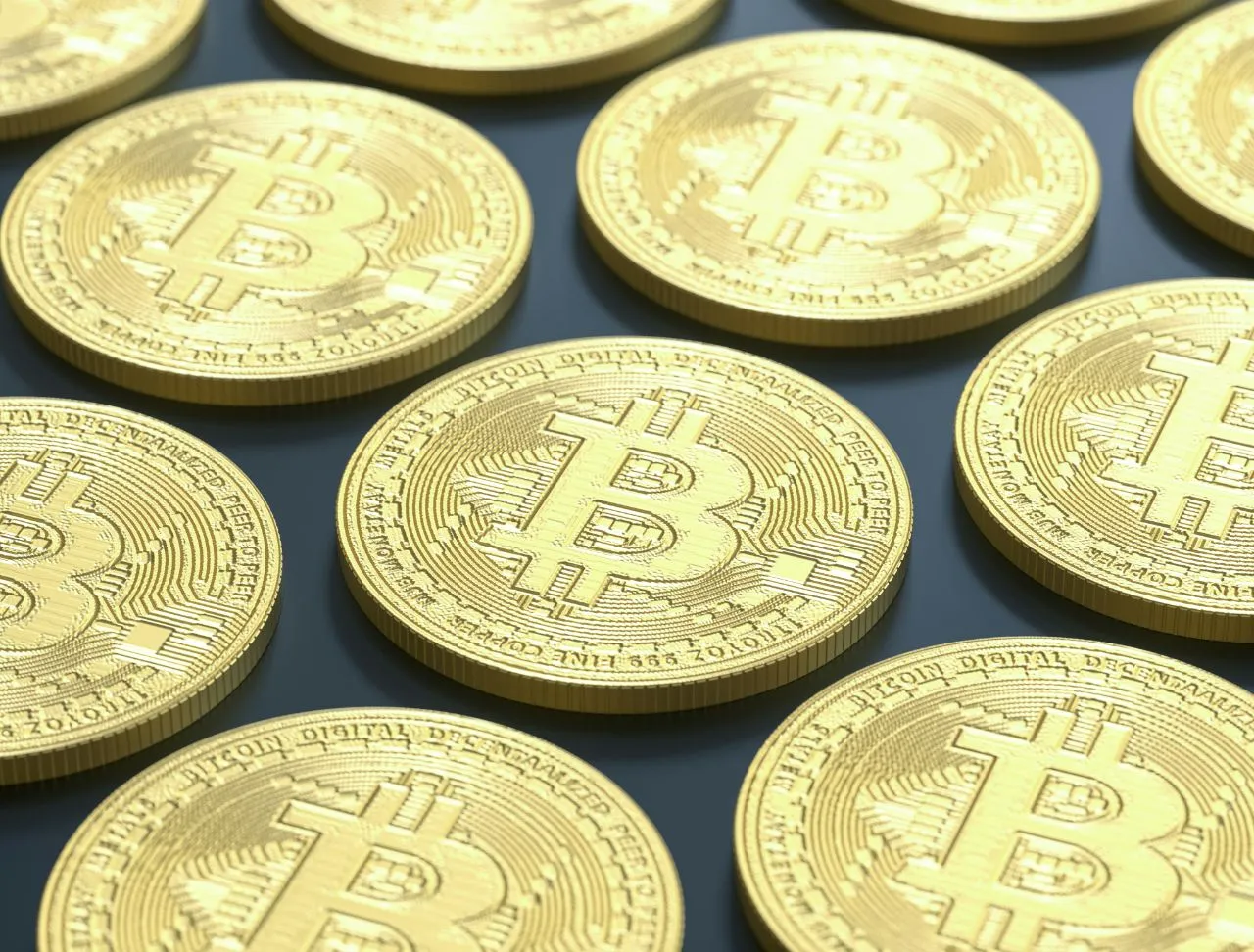
https://asset.coinness.com/en/news/2d3363e7bb016e0cb859c1f093bfd027.webp
Photo by Vasilis Chatzopoulos on Unsplash

2024 ‘transformational’

The Metaplanet CEO claimed that 2024 had been “transformational” for the company. He added: “We broke records, expanded our Bitcoin treasury, and reinforced our position as Asia’s leading Bitcoin Treasury Company.”


Shifting its attention to 2025, the firm is focused on its efforts to drive greater value for shareholders. Metaplanet’s fortunes are now heavily dependent upon the performance of Bitcoin. In an interview at a New Year’s Eve party held in Miami by Microstrategy founder Michael Saylor, Gerovich commented on Bitcoin adoption, stating:

"I’m slowly but surely seeing Bitcoin becoming a topic of discussion at the highest levels of government. Corporations around the world are beginning to adopt it as a Bitcoin standard."


The Metaplanet CEO is optimistic that the U.S. will adopt a strategic Bitcoin reserve once the Trump administration commences. Should that happen, he believes that other countries will follow. He sees Japan as one of those countries where they do look to the U.S. as a guide on such matters. “So I think if President Trump does adopt it as a strategic reserve, then Japan and many countries in Asia will do the same,” he stated.


Metaplanet is understood to be pursuing a business model very similar to the one pioneered by Microstrategy in the United States. The company increased the rate at which it acquired Bitcoin in H2 2024. Metaplanet made its first Bitcoin purchase in April 2024. At that time, its stock was trading at $1.90. Just as the Bitcoin unit price surged, so too did Metaplanet stock, closing the year at $22.05 per share.

More to Read
View All
Policy & Regulation·

Mar 11, 2025

Thailand’s SEC expands list of approved cryptocurrencies to include stablecoins

Thailand's Securities and Exchange Commission (SEC) has approved the leading U.S. dollar stablecoins USDT and USDC, expanding its list of approved cryptocurrencies within the Southeast Asian country.Photo by Tarun Ottur on UnsplashListing on regulated exchanges The approval was announced in a statement published on the SEC website on March 6. It means that Tether’s USDT and Circle’s USDC can now be listed on regulated exchanges in Thailand. The regulator had arrived at its decision to add the two stablecoins following a public consultation process regarding regulatory changes. Those changes were finalized last month and will now proceed to go into effect on March 16. The two stablecoins join five cryptocurrencies that had previously been approved. These include Bitcoin (BTC), Ethereum (ETH), Ripple (XRP) and Stellar (XLM). Certain cryptocurrencies are also being used for the testing of payment settlement through the Bank of Thailand’s Programmable Payment Sandbox.   A regulatory sandbox is a controlled environment testing ground for products and services developed within the private sector. Back in June of last year, the Southeast Asian country’s central bank launched an enhanced regulatory sandbox focused on programmable payments.  USDT issuer Tether responded to the addition of its stablecoin within the approved cryptocurrency list, stating: “This approval enables USD₮ to be traded within the country, facilitating its listing on regulated exchanges and paving the way for USD₮ to be accepted for payments, which advances the region’s leadership in digital asset innovation.” Tether CEO Paolo Ardoino said that the company sees value in the Thai market and with that, it intends to continue to explore ways to broaden its service offering within Thailand. He added:  “We are committed to supporting the long-term success and adoption of stablecoins in Thailand and look forward to contributing to the growth of the country’s digital asset ecosystem by fostering a strong and sustainable stablecoin infrastructure.” Stablecoin market growth According to DeFi data aggregation platform DefiLlama, the stablecoin market now stands at $227 billion in terms of market capitalization. This represents a 68% increase by comparison with the size of the market in 2023. It indicates that stablecoin adoption is on an upward growth trajectory. Digital assets are being used in many instances to facilitate international payments and remittances, particularly in emerging markets. In Europe, American investment bank JPMorgan recently forecasted that the introduction of the Markets in Crypto-Assets (MiCA) regulation will drive euro-pegged stablecoin growth.  Meanwhile, in the United States, S&P Global Ratings recently identified that a current lack of stablecoin regulation is acting as a barrier to broader institutional use. The company anticipates adoption growth once regulatory clarity has been achieved. Vlad Tenev, CEO of commission-free investing platform Robinhood, stated last month on Yahoo Finance’s Opening Bid podcast that stablecoin legislation will be passed in the U.S. in 2025. Tenev believes that applying a 4% interest rate to stablecoins would lead to a greater rate of adoption.

news
Policy & Regulation·

Jul 20, 2023

Yat Siu: Hong Kong’s Crypto Adoption Sanctioned by the Mainland

Yat Siu: Hong Kong’s Crypto Adoption Sanctioned by the MainlandIn a keynote speech at the Ethereum Community Conference (EthCC) in Paris on Wednesday, Yat Siu, Co-Founder of blockchain gaming and NFT firm Animoca Brands, shed light on Hong Kong’s rapid adoption of cryptocurrencies and Web3 technology, emphasizing its connection to developments unfolding in mainland China.Photo by Serey Kim on UnsplashDriven by the Chinese authoritiesSiu argued that the current crypto trend in Hong Kong signifies more than just the actions of the Chinese autonomous area itself, pointing to a larger agenda driven by China’s aspirations.According to Siu, the Chinese government’s release of its Web3 white paper in May, which positioned Web3 as the future of the internet, carries significant weight. Notably, this announcement came only days after Hong Kong revealed plans to allow retail crypto investments. Siu highlighted that even though China’s white paper did not explicitly mention cryptocurrencies, it is key to acknowledging the country’s commitment to advancing Web3 technologies.The news of Hong Kong’s crypto developments resonated throughout China, capturing attention even on China Central Television, the national TV channel. Siu underscored the broader implications of this coverage, suggesting that the developments in Hong Kong bear the imprint of higher authorities. He made it clear that any actions taken by Hong Kong would require the approval of China.Challenging US global hegemonyBeyond Hong Kong, Siu delved into the broader significance of Web3 as a tool to challenge the United States’ technological hegemony. He expressed concerns about the security risks associated with excessive reliance on tech giants such as Google, Apple, and Facebook. Siu argued that countries like Japan, Korea, and China view Web3 as an opportunity to break free from the dominance of US-centric technologies. This motivation is especially pronounced in China, which is actively pursuing de-dollarization.Reducing dependence on the US dollar represents a key factor driving the adoption of Web3 in these countries. Siu pointed out that the global currency’s position affords the United States significant power and influence, making it crucial for China and other nations to seek alternatives. Embracing Web3 technologies serves as a potential avenue for diminishing reliance on the US dollar and challenging the current financial status quo.While mainland China banned nearly all crypto activities in 2021, the country has remained one of the largest crypto-mining hubs worldwide, despite the prohibition. The proactive stance of Hong Kong in implementing crypto-friendly regulations has sparked hope that it could pave the way for China to eventually lift its long-standing ban.However, prominent figures within the Chinese establishment, such as CPIC Investment Management CEO Chenggang Zhou, have recently reiterated the country’s anti-crypto stance.The rapid adoption of cryptocurrencies and Web3 technology in Hong Kong provides a glimpse into broader developments unfolding in mainland China. Web3 is seen as a potent instrument for challenging US technological dominance, although whether that leads to China lifting its crypto ban is something that remains to be seen.

news
Web3 & Enterprise·

Dec 03, 2024

DWF Labs switches headquarters from Singapore to Abu Dhabi

DWF Labs, a Singapore-based crypto sector investment firm and market maker, has decided to move its headquarters to Abu Dhabi in the United Arab Emirates (UAE). Alongside its current offices and headquarters in Singapore, the company has established offices in Dubai, Hong Kong, Switzerland, South Korea and the British Virgin Islands (BVI).Photo by Adnan Uddin on PexelsFocusing on MENA growthIn an X post published on Dec. 2, DWF Labs Co-Founder Andrei Grachev announced the change of headquarters location from Singapore to Abu Dhabi, stating: “In order to build a strong presence in the Middle East and run more RWA [Real World Assets] and financial services there, @DWFLabs is moving the headquarter to Abu Dhabi.” Grachev added that more news in this regard will be announced soon, advising stakeholders to stay tuned regarding the matter. In the past, the DWF Labs founder has highlighted the significance of the Middle Eastern market.  Earlier this year, he suggested that the Middle East and North Africa (MENA) market is “one of the fastest growing markets in the world,” while commenting on the firm’s partnership with the Dubai Multi Commodities Centre (DMCC), a Dubai-based ecosystem for blockchain and distributed ledger technologies.  That isn’t the firm’s only partnership within the UAE. In September, it emerged that it had partnered with Abu Dhabi-based Web3 venture capital firm Klumi Ventures. The firms intend to collaborate in relation to the offering of strategic crypto advisory services in the UAE, investments and market making, market education and in the facilitation of over-the-counter (OTC) deals and crypto asset options. Strategic positioningAt the time, Grachev said that the two firms were “strategically positioned to drive the digital transformation in the UAE,” with the ability to empower both new market entrants and established institutions to succeed within the digital assets arena. It appears that Grachev has been spending a significant amount of time in Abu Dhabi of late. On Sept. 25, he posted on X that he had arrived in Abu Dhabi and was “cooking something special for the industry.” He followed up on that more recently, posting a selfie on X on Nov. 25 with the caption “Chef cooking in Abu Dhabi.” The authorities in both Dubai and Abu Dhabi, as well as Singapore, have all been working towards attracting crypto startups to their cities. All of them have had some success in that regard, although DWF Labs’ move away from Singapore indicates how competitive this environment is and how mobile crypto startups are. ADGM crypto hubIn the case of Abu Dhabi, most crypto sector activity has happened within the city’s international financial centre (ADGM), which has attracted projects such as the Kaia DLT Foundation, stablecoin issuer Paxos, blockchain infrastructure firm Blockdaemon, crypto custodian Liminal, crypto venture capital fund Token Bay Capital and many others. DWF Labs was first founded in Singapore in 2022. It has established ecosystem funds and grants relative to projects such as EOS, Floki, Gala Chain, Klaytn and TON. Additionally, the firm has just announced the launch of a $20 million fund focused on meme coin projects.

news
Loading