Top

Litigation set to fuel Bitcoin accumulation at Genius Group

Web3 & Enterprise·June 30, 2025, 5:11 AM

Artificial intelligence-driven education technology firm, Genius Group, has announced a plan to buy Bitcoin from the proceeds of damages that the company is pursuing through the courts.


In a press release published to the Singapore-headquartered company’s website on June 26, it outlined that the firm’s Board of Directors has approved a distribution plan that would see any potential damages received from litigation that Genius Group is currently embroiled in, divided equally for distribution to shareholders and for the purchase of Bitcoin for the company’s Bitcoin treasury.
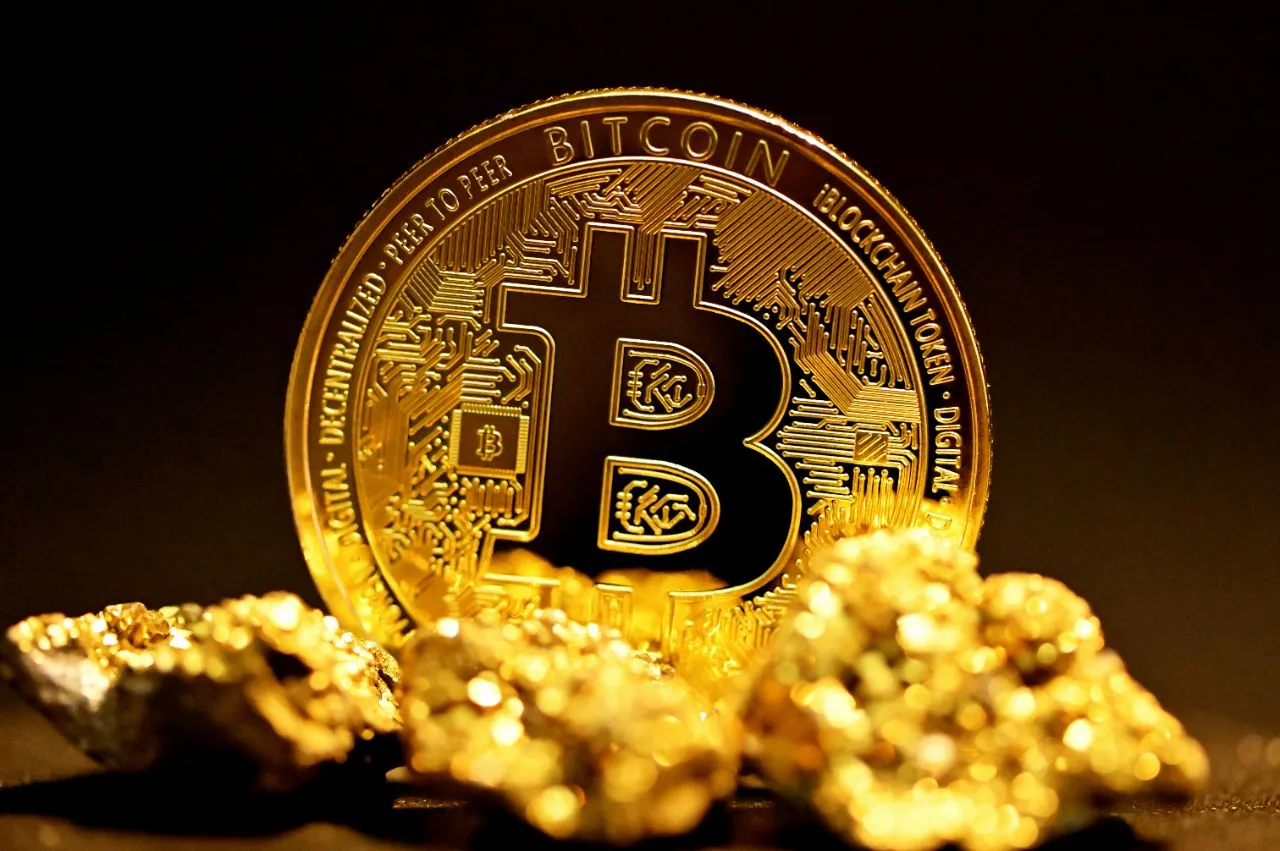
https://asset.coinness.com/en/news/2fb33931ea92c1c526fdd126479ae9fd.webp
Photo by Kanchanara on Unsplash

Up to $1 billion in potential damages

Genius Group CEO, Roger Hamilton, commented on the matter, stating:


“We are seeking combined damages of over $1 billion. As both lawsuits are being pursued by the Company to recover damages caused by third parties directly to our shareholders, the Board believes that 100% of any proceeds from the successful outcome of these cases should be directly distributed or reinvested for the benefit of shareholders.”


On X, Hamilton outlined that there’s no guarantee with regard to how much the company recovers through litigation. However, he added that if justice prevails and the company is awarded $1 billion in damages, that would equal a $7 dividend per share for shareholders and the addition of 5,000 BTC to the firm’s Bitcoin treasury.


Last month, the company provided an update on a lawsuit it has taken under the Racketeer Influenced and Corrupt Organizations (RICO) Act. Initially, $450 million in damages had been pursued but Genius Group amended the lawsuit, raising its claim to $750 million. 


The lawsuit is being taken against Peter Ritz and Michael Moe as the controlling officers and directors of LZGI International, and against Michael Carter and John Clayton, in the United States District Court, Southern District of Florida. The company alleges that the defendants attempted to defraud Genius Group. 


‘Bitcoin First’

Genius Group announced its “Bitcoin First” approach, and the launch of a Bitcoin treasury in November 2024, getting started with an initial purchase of 110 BTC valued at $10 million at that time. In April 2025, a New York court prohibited the company from selling stocks in order to fund the purchase of Bitcoin. Those court-imposed funding restrictions led to the firm selling off a small proportion of the overall Bitcoin that it was holding. 


Prior to that prohibition on the purchase of Bitcoin being imposed, Genius Group had expressed the aspiration to build up its Bitcoin reserve to a value equivalent to $100 million. Wading further into the Bitcoin space, the firm acquired blockchain learning platform, XD Academy, in December 2024.


On May 22, Genius Group announced that the U.S. Court of Appeals had overturned the ban imposed on the company. With that, it increased its Bitcoin holdings by 40%. As of June 17, the company held 100 BTC, valued at around $10 million.


The firm plans to bring forward another lawsuit “alleging naked short selling and evidence of spoofing against certain parties,” with damages being pursued in the region of $250 million.


Commenting on the coming of age of Bitcoin and the pursuit of a Bitcoin treasury strategy back in November 2024, Hamilton stated that “we're living in a unique moment in history - one most public companies will miss.”


 

More to Read
View All
Policy & Regulation·

Jun 07, 2023

SEC Lawsuit Stalls Binance’s Gopax Acquisition Deal in South Korea

SEC Lawsuit Stalls Binance’s Gopax Acquisition Deal in South KoreaNothing exists in a vacuum, and on that basis, it appears that ripples emanating from the recent lawsuit filed by the Securities and Exchange Commission (SEC) in the United States against global crypto exchange Binance have resulted in the company struggling to complete the acquisition of South Korea’s Gopax.Photo by Daniel Bernard on UnsplashSuspended pending reviewThe acquisition deal between Binance and South Korean crypto trading platform Gopax has hit a roadblock as a direct consequence of the lawsuit. The Financial Services Commission (FSC), the financial watchdog in South Korea, has put the acquisition on hold as it reviews the situation.Binance had acquired a majority stake in Gopax in February, with plans to re-enter the South Korean crypto market after a two-year absence. Gopax is a top five cryptocurrency exchange in South Korea, alongside Upbit, Bithumb, Coinone, and Korbit. However, according to a report by local news media, the FSC has suspended Gopax’s executive change report filed on Tuesday in light of the SEC lawsuit. The report outlined the nomination of three Binance members, including Leon Singh Poong, as inside directors of Gopax.The FSC cited the allegations of securities law violations against Binance and the SEC’s request to freeze Binance.US assets as the reasons for its cautious approach.Gopax revivalThe significance of Binance’s acquisition of Gopax goes beyond its re-entry into the South Korean market. It also aimed to revive the struggling local crypto trading platform. In November 2022, Gopax faced challenges when it suspended withdrawals of principal and interest payments from its decentralized finance service, GoFi, following the collapse of the Bahamas-based FTX crypto exchange and the bankruptcy of Genesis, a US digital assets financial services firm.Digital Currency Group, the parent company of Genesis, was reportedly the second-largest shareholder of Gopax and a key business partner providing the GoFi product. Binance’s acquisition deal intended to inject new capital into Gopax to facilitate customer withdrawals and interest payments for GoFi.The SEC lawsuit against Binance alleges the exchange’s commingling of customers’ funds and violations of various securities laws. The SEC has filed 13 charges against Binance, its subsidiaries, and its CEO, Changpeng Zhao.Acquisition strategyBinance appears to have been pursuing an acquisition strategy in attempting to carve out a greater market share in Asian markets. Binance entered the Japanese market via acquisition in November 2022 when it purchased local crypto platform, Sakura Exchange BitCoin. At the end of last month, Binance announced that it was rebranding the business as Binance Japan and launching it as a stand alone bespoke platform dedicated to the Japanese market.In Thailand, the global crypto exchange has varied its approach, entering into a joint venture rather than a full acquisition. It has partnered with Gulf Innova, with the new entity, Gulf Binance, recently having been awarded a trading license by the Thai regulator.The outcome of the SEC lawsuit and its impact on Binance’s operations in South Korea remains uncertain. The FSC’s review process will consider the allegations against Binance and the implications of the SEC’s actions before making a decision on the Gopax acquisition. The crypto industry will closely monitor the developments as they unfold, as no doubt the saga will have broader implications for Binance and its expansion plans.

news
Policy & Regulation·

Nov 07, 2024

Crypto community optimism across Asia following Trump’s election victory

Recognition of Donald Trump’s victory in the U.S. presidential election on Nov. 6 has led to many crypto proponents in Asia foreseeing a positive outcome for crypto within the Asian region, and globally.Photo by Kevin Lanceplaine on UnsplashBright future for cryptoAccording to a report published by the South China Morning Post (SCMP), crypto proponents in China are expectant of a bright future for crypto both on the Chinese mainland and in Hong Kong. The mindset seems to be that a pro-crypto stance in the U.S. will lead to other jurisdictions taking a similar approach. HashKey CEO Livio Weng expressed such a view, stating:“Trump’s pro-crypto stance is expected not only to invigorate the US virtual-asset industry, but also to encourage Hong Kong to further relax its own virtual-asset policies in its quest to become a global Web3 hub.”  Prior to being elected, Trump had promised to fire Gary Gensler, who as Chair of the Securities and Exchange Commission (SEC) has pursued a strategy of regulation by enforcement, a course of action that has been broadly criticized by crypto market participants in the United States. Ripple CEO Brad Garlinghouse wasted no time in calling on Trump to act, and to fire Gensler. Influencing regulatory attitudesThere seems to be a consensus among commentators that the regulatory approach to crypto in the U.S. is going to become crypto-friendly. Crypto analyst Miles Deutscher suggests that “a Trump victory is a WIN for US tech innovation, as it would solidify [the United States’] status as a crypto powerhouse.” Weng believes that “this shift could also positively influence regulatory attitudes toward virtual assets in mainland China.” That view is mirrored in South Korea by KP Jang, head of Xangle Research. Jang asserts that “if Trump implements bold virtual asset policies while improving existing regulations, it is expected to accelerate regulatory reforms in Korea as well.” Sumit Gupta, CEO and co-founder of India’s largest crypto exchange, CoinDCX, outlined on X that Trump’s victory is a pivotal moment for global crypto, adding:”The direct effects of Trump’s policies might not alter India’s regulatory environment right away. However, global sentiment and investor behaviour will be influenced, eventually reaching India.” The CoinDCX CEO believes that should Trump now appoint regulatory leadership that’s crypto-positive, any resultant crypto regulatory framework adopted by the U.S. could become a blueprint for use by other nations. Gupta identified further potential upside insofar as the implementation of positive crypto policies by Trump would lead to a more attractive environment for crypto, “potentially opening up enhanced funding opportunities and partnerships for Indian startups as investors seek global growth.” Bitcoin price surgeAt the time of writing, the Bitcoin unit price is up 0.64% over the course of the past 24 hours, at $74,884. American business news channel CNBC reported that Bitcoin could reach $100,000 before Trump even takes office.  Matthew Hougan, chief investment officer (CIO) at crypto asset fund manager Bitwise, said that Trump’s election victory could herald in a “golden age of crypto,” with a friendlier regulatory environment leading to greater institutional investment and mainstream adoption.

news
Policy & Regulation·

May 23, 2023

Korean Crypto Exchange Alliance Launches Its Official Website

Korean Crypto Exchange Alliance Launches Its Official WebsiteThe Digital Asset eXchange Alliance (DAXA), which comprises South Korea’s five major cryptocurrency exchanges Gopax, Bithumb, Upbit, Korbit, and Coinone, announced the launch of its official website on Tuesday.Photo by Markus Winkler on PexelsWebsite structure and featuresThe website has three primary sections: Introduction, News, and Archives. The Introduction section provides comprehensive information about the exchange, including a greeting from Chairman Lee Sirgoo, who also serves as the CEO of Upbit’s operator Dunamu. It also presents an organizational structure, details of the corporate identity, and links to each individual exchange.The News section provides users with announcements, press releases, and event information. Meanwhile, the Archives section houses educational videos, institutional reports, and a list of important statutes and regulations.Mitigating information disparityDAXA Vice Chairman Kim Jae-jin said the website would offer easy access to information concerning digital assets and the alliance’s self-regulatory measures. She mentioned the group’s commitment to investor protection, focusing on addressing information asymmetry.In addition to the website, DAXA runs a Youtube channel, with its first video uploaded in January of this year.Controversy surrounding the allianceEarlier this year, DAXA faced backlash after it implemented a new clause in its guidelines, which disallowed the re-listing of cryptocurrencies that had been removed from its member exchanges for a period of one year. Critics claimed that DAXA’s guideline was unclear and voiced concerns about the Alliance’s growing influence in the crypto sector. These worries are amplified by the fact that the member exchanges of DAXA command 98% of the crypto trading volume in Korea.

news
Loading