Top

Bit Origin makes first purchase following DOGE treasury announcement

Markets·July 22, 2025, 11:46 PM

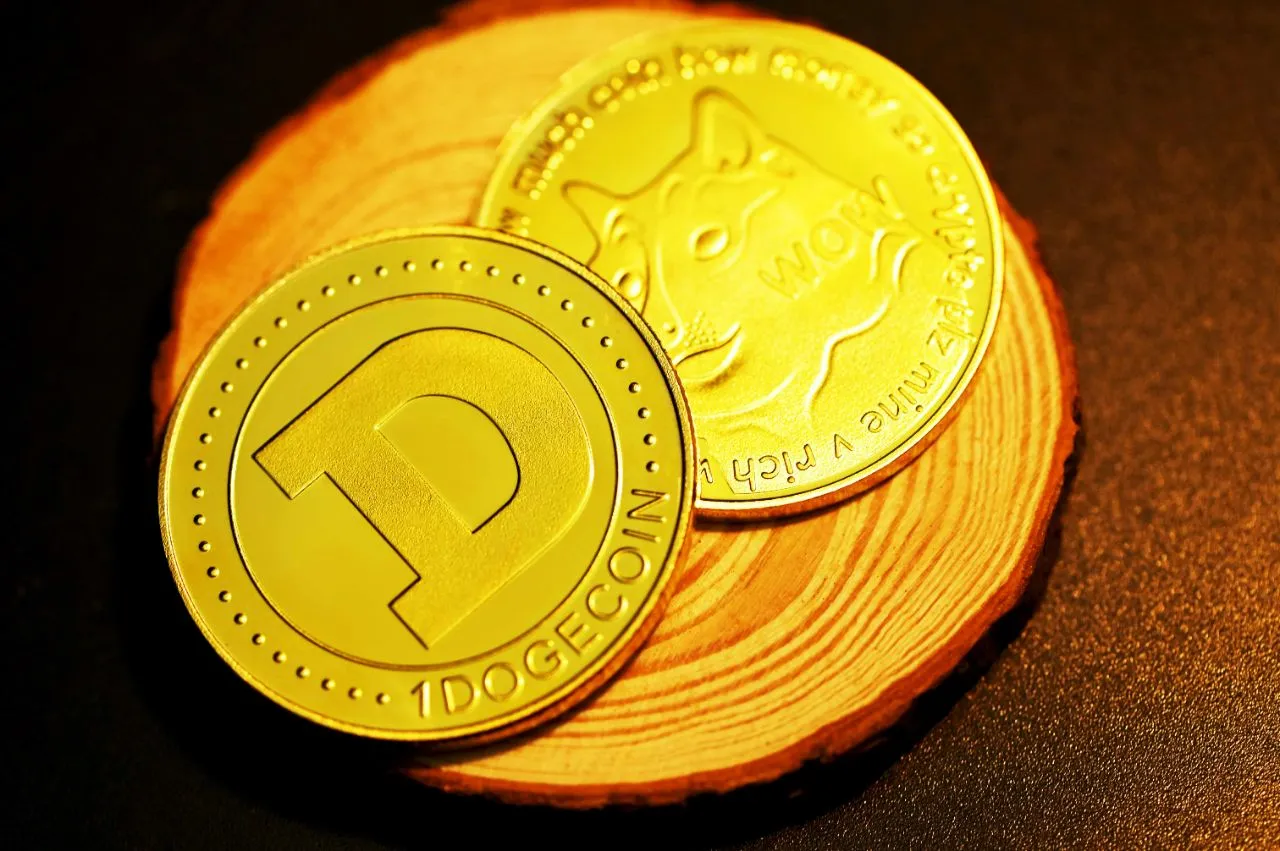
Bit Origin, the Nasdaq-listed (BTOG) pork processor turned crypto mining infrastructure firm, has acquired 40.5 million Dogecoin (DOGE), the company’s first purchase of the world’s largest memecoin by market cap since it announced that it was establishing a Dogecoin treasury.


In a press release published on July 17, the Singapore-headquartered company with operations in the United States, Canada and China, set out that it would become the “first publicly listed company on a major US exchange to accumulate Dogecoin as a core asset.”
https://asset.coinness.com/en/news/b52ff0c12870ae865a754515c4927a2b.webp
Photo by Kanchanara on Unsplash

$500 million treasury funding

The firm outlined that it had entered into agreements with accredited investors, implicating the sale of $400 million in Class A ordinary shares in the company. An additional $100 million unlocked via convertible debt brought funding for its Dogecoin treasury to $500 million.


Jinghai Jiang, Bit Origin’s CEO and Chairman, asserted that “what started as a joke has evolved into a globally liquid asset with a payments utility.” Jiang asserted that very few digital assets match the settlement speed and scale of community that Dogecoin offers.


X Money potential

In particular, he singled out the potential use of DOGE for X Money, a new payment system that is in the process of being established by Elon Musk’s X social media platform. Alongside many proponents of the cryptocurrency, Bit Origin is hoping that Musk will implement the use of DOGE to power X money. Jiang added:

“In an age of broken institutions, Doge embodies a shared culture of optimism and resilience that transcends existing political and financial systems.”


On social media, the company outlined that it believes in “Dogecoin not just as a meme, but as a future payments backbone.”


Having utilized the services of Chardan Capital Markets as a placement agent, the company has already completed an initial closing of $15 million under the convertible debt facility that has been established. 


On July 21, Bit Origin published another press release, detailing the acquisition of 40,543,745 DOGE with the memecoin holding having been purchased at an average acquisition cost of $0.2466 per DOGE. 


Nearing inflection point for payments

Commenting on the development, Jiang stated:

“From our experience in mining, we understand the tradeoffs that define proof-of-work systems. We see Dogecoin’s utility potential for micropayments nearing an inflection point, driven by renewed developer activity and broader institutional interest in tokenization.”


Dogecoin emerged in December 2013 having been developed by Jackson Palmer and Billy Markus as a joke. The project borrowed much of its code from Bitcoin. Despite having originated as a joke, the project has developed a sizeable community. The digital asset currently holds a market capitalization of $40.5 billion, according to CoinMarketCap data. 


Bit Origin rebranded from China Xiangtai Food Co., Ltd. in April 2022. Up until that point, it had been involved in the pork processing business. The company pivoted to crypto mining, partnering with MineOne on a Wyoming mining facility in the United States. The facility was ordered to be shut down by the former Biden administration on the basis of it being a national security risk to have a Chinese project located within a mile of a U.S. Air Force base that houses nuclear intercontinental ballistic missiles.

More to Read
View All
Web3 & Enterprise·

May 17, 2023

Superscrypt Backs Airstack’s Web3 Developer Platform

Superscrypt Backs Airstack’s Web3 Developer PlatformSingapore-based Superscrypt, an early stage blockchain investment company founded by state-owned global investment conglomerate Temasek, has led an investment round into Web3 developer platform, Airstack.Photo by Giorgio Trovato on UnsplashIndian influenceAirstack closed out the second tranche of its pre-seed funding round, having raised the largest portion of the $7 million raise via Superscrypt. Although based in Miami Beach, Florida, Airstack has a strong Indian influence. Three of its five founders, Deepesh Kumar, Vysakh Nair and Sarvesh Jain originate from the world’s most populous country.The firm’s main offering is to enable developers to be able to easily query on and off-chain data and integrate that same data into the Web3 apps that they are building. Airstack enables this functionality by featuring GraphQL, a query language for APIs and a runtime for fulfilling those queries with the user’s existing data, as a core component of its platform.Achieving greater functionality still, the start-up enhances that use of GraphQL by incorporating the use of artificial intelligence (AI). The company’s Miami Beach-based CEO and Co-Founder, Jason Goldberg, elaborated on the technology it is using in an interview with CoinDesk: “We did extensive interviews with developers over the past year, gaining insights into their previous tool usage and the challenges they faced. Airstack was built to directly address those pain points.”Recent platform launchThe product offering was launched last month and has already lured in over two hundred developers to use the platform. Those developers are harnessing the functionality of Airstack’s platform to assist them in their efforts to bring a broad range of dApps to market.Developer projects are grounded in areas such as marketing engines, decentralized finance (DeFi) portfolio optimizers, customer resource management tools, advertising platforms, and decentralized social media apps, together with messaging applications.With just a straightforward query and response approach, developers can use Airstack platform functionality to query, combine, and integrate on-chain or off-chain, cross-chain, and cross-application data. The offering applies to queries relative to the Ethereum and Polygon blockchain networks. The project intends to support additional blockchain networks going forward, while also intending to increase the level of query complexity made available to platform users.Joining Superscrypt on the Airstack cap table are Hashed Emergent, NGC, Primal Capital, UOB Ventures, Signum Capital, and others. Goldberg articulated the firm’s strategy going forward: “Our immediate focus is to onboard thousands of developers onto Airstack in the coming months. We aim to identify the areas where we add the most value and where genuine business use cases emerge before finalizing our pricing model.”Social app upgradeAt the same time as this funding announcement, Airstack also revealed a separate development related to its Jam social app. Taking to Twitter on Tuesday, Goldberg provided details on an update to the app which utilizes Airstack functionality in order to create social groups based on NFT ownership and collector status. That functionality can be extended further, so that data can be gathered across projects, creating bespoke user profiles relative to the user’s blockchain activity and presence.At the same time as this funding announcement, Airstack also revealed a separate development related to its Jam social app. Taking to Twitter on Tuesday, Goldberg provided details on an update to the app which utilizes Airstack functionality in order to create social groups based on NFT ownership and collector status. That functionality can be extended further, so that data can be gathered across projects, creating bespoke user profiles relative to the user’s blockchain activity and presence.

news
Policy & Regulation·

Sep 26, 2025

Kazakhstan pilots tenge-backed stablecoin with Solana and Mastercard

Kazakhstan’s central bank has begun testing a stablecoin tied to the national currency, advancing a broader plan to modernize the country’s financial infrastructure. According to Cointelegraph, the pilot, run inside the National Bank of Kazakhstan’s Digital Assets Regulatory Sandbox, introduces Evo, a token with the ticker KZTE that is built on Solana and backed by the tenge. Intebix, a local crypto exchange, and Eurasian Bank are issuing KZTE. Mastercard is preparing connections that would link the token with major stablecoin issuers worldwide. The central bank is not minting the asset, but it is providing the regulatory framework that allows the token to be created and tested. Intebix founder Talgat Dossanov said the initiative is the first instance of the monetary authority directly engaging in the process of stablecoin issuance.Photo by GuerrillaBuzz on UnsplashBuilding a national crypto ecosystemEarly use cases focus on practical payments and on-ramps. The token is designed to widen the bridge between crypto and fiat, support conversions on exchanges, and enable spending through crypto cards. Officials described the pilot as a building block in a national digital asset ecosystem that aims to nurture new financial tools and deepen the local market. The program aligns with guidance from President Kassym Jomart Tokayev, who in a Sept.  8 address urged faster development of a comprehensive digital asset environment. He called for a new banking law to boost competition, attract new players, strengthen fintech, and ease the circulation of digital assets. Tokayev also cited progress with the digital tenge, already in use to finance projects through the sovereign wealth fund, and proposed creating a state crypto fund under the central bank’s investment arm to launch a strategic reserve of promising tokens. USD stablecoin accepted as regulatory feesRegulatory efforts extend beyond the sandbox. On Sept. 4, the Astana Financial Services Authority (AFSA), the independent regulator of the Astana International Financial Centre (AIFC), launched a pilot that lets companies based at the center pay regulatory fees using stablecoins backed by the U.S. dollar. More than 4,000 firms from over 80 countries are registered at the AIFC, and Bybit was the first to sign a multilateral memorandum of understanding with the regulator. Under the fee pilot, licensed Digital Asset Service Providers may join as Providers and act as agents for payers who choose to settle obligations to the regulator with stablecoins. AFSA chief executive Evgeniya Bogdanova said the initiative is meant to position the financial center as a hub for digital finance and to keep pace with global trends in stablecoin adoption. Together, the sandbox stablecoin, the digital tenge rollout, and the AIFC payments pilot signal a coordinated push to make digital assets a larger part of Kazakhstan’s financial system. Authorities are testing how these tools can operate within clear rules, with an eye to drawing investment and keeping the country connected to fast-moving changes in global finance. 

news
Web3 & Enterprise·

Jun 29, 2023

Sony Network Invests $3.5M in Startale Labs to Drive Global Web3 Adoption

Sony Network Invests $3.5M in Startale Labs to Drive Global Web3 AdoptionSony Network Communications, a prominent Japanese internet service provider, has made an investment of $3.5 million in Startale Labs, an innovative Web3 company based in Singapore. The primary objective of this collaboration is to establish an infrastructure that will promote the global adoption of Web3 technologies.Photo by Bastian Riccardi on UnsplashTelecom meets Web3Sony Network Communications, founded in 1995, offers high-speed fiber-optic broadband services and operates in various sectors of the telecommunications industry. The company is actively involved in advanced technology ventures such as the Internet of Things (IoT) and artificial intelligence (AI). Meanwhile, Startale Labs specializes in the Web3 domain, providing advisory services related to Web3, supporting the creation of layer 1 blockchains and applications, and collaborating with other entities to develop core Web3 functionalities.As part of this partnership, Jun Watanabe, the President and Representative Director of Sony Network Communications, will join Startale Labs as a director. He expressed his gratitude for the collaboration, emphasizing the deepening ties between Sony and Startale Labs. He highlighted the fruitful joint efforts already underway to advance Web3 technologies. Both companies share the objective of fostering an infrastructure that facilitates global Web3 adoption. Jun Watanabe said this initiative will lead to the emergence of revolutionary Web3 applications.Sota Watanabe, the CEO of Startale Labs, acknowledged Sony Group’s remarkable achievements across diverse industries such as gaming, entertainment, and financial services. He believes that Sony holds great potential in the Web3 sector, and Startale Labs is well-positioned to contribute its expertise and knowledge to this domain. With this partnership, Sota Watanabe envisions a collaborative effort that will not only foster the global Web3 infrastructure but also drive the creation of valuable and impactful Web3 applications.Sony’s Web3 expansionSony Group has been actively exploring opportunities in the Web3 field. Earlier this month, Sony Bank, another affiliate of Sony Group, partnered with Mitsui & Co. Digital Asset Management (MDM) to introduce MDM’s security token service, Alterna, to the Tokyo-based online bank’s customers. Through this collaboration, Sony Bank customers can invest in real-world assets, such as large-scale real estate properties, using security tokens provided by Alterna. This platform opens up investment avenues that were previously inaccessible to retail investors due to high capital requirements. Notably, the minimum investment requirement through Alterna is 100,000 yen.Government supportThere’s also been a positive move from the Japanese government for the Web3 and cryptocurrency industry. The Japanese National Tax Agency recently announced the revised corporate taxation rules pertaining to crypto assets. Under the new amendment, companies are exempt from taxes on unrealized gains from cryptocurrencies if the virtual assets were issued by the company and have been continuously held since issuance, or if they have remained subject to certain transfer restrictions since issuance.Startale Labs CEO Sota Watanabe welcomed this development on his Twitter account, stating that Web3 projects like Astar Network can now conduct business in Japan without moving their operations overseas. Meanwhile, he highlighted the importance of addressing the issue of corporate taxes on tokens issued by third parties in the future. He hoped for continuous engagement in constructive discussions with politicians and government agencies.

news
Loading