Top

Conut teams up with Foblgate to provide trendy crypto news to exchange users

Web3 & Enterprise·November 14, 2023, 8:28 AM

South Korean cryptocurrency exchange Foblgate announced on Tuesday (local time) that it will collaborate with Korean cryptocurrency newsletter Conut to bring relevant news about virtual assets to a wider audience, providing readers with richer and more informative content.

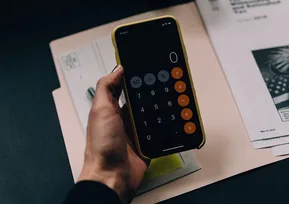
Photo by Markus Winkler on Unsplash


Publishing entertaining and insightful crypto news

Launched in 2021, Conut is dedicated to providing crypto news in a way that is fun, straightforward and appealing to younger demographics, considering that crypto is more popular among younger age groups. It simplifies complicated topics like Play-to-Earn (P2E) games, the metaverse, cryptocurrency regulations and spot bitcoin exchange-traded funds (ETFs) using trendy memes and internet vernacular instead of formal language. Currently, the newsletters are available on the official Conut website or via email subscription, which has accumulated over 8,000 subscribers as of this month. In the future, Conut plans to launch a mailing service as well as a P2E app called Coquiz to increase accessibility and reach more people who are interested in crypto and blockchain.

Through this newest collaboration with Foblgate, content from Conut’s recent newsletters will be featured on Foblgate’s main page, providing users with access to a wealth of information on a wide range of topics, from crypto basics to the latest trends.

“By making Conut’s content easily accessible to our users, we intend to promote a better general understanding of blockchain and resolve information asymmetry. We plan to explore and offer more content in the future for our users to take advantage of,” said Foblgate CEO Ahn Hyun-jun.

The founders of Conut, Lee Choong and Jo Hana, also expressed their anticipation for the collaboration, stating that it would be a great help in disseminating quality content.


Nurturing creativity

Foblgate has been an active proponent of content production and promotion. Earlier this year, the exchange co-hosted the Self-Made Genius Contest — a contest for exploring creative projects in traditional and digital art.

More to Read
View All
Web3 & Enterprise·

Sep 27, 2023

Sejong Telecom to Collaborate with KOREIT for Security Token Products

Sejong Telecom to Collaborate with KOREIT for Security Token ProductsSejong Telecom said Wednesday that it is going to work with the Korea Real Estate Investment and Trust (KOREIT) to jointly develop security token products.Through this agreement, Sejong Telecom aims to transform trust products that are discovered by KOREIT into security tokens and then list them on BBRIC — an integrated real estate investment and income distribution service developed and operated by the Sejong Telecom Consortium — in order to attract investors.Photo by NordWood Themes on UnsplashRevolutionizing real estate investmentsBBRIC utilizes blockchain technology to ensure the transparency and security of financial products and provides a crowdfunding-style real estate indirect investment platform that is easily accessible to the general public, thus expanding the accessibility of fractional investments and allowing anyone to acquire information and engage in trading. It has also obtained information security management system (ISMS) certification, further enhancing measures for investor protection.“Security token transactions that are conducted online require security, confidence in product value, and transparency of transactions. BBRIC has consistently demonstrated its security and transparency as well as the investment value of its listed security tokens,” said Park Hyo-jin, Head of Sejong Telecom’s blockchain division.KOREIT is a leading comprehensive real estate and finance company. Leveraging its long-standing expertise and professionalism, it has been enhancing its competitiveness in various business areas, including land trusts, land trust-led urban improvement projects, and real estate investment trusts (REITs).“We will work together with KOREIT to find underlying assets for security tokens and select secure and reliable products with high investment value to offer to investors,” Park added.Further efforts to advance BBRICSejong Telecom also recently signed a business agreement with Hyosung TNS, the infrastructure and finance arm of South Korean conglomerate Hyosung Group, to promote BBRIC and develop security token services.

news
Web3 & Enterprise·

Mar 05, 2025

RWA tokenization gaining momentum in UAE

Real-world asset (RWA) tokenization, the conversion of tangible assets into digital tokens on a blockchain, is gaining momentum in the United Arab Emirates (UAE), according to a number of industry professionals working in the sector.Photo by ZQ Lee on Unsplash‘No lack of demand’Scott Thiel, founder and CEO of Dubai-based RWA token marketplace Tokinvest, recently outlined to Cointelegraph that the company is experiencing “no lack of demand” for tokenized RWAs. Thiel believes that demand is coming from real estate developers and large property owners who “want to explore how they can use this as an alternate means of financing or selling their property.” The Tokinvest CEO explained that a booming property market in the UAE,  particularly in Dubai, is contributing towards RWA tokenization demand in the country. He stated: “What’s the hottest real estate market in the world? Well, I think today it’s probably Dubai, and so, everyone would like to own a piece of this or to get access to the economic benefits of being a participant in that marketplace.” RWA tokenization dealsLast year, Liv Digital Bank, a subsidiary of Emirates NBD, the second largest bank in the UAE, signed a deal with RWA tokenization firm Ctrl Alt. At the time, Ctrl Alt CEO Matt Ong pointed to a Boston Consulting Group report that forecast a $16 trillion business opportunity with regard to the tokenization of global illiquid assets by 2030. In January, MANTRA, a layer-1 blockchain project that focuses on RWA tokenization, inked a $1 billion deal with Damac Group, an Emirati property development company. The objective of the partnership is to bring transparency, security and access to Damac’s assets using blockchain. Last month, MANTRA was awarded a Virtual Asset Service Provider (VASP) license by Dubai regulator, the Virtual Assets Regulatory Authority (VARA). MANTRA Co-founder and CEO John Patrick Mullin described the license award as “a validation of our purpose, which is to provide developers and institutions with a purpose-built RWA Layer 1 Blockchain, that’s capable of adhering to real world regulatory requirements.” Proactive regulationIt is with regard to regulation that many in the industry feel that the UAE is gaining the upper hand where RWA tokenization is concerned. Tokeninvest’s Thiel provided input into the formulation of VARA’s regulatory framework back in 2022. He said that the authorities there have taken a proactive approach to digital asset regulation, with a genuine desire to provide regulatory clarity. The Tokinvest CEO was sufficiently impressed by the regulatory approach in the UAE to relocate the company there. Back in January, VARA awarded the company a trading license for its tokenized RWA marketplace. Commenting following the announcement of the Damac deal, MANTRA’s Mullin complimented the UAE authorities on their business-friendly approach: “The UAE has shown time and again that they can lead the crypto industry in innovation.”  In a series of posts on X recently, Julian Kwan, CEO and founder of IXS, a Singapore-based institutional bridge for tokenized RWAs, cited the Damac tokenized real estate deal while asserting that tokenized “RWAs are no longer a concept — they are an unstoppable financial movement.”

news
Web3 & Enterprise·

Sep 23, 2024

Hashgraph ecosystem developer explores use cases in Qatar

The Hashgraph Association, a non-profit organization that focuses on building an ecosystem of startups and enterprises relative to the use of the Hedera Hashgraph public ledger, has announced that it intends to explore use cases for the technology in Qatar. Hedera Hashgraph was first created in 2015 by Leemon Baird and Mance Harmon. The network is designed such that anyone can transact using it and deploy applications on it. However, governance is separated from consensus, with a group of businesses overseeing the network protocol.Photo by Hongbin on UnsplashFive key use casesIn a LinkedIn post published on September 19, the Hashgraph Association outlined that within the next 12 months, it would explore the implementation of five key use cases relative to the Hashgraph network in Qatar, collaborating with stakeholders within the Middle Eastern country in order to do so. First on its list is the tokenization of equities. During the TOKEN2049 event in Singapore earlier this week, the HBAR Foundation, another entity which supports the creation of Web3 communities on the Hedera network, launched the Hedera Asset Tokenization Studio.  According to the HBAR Foundation, the initiative “enables the seamless issuance and management of tokenized bonds and equities on the Hedera network.” The move, when considered in the context of the Hashgraph Association’s intentions relative to the pursuit of the tokenization of equities as a use case in Qatar, demonstrates that the distributed ledger technology (DLT) network’s most prominent stakeholders are homing in on this particular use case in furthering the use of the network.  Dr. Sabrina Tachdjian, the HBAR Foundation’s head of fintech and payments, stated that the  Asset Tokenization Studio will lower technical barriers to the tokenization of bonds and equities, along with the recording of their underlying data on the ledger. Sukuk tokenizationOther use cases up for exploration in Qatar are real estate tokenization and sukuk tokenization. A sukuk is an Islamic financial certificate. It’s a bond-like financial instrument which is sharia-compliant. The world’s first tokenized sukuk, linked to a sovereign instrument, was created in Malaysia in 2023.  Fusang Exchange listed the product, as a digitized version of a sukuk issued by the International Islamic Liquidity Management Corporation (IILM), represented via an ERC-20 token. Shariah-compliant finance represents a $4 trillion opportunity. Additionally, the Hashgraph Association is looking to exploit the carbon credit sector as a use case, while also looking towards the use of the Hedera Hashgraph ledger for the purpose of consumer engagement and loyalty programs. Digital assets frameworkOn September 1, the Qatar Financial Centre (QFC) announced that the Qatar Financial Centre Authority (QFCA) and the Qatar Financial Centre Regulatory Authority (QFCRA) had launched the QFC digital assets framework. The Hashgraph Association believes that the regulations strengthen its role in “fostering innovation and trust within the digital assets ecosystem, further solidifying the region’s position as a global leader in fintech.” In May, the Hashgraph Association announced at the Qatar Economic Forum a $50 million partnership with the QFC, with the goal of creating a digital assets venture studio in Qatar to support solutions built on the Hedera network.

news
Loading