Top

dtcpay forges strategic partnership in launch of crypto payments system

Web3 & Enterprise·November 14, 2023, 1:03 AM

Singapore-based dtcpay has announced a collaboration with Singaporean data-sharing platform PlatON and Chinese payments firm Allinpay International, marking the imminent launch of a digital currency payments system.
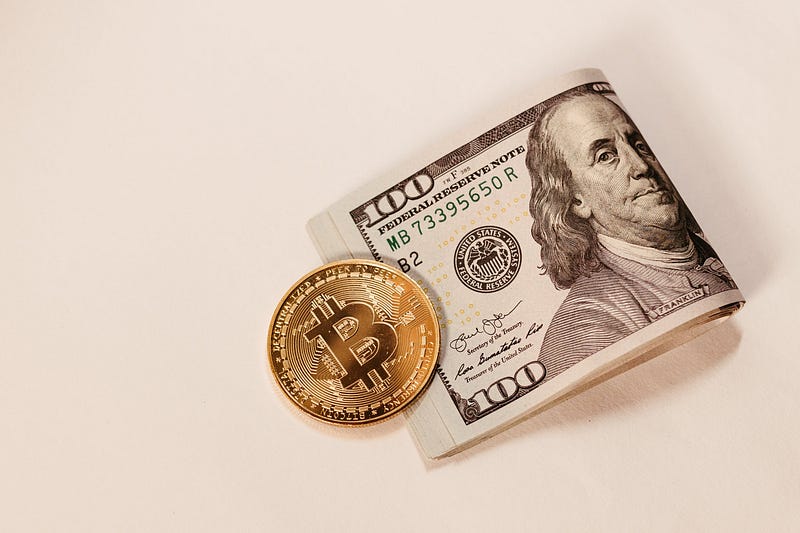
Photo by Jonathan Borba on Pexels


POS terminal crypto payments

The trio is set to unveil a cutting-edge digital currency payment system, leveraging smart point of sale (POS) terminals supporting a range of currencies, including USDT, ETH and BTC. The primary goal of this partnership is to broaden the reach of digital payments, providing global users with faster, more cost-efficient and secure payment experiences.

The overarching objective of the collaboration is to empower partners and merchants to seamlessly accept payments in both fiat and digital currencies. By doing so, dtcpay, PlatON and Allinpay International aim to enhance operational efficiency, broaden business outreach and capture the attention of a younger customer base.

Officials emphasize that this venture aligns with dtcpay’s commitment to delivering secure and efficient digital payment solutions while diversifying its service offering. A spokesperson for Tonghua International, Allinpay International’s parent company, stated:

“We are very pleased to cooperate with industry leaders, PlatON and dtcpay. This cooperation will not only promote the development of digital currency payments but also help merchants better adapt to the modern payment trend and meet the needs of young consumers.”


A collaboration that relies on core competencies

The collaborative effort capitalizes on the strengths of each entity. dtcpay facilitates swift and secure digital and fiat currency exchange. PlatON contributes advanced privacy computing technology for robust technical infrastructure, while Allinpay International provides smart terminals and online aggregate payment interfaces, eliminating entry barriers relative to Web3 payments.

In addition to driving advancements in digital currency payments, Allinpay International seeks to support merchants in adapting to modern payment trends and meeting the preferences of younger customers. dtcpay’s comprehensive suite of services includes multi-currency swaps, online checkouts and in-store POS solutions, positioning the company as a one-stop solution for merchants embracing the future of payments.

Founded in 2019 in Singapore, dtcpay operates as a regulated payment service provider licensed by the Major Payment Institution (MPI) under the Monetary Authority of Singapore (MAS).

The company struck up a similar partnership in September, bringing crypto payments to the POS system of Jeripay, which has a network of 8,000 terminals in Singapore. In an interview earlier this year, the firm’s CEO Kanny Lee outlined that dtcpay had targeted Hong Kong and Dubai as markets in which the company plans to expand.


Sumsub partnership

The collaboration’s momentum was further solidified at the end of September 2023 when dtcpay partnered with Sumsub, a global full-cycle verification platform. This partnership aimed to enhance the security and reliability of digital currency payments in target markets such as Singapore, Hong Kong, Dubai, the UK and Europe. Sumsub integrated its electronic Know Your Customer (e-KYC) service into dtcpay’s wallet platform, streamlining the onboarding process for customers engaging in transactions through the platform.

PlatON is an open financial infrastructure that features verifiable and privacy-preserving computation. It will endeavor to bring financial-level system stability and compliant digital asset management to the collaboration. Allinpay is a global financial payment company focused on providing diverse payment solutions while enhancing digital financial technology services globally.


More to Read
View All
Markets·

Jan 09, 2024

Philippines leading charge in Asia amid global bitcoin payment surge

Bitcoin's global merchant acceptance witnessed a substantial surge, growing by 174% throughout 2023, with the Philippines proving itself in leading the way within the Asian region.Photo by rc.xyz NFT gallery on UnsplashRegion facing regulatory restrictionsThat’s according to BTC Map, a provider of bitcoin merchant mapping services. The data, derived from BTC Map's open-source mapping data via OpenStreetMap, revealed that the number of venues accepting bitcoin payments surged from 2,207 at the beginning of the year to 6,126 by the year's end. This diverse array of businesses included restaurants, bars, shops and various services. The expansion of bitcoin vendors is a global phenomenon, with concentrations notably observed in Europe, the United States and Latin America. The Philippines stands out in Asia with hundreds of vendors, while regulatory restrictions in East Asia, especially China, have limited adoption. While it's great to see a high level of direct adoption among Filipino merchants, it's easy to understand why this level of adoption hasn’t been matched within Asia’s largest market. China has had a long-standing ban on cryptocurrency trading, mining or its use as a means of payment. Despite the ban, it appears that crypto trading is still alive and well in China, although beneath the surface. With mining too, while the sector shrank considerably once a ban was imposed, there is believed to be a significant ongoing level of bitcoin mining occurring still within China’s borders. However, when it comes to vendors, this is likely to be an activity that is far too visible to the authorities and with that, China’s 1.4 billion citizens are not getting the opportunity to buy goods and services with the world’s leading cryptocurrency. Compounding matters, the Chinese authorities have been working diligently on a myriad of projects to bring about day-to-day retail use of the country’s central bank digital currency, the digital yuan. Those efforts are not likely to be aligned with an accommodation of or tolerance of bitcoin payments. The increase in merchant listings showcased a slight decline from the peak in September, which reached 6,590 merchants. BTC Map's platform allows businesses and users to tag locations accepting bitcoin payments, with the rise in numbers potentially attributed to increased user contributions to the database. This surge in bitcoin adoption globally occurred against the backdrop of the cryptocurrency's price volatility throughout the year. Despite potential limitations in data collection due to its reliance on volunteer contributions, the overall trend indicates a growing acceptance of bitcoin. Ongoing challenges to adoptionA panel of bitcoin leaders at the Plan B conference in October discussed the challenges and opportunities of global bitcoin adoption. Notably, they highlighted the difficulty of onboarding new users and merchants, particularly in diverse cultural contexts. In El Salvador, where bitcoin is legal tender, obstacles persist in convincing merchants to accept bitcoin payments. Geographically, concentrations of bitcoin-accepting vendors were more prevalent in Central and South America, while Africa and Asia demonstrated fewer such establishments. The United States and Europe led in the global count of crypto-friendly merchants. The panel stressed the importance of education in overcoming these challenges, emphasizing the need for user-friendly applications to facilitate mainstream adoption, moving away from complex technologies. As bitcoin continues its global expansion, the industry recognizes the vital role education and user-friendly solutions play in fostering broader acceptance. 

news
Web3 & Enterprise·

Mar 12, 2025

Coinbase registers with FIU in India amid market comeback efforts

With reports of American exchange platform Coinbase having been in talks with regulators to re-enter the Indian market emerging last month, the firm has made further progress with those efforts, registering with the Financial Intelligence Unit (FIU). In a blog post published to the Coinbase website on March 11, the company confirmed that it had successfully registered with the FIU, a national agency which is responsible for gathering, processing, analyzing and circulating data related to suspicious financial transactions.Photo by Big G Media on UnsplashOffering retail services in 2025As a consequence of this registration, the company intends to commence trading activity in India once more, with plans to offer retail services to Indian investors later this year. Commenting on the development, John O'Loghlen, Regional Managing Director for the Asia-Pacific (APAC) region at Coinbase, stated that the company is committed to building its business in markets where potential exists for crypto and on-chain innovation. He added: “India represents one of the most exciting market opportunities in the world today, and we’re proud to deepen our investment here in full compliance with local regulations.” News of this development has been interpreted as a positive for the crypto sector. Taking to X, Suraj Chawla, founder and CEO of GPU.net, a decentralized network of GPUs, suggested that the registration was indicative of a softening in the regulatory approach taken to crypto in India. He believes that the Trump administration in the U.S., which is pro-crypto, is collaborating with India’s government, led by Prime Minister Narendra Modi. He added: “This is extremely positive news with countries like UAE, IND, RUS, USA adopting mainstream crypto and working on critical infra like exchanges, ETF and stablecoins.” Taking this development as a sign of a crypto awakening in India, Chawla suggested that we could see major Indian corporations like Reliance, Tata and Adani going into mainstream crypto infrastructure. ‘Informal pressure’Coinbase was forced to disable UPI payments on its platform in India back in 2022 due to what Coinbase CEO Brian Armstrong described at the time as “informal pressure” from India’s central bank, the Royal Bank of India (RBI). Armstrong offered the following take on the status of crypto in India at that time:“India is a unique market in the sense that the Supreme Court has ruled that they can't ban crypto, but there are elements in the government there, including at the Reserve Bank of India, who don't seem to be as positive on it.” In 2023 the company disabled new user sign-ups on its platform.  India’s central bank has leaned against crypto over the last few years. In January of last year, RBI Governor Shaktikanta Das, said that there was no place in India for “crypto mania,” following the approval of spot Bitcoin exchange-traded funds in the U.S. He said at that time that "the way we look at crypto remains unchanged, irrespective of who does what."  While taking what has been at best an ambiguous approach to cryptocurrencies, the RBI has advocated for the adoption of blockchain technology by India’s banks.

news
Policy & Regulation·

Aug 01, 2023

Energy Theft Results in Crypto Mining Operation Shutdown in Borneo

Energy Theft Results in Crypto Mining Operation Shutdown in BorneoAuthorities in Miri, a city on the island of Borneo in Malaysia, swiftly responded to a tip-off from the public, leading to the successful shutdown of an illegal cryptocurrency mining operation.According to local news source, The Borneo Post, during a well-executed raid, 34 mining servers were confiscated, all of which were illicitly drawing power through cable tapping.Photo by Muhammad Faiz Zulkeflee on UnsplashEnergy thieves turn to miningWhile Borneo offers some of the lowest energy prices in Malaysia, it continues to struggle with the problem of energy theft. That issue has been highlighted via a recent utility announcement. Sarawak Energy, the local energy provider, estimated that the criminal operation caused losses of approximately 6,000 Malaysian ringgits ($1,300) worth of stolen electricity each month.The rise of the Bitcoin mining industry in 2023 has brought about record-high network hash rates and network difficulty. While the growth of miners generally signifies the robustness of the Bitcoin network, smaller operators without the economies of scale enjoyed by larger corporations face challenges.One such challenge is energy generation to power their mining servers. In pursuit of higher profit potential with lower electricity rates, illegal mining operators are drawn to stealing electricity from the grid. By eliminating energy expenses, these illicit miners can accumulate profits and offset equipment costs.Fourth recent instanceThe recent incident marks the fourth major operation in Senadin, where Miri is located, where authorities have cracked down on power theft cases related to cryptocurrency mining in 2023. So far, over 137 Bitcoin mining servers have been seized during these operations.On the other side of the spectrum, legitimate crypto mining companies are actively securing funding to support their mining projects. Riot Platforms, for instance, invested a substantial $162.9 million to acquire 33,280 state-of-the-art equipment from MicroBT, a leading producer of mining machinery.In another example, Coinbase extended a $50 million credit line to Canadian cryptocurrency firm Hut 8 Mining, facilitating its operations. Furthermore, Volcano Energy, a public-private partnership in El Salvador, secured an initial funding of $250 million for its ambitious Bitcoin mining venture.Appropriate mining activityThe spate of recent instances of illegal mining in Borneo acts as a reminder of the importance of regulatory compliance and adherence to the law within the cryptocurrency industry. While the allure of lucrative profits may tempt some to engage in illegal activities, the consequences can be severe. Mining can be a positive societal force when applied within appropriate circumstances.A move by the President of Kyrgyzstan last week to harness crypto mining in order to utilize energy that is otherwise being wasted at the central Asian country’s Kambar-Ata-2 hydropower plant serves as a recent example of a positive use case for the activity.In Texas in the United States, crypto miners are collaborating with those that manage the local energy grid, turning off miners at times when the state is on the brink of suffering blackouts.As the crypto mining landscape continues to evolve, it is essential for both authorities and legitimate operators to work together in finding sustainable solutions that ensure the industry’s growth while maintaining the integrity of the energy infrastructure.

news
Loading