Top

India tightens control with 3,000 police officials trained in crypto investigations

Policy & Regulation·November 10, 2023, 2:23 AM

As the crypto sector continues to develop, authorities continue to get to grips with the new crypto innovation, with India’s law enforcement being the latest entity to look to clamp down.

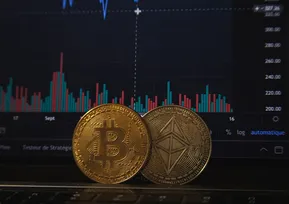
Photo by Naveed Ahmed on Unsplash


Crypto forensics and investigation training

According to the Ministry of Home Affairs (MHA) annual report, a comprehensive training initiative was undertaken during the financial year 2022–2023. The initiative, spearheaded by the Narcotics Control Bureau and the Indian Cyber Crime Coordination Centre (I4C), equipped over 2,900 officials with essential skills in cryptocurrency forensics and investigation.

Under the aegis of the Narcotics Control Bureau, India’s central law enforcement and intelligence agency, 141 officers underwent specialized training in the investigation of darknet activities, cryptocurrencies and other pertinent areas such as digital footprints.

The report stated that workshops were set up that covered techniques for gathering intelligence and evidence from open sources and social media platforms, reflecting a commitment to staying ahead in the ever-evolving landscape of cybercrime.

There’s clearly a need for this level of expertise, given an uptick in crypto-related scams in India and the broader Asia region as a whole in recent times. Earlier this week, it emerged that the Indian authorities had arrested eight individuals in relation to a $300 million cryptocurrency scam.

Raj Kapoor, the founder of the India Blockchain Alliance (IBA), recently called for greater control when it comes to crypto-related illicit financing. Kapoor stated:

”It is a kick on the backside for most governments. All regulatory bodies will take a closer look at crypto regulation. Governments will need to start implementing new rules and regulations.”

I4C played a pivotal role in training over 2,800 cyber police officials. The training encompassed crypto forensics, investigations and emerging technologies like anonymization networks. The focus extended to addressing the misuse of mobile applications in the cyberspace realm.


Ongoing blockchain tech adoption

As India proactively prepares to combat potential crypto-related crimes amidst increased adoption, the nation is also delving into mainstream blockchain applications. In a recent stride towards digital transformation, Hindustan Petroleum (HPCL), the state-run oil and gas company, partnered with blockchain software firm Zupple Labs. Together, they launched a blockchain system designed to automate the verification of purchase orders (POs).

HPCL’s spokesperson outlined the significance of this implementation to Cointelegraph, stating that the integration helps automate the verification of HPCL POs to external parties, utilizing the blockchain system alongside HPCL’s internal e-PO. This generates tamper-evident, verifiable POs, enhancing efficiency and transparency within industry processes.

In a separate development, it emerged on Thursday that India’s Central Bureau of Investigation has appointed Singapore-headquartered digital asset market intelligence outfit Liminal to manage seized digital assets.

This holistic approach, combining advancements in law enforcement training and embracing blockchain applications, underscores India’s commitment to navigating the evolving landscape of digital technologies while looking to ensure a secure and transparent future.
More to Read
View All
Markets·

Apr 24, 2023

K-Pop NFT Platform MetaBeat’s Token Listed on UniSwap v3

K-Pop NFT Platform MetaBeat’s Token Listed on UniSwap v3MetaBeat, a non-fungible token (NFT) platform based in Seoul and catering to K-pop fans, announced that its BEAT token is listed on Uniswap v3, one of the most popular decentralized cryptocurrency exchanges.©Pexels/Josh SorensonBEAT/USDC on UniswapBy introducing the BEAT/USDC liquidity pool on Uniswap v3, MetaBeat aims to increase the popularity of its BEAT tokens.MetaBeat ecosystemThe MetaBeat ecosystem enables music fans to contribute to their community with social media activities. Contributions from fans, along with their artists’ performances, are taken into account when determining the FANomance Index, which is then utilized to appropriately reward fans.Fans can support their favorite artists in three distinct ways: Drops, Mingle, and Shout Out.DropsWithin the MetaBeat platform, Drops indicate NFT sales. MetaBeat creates and sells community NFTs backed by music intellectual property (IP), allowing fans to own or stake them for value sharing. The IP value depends on music consumption, such as album sales and streams.MingleMetaBeat users can stake tokens on an open Mingle, backed by music IP, and obtain rewards based on the Mingle’s FANomance Index.Shout OutThe Shout Out program incentivizes fans who upload their artist-related posts on social media and verify their activities on MetaBeat.KuCoinMeanwhile, it is also worth noting that the BEAT token is tradable on a centralized exchange. In November last year, the global centralized exchange KuCoin began supporting the trading pair of BEAT/USDT.

news
Web3 & Enterprise·

Sep 12, 2023

Coinbase Affirms Commitment to India Despite Disabling Sign-Ups

Coinbase Affirms Commitment to India Despite Disabling Sign-UpsLeading US-based cryptocurrency exchange Coinbase announced on Monday that it has temporarily disabled new user sign-ups for its exchange platform in India.A report emerged via India’s English-language business daily The Economic Times on Monday which stated that Coinbase was stopping “all services” for Indian users.Photo by Big G Media on UnsplashClarification of a misunderstandingIt appears that Coinbase sent emails to a subset of its Indian customers, notifying them of the cessation of exchange operations in the country by September 25. However, a more recent report by TechCrunch outlined that Coinbase has provided further clarification that these emails were sent exclusively to customers who did not meet the updated standards set by the company.On that basis, these messages do not affect and are not relevant to the majority of Coinbase users in India. The email further advised affected users to transfer their funds from the platform by the specified date.A Coinbase spokesperson communicated to TechCrunch via email, stating:“We stopped allowing new user sign-ups on our exchange product in India back in June of this year. We maintain a robust tech hub in the country and offer live products, including our Coinbase Wallet. We are committed to India over the long term.”Coinbase’s proprietary exchange app in India reportedly boasts fewer than 50,000 monthly active users, as indicated by data from Sensor Tower, shared by an industry executive.Difficulty in cracking Indian marketDespite its aspirations, Coinbase has been unable to make headway with local authorities since launching its exchange in India over a year ago. The lack of progress with local officials has proven frustrating for company executives, including Durgesh Kaushik, who joined Coinbase last year as the Senior Director for Market Expansion, only to leave the company within a couple of months.Coinbase’s CEO, Brian Armstrong, made a visit to India last year to launch the exchange service by adding support for India’s popular payment instrument, the Unified Payments Interface (UPI). Unfortunately, the body overseeing UPI immediately denied Coinbase’s recognition, leading Coinbase to suspend support for the payment system shortly thereafter.UPI has proven to be a runaway success in India. Consequently, being able to access and integrate with it would be very important in providing Coinbase’s Indian customers with the means of on-ramping and off-ramping between the exchange and fiat currency. Coinbase affirmed its commitment to collaborating with the National Payments Corporation of India (NPCI) relative to UPI but these efforts simply have not borne fruit.RBI pushbackIn May of the same year, Armstrong disclosed that Coinbase had to halt its trading service in India due to “informal pressure” from the Reserve Bank of India (RBI), the nation’s central bank. Armstrong pointed out that cryptocurrency trading isn’t illegal in India — in fact, the country had recently imposed taxation on it. However, there were elements within the government, including the RBI, that appeared less enthusiastic about cryptocurrencies and were exerting “soft pressure” behind the scenes.Notably, other Indian cryptocurrency exchanges like CoinDCX and CoinSwitch remain operational, but they’ve had their own struggles in their own local market. In August CoinSwitch downsized its headcount, citing a 30% tax on crypto gains and a 1% tax deducted at source (TDS) on transactions as contributing factors. That same month, CoinDCX cut its headcount by 12%.

news
Policy & Regulation·

Jul 08, 2025

Hong Kong moves towards stablecoin licenses as Shenzhen warns of stablecoin scams

The Chinese autonomous territory of Hong Kong is moving closer towards the issuance of stablecoin licenses, while 30 kilometers away on the Chinese mainland, the authorities in Shenzhen are warning against stablecoin investment scams. Hong Kong has set Aug. 1 as the effective date for its incoming Stablecoin Ordinance. Firms such as JD.com and Ant Group, an affiliate company of Alibaba Group, are understood to be interested in seeking licensing. Photo by ダモ リ on UnsplashSingle-digit license issuanceIn a recent interview with Chinese language newspaper Ming Pao, Christopher Hui, Hong Kong’s Secretary for Financial Services and the Treasury, outlined that stablecoin licenses are likely to be issued in 2025 following the passing of the Aug. 1 effective date, although he indicated that the number of licenses issued will remain in single digits. Hui hopes that stablecoins can address some of “the difficulties and pain points in the real economy,” like cross-border payments involving volatile local currencies. The official said that stablecoins can reduce transaction costs and facilitate cross-border transactions when based on fiat currencies and serving as effective payment tools. Yuan-based stablecoinsHui stated that the issuance of a stablecoin in Hong Kong which is based on the sovereign currency of another jurisdiction would only be permitted following “discussions with the relevant authorities."  It’s understood that the aforementioned Chinese e-commerce firms have been lobbying government for the approval of offshore yuan-based stablecoins. Last month, the Governor of the People’s Bank of China, Pan Gongsheng, acknowledged that stablecoins are disrupting global payments infrastructure. However, mainland China still has a mining and trading ban in place in relation to crypto, despite previous speculation that the country would open up to crypto. Hui expressed the view that where a stablecoin implicates another sovereign currency, there are additional risk factors that would have to be taken into account. Exploiting uninformed view of stablecoinsMeanwhile, 30 kilometers from Hong Kong, the authorities in Shenzhen have issued a warning to members of the public highlighting that scammers are exploiting the public’s uninformed view of stablecoins as a guise through which to lure victims into investment scams. They asserted that scammers are using new concepts, in this case stablecoins, for hype in an effort to peddle illegal fundraising, gambling, fraud and money laundering schemes.The Shenzhen Municipal Task Force Office for Preventing and Combating Illegal Financial Activities asked the public to report such schemes “engaged in illegal fundraising in the name of investing in stablecoins,” in order to enable the authorities to crack down on the illicit activity. The authorities added: "We urge the general public to remain rational in their investment decisions, avoid blindly trusting extravagant promises, develop a correct understanding of money and investment, stay alert to financial risks and avoid falling victim to scams." Last month, JD.com took to Weibo to warn the public that fraudulent JD stablecoins were being offered by scammers at a time when the company has yet to issue a stablecoin.

news
Loading
