Top

Lotte’s NFT marketplace partners with upcycling brand NiUl for membership NFTs

Web3 & Enterprise·November 08, 2023, 9:08 AM

Lotte Data Communication, an affiliate of South Korean retail conglomerate Lotte Group, issued a press release on Wednesday (local time) to reveal that its NFT marketplace, Kottonseed, has issued new non-fungible tokens (NFTs) in partnership with upcycling brand NiUl whose name stands for “Nothing is Useless.”

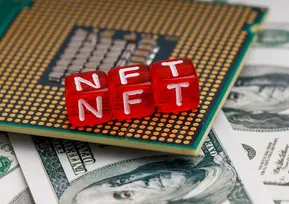
Photo by MSA-90 on Pixabay


Plastic lids to stylish keychains

NiUl recycles discarded plastic lids, transforming them into vibrant, stylish key ring pendants known as NiUl rings. NiUl has successfully sold over 2,000 pendants across a mix of online and offline platforms, with 300 kilograms of plastic lids donated by supporters. In a strategic move to broaden its reach, the company has been partnering with diverse firms and ramping up its donation initiatives, targeting environment and fashion-conscious millennials and Generation Z consumers.

In their latest venture with Kottonseed, these pendants have been digitized into membership NFTs, which come with a suite of benefits like a special edition rope strap and discounts on products. Some lucky members may even get the opportunity to be involved in creating a NiUl ring. These membership NFTs are being released in limited numbers and are up for grabs starting today on NiUl’s page on Smart Store, an e-commerce platform of popular search engine Naver.


NFTs in five colors

The NFTs are offered in five distinct colors, each named after the sky’s varying appearances: “Post-rain Clear,” “Blue Sky,” “Sunset,” “Aurora” and “Night Sky.”

A spokesperson for Lotte Data Communication expressed that the company sees great value in participating in upcycling initiatives with NiUl through their NFT marketplace, Kottonseed. They are keen on pursuing enjoyable and varied collaborations to support NiUl’s socially beneficial endeavors. Moreover, Lotte is actively exploring ways in which NFTs can contribute to environmental, social and governance (ESG) objectives.

More to Read
View All
Policy & Regulation·

Feb 09, 2024

Settlement approved but sealed by judge in BlockFi-3AC case

A settlement agreement between failed crypto lender BlockFi and bankrupt Singaporean crypto hedge fund Three Arrows Capital (3AC) has received approval from a U.S. judge. However, the specifics of the settlement remain sealed, citing concerns raised by yet another failed crypto platform, FTX. Dispute resolvedDuring a hearing on Feb. 6, New Jersey Bankruptcy Court Judge Michael Kaplan resolved the dispute, which saw BlockFi claiming $129 million owed by 3AC, while the Singapore-based firm contended that BlockFi owed it $280 million. Judge Kaplan's decision to keep the settlement agreement sealed stemmed from a perspective that unsealing it would be counterintuitive. BlockFi had filed a motion to seal the settlement terms last month. The U.S. Trustee objected to the seal, asserting that the debtors hadn't provided sufficient justification for sealing the agreement.Photo by mk. s on UnsplashSensitive settlement termsBlockFi justified the need for confidentiality, citing the sensitive commercial nature of the terms, which could potentially impact ongoing litigation involving FTX. The approval of the settlement now paves the way for BlockFi to proceed with distributions from the lending estate to its 100,000 creditors, with the firm owing up to $10 billion. Central to the dispute were preferential payments, transactions made just before bankruptcy that could have given the recipient more than they would have received through court proceedings. The resolution of counterclaims between BlockFi and 3AC follows mediation ordered by Judge Kaplan in October, likely culminating from a two-day hearing starting on Jan. 5 aimed at resolving the matter conclusively. This settlement follows another agreement between 3AC and Genesis, settling $1 billion in claims by 3AC. The company filed for bankruptcy in July 2022, attributing the extreme fluctuations in cryptocurrency markets as the reason for its collapse. Projected 46% 3AC creditor recoveryAccording to a December report to creditors by Teneo, it's estimated that 3AC creditors will receive approximately 45.74% of their claims from the bankrupt estate. As of Dec. 18, 2023, 3AC's assets were valued at $1.16 billion, while recognized claims for distribution stood at $2.7 billion. In an ongoing effort to secure 3AC's assets, a British Virgin Islands (BVI) court froze $1 billion in assets belonging to 3AC's founders, amid the liquidation process. This move is part of a broader strategy to seek recoveries from the founders and Kelly Chen, wife of one of the co-founders. 154 claims totaling $3.4 billion were filed against the 3AC estate, with $200 million not admitted for distribution and $322 million rejected or expected to be rejected. Additionally, claims worth $76 million are currently under dispute. BlockFi, along with eight affiliates, filed for Chapter 11 bankruptcy in November 2022. The firm cited significant exposure, including obligations owed to BlockFi by FTX-linked hedge fund Alameda Research, assets on the FTX platform and an undrawn credit line from FTX. 3AC’s collapse in June 2022, followed by FTX's downfall, led to BlockFi's bankruptcy filing in late November 2022. In a separate development, OPNX, a crypto bankruptcy claims platform launched by 3AC co-founders Su Zhu and Kyle Davies, announced its cessation of operations, with plans to shut down by Feb. 14.  

news
Policy & Regulation·

Aug 11, 2023

India Launches Crypto-Enabled Web Browser Initiative

India Launches Crypto-Enabled Web Browser InitiativeIn a further leap into the digital frontier, the Indian Ministry of Electronics and Information Technology (MeitY) has unveiled the Indian Web Browser Development Challenge (IWBDC), signaling a significant move towards reducing the nation’s reliance on foreign technology.Photo by Julian Yu on UnsplashIndigenous web browserCentral to this ambitious initiative is the creation of an indigenous web browser with an innovative twist — the integration of cryptographic features for digitally signing documents. This advancement is poised to heighten the security and efficiency of online transactions, elevating India’s digital landscape.The launch event for the challenge took place at the India Habitat Centre and showcased a collaborative endeavor involving MeitY, Controller of Certifying Authorities (CCA), and the Centre for Development of Advanced Computing (C-DAC).Harnessing blockchain technologyAt its core, this initiative aims to bridge the traditional internet framework with the burgeoning potential of blockchain technology. A press release published by MeitY on Wednesday clarified that the web browser will boast an embedded CCA India root certificate, bolstering the browser’s security framework and upholding the sanctity of data privacy.Sunita Verma, Research & Development Group Coordinator at MeitY, underscored the profound significance of this initiative in India’s digital narrative. She conveyed the message from Alkesh Kumar Sharma, MeitY’s Secretary, emphasizing that this challenge embodies a pivotal stride toward realizing the vision of an “Aatmanirbhar Bharat” or self-reliant India.Further echoing this sentiment, Verma stated:“Digital India has orchestrated a transformative shift in our nation’s operational fabric. As we journey forward, the convergence of technology and homegrown innovation stands as a critical waypoint. More than just a browser, this is a symbol of a self-sufficient, digitally empowered India.”Progressive use caseIn line with the drive towards digital sovereignty, Arvind Kumar, MeitY’s CCA, illuminated the paramount significance of trustworthiness and security in the realm of digital interactions. He expressed his confidence that the forthcoming browser, fortified with the India Root Certificate, will render the nation more resilient against internet vulnerabilities, ultimately curbing dependence on foreign technology players.The IWBDC extends an open invitation to innovators across diverse domains, encompassing academia, industry, startups, and individuals, to contribute their ingenuity to this groundbreaking venture. The challenge brings with it a substantial prize pool of Rs. 3.41 crore ($0.4 million), offering not only financial incentives but also a chance to shape the trajectory of India’s digital future.While establishment agencies in India have largely been opposed to the legalization of cryptocurrencies, this initiative demonstrates that others are looking to exploit the blockchain and cryptocurrency innovation.While the Indian government has been active in calling for global crypto regulation, the country itself has not as yet finalized any such legislation relative to Web3 and cryptocurrency. Initiatives like this one help to showcase the possibilities that this innovation can bring about. That should serve to steer regulation in India towards a set of rules that enable the further development of that innovation.As the curtains rise on the Indian Web Browser Development Challenge, the world’s most populous nation is taking a decisive stride towards asserting its tech self-reliance, intertwining innovation with security, and laying the foundation for a digitally progressive India.

news
Markets·

Nov 28, 2025

Upbit suffers $30M breach, overshadowing Dunamu’s major merger announcement

South Korea’s largest crypto exchange, Upbit, suffered a security breach on Nov. 27 that resulted in the theft of 44.5 billion won ($30.4 million) in digital assets, all taken from the exchange’s hot wallets. The stolen tokens were all Solana-based, and Upbit CEO Oh Kyoung-suk said in a statement that no users will incur losses, as the company will cover the full amount with its own reserves.Photo by FlyD on UnsplashHot-wallet breach hits 24 tokensThe exchange said in a statement that the compromised tokens were transferred to an unknown external wallet at around 7:42 p.m. UTC on Nov. 26. In total, 24 cryptocurrencies were affected, all within the Solana ecosystem. The stolen assets ranged from infrastructure tokens such as Solana (SOL) to staking-related assets like Jito (JTO), along with the stablecoin USD Coin (USDC) and memecoins including Bonk (BONK), Moodeng (MOODENG), and Official Trump (TRUMP). According to Oh, the breach was followed by an emergency security review of the affected networks and wallets. He added that all remaining assets were moved to cold storage to prevent further unauthorized transfers. Oh also said the exchange is working to trace the stolen assets and block on-chain movements wherever possible, noting that Solayer (LAYER) tokens worth 2.3 billion won ($1.6 million) have already been frozen. Upbit is also reaching out to relevant projects and institutions for assistance. This marks Upbit’s second theft case. The first took place on Nov. 27, 2019, exactly six years ago to the day, according to News1. Authorities focus on Lazarus’ involvementFinancial authorities are investigating the incident, and North Korea’s Lazarus Group is being treated as the leading suspect, the Maeil Business Newspaper reported. Lazarus is also believed to have been behind the 58 billion won ($40 million) worth of Ethereum (ETH) stolen from Upbit in 2019. A government official told the paper that the latest breach did not appear to stem from a server intrusion but may have involved a stolen administrator account, allowing the attackers to impersonate internal staff and move assets—similar to the method used in the 2019 case. Security analysts echoed that assessment. One investigator said the stolen funds moved through exchange wallets before being mixed, a pattern often linked to Lazarus. He added that mixers, which are prohibited in Financial Action Task Force (FATF)-member jurisdictions, make tracing difficult and that attackers typically route assets through countries outside that framework, further pointing to North Korea. Following the incident, Upbit suspended deposits and withdrawals for all assets and said services will resume once security is fully verified. The halt has also affected trading dynamics on the exchange, with CryptoQuant CEO Ki Young Ju noting that retail investors are fueling altcoin spikes as arbitrage bots remain offline. Dunamu, Naver set $6.8B growth planThe security crisis struck at a particularly sensitive moment for Upbit’s operator, Dunamu, overshadowing what was intended to be a celebratory corporate milestone. On that same day, Dunamu, Naver, and Naver Financial held a joint press conference to outline their global expansion strategy. Dunamu brings its blockchain and crypto infrastructure, Naver contributes its position as Korea’s dominant search engine, and Naver Financial adds its payment platform serving 34 million users. The event came after reports that Naver Financial and Dunamu had approved a merger plan through a comprehensive share swap, with the ratio set at 1 to 2.54. The three companies said they will combine their respective strengths to invest 10 trillion won ($6.8 billion) over the next five years in building an ecosystem centered on Web3 and artificial intelligence (AI).During the press conference, Naver CEO Choi Soo-yeon said no decisions have been made on a Nasdaq listing for the newly combined Naver Financial–Dunamu entity or on whether it might eventually merge with Naver, according to TechM. She said dual listings remain a matter requiring national consensus. Choi also noted that while Naver Financial is a Naver subsidiary, Dunamu is the larger partner, and a later merger between the combined entity and Naver is unlikely.

news
Loading