Top

Hong Kong Crypto Exchange Contemplates Sale at HK$1 Billion Valuation

Web3 & Enterprise·October 17, 2023, 1:46 AM

Hong Kong’s BC Technology Group is reportedly considering the sale of its crypto platform, OSL, with a suggested valuation of approximately HK$1 billion ($128 million).

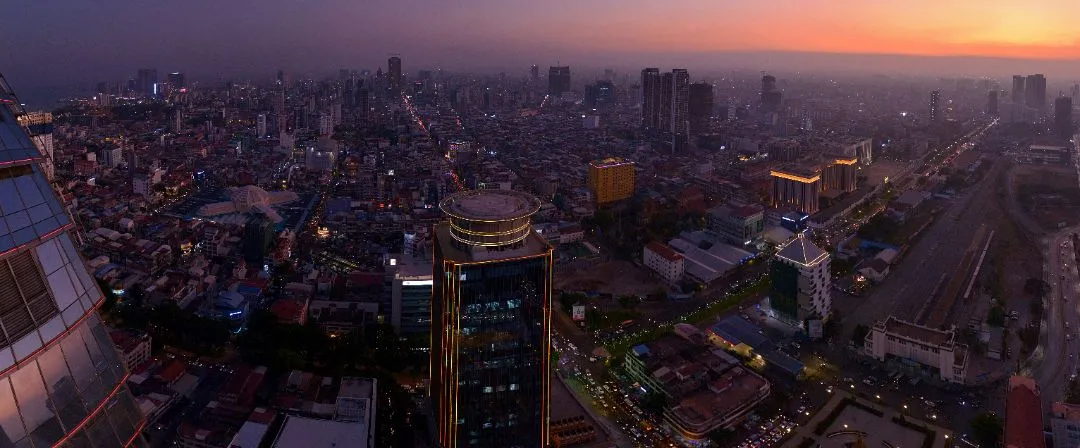
Photo by Samuel Chan on Unsplash


Discussions with potential buyers

That’s according to a report published by Bloomberg on Monday. OSL holds the distinction of being one of only two exchanges alongside competitor HashKey licensed under the digital asset regulations introduced by the city of Hong Kong in June. Bloomberg cited anonymous sources familiar with the matter having revealed that BC Technology has initiated discussions with potential buyers, including industry players and funds.

OSL’s platform encompasses prime brokerage, exchange services, and secure custody solutions for the cryptocurrency markets. Furthermore, OSL plays a pivotal role in facilitating financial institutions’ access to virtual asset trading. Rather than a complete sale of the company, BC Technology is considering the possibility of divesting specific parts of the business, according to these sources.

It’s important to note that these deliberations are ongoing, and there is no guarantee that they will culminate in a final deal, as highlighted by the insiders. In response to an inquiry from Bloomberg News, a representative from BC Technology stated:

“We are a highly transparent and regulated company. We do not comment on market rumors and speculations.”


Valuable trading license

OSL's regulatory licensing is likely to add considerably to its value. Earlier this year it emerged that digital asset sector firms were shelling out a range between HK$20 million and HK$200 million in their efforts to secure crypto trading licenses in Hong Kong.

In May the company obtained Type 1, 4, and 9 licensing from Hong Kong’s Securities and Futures Commission (SFC) through its OSL Asset Management (OSLAM) business. Following the acquisition of licensing, the firm moved to launch its first fund, concentrating on blockchain, artificial intelligence (AI), and Web3 technologies.


Hong Kong’s crypto hub challenges

Hong Kong enabled retail-level crypto trading on June 1, with the aim of further establishing the city as a hub for the cryptocurrency sector. The regulatory change enabled retail investors to trade larger tokens such as Bitcoin and Ethereum on licensed exchanges. Despite these efforts, demand for cryptocurrencies remains lackluster due to the lingering effects of last year’s wave of crypto sector bankruptcies.

To compound matters, Hong Kong is also grappling with the repercussions of the JPEX exchange scandal, an unlicensed Dubai-headquartered entity that further tarnished the reputation of the digital asset industry in the region.

BC Technology’s market value has shown substantial growth, surging to almost HK$1.9 billion from its low point earlier in the year. However, the company’s shares remain down by 80% from their peak in June 2021, which coincided with the cryptocurrency market’s frenzy during the pandemic.

In response to market developments, OSL has withdrawn its application for a digital asset license in Singapore and it is preparing a revised submission. It’s worth noting that certain clients from Singapore are being transitioned to the exchange in Hong Kong.

More to Read
View All
Policy & Regulation·

May 24, 2024

Hong Kong privacy watchdog halts Worldcoin operations

Hong Kong's Office of the Privacy Commissioner for Personal Data (PCPD) has issued a directive for the Worldcoin Foundation to cease its operations within the region, citing violations of local privacy laws. The decision comes after the PCPD found that Worldcoin had improperly collected facial and iris data from approximately 8,302 individuals. The agency’s investigation included ten covert visits to six different Worldcoin locations between December 2023 and January 2024. According to the PCPD, the extent of data collection by Worldcoin was deemed "unnecessary and excessive" failing to adhere to the Data Protection Principles.Photo by Claudio Schwarz on UnsplashConcerns over data retentionThe privacy watchdog criticized Worldcoin for its intention to retain personal data for up to 10 years. This retention period was intended for training AI models for user verification processes but was judged by the PCPD to be excessively long, amounting to prolonged retention of personal data. Following the findings, the PCPD has issued an enforcement notice to Worldcoin, mandating the cessation of all its activities in Hong Kong. Privacy Commissioner Ada Chung has called on the public to report any ongoing operations by Worldcoin in the city. In response to growing international scrutiny, Worldcoin announced in March that it would halt the collection of personal data and is planning to introduce a new feature titled "Personal Custody," which would purportedly allow users to store their data on their devices. This change comes as Worldcoin faces additional challenges in other jurisdictions, including Spain and Portugal, which have also expressed concerns over the project's data collection practices. The project was also scrutinized in South Korea but it recently resumed services. As of now, Worldcoin has not provided comments regarding the recent regulatory actions. 

news
Web3 & Enterprise·

Nov 10, 2023

Shinhan Bank to issue NFTs at 2023 Blockchain Grand Week in Seoul

Shinhan Bank to issue NFTs at 2023 Blockchain Grand Week in SeoulShinhan Bank, one of South Korea’s leading financial institutions, is set to issue non-fungible tokens (NFTs) and operate a promotional booth in celebration of its participation in the upcoming 2023 Blockchain Grand Week, scheduled for next Wednesday, according to a report by local news outlet Newspim.The Blockchain Grand Week, an annual event since 2018, is hosted by the Ministry of Science and ICT and organized by the Korea Internet and Security Agency (KISA), the National IT Industry Promotion Agency (NIPA) and the Institute of Information and Communications Technology Planning and Evaluation (IITP). Its objectives are to increase public awareness of blockchain technology and to facilitate the broader adoption of its ecosystem.Photo by Pete Linforth on PixabayNFTs to first 2,000 visitorsThe event is set to take place at the Convention and Exhibition Center, better known as COEX, in Seoul over two days. It will feature a conference centered around the theme “Adding Trust to Digital Platforms” and will include several academic seminars. Various blockchain companies will also be showcasing their products and services at their respective booths. For this event, Shinhan Bank is collaborating with Hexlant and Vircle to introduce their NFT project. They also plan to offer NFTs to the first 2,000 visitors to their booth.The NFTs will be distributed through Shinhan Bank’s NFT wallet, SOL Wallet, and will come with practical perks such as tickets for events at the booth and coffee coupons. Furthermore, these NFTs will be transferable to others.A representative from Shinhan Bank expressed hope that visitors will have the opportunity to experience the bank’s NFTs and gather diverse information related to blockchain technology. The official also emphasized the bank’s commitment to continually developing and introducing blockchain services that can be integrated into customers’ daily lives.Shinhan Bank’s endeavors in blockchainShinhan Bank’s efforts in the blockchain sector have been marked by various accomplishments in recent years. In 2021, the bank received the Ecosystem Transformation Award at the Enterprise Blockchain Awards, now known as the Web3 and Blockchain Transformation Awards (W3B Awards). This January, Shinhan integrated the SOL Wallet service into its financial services application. The bank remains dedicated to spearheading client-centric blockchain initiatives, one such effort being the development of NFT technology in collaboration with Hexlant and Vircle for corporate marketing purposes.Prohibition on discussing virtual assetsMeanwhile, there has been some dissatisfaction among industry insiders regarding the event’s restrictions. Those operating booths are prohibited from mentioning virtual assets in their projects. The application form for booth holders explicitly stated that exhibitions related to virtual assets are not allowed. This cautious approach is believed to be a response to recent cryptocurrency scandals, such as the $40 billion Terra-LUNA crash and the controversy surrounding a Korean lawmaker’s crypto holdings.

news
Policy & Regulation·

Apr 09, 2025

DLD partners with regulator in Dubai to integrate tokenized property

The Dubai Land Department (DLD), a government agency responsible for the registration of real estate in Dubai and the promotion of real estate investments, has signed an agreement with the Virtual Assets Regulatory Authority (VARA), a local regulator, to better integrate tokenized real estate within existing systems. In a statement published on the DLD website on April 6, the government agency set out further details on the collaboration. The purpose of the agreement is to better accommodate fractional ownership of Dubai real estate through tokenization. Photo by Precondo CA on UnsplashLinking fractional ownership to DLD registryTo that end, a governance system will be put in place in order to link the DLD’s land and property registry with tokenized, fractional ownership of property. The parties believe that this approach will lead to greater operational efficiency for stakeholders such as property management firms. Furthermore, greater accommodation of tokenized ownership will lead to enhanced liquidity within the Dubai real estate market.  As a consequence of this improved liquidity and facilitating a more seamless approach in terms of operational efficiency for property management firms, it’s believed that a greater share of global investment in local real estate can be achieved. Broadening the investor baseFractional ownership via tokenized real estate opens the market up to a broader range of potential investors. On this basis, the collaboration can play a role in contributing towards the objectives of Dubai’s Real Estate Strategy 2033, which sets out to boost the local property sector’s contribution towards gross domestic product (GDP). That initiative targets a real estate market value of AED 1 trillion ($272 billion). The DLD said that the initiative also feeds into the broader objectives of the Dubai Economic Agenda (D33), a ten-year plan that has been set out to double Dubai’s economy by 2033, through focusing on innovation, achieving competitiveness at a global level and sustainable growth. Helal Almari, the director general of Dubai’s Department of Economy and Tourism, commented on the partnership, stating that it reflects the future-focused innovation, which he claims Dubai has already become associated with. He added: “Real Estate and Virtual Assets are key pillars of the D33 Economic Agenda D33 and by joining forces DLD and VARA will be creating the blueprint for RE 2.0 in a Decentralised Future Economy.” Almari expressed the belief that putting legal safeguards in place to recognize fractional ownership rights where real estate is concerned will facilitate “more inclusive economic participation” in this market sector.  The DLD recently launched a real estate tokenization pilot project in collaboration with VARA and the Dubai Future Foundation (DFF). At that time, DLD Director General Marwan Ahmed Bin Ghalita recognized the potential that tokenization can bring to the real estate sector. He stated: “By converting real estate assets into digital tokens recorded on blockchain technology, tokenization simplifies and enhances buying, selling, and investment processes.”Last month, Scott Thiel, founder and CEO of Dubai-based real-world asset (RWA) token marketplace Tokinvest, outlined that RWA asset tokenization in the United Arab Emirates (UAE) is gaining momentum. Commenting on this latest development, Thiel said that it’s a demonstration that “the future of real estate investment is onchain.”

news
Loading