Top

Singapore’s Regulator Imposes 9-Year Ban on 3AC Founders

Policy & Regulation·September 15, 2023, 12:50 AM

Singapore’s central bank and financial regulator, the Monetary Authority of Singapore (MAS), has handed down a nine-year prohibition order to Kyle Davies and Su Zhu, co-founders of the failed crypto hedge fund Three Arrows Capital (3AC).
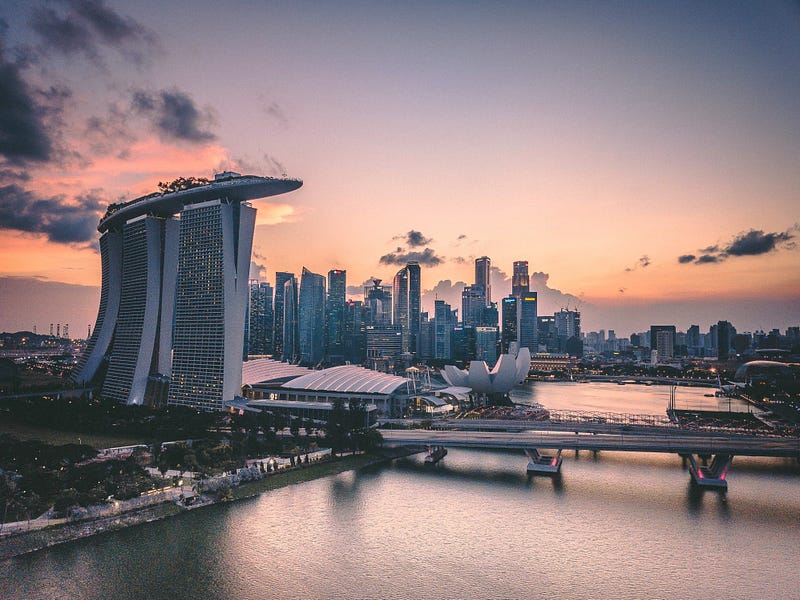
Photo by Swapnil Bapat on Unsplash


Severe restrictions

The penalty relates to alleged violations of the city-state’s securities laws. The prohibition order came into effect on Wednesday, carrying severe restrictions for Davies and Zhu.

During this nine-year period, Davies and Zhu are prohibited from engaging in any regulated activities in Singapore. They are also barred from managing, serving as directors, or holding substantial shares in any capital market services business within the territory of Singapore.

Loo Siew Yee, the Assistant Managing Director of Policy, Payments, and Financial Crime at MAS, emphasized the seriousness of the violations in a statement released by the central bank on Thursday. Yee stated:

“MAS takes a serious view of Mr. Zhu’s and Mr. Davies’ flagrant disregard of MAS’ regulatory requirements and dereliction of their directors’ duties.” She further asserted that MAS would take action against senior managers who engage in such misconduct.


Securities law violations

MAS’s decision to impose these sanctions on the 3AC co-founders was based on its findings of further securities law violations during investigations into 3AC and its founders. The regulatory authority accused Davies and Zhu of failing to inform MAS when 3AC hired a new business representative, providing false information to the regulator, and neglecting to establish an appropriate risk management framework.

3AC’s troubles stemmed from the crypto market crash that occurred last year, triggered by the Terra ecosystem’s collapse. The hedge fund’s leveraged crypto positions exposed it to billions in loan defaults, resulting in significant financial losses. Its lack of risk management had a cascading effect in crypto. Lenders like Celsius and BlockFi had exposure to 3AC, leading to further collapses later in 2022 as a consequence.

3AC’s creditors claim that the firm owes as much as $3.5 billion, and liquidators are now seeking to recover approximately $1.3 billion from Zhu and Davies, who allegedly incurred the debt when the firm was already insolvent.


Regulatory reprimands

This action by MAS follows last June’s reprimand of 3AC, which occurred just before the hedge fund filed for bankruptcy amid widely reported insolvency issues. At that time, MAS had criticized 3AC for providing false information, failing to report directorship changes involving Zhu and Davies, and exceeding the legal assets under management threshold.

It’s just the latest reprimand the duo have received from a regulator this year, though. Zhu and Davies have been busy in trying to get another start-up off the ground. Earlier this year, they launched OPNX, a crypto bankruptcy claims trading platform. The venture is based out of Dubai, and the firm reported in April that it had gotten significant VC backing.

Many of those that the company claimed were backing the venture disassociated themselves from those claims. The following month, the Dubai regulator, the Virtual Assets Regulatory Authority (VARA), reprimanded the OPNX founders, having issued an investor alert relative to the firm a few weeks prior to that. VARA's complaint was that the business had been operating without having acquired the appropriate licensing.

More to Read
View All
Policy & Regulation·

Apr 14, 2023

Growing Concerns about Single Crypto Exchange Listings in Korea

Growing Concerns about Single Crypto Exchange Listings in KoreaAccording to Yonhap Infomax, there is increasing concern about single crypto exchange listings in the Korean market, following the recent arrest of two former Coinone employees.©Pexels/RODNAE ProductionsCrypto listing briberyThe individuals were detained by the Seoul prosecution for allegedly accepting about 3 billion KRW (equivalent to over $2.2 million) in bribes to list a certain cryptocurrency on the exchange.Prosecutors are investigating if these suspects were also involved in the listing of the Puriever token, which is reportedly connected to the kidnapping and murder of a woman in her forties in Gangnam, Seoul.Single exchange-listed cryptosA recent report by the Financial Services Commission (FSC) revealed that 389 cryptocurrencies were listed on a single Korean exchange in the second half of last year, a decrease from the previous year’s 403. Despite the decrease, the trend of single exchange listings continued. Exchanges often exclusively list specific cryptocurrencies to gain a competitive edge, as investors typically prefer larger exchanges with greater liquidity.However, these cryptocurrencies may lack proper review and management and are often highly volatile. The FSC report showed that 34% of cryptocurrencies listed on a single exchange had a market cap of less than 100 million KRW (~$76,000). The Financial Intelligence Unit also warned investors about price fluctuations and liquidity shortages.High volatile cryptocurrencies are attractive to exchanges, as they can lead to increased transaction fee profits.Transparent listingTo address this issue, experts advocate for a transparent listing process.One lawyer in the crypto industry noted that there is a global trend of regulating cryptocurrencies as securities, and if relevant bills pass in Korea, their issuance and disclosure will be regulated. Clear guidelines on disclosures could resolve the issues of single crypto exchange listings, the legal advisor added.Another industry insider has called for investor caution, stressing the need to consider the potential delisting of these crypto assets.

news
Web3 & Enterprise·

Sep 13, 2023

Korean Securities Firms Unite to Build Shared Security Token Infrastructure

Korean Securities Firms Unite to Build Shared Security Token InfrastructureShinhan Securities, KB Securities, and NH Investment and Securities are gearing up to sign a memorandum of understanding (MOU) later this month to establish a security token consortium, according to South Korean news outlet MoneyToday.Photo by Louie Nicolo Nimor on UnsplashShared infrastructureThe primary objective of this consortium is to create a shared infrastructure for their security token operations. This initiative marks the first instance where the nation’s major securities firms are getting together to set up a security token consortium. Until now, securities companies have typically sought collaborations with banks, fractional investment firms, or blockchain technology companies, showing reluctance to cooperate with their direct competitors over concerns of potential loss of competitiveness.An expert within the securities industry underscored the paramount importance of securing control over the infrastructure, particularly given that the security token market has not materialized. The expert further stated that once a collaborative network is built among the leading securities firms, it is likely to set the standards for the entire market. Meanwhile, the precise details of the plan have not yet been finalized.Challenges in prior initiativesSince the South Korean Financial Services Commission revealed the security token guidelines in February, the securities sector has been deliberating the creation of a shared network that would be accessible to all industry participants. This kind of system is considered ideal as it facilitates flexible expansion and cost efficiency. However, the discussion came to a halt due to conflicts between the Korea Securities Depository, the Korea Financial Investment Association, and fintech firm Koscom.Meanwhile, installing an independent network is not very feasible, given that it not only incurs significant costs upfront but also has limited potential for expansion. This is why these industry leaders devised an alternative strategy in which they can collectively share the financial burden. In addition, Shinhan, KB, and NH plan to explore joint business models with the aim of maximizing the utility of their security token infrastructure.

news
Markets·

Jan 20, 2024

Hong Kong financial services platform plans spot Bitcoin ETF launch for Q1

Venture Smart Financial Holdings Ltd. (VSFG), a Hong Kong-based financial services company, is gearing up to initiate an exchange-traded fund (ETF) directly investing in bitcoin in the first quarter of this year.Photo by Kanchanara on UnsplashThat’s according to a report by Bloomberg on Friday. The move aligns with Hong Kong's strategic efforts to establish itself as a digital asset hub, and with that, the company plans to submit an application to the Securities and Futures Commission (SFC) for ETF approval. Brian Chan, the group head of investment and product at VSFG, expressed optimism about the potential of this market, setting a goal of achieving $500 million in assets under management by the end of the year. Long-term objectiveWhile the firm has taken the decision to focus on spot crypto ETFs amid a backdrop of spot bitcoin ETF approval in the United States earlier this month, it’s an objective the firm has been working on for some time. In June of last year, crypto media reported that VSFG were planning the launch of such a product. Notwithstanding that intention, the recent launch of several high-profile bitcoin funds in the United States, including offerings from BlackRock and Fidelity Investments, will likely assist the company in getting product approval in Hong Kong. Immediately following U.S. approval, a Hong Kong lawmaker suggested that the Chinese autonomous territory should respond proactively. Johnny Ng outlined that Hong Kong had to respond to secure its global position in developing the digital assets space in Hong Kong. Positive soundingsTowards the end of December, there appeared to be positive soundings on the possibility of spot bitcoin ETF approval in Hong Kong emerging from the local regulator. SFC CEO Julia Leung stated that the regulator was open to the notion of retail participation in spot crypto ETF products. Her comment was followed shortly afterwards by a joint announcement from the SFC alongside the Hong Kong Monetary Authority (HKMA) that they were prepared to accept applications for such funds. The approval process for such products typically takes weeks to months, following the precedent of traditional ETFs. Hong Kong presently permits futures-based crypto ETFs, with three already listed: CSOP Bitcoin Futures, CSOP Ether Futures and Samsung Bitcoin Futures. However, these funds have a combined asset value of around $50 million. Samsung Asset Management has not ruled out exploring the launch of a spot ETF, while CSOP Asset Management remains silent on the matter. VSFG is one of Hong Kong's first SFC-approved virtual asset managers, offering both traditional and digital wealth management services. Aegis Custody, a digital asset custodian, is in discussions with four asset managers about listing spot crypto products in Hong Kong. The regulatory requirements in the city may lead issuers to impose higher fees compared to the low management levies seen in many new U.S. spot bitcoin ETFs. Although bitcoin experienced substantial growth in anticipation of these U.S. products, it has seen a 10% decline since their trading commenced on Jan. 11. Nevertheless, many industry commentators expect a stronger bitcoin unit price in the medium to long term as a direct consequence of these products. 

news
Loading
