Top

Binance Takes P2P Service Measures in Response to Sanctioned Russian Banks

Policy & Regulation·August 26, 2023, 1:37 AM

Global crypto exchange Binance has removed the option for users to conduct transactions via sanctioned Russian banks on its peer-to-peer (P2P) platform, a decision that comes on the heels of a Wall Street Journal exposé published earlier this week, shedding light on the platform’s involvement in facilitating the movement of funds for Russian users.

Previously, Binance’s peer-to-peer service featured five Russian banks under sanctions as a method for ruble transfers between users. However, the company swiftly acted to address potential compliance concerns. Fittingly, this latest news was also broken by the Wall Street Journal on Friday.
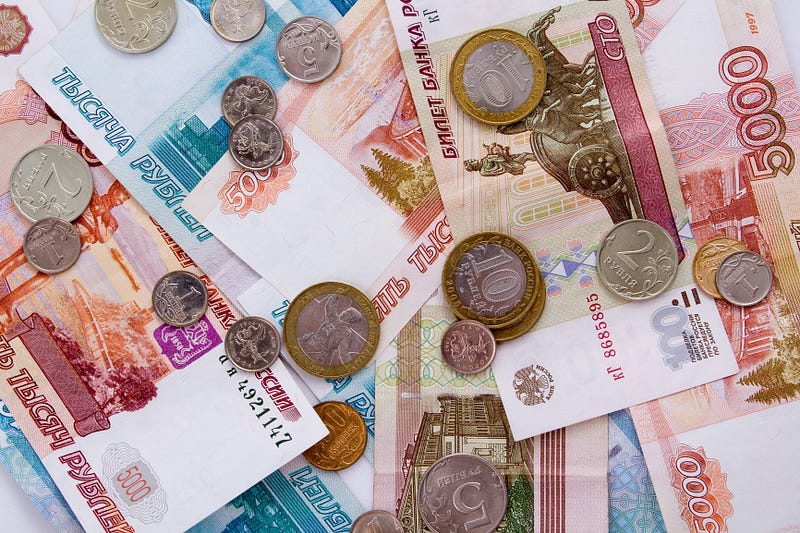
Dmitry Sidorov on Pexels


Sailing too close to the wind

When approached regarding the omission of these banks, a Binance spokesperson stated: “We regularly update our systems to ensure compliance with local and global regulatory standards. When gaps are pointed out to us, we seek to address and remediate them as soon as possible.”

The Wall Street Journal’s article outlined how Binance’s peer-to-peer platform facilitated ruble-to-crypto trades that frequently involved the sanctioned Russian banks, with Rosbank and Tinkoff Bank being prominent examples.

These trades often utilized layers of intermediaries to convert funds from these banks into Binance balances, as detailed by various company resources, user screenshots, and messages in official chat groups. Despite these revelations, Binance’s exchange had continued to handle significant volumes of ruble trading, according to data compiled by digital asset research firm CCData.


US DoJ probe

Binance’s activities in Russia could potentially contribute to its ongoing legal challenges in the United States. The US Justice Department (DoJ) has been probing the company’s actions for potential violations of American sanctions on Russia. In response to such concerns, the Binance spokesperson emphasized:

“Binance aims to diligently comply with the global sanctions rules and enforces sanctions on people, organizations, entities, and countries that have been blacklisted by the international community, denying such actors access to the Binance platform.”


Workarounds

Traders, however, had reportedly found workarounds to the bank removals, as observed in the official Telegram chat group for Russian clients. Many shared that they could still engage with sanctioned banks by selecting alternative payment methods and then manually inputting their Rosbank or Tinkoff bank details.

Earlier this year, an investigative report by CNBC alleged that employees of the company had told it that Binance staff regularly helped Chinese customers to bypass Know Your Customer (KYC) controls in order to access the platform. More recently, another report, once again by the Wall Street Journal, found that business in China was booming, which surprised many given that China banned crypto trading within the country in 2021.

It’s apparent that the company is reacting to regulatory and legal pressures in taking the decision to make these changes to its P2P service. Perennial crypto critic US Senator Elizabeth Warren took to X (formerly Twitter) on Friday, stating:

“I rang the alarm about sanctions evasion by Russia using the crypto platform Binance — and urged [the DoJ] to investigate potentially false statements it made to Congress. We need stronger crypto regulations to rein in illicit finance.“


More to Read
View All
Web3 & Enterprise·

Oct 31, 2023

Korean Crypto Exchange Giants Lead Market Expansion With Increased Listings

Korean Crypto Exchange Giants Lead Market Expansion With Increased ListingsSouth Korea’s top three cryptocurrency exchanges Upbit, Bithumb and Coinone have all increased the number of cryptocurrencies they listed for trading this year compared to last year, making them responsible for leading the market’s activity and expansion.Photo by Maxim Hopman on UnsplashDynamic shifts in listing and delisting trendsA recent analysis by local news outlet News1 on the number of cryptocurrencies listed and delisted this year on the country’s major fiat-to-crypto exchanges Upbit, Bithumb, Coinone, Korbit and Gopax — listed in order of market share size — revealed that Upbit and Coinone have increased their number of listings and delistings compared to last year.The remaining three exchanges, on the other hand, showed differing results. Bithumb increased its number of listings by 47 compared to the number listed last year, while delistings decreased by three, and Gopax listed eight fewer tokens and delisted one more token. Meanwhile, Korbit’s listings decreased by 37 tokens, while delistings decreased by only one.Among the five exchanges, Bithumb listed the highest number of new cryptocurrencies this year, with 80 new currencies in total added as of Monday (local time). This represents a more than double increase compared to the 33 currencies added last year. It is also 18 more than Coinone’s 62 new currencies and 50 more than Upbit’s 30.Differing approaches based on situational factorsGopax and Korbit have taken a more conservative approach compared to Upbit, Bithumb, and Coinone, which have been more aggressive in their listing strategies. In particular, as of Oct. 4, Bithumb has also been offering free transaction fees in an effort to regain its market share. This aggressive approach can be interpreted as an effort to weather the recent crypto winter, although it hasn’t been very successful.Conversely, the exchange that delisted the most cryptocurrencies this year was Coinone, with 38 taken down as of Monday, marking a significant increase compared to last year when it delisted 26. This can be accredited to the platform’s efforts to improve its reputation and operating system following an incident earlier this year where two former employees were booked for taking bribes in exchange for listing certain cryptocurrencies. Coinone CEO Cha Myung-hun subsequently issued an apology and pledged to take proper measures to prevent such an event from recurring. Since then, the exchange has been actively looking into carrying out delistings tied to issues like the amount of currency in circulation or market price manipulation.Bithumb and Upbit came in second and third for most delistings this year, with 22 and 18, respectively.However, Korbit showed the least fluctuation in the number of listings and delistings this year — nine and three, respectively — among the five exchanges. This is a sharp contrast owing to its conservative listing policy. Speculation suggests that the platform might adopt a more aggressive stance if market conditions improve in the second half of the year.On the other hand, Gopax listed 10 tokens and delisted eight tokens. The exchange has notoriously been dealing with operational difficulties due to regulatory roadblocks despite optimistic outlooks after its acquisition by Binance, one of the world’s most prominent exchanges. Along with the recent appointment of Cho Young-joong as the new CEO of CityLabs, the company that acquired an 8.55% stake in Gopax, the exchange has been working on resolving regulatory issues and improving the state of operations.

news
Web3 & Enterprise·

Feb 23, 2024

Startale snags additional seed funding from Samsung and UOB

Startale Labs, the driving force behind initiatives such as the Astar Network smart contract hub and Startale Web3 Cloud, has secured a financial injection of $3.5 million. This backing, announced by Startale through a recent blog post, comes through a collaboration between UOB Venture Management, a subsidiary of the Singaporean financial giant UOB, and Samsung Next, the corporate venture capital arm of Samsung. UOB Venture Management is renowned for its equity financing in Southeast Asia and Greater China, bringing deep regional market insights to the table. Meanwhile, Samsung Next Ventures, an integral part of Samsung's innovation ecosystem, is dedicated to exploring cutting-edge technologies, including AI, fintech and blockchain, with a vision to shape the future of technology.Photo by Louie Martinez on UnsplashFunding talent acquisitionThe freshly acquired funds are earmarked for pivotal purposes, primarily focusing on bolstering talent acquisition and driving forward the development of Startale Labs' diverse product portfolio. Taking to the X social media platform, Astar Foundation Chief Operating Officer (COO) Shun Ishikawa confirmed that in light of the recent funding, Startale is hiring and it welcomes applicants to get in touch, particularly engineers. Moreover, alongside the $3.5 million capital injection, Startale also drew attention to a strategic alliance with Sony Network Communications to embark on a blockchain venture. With these combined resources, Startale aims to accelerate its development trajectory. Paul Ng, Executive Director of UOB Venture Management, emphasized the importance of real-world use cases in onboarding new users to Web3 technologies. Ng stated: "We are excited to support Startale, who have demonstrated expertise and experience in building successful Web3 products, in their mission to bring billions of users into the Web3 ecosystem.” Having made significant strides since its establishment in January 2023, Startale Labs has garnered support from these leading Asian enterprises within a remarkably short span. Sota Watanabe, CEO of Startale Labs, outlined the company's vision for the future, stating: "With the funds raised, we aim to invest in product development and recruitment to create a truly representative Web3 company of Asia and beyond." Through his X account, Watanabe expressed the intention that “we’re going to prove that Japanese startups can be successful in the world.”Sony joint ventureAn initial investment of $3.5 million by Sony in June of last year was followed in September by a collaboration between Sony Network Communications and Startale Labs, giving rise to the joint venture "Sony Network Communications Labs Pte. Ltd." This venture is dedicated to developing a blockchain infrastructure aimed at underpinning global Web3 initiatives. The objective is to harness blockchain advancements to create compelling use cases that foster wider adoption of Web3 technology. Sony Network Communications Labs is structured such that Sony Network Communications holds a 90% stake in the venture, with Startale Labs contributing the remaining 10%. Startale Labs' recent funding infusion, coupled with strategic partnerships with industry giants, appears to be putting the blockchain startup firmly on the road towards driving innovation and playing its part in shaping the future of Web3 technology. 

news
Policy & Regulation·

Jan 02, 2025

Regulator pulls plug on Bybit in Malaysia

In Malaysia local regulator the Securities Commission has ordered global crypto exchange platform Bybit to shut down its operations within Malaysia as part of enforcement actions being taken by the regulator against the company.Photo by Esmonde Yong on UnsplashOperating without registration The Securities Commission published a statement to its website late last week outlining that both Bybit and its CEO Ben Zhou had been reprimanded for carrying out digital asset trading activities in Malaysia without having completed the necessary registration. The regulator also pointed out that both Zhou and his company have been listed on its Investor Alert List since July 2021. The Securities Commission took the opportunity to remind investors that they should only deal with what it termed “Recognized Market Operators” (RMOs), a designation it applies to entities that have completed registration with the regulator. Investors who utilize unregistered platforms are not extended any form of protection under Malaysian securities law, the Securities Commission warned, adding that such platforms could put them at risk of fraud and implicate them in money laundering activity potentially. Enforcement actions Bybit has been directed by the regulator to disable its website and mobile applications that are currently targeting Malaysian investors within 14 business days from Dec. 11.  The regulator also wants the company to curb other forms of promotion aimed at Malaysian investors. With that, it has requested that the company take down its Telegram-based support channel for Malaysian customers. Advertising activity, including social media posts, must also cease in cases where such activity is aimed at Malaysian investors. The Securities Commission acknowledged that thus far, Bybit has been compliant with its latest enforcement requests. Intentions to secure licensing Bybit has responded to these developments on its Bybit Malaysia Telegram channel, stating that the company understands that these actions “may cause some inconvenience” to Malaysian customers. “Once we have secured the appropriate licenses, we look forward to reconnecting with you again in the future,” it added. The enforcement action is likely to be a setback for Bybit given that the firm appeared to be focusing on the Malaysian market of late. In June it emerged that the company was moving to relocate Chinese employees to both Malaysia and Dubai.  This is not the first occasion in which Malaysia’s Securities Commission has taken action against a crypto platform. In 2023 the commission ordered the closure of the Malaysian operations of global exchange Huobi (subsequently rebranded as HTX). The circumstances in that instance were similar in that it acted against the exchange and its CEO for operating illegally within the Malaysian market. Within the Malaysian market, only six trading platforms have been registered. These include Hata Digital, Luno, MX Global, Sinegy, Tokenize Technology and Torum International. Earlier the Securities Commission acted similarly in prohibiting Atomic Wallet from operating within Malaysia given its failure to register its digital asset exchange activities. 

news
Loading