Top

China Unveils Offline SIM Card Wallet for Digital Yuan Payments

Policy & Regulation·July 12, 2023, 11:46 PM

The People’s Bank of China (PBoC) has announced a new offline SIM card-based solution for its digital yuan, enabling users to make payments even with their phones switched off.

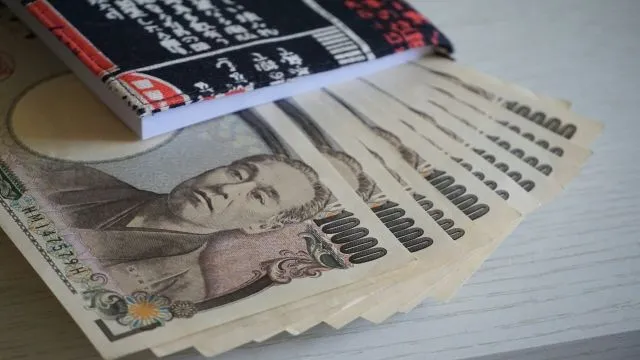
Photo by Sumeet Singh on Unsplash


Embedded hardware

The innovative initiative was revealed via a social media post on Monday. It aims to reach users with 2G phones who were previously unable to access digital currency.

Currently, this feature is only available for Android phone users with NFC functionality, as no details have been given for iOS users or 2G phone owners. This innovation is part of the central bank’s efforts to expand the reach and usage of its digital currency, especially for users with 2G phones who were previously unable to access it.

Earlier this year, the PBoC launched a similar solution for smartphone users, using near-field communication (NFC) technology. However, the latest solution relies on hardware embedded in SIM cards, which can act as a “hard” (offline) central bank digital currency (CBDC) wallet.


Partnership with telecoms giants

The central bank’s partners relative to this particular project include major telecom operators China Mobile, China Telecom, and China Unicom, as well as state-owned commercial banks Industrial and Commercial Bank of China and Bank of China, who have also introduced SIM card-based “hard wallet products.” These developments are expected to significantly improve the payment capabilities and network-free functionality of the digital yuan.

To use this feature, citizens have to get a “super SIM card” from their carriers. After they have replaced their existing SIM cards and opened the digital yuan app on their phones, they will see an option to “open a SIM card hard wallet.” This will enable them to make touch-based payments to merchants even when their devices are powered off or lack network connectivity.

SIM-based wallets are likely to be particularly useful for those using 2G devices or smartphones without NFC capabilities. Considering that about 20% of Chinese mobile users still use 2G phones, it would make sense for the PBoC to continue working in this direction with future updates.


Driving adoption

The ultimate plan of the PBoC regarding SIM-based wallets is not clear yet. However, recent developments, such as the pilot project in Qingdao where CBDC payments were tested on the metro system without electricity or network, indicate a strong push toward increasing the accessibility and adoption of the digital yuan.

Frankly, moves to bring about adoption of the e-CNY have been nothing short of relentless. These measures have varied from paying state employees in e-CNY in Changshu, collaborating with French bank BNP Paribas so that its corporate clients start to use the digital yuan and enabling e-CNY bus fare payments on public transport in Jinan.

China’s Jiangsu Province has integrated the digital yuan into its education system, while the resort city of Sanya recently introduced e-CNY ATM machines so that foreign tourists have a means through which they can access the digital currency. These developments demonstrate a clear commitment by the Chinese authorities in advancing the rollout of its central bank digital currency.

More to Read
View All
Policy & Regulation·

Dec 01, 2023

Paxos scores licensing approval in Abu Dhabi

Paxos scores licensing approval in Abu DhabiPaxos, a New York-based blockchain and tokenization infrastructure platform, has achieved in-principle licensing approvals from the Abu Dhabi Global Market’s (ADGM) Financial Services Regulatory Authority (FSRA).Photo by Kent Tupas on UnsplashEnabling stablecoin issuanceIn a press release published on Wednesday, Paxos outlined that these approvals mark a significant step for the company, enabling it to issue USD and other currency-backed stablecoins while also providing crypto-brokerage and custody services through two regulated ADGM entities.This licensing acquisition comes hot on the heels of a similar outcome in Singapore. Earlier this month, Paxos subsidiary Paxos Digital Singapore Pte. Ltd., received in-principle approval from the Monetary Authority of Singapore (MAS). That approval enables it to offer digital payment token services and issue USD-backed stablecoins within the Southeast Asian city-state.The company, while making efforts to focus on transparency and accountability, aims to extend the global reach of its regulated USD-backed stablecoins upon receiving full approval in Abu Dhabi. Walter Hessert, Paxos’ Head of Strategy, emphasized the importance of regulatory compliance and engagement with authorities to shape digital asset rules, maintaining Anti-Money Laundering (AML) and Know Your Customer (KYC) standards.Hessert stated:”Our IPAs [in-principle approvals] from the FSRA [Financial Services Regulatory Authority], on the heels of our IPA from the Monetary Authority of Singapore, solidify our commitment to pursuing international growth through regulated frameworks. Paxos is unique in the industry for this approach and we will continue expanding our regulatory licensing to serve global enterprises as a trusted, innovative partner.”U.S. regulatory difficultiesIn addition to Singapore and now Abu Dhabi, Paxos already holds approvals from the New York State Department of Financial Services (NYDFS), the local state regulator in New York in the United States. The company’s experience in its home market has been problematic more recently, however.In February, the Securities and Exchange Commission (SEC) issued Paxos with a Wells Notice, a letter that informs the receiver that infractions have been uncovered following investigation. The New York regulator, the NYDFS, also took action against Paxos, claiming that the company didn’t administer BUSD in a safe and sound manner.These actions led to Paxos ceasing to mint any further BUSD stablecoin, and existing BUSD tokens will remain redeemable until at least February next year.Focus on Asia and Middle EastIt’s likely that these regulatory difficulties have led to the company concentrating its effort in 2023 on expanding in overseas markets. Licensing accomplishments in Singapore and Abu Dhabi speak to that.Paxos expressed contentment with MAS as its regulator in Singapore, anticipating that the oversight will accelerate global consumer adoption of digital assets. As the first blockchain service provider to obtain licenses in both New York and Singapore, the company is strengthening its regulatory portfolio globally.This is further evidenced by a recent collaboration the company had formed in the Philippines earlier this month. Paxos has forged an alliance with Coins.ph, a leading cryptocurrency exchange in the Southeast Asian country. The goal of the collaboration is to propel the adoption in the Philippines of PayPal USD (PYUSD), a U.S. dollar stablecoin issued by Paxos.

news
Policy & Regulation·

Nov 18, 2025

Japan to classify crypto as financial instruments, seeks 20% tax rate

Japan’s financial authority has decided to regulate cryptocurrencies under the Financial Instruments and Exchange Act, classifying them as financial instruments. According to a report by The Asahi Shimbun, the Financial Services Agency (FSA) intends to include this reclassification in an amendment scheduled for submission during next year’s regular Diet session. Under the revised framework, local crypto exchanges will be required to provide detailed disclosures on the 105 tokens they handle. This includes the existence of issuers, underlying technologies such as blockchain, and price volatility risks. The proposed regulations will also subject these classified cryptocurrencies to insider trading rules. Issuers and individuals affiliated with exchanges will be prohibited from trading based on material non-public information, such as the suspension of trading or an issuer’s potential bankruptcy.Photo by Karola G on PexelsToken coverage in JapanAlthough the regulatory list contains 105 tokens, data from the Japan Virtual and Crypto Assets Exchange Association (JVCEA), cited in a New Economy report, indicates that Japanese exchanges currently list 119 cryptocurrencies, leaving unclear how the remaining digital assets will be regulated.  To enhance investor protection, the FSA will mandate specific disclosure requirements for issuers that use token launches for fundraising. These entities will be required to report on their latest business activities and future issuance plans annually. This legislative push follows a discussion paper published by the FSA in April, which proposed dividing crypto assets into two distinct categories. The first category includes tokens issued for raising capital, while the second comprises established cryptocurrencies that are not primarily used for issuer fundraising, citing Bitcoin (BTC) and Ethereum (ETH) as primary examples. Tax cut from 55% to 20%In parallel with these regulatory changes, the FSA plans to request tax reforms similar to those applied to traditional stock trading. Under Japan’s current tax code, taxes on cryptocurrency gains can reach as high as 55%. The agency proposes reducing this rate to a flat 20% in next year’s tax reform. Responding to the news on X, Changpeng Zhao, the founder and former CEO of Binance, welcomed Japan’s initiative to lower crypto taxes. However, he noted that the proposed 20% rate remains high compared to other jurisdictions, many of which do not levy capital gains taxes on crypto at all. Crypto ETF CFDs set to closeThe government’s move to tighten regulations is already reshaping the financial product landscape. One immediate impact is visible in contracts for difference (CFDs) linked to crypto ETFs. As reported by FinanceFeeds, IG Securities, the Japanese subsidiary of the London-listed IG Group, announced changes to its offerings. The firm will stop accepting new orders for CFDs tied to BlackRock’s iShares Bitcoin Trust and its Ethereum equivalent on Dec. 1. Open positions are scheduled to be automatically closed on Jan. 31 of next year. If clients do not settle their holdings prior to this date, the final settlement will be calculated based on the official closing price of that final day. This discontinuation adheres to an FSA decision that derivatives referencing Bitcoin or Ether ETFs must be regulated as crypto-related derivatives rather than standard ETF products. These instruments, now under the crypto-related derivative classification, fall under stricter rules regarding investor protection, operational oversight, and licensing. Japan’s latest regulatory and tax initiatives reflect a broader effort to bring clarity and investor protection to the country’s growing crypto market. As the framework evolves, the industry will be watching how the new rules influence participation and market structure. With lower taxes and stricter oversight on the horizon, both investors and exchanges may need to adjust, potentially reshaping liquidity and Japan’s overall appeal while prompting trading platforms to rethink their product offerings. 

news
Web3 & Enterprise·

Sep 18, 2023

XPLA Forms Strategic Partnership with Nefta for Gaming Infrastructure Development

XPLA Forms Strategic Partnership with Nefta for Gaming Infrastructure DevelopmentSouth Korean gaming company Com2uS Group’s blockchain mainnet XPLA announced on Monday that it has entered into a strategic partnership with Web3 infrastructure firm Nefta.Photo by Jack B on UnsplashStreamlining Web3 game developmentXPLA stated that Nefta’s Toolbox service, which aids in Web3-based game development for maximum retention and monetization, will be connected to the XPLA mainnet, creating an environment that is optimized for seamless development processes.The Nefta Toolbox provides one-stop support for integrating blockchain technology into clients’ services. It not only serves clients in the gaming industry but also those in music and entertainment, providing them with cutting-edge technology and products like a digital wallet and a customizable marketplace.Future-oriented partnership“We are delighted to partner with Nefta due to their unparalleled infrastructure technology and deep insights into Web3 gaming that they gained from working with major global Web3 gaming companies. With this partnership, we will expand and lead the industry,” said Paul Kim, Team Leader at XPLA. Nefta has previously partnered with game developers such as Medieval Empires and MYSTiC Games.Geeshan Willink, CEO of Nefta, highlighted the alignment of Nefta’s blockchain tools and technology with XPLA’s vision for advancing Web3 philosophy. He also expressed the firm’s commitment to developing the partnership to provide noteworthy benefits to both developers and gamers.The new partnership is expected to strengthen XPLA’s position in the Web3 gaming industry by leveraging Nefta’s expertise in infrastructure technology and blockchain tools.

news
Loading