Top

Bitget Launches Crypto Loans Product

Web3 & Enterprise·July 05, 2023, 12:26 AM

Bitget, the Seychelles-based platform known for its crypto derivatives and copy trading services, is venturing into the cryptocurrency loan market with the introduction of its Crypto Loans product.

The move, which the company announced via a press release published on Tuesday, is aimed at attracting users who are seeking alternative funding solutions backed by digital assets, as an option beyond traditional credit institutions.
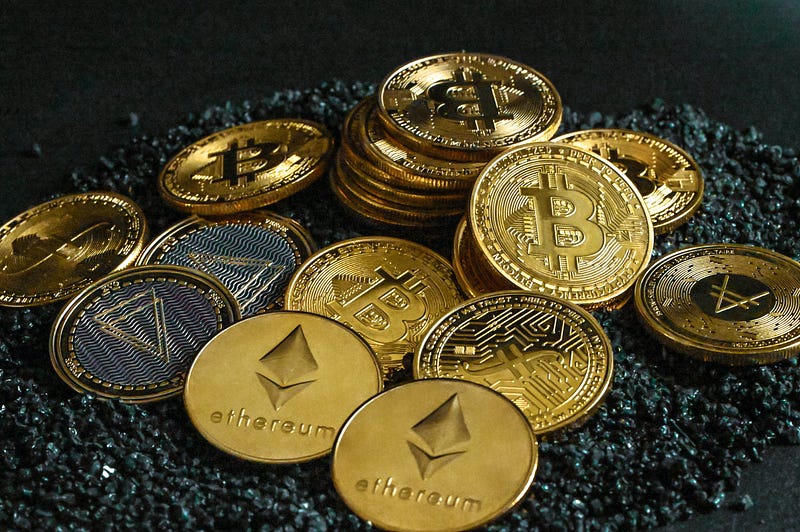
Photo by Traxer on Unsplash


Dual coin approach

The Crypto Loans product employs a dual-coin approach, allowing users to stake one digital asset as collateral and borrow an equivalent amount in another asset. Bitget believes that crypto loans have been gaining popularity in recent years, with the overall digital lending sector surpassing $8.5 billion in 2022 and experiencing a compound annual growth rate of 20.5%, as reported by Global Market Insights.

Despite the overall growth in the digital lending area, the crypto loan sector faced significant setbacks in 2022, particularly with the troubles surrounding centralized crypto lending services. Major firms like Celsius, BlockFi, and Voyager Digital suffered collapses and bankruptcy, raising concerns about the trustworthiness of such services in the future.

Bitget, however, is confident in its Crypto Loans product, emphasizing that it has streamlined the loan process to ease user onboarding. The amount users can borrow is determined by the market value of the collateral staked, and the loan is automatically disbursed with a specific interest rate. Borrowers have the flexibility to utilize the funds as needed and adjust the collateral based on their requirements.


Swift loans process

It also has the option to repay the loan before or at the predetermined deadline. To further encourage user adoption, Bitget promises support for withdrawals and a swift review process for loan applications. The feature is expected to provide added convenience and ease of use for users.

Bitget’s Managing Director, Gracy Chen, highlighted the advantages of the Crypto Loans product, noting that users can now stake less-demanded coins and obtain loans in more liquid assets for investment purposes. The platform’s flexible borrowing and repayment mechanism is designed to accommodate the needs of all users, ensuring convenience and accessibility.

Notably, Bitget has been expanding its presence in the crypto market. In March, the platform acquired a controlling stake in BitKeep, a crypto wallet that has been rebranded as Bitget Wallet. Additionally, Bitget unveiled a $100 million venture fund in April, following a $10 million investment from Dragonfly Capital. In May, it announced the launch of its Blockchain4Youth program, recognizing the importance of the younger demographic in achieving crypto mass adoption.

As Bitget ventures into the crypto loan market, it’s aiming to go one further than previous crypto lending providers who have largely failed, to provide a secure and user-friendly platform for borrowing and lending digital assets. The success of the product will depend on user trust and confidence, especially given the setbacks experienced by those other players in the sector in the past. Nonetheless, with its growing user base and strategic investments, Bitget is certainly showing some potential relative to making a mark in the cryptocurrency loan market.


More to Read
View All
Web3 & Enterprise·

Aug 07, 2023

Klip Wallet’s WalletConnect Integration Includes Access to OpenSea NFTs

Klip Wallet’s WalletConnect Integration Includes Access to OpenSea NFTsGroundX, a blockchain subsidiary of the South Korean messaging app behemoth Kakao, has announced that its digital asset wallet, Klip, now supports WalletConnect, a protocol that enables seamless connections between mobile cryptocurrency wallets and decentralized applications (dApps).Photo by Mariia Shalabaieva on UnsplashAccess to OpenSea and beyondThis integration brings new benefits to Klip users, as they can now easily access various platforms, including the popular non-fungible token (NFT) marketplace, OpenSea. With WalletConnect, users can efficiently manage a wider range of digital assets, making their experience more comprehensive and convenient.PC and mobile compatibilityAnother advantage of Klip’s adoption of WalletConnect is that both PC and mobile users can now access Klip and other blockchain services through this protocol. This ensures a smooth user experience across different devices, allowing for greater accessibility and flexibility.GroundX’s expansion effortsGroundX has been working on improving Klip’s functionality and services. Recently, it forged a partnership with the 1inch Network, a decentralized finance (DeFi) aggregator that offers competitive token swap rates on various decentralized exchanges, enhancing Klip’s token exchange capabilities. Thanks to this collaboration, Klip users can not only exchange Klaytn-based tokens but also tokens based on the Ethereum and Polygon blockchains. This expanded compatibility adds further value to the Klip wallet, empowering users with more options and opportunities for managing their digital assets efficiently.A spokesperson from GroundX emphasized that these recent enhancements in the Klip wallet will enhance its usability and convenience for users. The spokesperson added that the inclusion of various NFTs and DeFi assets within Klip through WalletConnect will lead to the expansion of the Klip wallet’s ecosystem.

news
Policy & Regulation·

Jun 01, 2023

Korean Crypto Exchange Alliance Reveals Standardized Regulation Guidelines

Korean Crypto Exchange Alliance Reveals Standardized Regulation GuidelinesThe Digital Asset eXchagne Alliance (DAXA), consisting of five leading cryptocurrency exchanges in South Korea, today revealed standardized regulation guidelines, according to a report by news media The Asia Business Daily.Photo by Nick Fewings on UnsplashStandardized guidelinesTwo important documents — the standardized internal control framework and the code of conduct and ethics — were released by DAXA today. These documents were developed based on data provided by financial investment firms and member exchanges. Reviewed by DAXA members and advisors, this documentation represents a significant milestone as it is the first of its kind to address the unique characteristics of the crypto industry. The establishment of unified rules and regulations through the collaborative efforts of the member exchanges stands as a commendable achievement.Internal control frameworkThe internal control framework consists of five parts, encompassing a total of 68 articles. These parts cover general provisions; governance of virtual asset service providers (VASPs); organization and standards for internal control; compliance officers and internal control system management; and compliance details.Code of ethicsThe code of conduct and ethics comprises five chapters with 24 articles. These chapters focus on general provisions, customer ethics, employee ethics, corporate management ethics, and societal ethics.DAXA Vice Chairman Kim Jae-jin expressed optimism that these guidelines will serve as a valuable reference for all VASPs, fostering the development of a fair, trustworthy, and globally competitive crypto market.DAXA’s websiteLast month marked the launch of DAXA’s official website, and their YouTube channel has been active since January. The alliance is made up of five member exchanges: Gopax, Bithumb, Upbit, Korbit, and Coinone. At the helm of the alliance is Chairman Lee Sirgoo, who concurrently serves as CEO of Dunamu — the company operating Upbit, the largest cryptocurrency exchange in the nation.

news
Policy & Regulation·

May 22, 2023

Cebu Meeting of FSB Highlights Crypto Risks

Cebu Meeting of FSB Highlights Crypto RisksThe Regional Consultative Group for Asia of the Financial Stability Board (FSB) has highlighted the risks implicated by crypto assets in a series of meetings held on Thursday and Friday in Cebu, the Philippines.The FSB is an international body with a mandate to monitor the global financial system, as well as make recommendations in respect of that system. The agency was established by the G20 group of countries in April 2009, replacing its forerunner, the Financial Stability Forum.Photo by John Alvin Merin on UnsplashA regulatory framework for cryptoThe two-day event focused on non-bank financial intermediation (NBFI) in Asia and the development of an effective global regulatory framework for crypto-assets. It discussed recent developments in financial markets, together with their regional impact.In opening remarks, Philippine Central Bank Governor, Felipe Medalla, stated: “Crypto, the biggest issue there is, whether we like it or not is quite a lot, especially younger people who are actually gambling. They have huge losses, our view right now. Well, you’re there, it’s your problem and the regulation becomes strict the moment crypto meets banking.”International participants highlighted the need for the development of an effective global regulatory framework for crypto-assets. Particular concern exists with regard to the potential for systemic risk in relation to crypto and a potential overflow into the traditional financial system.Earlier this year, the FSB proposed a complete regulatory framework for cryptocurrencies, with the report having been originally submitted in October of last year. Among its key components is the imposition of tighter controls. It proposed the guiding principle of “same activity, same risk, same regulation” for crypto assets, mirroring the approach taken for traditional financial assets.Global approach to taming cryptoThis approach has proven to be problematic for people working within the digital assets space. Many of the core facets of cryptocurrencies are entirely different to anything we see in traditional finance. Trying to frame crypto within an existing approach and standard has been perceived by many to be akin to trying to fit a square peg in a round hole.It’s not the FSB's role or place to affect policy directly. That responsibility lies with policymakers and regulators in each individual country. However, the organization is seeking to influence those individuals and entities in the hope that they will employ its suggested regulatory framework.Klaas Knot, Chair of the FSB and President of the Dutch Central Bank, provided this view on crypto: “We will come up with a global regulatory framework. It also only makes sense to regulate this from a global perspective. Because, nowadays you can take a server and put it anywhere in the world and start issuing these digital assets.”From Knot’s take, it’s clear that governments and central bankers are cottoning on to the fact that individual nation-state regulation is futile to an extent where decentralized innovations like cryptocurrency are concerned. Others such as European Central Bank (ECB) President Christine Lagarde and Mark Branson, President of German financial markets regulator BaFin, similarly have called for a globally enforced regulatory approach over the course of the past year.Ongoing struggleWhile regulation can be helpful, particularly when it comes to the points at which crypto meets the traditional system, there’s no doubt that this emerging innovation will disrupt the conventional system to some degree or other. That may place an incentive before central bankers and governments to try and stymie the further development of digital assets.While a truly global approach to regulating digital assets could retard development of the sector, there is rarely total consensus among world governments on a single issue. Therefore, by its very nature, crypto, and the digital assets sector will likely continue to develop regardless. It’s more a question of how long that process takes.

news
Loading