Top

Shinhan Bank Advances into Metaverse with the Launch of Shinamon Season 3

Web3 & Enterprise·June 09, 2023, 3:45 AM

According to a report by local news media Dailian, Shinhan Bank, a prominent financial institution in South Korea, has made a stride in its metaverse endeavors. The bank announced yesterday the launch of Shinamon Season 3, a metaverse platform, accompanied by a series of celebratory events to mark its implementation.

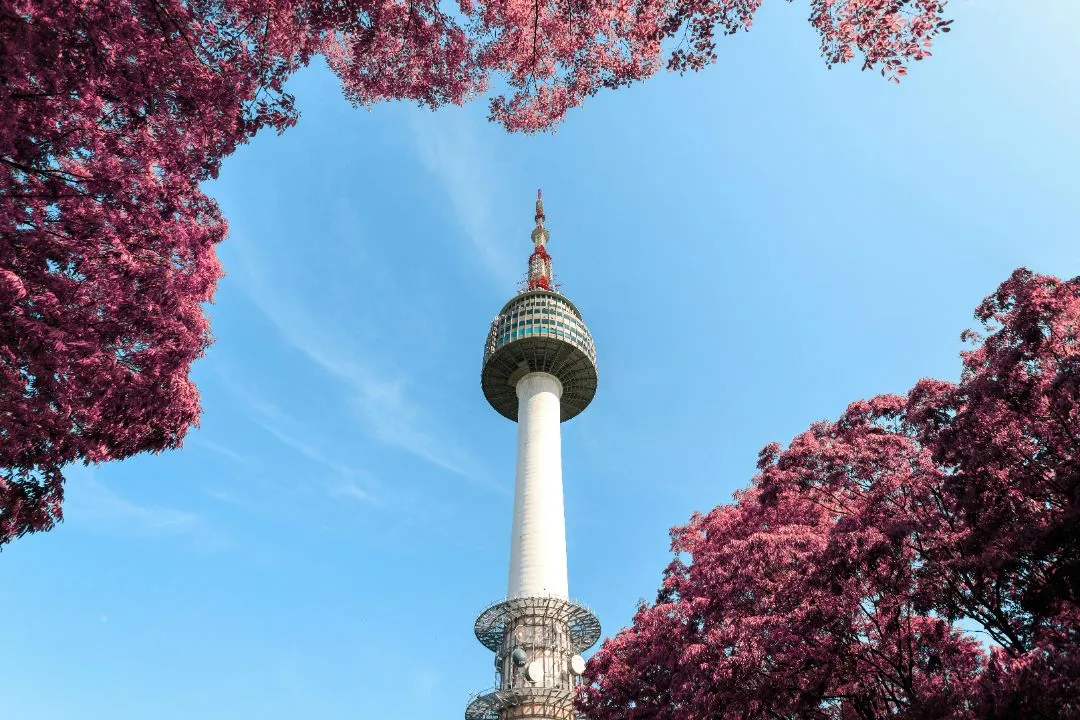
Photo by Richard Horvath on Unsplash


Merging financial & non-financial realms

Shinhan Bank claims it is the first Korean bank to independently develop a metaverse platform. With the launch of Shinamon Season 3, the bank has merged the financial and non-financial realms, providing customers with access to a user-friendly platform that offers fun and engaging experiences.

In Shinamon Season 3, Shinhan Bank has enhanced its financial services by replacing mobile gifts with reward points and providing additional benefits to customers who make transactions through the bank.


Personalization and enhanced services

After gathering customer feedback over the past two seasons, Shinhan has made enhancements to the platform’s environment and interface. Additionally, they have introduced the ability for customers to personalize their characters’ costumes. Looking ahead, the bank intends to leverage NFT wallets to help customers reach other platforms.

To celebrate the release of Shinamon Season 3, Shinhan Bank is organizing special events that will grant rewards to customers who join the metaverse. Participants of Shinamon Season 3 who engage in daily quests will have an opportunity to win enticing prizes, including electronic devices, free fried chicken coupons, and reward points.

A Shinhan Bank official said that customer feedback was given top priority in the preparations for the launch of Shinamon Season 3. The official added that will continue to reflect customer needs and integrate a diverse range of financial services. This approach aims to create a metaverse platform that closely resonates with real-life experiences, making it more relatable for customers.

More to Read
View All
Web3 & Enterprise·

Nov 22, 2023

NBC and AliPay collaborate to enable enhanced cross-border payments

NBC and AliPay collaborate to enable enhanced cross-border paymentsThe National Bank of Cambodia (NBC) and Ant Group, the parent company of AliPay+, the borderless payment and marketing solutions provider for merchants, have inked a memorandum of understanding (MOU) on “Cross-Border QR Code Payment Cooperation.”The deal was announced at last week’s Singapore FinTech Festival. The collaboration aims to boost the use of KHQR codes through Alipay+. KHQR codes provide for a standardization of QR codes which have been created for retail transfers and payments within Cambodia.Chea Serey, the Governor of NBC, and Douglas Feagin, Senior Vice President of Ant Group, formally signed the MOU to facilitate efficient and secure cross-border QR code payment transactions. The agreement focuses on bridging Bakong’s network through KHQR codes and Alipay+’s extensive global QR code acceptance network, as outlined in an NBC press release.Photo by Paul Szewczyk on UnsplashBakong CBDCBakong is Cambodia’s central bank digital currency (CBDC) based upon the Cambodian riel. Japanese fintech developer Soramitsu has collaborated with the Cambodian authorities in developing it.This latest development unfolded as Chea Serey took the stage as a keynote speaker at the Singapore Fintech Festival, addressing the theme, “The Intersection of Policy, Finance, and Technology.”According to a statement from Chea Serey’s official Facebook account, this collaboration opens doors for Cambodia Bakong users to access Alipay+ and engage with over 83 million merchants worldwide. Additionally, it allows international tourists to seamlessly make payments to KHQR merchants in Cambodia. Serey stated:“Today I am glad to announce the MoU signing between Alipay Plus and NBC, hence I encourage local banks to inform their merchants to open KHR accounts and start accepting KHR payments otherwise they won’t be able to benefit from this arrangement.”Greater interoperabilitySerey highlighted that this collaboration marks a significant step in enhancing Cambodia’s payment connectivity on a global scale, creating a more convenient and inclusive experience for tourists and contributing to the growth of the national economy.In an interview with CNBC at last week’s event, Serey said that the initiative will enable greater interoperability. In China, Cambodian merchants and visitors can use the Cambodian payment system to make payments to Chinese vendors. Likewise, Chinese visitors can use Alipay+, a platform they are familiar with, to make payments for goods and services in Cambodia. Serey believes this to be important, given that Cambodia depends heavily on tourism.The Alipay+ platform facilitates payments through various digital wallets, including Korea’s KakaoPay, Malaysia’s TouchnGo, Thailand’s TrueMoney and the Philippines’ GCash. Ant Group has been attempting to extend the regional utility of its payment system for some time.As far back as 2017, Ant Group signed an MOU with British bank Standard Chartered with a view towards increasing financial services access to clients located along China’s “Belt and Road” initiative route. In 2019, Alipay inked a deal with Cambodia’s DaraPay to allow Alipay wallet holders to pay for goods and services at DaraPay POS terminal points.Alipay and WeChat Pay are recognized as two of the most preferred payment methods among Chinese consumers. Together, they dominate the Chinese mobile payments landscape, boasting a market share of over 92 percent and a user base exceeding 2 billion.

news
Policy & Regulation·

Oct 24, 2025

U.S.-sanctioned Huione Group suspected of supporting crypto transactions in Korea

A Cambodia-headquartered financial group recently cut off from the U.S. financial system is suspected of having operated in South Korea, raising fresh questions about cross-border crypto and currency flows tied to the group. According to the Dong-A Ilbo, which cited data from the Korea Customs Service (KCS), Huione Group—now sanctioned by the U.S. Treasury Department’s Financial Crimes Enforcement Network (FinCEN)—appears to have run a currency exchange in Seoul from 2018 to July 2024. The outlet reported that a banner on the premises displayed a logo identical to Huione’s, prompting suspicions about its ownership and control.Photo by Aleksandar Pasaric on PexelsTies to North Korean hackersThe exchange reported conducting roughly $20,000 in annual currency conversions during that period, excluding cryptocurrency transactions. The timeline overlaps with a period in which Huione Group reportedly received $150,000 in cryptocurrency from the North Korean hacking group Lazarus.  Connections also extend to Cambodia. Panda Bank—a local lender that shares a building with Huione subsidiaries—supports USDT transactions originating from South Korea. Panda Bank director He Yanming is listed as the owner of Huione Crypto, a virtual asset service provider (VASP), suggesting potential links between operations in Seoul and Phnom Penh. These developments come against the backdrop of a U.S. investigation disclosed in May, in which FinCEN said Huione’s business networks, including payments arm Huione Pay, collectively laundered at least $4 billion in illicit proceeds between August 2021 and January 2025. Crypto used in $2.6B illegal conversionsMeanwhile, recent KCS data also shows a rise in illegal currency conversions involving cryptocurrency by foreign nationals. The Korea Economic Daily reported conversions totaling 432 billion won ($302 million) in 2021, climbing to 836 billion won ($584.5 million) in 2023 and 956 billion won ($668.4 million) last year. Over the past eight years, the total amount involved in such cases reached 3.7 trillion won ($2.59 billion) across 28 instances. By value, Chinese nationals accounted for 84.1% of the total, followed by Australians (11.1%), Vietnamese (3.2%), and Russians (1.6%). The growing prevalence of cryptocurrency in illicit activity parallels a broader surge in crypto investment within the country. Many South Koreans have turned to digital assets, often with home ownership as a long-term goal. Trading on local exchanges, Bloomberg reported, is heavily skewed toward more volatile altcoins, which make up more than 80% of total volume.  That stands in contrast to global markets, where investors largely focus on Bitcoin and Ethereum, which together make up more than half of overall trading. The momentum in local crypto investment intensified after Donald Trump’s U.S. presidential victory, with crypto trading in Korea reaching $27 billion in December 2024, about 80% of turnover on the KOSPI stock index. The investigation underscores the growing challenge for regulators in tracking and containing cross-border financial networks that rely on cryptocurrency and informal money transfers. As crypto adoption deepens in South Korea and scrutiny widens abroad, authorities find themselves navigating an increasingly intricate intersection of financial opportunity, enforcement, and risk. 

news
Web3 & Enterprise·

Jul 09, 2025

Metaplanet aspires to acquisition of digital bank

The CEO of Japanese hotel operator turned Bitcoin treasury company, Metaplanet, has suggested that the firm may consider acquiring a digital bank in the future. Simon Gerovich, the firm’s CEO and a former Goldman Sachs banker, told the Financial Times that part of the second stage of its overall strategy may involve “acquiring a digital bank in Japan and providing digital banking services that are superior to the services which retail now is getting.”Photo by Kanchanara on UnsplashBitcoin gold rushGerovich explained that phase one of Metaplanet’s plan involves participating in what he considers to be “a bitcoin gold rush.” He added: “We need to accumulate as much bitcoin as we can . . . to get to a point where we’ve reached escape velocity and it just makes it very difficult for others to catch up.” Other firms are jumping on the bandwagon, as within a very short timeframe, 140 companies around the world have adopted a Bitcoin treasury strategy. Metaplanet currently weighs in as the fifth-largest corporate holder of Bitcoin globally. Right now, the company holds 15,555 BTC. Its target is a holding of 210,000 BTC, which equates to around 1% of the total Bitcoin supply. Based on current pricing, such a holding would be worth in the region of $23 billion. Acquiring cash-generating businessesOnce the company has accomplished its Bitcoin accumulation goals, it plans to move on to phase two, acquiring cash-generating businesses while leveraging its Bitcoin holdings in order to do so. Using Bitcoin as collateral, Gerovich said that Metaplanet will “get cash that we can use to buy profitable businesses.”  While inroads are being made with regard to the acceptance of Bitcoin as a corporate reserve asset, it is earlier days still for its acceptance as collateral. Last month, the Federal Housing Finance Agency (FHFA) in the United States, ordered Fannie Mae and Freddie Mac, key government-sponsored players in the American mortgage market, to explore the treatment of Bitcoin as eligible collateral for mortgages. Standard Chartered and crypto exchange OKX launched a pilot program earlier this year geared towards the use of crypto for collateral purposes. Gerovich talks in terms of Metaplanet’s phase two plan playing out at a time “when bitcoin, like securities or government bonds, can be deposited with banks and then they’ll provide very attractive financing against that asset.” The Metaplanet CEO stated that he expects the Bitcoin accumulation phase of the plan to play out over a period of between four and six years. The Tokyo-listed firm started accumulating Bitcoin in 2024. Some market participants are backing Metaplanet’s strategy with their own money. Global investment management firm Capital Group recently became Metaplanet’s second-largest investor. Bitcoin treasury criticsHowever, the emergence of Bitcoin treasury firms has also drawn quite a few detractors. Some critics point out that many of these companies have a negative operating income. Market analyst Caleb Franzen asserted that even after buying Bitcoin, they’re still junk companies. Others point out that too many firms have jumped on the Bitcoin treasury bandwagon, making the prospect no longer attractive. Fakhul Miah, managing director of GoMining Institutional, is also concerned about copycats. He told Cointelegraph that ”if these smaller firms crash, we could see a ripple effect that hurts Bitcoin’s image.”

news
Loading
