Top

Beijing Municipal Government Unveils Web3 White Paper

Policy & Regulation·May 30, 2023, 12:34 AM

In what is being perceived by many as a significant development, the Beijing Municipal Science and Technology Commission, also known as the Administrative Commission of Zhongguancun Science Park, has released a white paper titled “Web3 Innovation and Development.”

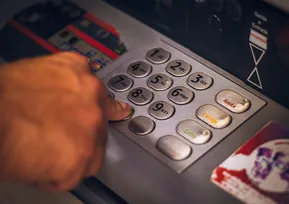
Photo by zhang kaiyv on Pexels


The “inevitable trend” of Web3

This announcement, as reported by local news outlet, The Paper, was made during the Zhongguancun Forum. The Forum is an event focused on technological advancements and innovation. The white paper acknowledges Web3 technology as an “inevitable trend for future Internet industry development.”

The objective of the Beijing Municipal Government is to establish the city as a global innovation hub for the digital economy. To support this ambition, the government plans to allocate a minimum of 100 million yuan (approximately $14 million) annually over the next two years.


Enhanced policy support

The white paper points towards Beijing’s intention to enhance policy support and accelerate technological advancements to foster the growth of the Web3 industry. This strategic move aligns with what appears to be China’s evolving stance toward the crypto industry, as the government aims to leverage the potential of emerging technologies.

The timing of the white paper release coincides with the upcoming implementation of new digital asset regulations in Hong Kong. At the beginning of next month, the Securities and Futures Commission (SFC) of Hong Kong will introduce new rules for the cryptocurrency sector, permitting retail investors to engage in crypto trading. This stands in stark contrast to the current regulatory environment in the United States, where authorities have been tightening their control over cryptocurrencies.


Second guessing China’s approach to crypto

China had previously banned the use of cryptocurrencies in 2021. Notwithstanding that, the release of the Web3 white paper may suggest a potential shift in the country’s approach. Notably, on May 23, China Central Television, a state-owned media outlet, aired a segment focused on cryptocurrencies, prominently featuring the Bitcoin logo and a Bitcoin ATM in Hong Kong.

This coverage holds significance, but the fact that the video was quickly taken down from the broadcaster’s website casts doubt on just how far down the crypto rabbit hole China is willing to go.

Changpeng Zhao (CZ), the Founder and CEO of global crypto exchange Binance, tweeted out that the timing of the publication of the paper is apt given other blockchain and crypto-related initiatives taken on by various Chinese entities. A recent study suggested that Hong Kong is emerging as a leading jurisdiction when it comes to its crypto readiness.

It remains to be seen how these developments will unfold and whether Beijing’s proactive approach will pave the way for further integration of blockchain technology and cryptocurrencies in China’s digital economy.

For the time being, with the release of the white paper, Beijing appears to have taken a significant step forward in shaping its future as a leading player in the global Web3 landscape. However, to what extent Beijing is ‘all in’ on crypto remains imponderable.

More to Read
View All
Policy & Regulation·

Sep 19, 2023

Rising Cryptocurrency Arbitrage Transactions Raise Concerns in South Korea

Rising Cryptocurrency Arbitrage Transactions Raise Concerns in South KoreaThe number of arbitrage transactions between South Korean and foreign cryptocurrency exchanges has been experiencing a notable uptick, according to a report by local media outlet Maeil Business Newspaper.In recent developments, foreign actors engaging in price manipulation have been transferring substantial amounts of cryptocurrency assets to Korean exchanges, driving up prices. Subsequently, they transfer these tokens from Korean exchanges back to overseas platforms, capitalizing on the price discrepancies to generate profits.Photo by Maxim Hopman on UnsplashBithumb’s case in H1According to documents submitted to Kim Hee-gon, a member of the ruling political party People Power Party, on Monday, KRW 3.4 trillion ($2.6 billion) worth of tokens were moved from Bithumb, a leading Korean cryptocurrency exchange, to foreign trading platforms during the first half of this year. Although this figure marks a 40% decrease compared to H1 2022’s KRW 5.7 trillion, primarily due to the significant decline in token prices across the cryptocurrency market, it’s noteworthy that the number of transactions has seen a significant increase.Other exchangesGopax, another major exchange in the nation, recorded token outflows totaling KRW 12.3 billion. On the other hand, Upbit, Coinone, and Korbit, which are also prominent exchanges, declined to provide data due to reasons like confidentiality concerns. However, given that Upbit holds an 82.0% share of the Korean crypto market, nearly four times larger than Bithumb’s share (14.2%), it is suspected that the volume of tokens transferred from Upbit to foreign platforms would likely have followed a similar proportion.While the value of tokens sent from Bithumb to overseas operators saw a year-over-year decrease, the number of transactions surged to 231,302, nearly doubling the figure of H1 2022’s 124,048 transactions. The average transaction size was KRW 14.7 million.Even though the overall enthusiasm for cryptocurrencies might have cooled off since last year, the spike in the number of transactions suggests that there’s been a surge in arbitrage trading between Korea and foreign markets.Kimchi premiumEarlier this month, a significant transaction caught the eye of cryptocurrency market observers in South Korea. On September 1, crypto data analytics firm Arkham identified that 170,000 CyberConnect (CYBER) tokens were transferred to Bithumb from a crypto wallet thought to be owned by DWF Labs, a firm specializing in cryptocurrency trading and investment. The timing of the transaction coincides with a period during which the Kimchi premium for CYBER exceeded 100%. The Kimchi premium refers to the crypto price gap between Korean exchanges and their foreign counterparts.The complicating factor here is that DWF Labs is a foreign entity that is managed by a foreign team.The use of corporate accounts is virtually prohibited in the Korean crypto market. The Travel Rule mandates that any transfers of tokens between Korean and international exchanges must go through accounts that have been verified under Know Your Customer (KYC) guidelines. Given these regulations, there are growing suspicions within the crypto community that foreign venture capitalists may have used accounts in borrowed names to conduct sales on Korean exchanges, which are restricted to Korean citizens. However, it’s worth noting that there is currently no legal basis for taking punitive action even if borrowed-name accounts were indeed used.Lawmaker Kim commented on the limitations of current financial regulations aimed at preventing money laundering in the cryptocurrency market. Despite efforts by financial authorities, including the introduction of the Travel Rule, Kim stated that these measures have not been very effective. He emphasized the urgency of enhancing the regulatory framework to curb potential illicit activities involving cryptocurrencies, such as those exploiting market arbitrage opportunities.

news
Policy & Regulation·

Jul 25, 2023

Seoul Govt to Hire Blockchain Expert to Enhance Administrative Services for Citizens

Seoul Govt to Hire Blockchain Expert to Enhance Administrative Services for CitizensThe Seoul Metropolitan Government is hiring a blockchain specialist in an effort to bolster its administrative services for citizens, leveraging the power of blockchain technology to provide enhanced and efficient solutions, as per local news outlet Etnews.Photo by Yu Kato on UnsplashRoles and eligibilityThe appointed blockchain specialist will participate in the development and management of blockchain-based administrative systems. The position will also involve facilitating technological cooperation between the public and private sectors, with a focus on integrating blockchain-powered platforms with cutting-edge technologies such as artificial intelligence, big data, and the Internet of Things.Interested candidates have until July 26 to submit their applications, with the successful candidate expected to be revealed in August, following document screening and interviews.To be eligible for the position, applicants must meet one of the following criteria:1. Hold a bachelor’s degree and possess at least one year of experience in related fields.2. Have three or more years of relevant experience.3. Be public servants of rank 8 or higher with a minimum of two years of relevant experience.Eligible candidates must have a proven track record in the development and operation of information systems, blockchains, and non-fungible tokens.Seoul’s blockchain initiativesThe Seoul Metropolitan Government’s current efforts to integrate blockchain technology into its administrative services include the operation of the Seoul Wallet app, a one-stop solution that enables citizens to access their identification, certificates, and credentials. The city government has plans to connect this app with other digital and healthcare platforms to create a fully integrated management system.Seoul has been at the forefront of blockchain adoption in South Korea. In 2020, it became the first Korean city to launch a blockchain-powered labor contract system, aimed at protecting the rights of temporary workers. Additionally, the city has been actively exploring various ways to leverage blockchain for online ID verification services. Such initiatives include a benefits card designed for families with two or more children, offering discounts on public facilities usage.A representative from the city government highlighted their recognition of blockchain as a key technology in the era of Web3. As a result, Seoul is seeking opportunities to introduce and support blockchain-based initiatives within its jurisdiction. The official emphasized the city’s commitment to providing safe and inclusive civil services built on blockchain technology, following a thorough assessment of their potentials and risks.

news
Web3 & Enterprise·

Jun 07, 2023

Atomic Wallet Hacker Uses Lazarus Crypto Mixer

Atomic Wallet Hacker Uses Lazarus Crypto MixerThe stolen cryptocurrency from the recent $35 million hack of Atomic Wallet is already being moved to a crypto mixer favored by North Korea’s notorious cyber-hacking group.Photo by Micha Brändli on UnsplashSinbad.ioAccording to UK-based crypto compliance analysis firm Elliptic, the funds have made their way to a crypto mixer used by Lazarus Group, a notorious hacker group that focuses on crypto heists which is believed to have direct ties with the North Korean government.On June 5, Elliptic’s Investigations Team revealed that it had traced the funds from the Atomic Wallet hack to the crypto mixer Sinbad.io. Lazarus had previously used the mixer to launder over $100 million in stolen crypto assets.While the exact amount sent to the mixer was not specified, Elliptic noted that the stolen funds were being exchanged for Bitcoin before undergoing obfuscation through the mixer. Additionally, Elliptic reported that Sinbad.io is likely a rebranded version of Blender.io, another mixer extensively used to launder funds by the Lazarus Group. Blender.io has been sanctioned by the US Treasury.Atomic Wallet hackThe hack of several user accounts on Atomic Wallet occurred on June 3, resulting in losses of up to $35 million. News of the issue broke with the following tweet from the project team (which has subsequently been deleted): “We have received reports of wallets being compromised. We are doing all we can to investigate and analyze the situation. As we have more information, we will share it accordingly.”In a follow-up tweet the next day, the team confirmed that it was investigating the matter with the assistance of a number of “leading security companies.”However, Atomic Wallet later downplayed the incident, stating that less than 1% of its monthly active users were affected. The project team was castigated by users for trying to present the hack as a minor incident. One user took to Twitter to call out the Atomic Wallet team for “having the nerve to come to the networks and say that only 1% of wallets were affected.”The Atomic Wallet project is based out of Tallinn, Estonia, having been founded in 2017. It claims to provide a non-custodial decentralized multi-currency crypto wallet. The product supports over fifty coins and two hundred tokens. It also offers atomic swaps between digital assets, while also supporting integrations with instant exchanges such as Changelly, ShapeShift, and others.Roland Säde, the Chief Marketing Officer of Atomic Wallet, assured users that the team is working tirelessly to recover the stolen funds. He emphasized the need to complete the investigation to develop a concrete plan.Despite the ongoing efforts, Säde urged victims to track the illicit transfers and report them to popular crypto exchanges. By doing so, it was thought that may hinder the scammers from exchanging the funds.Crypto hacking menaceLazarus Group hackers have been the bane of the crypto space in recent years. Elliptic released a report last month that identified Japan as having been the country most adversely affected by the North Korean hackers. It’s understood that the estimated $721 million in stolen crypto from Japan-based entities amounts to nearly nine times the value of North Korea’s exports based on 2021 data.While Atomic Wallet is directly reporting the incidents, Säde believes that having more individuals monitoring the hackers’ activities will make it more challenging for them to move the funds undetected. Unfortunately, Elliptic’s recent findings suggest that for many victims, it may already be too late to prevent further misuse of their stolen cryptocurrency.

news
Loading