Top

Singapore Gets with Banks to Provide Guidance on Crypto Businesses

Policy & Regulation·April 11, 2023, 2:15 AM

In a move to provide clarity and guidance to financial institutions dealing with cryptocurrencies, the Monetary Authority of Singapore (MAS) is reportedly working with banks to develop new vetting procedures for crypto clients.

According to a recent Bloomberg report, the MAS plans to provide more detailed guidance to banks on how to properly screen and monitor customers involved in cryptocurrency transactions.
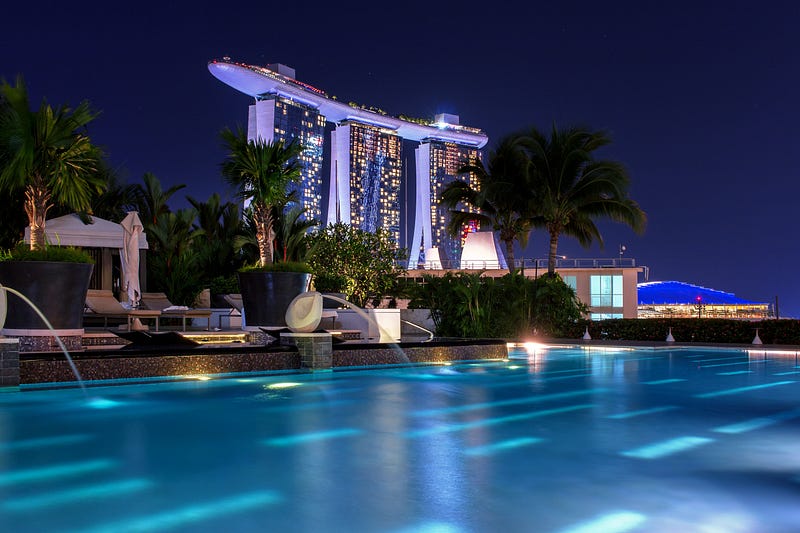
©Pexels/Pixabay


Regulatory clarity

The decision to provide guidance on crypto businesses comes as regulators around the world struggle to keep up with the rapidly-evolving digital currency industry. Many governments have been grappling with how to regulate cryptocurrencies in the face of concerns over money laundering, fraud, and other illicit activities.

Singapore, however, has taken a more progressive stance on digital currencies, with the MAS recently announcing plans to create a regulatory framework for crypto derivatives trading. The country’s financial watchdog has also been working to improve AML (anti-money laundering) and CFT (combating the financing of terrorism) measures relative to crypto transactions.

The MAS’s efforts to provide guidance to banks on crypto businesses are part of this broader push to promote responsible use of digital currencies in Singapore. By providing clear and detailed guidance to financial institutions, the regulator hopes to prevent illegal activities from taking place while also promoting the growth of the crypto industry.

The MAS’s approach is seen as a positive development for the crypto industry, as it provides a clear framework for financial institutions to work within. This could help to boost confidence in the crypto market, potentially leading to increased investment and adoption.


Striking the right balance

At the same time, however, some industry observers have expressed concerns that overly strict regulations could stifle innovation and limit the potential of cryptocurrencies. They argue that a balance must be struck between protecting consumers and promoting innovation in the digital currency industry.

Despite these concerns, the MAS’s efforts to provide guidance on crypto businesses are likely to be welcomed by financial institutions and industry participants alike. As the use of digital currencies continues to grow, it is becoming increasingly important for regulators to provide clear and comprehensive guidance on how to operate within this rapidly-evolving industry.


Previous failures

Singapore hasn’t always gotten its approach to cryptocurrency right. In 2021, the MAS put global crypto exchange Binance on its investor alert list. Binance felt compelled to curb its service offering in the city state. The consequence of that action was that a disproportionate number of Singaporeans proceeded to open accounts with FTX only later to get caught up in the collapse of the exchange.

The Monetary Authority of Singapore’s decision to provide guidance on crypto businesses is bullish for the digital currency industry. By providing clear and detailed guidance to financial institutions, the regulator is promoting responsible use of cryptocurrencies in Singapore while also boosting confidence in the market. However, there is a need to strike a balance between protecting consumers and promoting innovation in the industry, as overly strict regulations could stifle growth and limit the potential of cryptocurrencies.


More to Read
View All
Policy & Regulation·

Apr 18, 2025

Security token interest gains momentum in Korea ahead of election

South Korean brokerage firms are expanding into the security token offering (STO) space, a sector gaining attention ahead of the upcoming presidential election in June. Photo by Raymond Yeung on UnsplashDedicated STO divisionsAccording to local outlet Kukinews, major players like Mirae Asset Securities, Hana Securities and Shinhan Securities are either establishing dedicated STO divisions or partnering with tokenization platforms to stay ahead of the curve. Some are also exploring fractional investment opportunities tied to real-world assets (RWAs) such as real estate, art and music copyrights. Security tokens are blockchain-based digital assets that represent rights to real-world assets (RWAs) and, as the name suggests, are classified as securities. The financial industry is increasingly interested in this technology for its potential to accelerate digital transformation. However, trading such tokens requires a comprehensive legal framework—something that is currently lacking in Korea. Election renews STO interestSTOs have resurfaced as a key topic, with presidential candidates from both the left and right likely to include them in their campaign agendas. The renewed interest follows the ousting of President Yoon Suk-yeol earlier this month, after the Constitutional Court upheld his impeachment by the National Assembly over his declaration of martial law. Before the presidential election became imminent, legislative discussions around STOs had stalled in the National Assembly and received little attention. Among the standout moves made by presidential hopefuls, Lee Jae-myung, a primary candidate from the Democratic Party of Korea (DPK), recently added Kim Yong-jin, an STO expert and professor at Sogang University, to his policy advisory group. Meanwhile, lawmakers across party lines have introduced amendments to the Electronic Securities Act and the Capital Markets Act, aiming to establish a regulatory framework for STOs, according to the National Assembly’s National Policy Committee. This regulatory shift in political circles favoring STOs has been anticipated by the financial industry. An unnamed official from a brokerage firm predicted that presidential candidates will propose measures such as legalizing security tokens, advancing a regulatory framework for virtual asset service providers (VASPs), promoting investment in crypto-related businesses and permitting the use of stablecoins. Some observers even expect these bills to receive final approval within the year. Brokerage meets blockchainKorean securities firms' push into the STO space is further highlighted by a recent partnership between Shinhan Securities and the Solana Foundation.According to Yonhap, the two parties signed a memorandum of understanding (MOU) to collaborate on expanding the digital asset ecosystem. Their cooperation will focus on STOs, RWAs, crypto custody infrastructure, stablecoin payments for both online and offline use and responses to global policies and regulations.

news
Web3 & Enterprise·

Oct 02, 2023

Coinbase Acquires License to Enhance Crypto Operations in Singapore

Coinbase Acquires License to Enhance Crypto Operations in SingaporeUS crypto exchange business Coinbase has reached a significant milestone in its Singapore operations by obtaining a Major Payment Institution (MPI) license from the Monetary Authority of Singapore (MAS).The achievement, announced by the firm via a blog post published on Sunday, represents a pivotal moment for Coinbase as it expands its digital payment token services in Singapore to serve both individuals and institutions. The issuance of the full MPI license comes approximately one year after Coinbase initially received in-principle approval from MAS.Photo by Duy Nguyen on UnsplashEnabling broader service offeringThe importance of this development lies in Coinbase’s ability to provide advanced services, not only to individual traders but also to institutional investors. Hassan Ahmed, the country director of Coinbase Singapore, stressed the significance of this full license, stating that it will play a crucial role in strengthening relationships with stakeholders, especially regulated entities like banks. The regulatory milestone is anticipated to further cement Coinbase’s presence in the institutional finance sector in the region.Coinbase’s commitment to the Singaporean market has been evident in its continuous expansion initiatives. The company established a technology hub in Singapore last year, actively recruiting and training product managers and engineers specializing in Web3 technologies.In May the firm extended its product offering to Singaporean customers, introducing fee-less purchases of the USDC stablecoin and introducing digital asset staking. Meanwhile Coinbase Ventures, the firm’s investment arm, has also demonstrated confidence in the region by investing in more than 15 Web3 startups within Singapore over the past three years.Singapore earmarked for growthSingapore has emerged as the focal point for Coinbase’s Asia-Pacific institutional business, owing to its progressive stance on cryptocurrencies and a robust Web3 ecosystem boasting over 700 Web3 companies. According to Coinbase’s surveys, 25% of Singaporeans perceive cryptocurrencies as the future of finance, and 32% have had some form of crypto asset ownership. These statistics underscore Singapore’s growing importance in the global cryptocurrency landscape.Coinbase’s interest in meeting the demands of the local market is evident with the introduction of funding options like PayNow and the banks’ Fast And Secure Transfers (FAST) service, in addition to the integration of the Singpass onboarding system earlier this year.Despite facing regulatory challenges, including a lawsuit from the US Securities and Exchange Commission (SEC) accusing Coinbase of operating illegally, the exchange continues to explore avenues to grow and expand the business further. In August, Coinbase reported a significant improvement in its financials, with a narrower net loss and higher-than-expected revenue. This performance is reflected in its appreciating stock prices, which have more than doubled in 2023.This move places Coinbase among a select group of just over a dozen firms licensed to offer digital payment token services in Singapore. Last month, institutional investor-focused AsiaNext was officially designated as a Recognized Market Operator (RMO) by MAS. The firm was building on previous success in Singapore, having acquired a Capital Markets Services (CMS) license from MAS in June.That same month USDC stablecoin issuer Circle was awarded a full trading license. Other crypto firms to achieve licensing success in the city-state include Crypto.com and Blockchain.com.

news
Web3 & Enterprise·

Nov 02, 2023

Hong Kong’s HaskKey launches app following regulatory approval

Hong Kong’s HaskKey launches app following regulatory approvalHong Kong-based cryptocurrency firm HashKey has unveiled the HashKey Exchange app, which has received the approval of the Securities and Futures Commission (SFC).News of the app launch emerged following insights shared by HashKey’s Chief Operating Officer, Livio Weng, in an interview with The Block recently.Photo by Manson Yim on UnsplashAppealing to retail tradersThe HashKey Exchange app went live on Wednesday, having received regulatory clearance from Hong Kong’s securities regulator the previous Friday. This achievement allows the app to offer full mobile trading capabilities. Prior to this milestone, HashKey had been primarily catering to professional investors under a voluntary licensing scheme.With the new app, Hongkongers can now conveniently purchase bitcoin and ether, utilizing either Hong Kong dollars or US dollars, directly from their local bank accounts. The app launch is significant as HashKey has become one of Hong Kong’s first fully compliant retail-facing crypto trading platforms. “We’ve recorded large trading volume since we began to serve retail users,” Weng stated. The move aligns with the Hong Kong government’s efforts to bolster the virtual asset sector, which was set in motion one year ago with various policy shifts.These shifts included the introduction of a mandatory licensing scheme for cryptocurrency platforms, enabling them to offer tokens with large market capitalizations to retail traders. The new licensing regulations officially took effect in June, with a one-year grace period, though no new exchanges have been approved to date. HashKey and its rival, OSL, had their previous licenses upgraded in August.Developmental challengesHong Kong has faced several challenges on this journey. While the new regulations are largely in line with international norms, the process has been notably expensive, particularly against the backdrop of a bearish crypto market.The lingering fallout from the JPEX scandal, a cryptocurrency exchange allegedly involved in fraudulent activities, continues to impact Hong Kong’s virtual asset landscape. The SFC first raised concerns about JPEX in mid-September, and since then, it has moved to tighten regulation in response, having received thousands of complaints in relation to JPEX.Despite these challenges, HashKey Group has reported significant activity on its retail platform since its launch in August, with a total trading volume exceeding US$600 million. On October 30, the 24-hour trading volume exceeded US$100 million.Planned token launchIn a move designed to incentivize new users, HashKey Exchange has introduced its platform token, HSK, which is slated to be officially listed on the exchange next year. With a total supply of 1 billion HSK, the company has specified that these tokens will not be initially sold to retail investors, emphasizing its long-term vision for the project.Established in Hong Kong in 2018, HashKey Group operates a digital asset brokerage and a venture capital arm. HashKey Exchange earned the distinction of becoming Hong Kong’s second licensed exchange in November of the previous year, following in the footsteps of OSL. Notably, five companies have applied for the new licensing scheme, according to the SFC, while several other exchanges have expressed their intent to pursue similar approval.

news
Loading