Top

Malaysia Looking to Wean Itself Off Dollar Dependency

Policy & Regulation·April 11, 2023, 2:06 AM

According to Prime Minister Anwar Ibrahim, China is willing to engage in discussions with Malaysia regarding the creation of an Asian Monetary Fund. This proposal, which has been circulating for decades, aims to decrease the dependence on the US dollar.

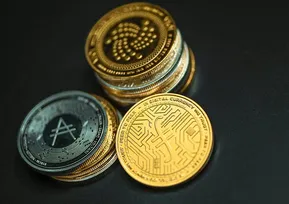
©Pexels/Sergei Starostin


Asian Monetary Fund

Anwar highlighted the necessity to minimize reliance on the dollar and the International Monetary Fund and proposed the establishment of this fund at the Boao forum in Hainan last week. He stressed that the fund would aid in diversifying the financial landscape of Asia and improving its resilience against economic challenges.

Following a state visit to China last week, Anwar stated that “there is no reason for Malaysia to continue depending on the dollar.” The Prime Minister told the Malaysian parliament on Tuesday that China’s President Xi Jingping was receptive to the idea of an Asian Monetary Fund and welcomed further discussions on such a proposal.

Anwar Ibrahim, serving as both the Finance Minister and Prime Minister of Malaysia, stated that the country’s central bank is already taking measures to allow for negotiations between Malaysia and China using their respective currencies, the ringgit and renminbi.

The robustness of the US dollar poses a significant challenge for Malaysia and other Asian countries, particularly as Malaysia is a net importer of food. In September 2022, the Bloomberg dollar index reached an all-time high, leading to a decline in the value of the ringgit and other Southeast Asian currencies to levels not seen in decades.

As a result, Anwar Ibrahim’s proposal for a shift towards bilateral trade negotiations with China using the ringgit and renminbi holds the potential to alleviate some of the region’s dependence on the dollar and reduce the impact of its fluctuations.


International shift away from dollar

This development comes as other officials in the region, particularly Singapore, have been discussing strategies to manage the effects of a dominant US dollar that has weakened local currencies and been used as an instrument of economic power by the United States.

There has been a raft of deals struck in recent weeks all pointing towards an international shift away from the US dollar as the global reserve currency. Russia has agreed with China to trade in renminbi. A major trade deal was struck recently between China and Brazil that will see the two countries trade in reals and renminbi. Major oil producer Saudi Arabia has made similar soundings and signed similar deals with Beijing.


Bitcoin as a reserve currency

All of this recent upheaval has brought further consideration of bitcoin acting as a reserve currency back into view. It’s expected that even if there is a shift away from the US dollar, the renminbi won’t be capable of acting as a single dominant global reserve currency. Taking to Twitter on Wednesday, Bloomberg Intelligence Crypto Market Analyst Jamie Coutts suggested that bitcoin’s performance in Q1, 2023 marks “a significant milestone in its ascendancy as a potential global reserve asset.”

Coutts believes that it marks the first occasion that the leading cryptocurrency has acted as a safe haven asset during a liquidity crisis. Bitcoin remains at an early stage of development. Nobody expects that it could serve as the global reserve currency at this point. However, it is not unreasonable to anticipate it increasingly growing into a role as a reserve currency used for international trade and settlement. Especially so, as issues bubble over relative to banking and a desire to escape the clutches of US dollar domination.

More to Read
View All
Web3 & Enterprise·

Oct 03, 2023

SBI Remit and Shonan Shinkin Bank Join Forces on International Remittances

SBI Remit and Shonan Shinkin Bank Join Forces on International RemittancesSBI Remit, a long-time partner of Ripple, has expanded its collaboration in Japan, partnering with Shonan Shinkin Bank to offer international remittance services.The partnership, operating under the guidance of SBI Group and announced by SBI Remit last week, claims to provide a more efficient and cost-effective solution for international employees living in Japan who need to transfer money abroad.Photo by Naoya Matsuda on UnsplashEfficient overseas transfersBoth Tokyo and Kanagawa Prefecture, the area of operation of Shonan Shinkin Bank alongside the city of Yokosuka where it is headquartered, have witnessed a surge in the number of migrant employees working there. That makes these metropolitan areas ideal locations for this particular collaboration.According to the press release, the partnership “was formed as mutual use of both parties’ network and strengths would allow Shonan Shinkin Bank to offer highly convenient international money transfer services that deliver convenience for foreign nationals working at local companies while enabling SBI Remit to develop new markets.”The collaboration, named SBI Ripple Asia, aims to leverage Ripple’s distributed ledger technology to streamline international payments. The technology has the potential to disrupt the remittance sector by offering real-time processing of cross-border payments. This approach significantly reduces transfer times and costs. One of the key elements of the partnership involves the use of XRP, Ripple’s native digital asset, for on-demand liquidity (ODL) between Japan and the Philippines. ODL allows for near-instantaneous transfers.Broader sector trendThis partnership is part of a broader trend in the financial industry, where blockchain technology is being harnessed to enhance services. Ripple, in particular, has been targeting remittances through an offering that enables a competitive edge through both speed and cost-effectiveness relative to transfers. Foreign workers in Japan, particularly the 280,000 Filipinos working in the country, stand to benefit from this new offering. That’s due to the ongoing need for foreign overseas workers to send money back home.The SBI Remit and Shonan Shinkin Bank collaboration highlights the immense potential of blockchain technology in reshaping financial services, especially in regions with a high concentration of foreign workers.This development represents yet another significant achievement in the longstanding partnership between SBI and Ripple. The two companies first began to cooperate by way of a mutually beneficial partnership in 2016 with the establishment of SBI Ripple Asia. The recent demonstration of using XRP for ODL remittances in Japan and the Philippines showcases the tangible benefits of this collaboration, with the potential to reduce international transfer times from days to mere minutes.With the demand for seamless international money transfers on the rise, the partnership between SBI Remit, Shonan Shinkin Bank, and Ripple is poised to make a significant impact on the remittance landscape in Japan and beyond.Foreign overseas workers and the families they support in their home countries have long since been at the edge when it comes to financial inclusion. In the press release, Shonan Shinkin Bank was stated to be committed to achieving financial inclusion by partnering with various stakeholders to provide solutions to the various issues facing small- and medium-sized enterprises, as well as providing international remittances and other solutions to the diverse local community.As the financial industry continues to embrace blockchain solutions, collaborations like this one serve as a testament to the ongoing evolution of global payments systems.

news
Web3 & Enterprise·

Jun 06, 2023

Zodia Custody and Blockdaemon Partner on Institutional Staking

Zodia Custody and Blockdaemon Partner on Institutional StakingLondon-based cryptocurrency storage provider Zodia Custody, a portfolio company of Japan’s SBI Holdings, has entered into a partnership with blockchain infrastructure provider Blockdaemon relative to crypto staking.Photo by Traxer on UnsplashInstitutional interestBlockdaemon announced the crypto staking collaboration, tailored to institutional clients, on Twitter on Tuesday. This move comes as institutional interest in staking, the process of contributing digital assets to support blockchain networks and earning rewards, continues to surge.Following the Ethereum network’s Shapella upgrade on April 12, the amount of ether (ETH) staked increased by an impressive 4.4 million, reaching a total of 22.58 million ETH (equivalent to $42 billion) as of May 23. This remarkable growth in staked assets reflects the growing confidence in the Ethereum network and the potential for substantial returns.First bank-owned custodianZodia Custody is a subsidiary of the well-known multinational bank Standard Chartered and backed by prominent institutions such as Northern Trust alongside SBI Holdings. It claims the title of being the first bank-owned custodian to provide staking services exclusively to institutional clients. This collaboration enables Zodia Custody to leverage Blockdaemon’s infrastructure to deliver secure and efficient staking solutions, catering to the specific needs of institutional investors.Blockdaemon has been at the forefront of facilitating seamless integration between traditional financial institutions and the emerging crypto industry. Earlier this year, the company introduced a wallet service targeted at the institutions and crypto custodians. The wallet assists clients in managing their assets securely, eliminating the need for third-party storage solutions. By partnering with Zodia Custody, Blockdaemon expands its portfolio of services, capitalizing on the rising demand for staking among institutional investors.The firm’s CEO and Founder, Konstantin Richter, stated that the partnership with Zodia “allows stronger security, automation and simplification of the process to participate in staking, truly accelerating Web3 innovation.”LMAX collaborationEarlier this month Zodia partnered with digital asset trade execution specialist LMAX Digital to provide a combination of institutional-grade trading infrastructure and custody services to crypto asset manager, Coinshares.Institutional investors, traditionally cautious about entering the crypto ecosystem, are now becoming more proactive in engaging with digital assets. Staking, with its potential for consistent and predictable returns, has emerged as an appealing opportunity. By participating in staking, institutions not only contribute to the efficient functioning of blockchain networks but also enjoy the rewards associated with validating transactions and securing the network.The partnership between Zodia Custody and Blockdaemon exemplifies the industry’s efforts to bridge the gap between traditional finance and the rapidly evolving world of cryptocurrencies. As more institutional clients seek exposure to digital assets, it becomes essential to provide them with secure and reliable solutions tailored to their specific requirements.With demand for staking services continuing to rise, institutional players are recognizing the value of taking a more active part in the crypto ecosystem. With Zodia Custody and Blockdaemon leading the way, the opportunities for institutional clients to engage in staking and reap the rewards are set to expand, further fueling the growth of the entire crypto industry.

news
Web3 & Enterprise·

Sep 14, 2023

Raon Whitehat Launches Cloud-Based NFT Wallet for OmniOne Marketplace

Raon Whitehat Launches Cloud-Based NFT Wallet for OmniOne MarketplaceSouth Korean tech security firm RaonSecure announced Thursday that its subsidiary Raon Whitehat has launched a cloud-based NFT wallet service on the OmniOne NFT marketplace, specializing in utility NFTs that are backed by tangible assets like gold.Photo by C Dustin on UnsplashMore secure and convenientUsers can easily create an account for the OmniOne NFT cloud wallet by entering a username and password. This cloud-based solution offers advantages over mobile app-based NFT wallets, which can present occasional inconveniences. In scenarios involving app deletion, device change, or device loss, one faces the cumbersome task of reinstalling the application and going through the authorization process again. In contrast, the cloud wallet provides a more seamless experience. NFTs are securely stored in the cloud and can be accessed from any device, requiring only the recollection of a username and password.Transferring NFTsIndividuals who have NFTs stored within their current app-based NFT wallet can create a new cloud wallet account and proceed to transfer their NFTs from the existing app-based account to the new cloud account by utilizing the “Send as Gift” feature.RaonSecure CEO Lee Soon-hyung announced that users are now able to store their gold-backed NFTs, purchased from the OmniOne NFT marketplace, in the cloud wallet. He explained that this development addresses the issue of potential NFT asset loss due to app deletion or device loss.Furthermore, Lee emphasized that Raon Whitehat is dedicated to introducing more innovative services in the future. These services will prioritize user convenience and security, specifically in the storage of diverse digital assets like NFTs and certification badges.

news
Loading