Top

Crypto exchange Foblgate unites with HKVAC to expand global reach

Web3 & Enterprise·December 14, 2023, 8:00 AM

South Korean cryptocurrency exchange Foblgate has taken a step onto the global stage by signing a business agreement with the Hong Kong Virtual Asset Consortium (HKVAC), a private institution committed to building and sustaining Hong Kong’s cryptocurrency market, according to an article by local news outlet ZDNET Korea.

“We look forward to strengthening our leadership in the global blockchain market with Hong Kong,” said Ahn Hyun-jun, CEO of Foblgate. “Korea has one of the most competitive markets in the world, and this partnership will further strengthen our presence in the global market.”

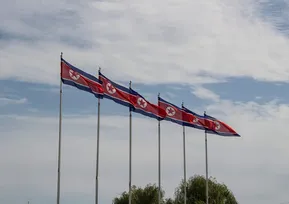
Photo by Erika Fletcher on Unsplash


International cooperation

Through this agreement, the two companies will provide opportunities for their respective business partners to expand their projects into Hong Kong and South Korea. They also plan to work together within the crypto and real asset markets and explore new business opportunities with companies in the security token sector.


Pioneering the future of the crypto industry

Established in May, the HKVAC is a private consortium consisting of a professional credit rating agency as well as big data firms, institutional investors and cryptocurrency exchanges like HTX (formerly Huobi) and KuCoin. It offers services like exchange and crypto asset ratings as well as data and research geared towards investors.

In particular, its credit ratings — issued by licensed rating agency FrancXav Asia Ratings — are aimed at reducing information asymmetry and promoting fair competition. They also serve to guide regulatory authorities in their own assessment of potential risks in the crypto industry.

More to Read
View All
Web3 & Enterprise·

Jun 27, 2023

Algorand Foundation and DWF Labs Partner for Ecosystem Growth

Algorand Foundation and DWF Labs Partner for Ecosystem GrowthThe Algorand Foundation has joined forces with DWF Labs, a global digital asset market maker and Web3 investment firm, in a strategic partnership aimed at accelerating the growth of the Algorand ecosystem.An announcement of the collaboration was made on Monday, with the expectation that it will provide more opportunities for developers, businesses, and the wider blockchain community where the Algorand layer one blockchain is concerned.Photo by Shubham Dhage on Unsplash$50M token purchaseDWF Labs has committed to purchasing $50 million worth of $ALGO tokens, the native cryptocurrency of the Algorand network. This infusion of funds will enhance liquidity within the Algorand ecosystem, bolstering stability and growth.Beyond the token purchase, the partnership is reinforced by a memorandum of understanding (MOU), establishing a comprehensive funding framework to support projects built on the Algorand blockchain. This commitment will foster innovation across various sectors such as decentralized finance (DeFi), art and music, gaming, oracles and bridges, and infrastructure.Ecosystem collaborationsWeb3 investment firms like DWF Labs play a pivotal role in accelerating the growth of blockchain ecosystems. By investing in startups and projects that complement existing blockchain platforms, DWF Labs creates synergies that drive growth.It’s not the first time that DWF Labs has collaborated with blockchain network ecosystem projects. Earlier this month, the firm announced a deal with the project team behind layer one blockchain TRON, that will see it become a liquidity provider to that TRON network.In April, DWF entered into a partnership with the EOS Network Foundation (ENF) which included a $45 million $EOS token purchase agreement, with a further $15 million allocated towards investment into EOS ecosystem projects.Andrei Grachev, Managing Partner of DWF Labs, expressed enthusiasm for the partnership, highlighting Algorand’s technological superiority, security, and commitment to environmental sustainability and social impact.Through funding and strategic collaboration, DWF Labs will support the creation of diverse applications, services, and solutions within the Algorand ecosystem. This will foster the ALGO network effect, attracting more users and driving further growth.Algorand network stability and growthThe Algorand Foundation and DWF Labs partnership aligns with ongoing efforts to drive blockchain network adoption. Algorand’s platform offers scalability and security, while DWF Labs’ expertise and financial support will propel the ecosystem’s growth and adoption.The Algorand network is a proof of stake (PoS)-based blockchain network. It aims to accelerate the convergence between existing TradFi and emerging decentralized networks and technologies.The $50 million investment in ALGO tokens injects liquidity into the ecosystem, promoting stability and facilitating economic activities. The partnership’s funding framework ensures that projects built on Algorand receive the necessary resources.Collaborations like this drive blockchain adoption and development. The Algorand Foundation and DWF Labs share a vision of innovation and collaboration, fostering a thriving ecosystem.As the blockchain industry expands, strategic alliances play a crucial role in accelerating innovation and establishing interconnected ecosystems. The collective efforts of the Algorand Foundation and DWF Labs contribute to blockchain’s advancement, leading towards a decentralized future with transparency and inclusivity.

news
Policy & Regulation·

Dec 02, 2023

Binance’s U.S. legal woes may have repercussions for its expansion in Thailand

Binance’s U.S. legal woes may have repercussions for its expansion in ThailandWhile Binance, the world’s largest cryptocurrency exchange, is gearing up for a new trading venture in Thailand, the recent guilty plea by the firm in the United States and the hefty $4.3 billion penalties for anti-money laundering and sanctions violations have raised concerns about the feasibility of its Thai market venture.That’s a consideration that has been raised by a recent report by Bloomberg. Earlier this month, it emerged that Binance had entered the beta testing phase of its Binance.th platform in Thailand. The venture is a collaboration with the local company, Gulf Energy Development Pcl, led by billionaire Sarath Ratanavadi.Photo by Peter Borter on UnsplashCasting a shadow over expansion plansFollowing Founder Changpeng Zhao’s (CZ) departure from the CEO role in the wake of the US criminal probe resolution, Singaporean Richard Teng, a regulator-turned-crypto executive, has taken the helm at Binance. In its report, Bloomberg suggests that these recent issues in the U.S. have “cast a shadow over the planned domestic digital-asset platform” in Thailand.The new Binance CEO has emphasized Binance’s commitment to compliance overhaul and increased corporate transparency. In an interview Ratanavadi expressed confidence in Binance, noting that the company was not accused of crimes such as fraud or misuse of customer funds in the U.S. settlement. He stated:“Binance grew extremely fast and so probably crossed paths with some regulations.”Despite the regulatory storm, Ratanavadi chose Binance due to its market-leading position. The stringent scrutiny by Thailand’s Securities and Exchange Commission and the approval process, including inquiries about Binance, reflect the regulator’s cautious approach. The Gulf Binance Co. platform is set to launch fully in January, with Gulf Energy holding a 51% stake and Binance the remaining share.Challenges in other Asian marketsThe company may also face additional challenges in other Asian markets as a consequence of its regulatory troubles in the United States. While it remains to be seen if this was an unrelated development, it emerged earlier this week that regulators in the Philippines were moving to block access to the Binance platform and curtail the exchange’s ability to target Filipinos through advertising.In South Korea, Binance’s activities in the country have come under renewed scrutiny within the crypto community in the wake of the regulatory penalties Binance has experienced in the U.S. Binance is active in that market through its acquisition of fiat-to-crypto exchange GOPAX. While GOPAX management are unfazed by these events, others have suggested that there may be consequences in terms of the ability of GOPAX to achieve full regulatory approval.Demand reductionAnother challenge for the Thai venture includes a reduction in demand for crypto trading services in the Southeast Asian country. Official data reveals a significant drop in monthly trading volume at licensed digital-asset operators in Thailand, falling from over 250 billion baht in November 2021 to 17 billion baht ($490 million) in September 2023. The number of active trading accounts has plummeted by 87% from the peak in 2021.Ratanavadi, whose net worth is estimated at $11 billion, believes that tighter regulatory oversight will restore investor confidence. Gulf Binance’s technology partner, Advanced Info Service Pcl, with its retail outlets, is expected to contribute to the joint venture’s marketing efforts.

news
Policy & Regulation·

Jan 18, 2024

Tax burden contributes to Indonesian crypto exchange trading slump

While Indonesia has been recognized as one of the world's swiftest embracers of cryptocurrencies, it has faced a notable setback more recently, with a 60% decline in transaction volumes on local exchanges compared to the preceding year. High taxesIn a recent report by CoinDesk Indonesia, the publication speculates that the imposition of high taxes may be a pivotal factor dissuading traders and impacting the overall market dynamics. Indonesia’s tax system treats crypto assets as commodities, with the burdensome taxes arising as a direct consequence of that classification. The tax framework in Indonesia subjects crypto assets to both income tax and value-added tax (VAT), treating them akin to commodities. Leading crypto exchanges in the country reveal that the cumulative tax load on each transaction could surpass the trading fees imposed by exchanges, potentially discouraging users from engaging in crypto transactions. Oscar Darmawan, the CEO of the leading Indonesian crypto exchange INDODAX, told CoinDesk that users bear an income tax of 0.1% and a VAT of 0.11% on every crypto transaction. Additionally, exchanges are required to remit a 0.04% fee to the recently established national crypto bourse. Darmawan clarified that “this places a significant financial burden on the domestic crypto industry." expresses Darmawan in an interview with CoinDesk Indonesia, underscoring the challenges faced by the industry due to the current tax structure.Photo by Nataliya Vaitkevich on PexelsAn international issueThe tax treatment of digital assets has been a bugbear for the crypto space on an international basis. In Japan, it arose last month that the country’s lawmakers were considering applying an exemption for companies from paying taxes on unrealized cryptocurrency gains. It has since transpired that such an amendment will be applied to its fiscal 2024 tax reform plan. India has applied a heavy tax burden where crypto is concerned, with a 30% tax applied to capital gains relative to the sale of crypto assets. Additionally, 1% taxation applies by way of a tax deducted at source (TDS) on crypto transactions. The use of cryptocurrency for the purchase of goods and services in the United States remains a stumbling block, given that the current tax code treats such a scenario as a taxable event. Last year, two U.S. senators attempted to address that issue, by including a $200 exemption for purchases made with cryptocurrency. Calls for crypto asset reclassificationIn response to this dilemma in Indonesia, some stakeholders within the local crypto industry advocate for a paradigm shift in the classification of crypto assets. They propose treating crypto as securities instead of commodities, anticipating that this alteration could alleviate the tax burden on users. Yudhono Rawis, the CEO of the exchange platform Tokocrypto, asserts: "Both stocks and crypto are tradable assets with profit potential … Thus, implementing the same tax regime for both these investment instruments would be more equitable and consistent." The industry anticipates regulatory changes in the near future, as crypto oversight in Indonesia is set to transition from the commodities regulator to the Financial Services Authority (OJK) in January 2025.  

news
Loading