Top

CarrieVerse token CVTX listed on Bitget

Markets·December 08, 2023, 6:28 AM

Web3 metaverse and NFT platform CarrieVerse’s governance token CVTX will be listed on global cryptocurrency exchange Bitget on Dec. 13, according to an article published by South Korean news outlet Money Today. This is the eighth exchange listing for the altcoin, following Gate.io, GOPAX, BingX and more. This comes as part of the platform’s efforts to expand its Web3 ecosystem.
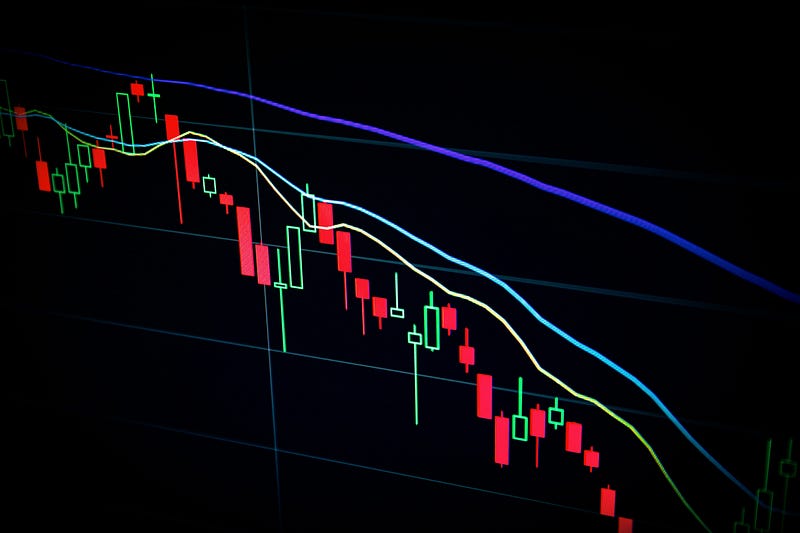
Photo by Maxim Hopman on Unsplash


CVTX’s versatility

Built on Polygon, CVTX is integrated into the tokenomics ecosystem of CarrieVerse and its card strategy role-playing game (RPG) SuperKola Tactics. It is also the governance token for the CarrieVerse blockchain gaming platform Cling. CVTX can be traded for USDT on all of the exchanges it is listed on except for GOPAX, which offers a CVTX/KRW pair. KRW stands for Korean won.


Global expansion

Last month, CarrieVerse also joined the Dubai Multi Commodities Centre (DMCC), the UAE’s largest free-trade zone for blockchain and crypto companies, as a metaverse service provider. The platform has received approval to set up a local subsidiary there, which will serve as a base to expand its ecosystem, particularly in the Middle East and North Africa (MENA) region.

“The market value of CarrieVerse and CVTX is expected to significantly increase once the platform is released in target regions. This will serve as a foundation for more listings on major domestic and international exchanges,” the company said, adding that its number of daily active users has exceeded 5,000.


Bitget’s substantial presence

Bitget is a cryptocurrency derivatives exchange registered in Seychelles, with global offices in Japan, South Korea, Canada and more. As one of the top ten derivatives exchanges in the world according to CoinMarketCap, Bitget handles over five million users and more than 500 cryptocurrencies. It is also registered on South Korea’s two largest exchanges, Upbit and Bithumb, as a market that facilitates deposits and withdrawals after the implementation of the crypto Travel Rule. The Travel Rule, enforced by the intergovernmental Financial Action Task Force, states that VASPs must share personal information about customers when facilitating crypto transactions that exceed a certain amount as a means of preventing related crimes.

More to Read
View All
Web3 & Enterprise·

Sep 05, 2025

Yunfeng Financial buys 10K ETH as Hong Kong firms deepen push into digital assets

Yunfeng Financial Group has purchased 10,000 Ethereum (ETH) on the open market for $44 million, the Hong Kong–listed fintech said in a Sept. 2 statement. The company described the move as part of a broader plan to increase exposure to digital assets, joining firms such as Bitmine Immersion Technologies and SharpLink Gaming that have incorporated ETH into corporate treasuries.Photo by DrawKit Illustrations on UnsplashETH backs RWA strategy, inflation hedgeThe acquisition follows Yunfeng’s July outline to expand into Web3, real-world asset (RWA) tokenization, artificial intelligence, and ESG-linked assets aimed at net-zero goals. Yunfeng said ETH could support its Web3 and RWA businesses, help optimize assets, and provide a hedge against traditional currencies. It is also exploring ways to incorporate ETH into insurance products. The RWA market has grown in recent months, with on-chain RWAs totaling $28.19 billion at the time of publication, up 7.37% from a month earlier, according to data from RWA.xyz. Yunfeng noted it may adjust the size of its ETH reserves in line with market conditions, regulation, and its financial position. The company said the purchase falls below Hong Kong Stock Exchange disclosure thresholds: all five percentage ratios—assets, profits, revenue, consideration, and equity capital—remain under 5%. It stated it will meet disclosure requirements if future transactions push holdings beyond the relevant limits. Institutions drive ETH momentumThe announcement comes amid heightened interest in ETH. CryptoRank data show a 30% year-to-date price increase, and Tom Lee, Fundstrat’s head of research and chair of BitMine, has forecast a near-term range of $4,000 to $5,450. He argued that Ethereum is well placed to serve institutional use cases, pointing to its role in hosting more than half of the roughly $250 billion stablecoin supply and its prominence in asset tokenization. Hong Kong continues to position itself as a regional hub for blockchain and digital assets despite Mainland China’s 2021 ban on crypto trading. In a separate development, Fosun Wealth Holdings launched tokenized shares of Sisram Medical, an Israeli med-tech company listed in Hong Kong. The tokens, representing about $328 million in market value, were deployed across Vaulta, Solana (SOL), Ethereum, and Sonic. Fosun said it plans to tokenize additional corporate bonds and shares, without naming issuers or setting a timeline. Other local companies have also disclosed crypto exposure. Linekong Interactive Group reported holdings of 92.07 BTC, 943.63 ETH, and 6,091.7 SOL as of June 30 after purchases in the first half of the year, with cumulative unrealized gains of roughly $7.5 million. Linekong said it views crypto as a long-term investment and may increase its holdings pending board and shareholder approval. 

news
Web3 & Enterprise·

Aug 29, 2023

HeyBit to Cease Virtual Asset Deposit Services in October

HeyBit to Cease Virtual Asset Deposit Services in OctoberSouth Korean centralized finance (CeFi) company HeyBit announced on Monday that it will terminate its virtual asset deposit service, Harvest, on October 2 in line with regulatory guidelines.Photo by Andre Taissin on UnsplashRegulatory limitations“Although we have made efforts to pay promised returns and provide stable digital asset investment products, we have ultimately decided to terminate the Harvest service in accordance with the policy guidelines of regulatory authorities,” the company said in a statement.It further emphasized that the service termination is solely due to regulatory restrictions, rather than questions of financial integrity or credit issues, while also citing its judgment call that running a deposit business is practically impossible at the moment.“Although some customers of other businesses have faced damages due to operational issues, the results of our due diligence report for the second quarter of 2023 were consistent with that of our last four reports, stating that the value of the assets we own exceeds that of deposited assets,” HeyBit said, seemingly referring to the recent class-action lawsuits against the Korean crypto platforms Haru Invest and Delio, who had unexpectedly suspended customer deposits and withdrawals, inciting KRW 50 billion (approximately $39 million at the time of the incident) in damages in the process. The company stressed that it was unrelated to this debacle and was securely storing all customer assets, alleviating potential investor concerns.The company has thus been able to properly handle management operations involving promised returns, additional deposits, and withdrawals for Harvest users up until now.However, it has decided to comply with the Virtual Asset User Protection Act, which is set to take effect next year in Korea. Article 7, Paragraph 2 of this act outlines that virtual asset companies must keep their own virtual assets and customers’ virtual assets separate, and they must own the same quantity and type of virtual assets — including deposited assets — as those that have been entrusted by customers.“We are thus unable to use the assets entrusted to us by our customers as a source of return,” HeyBit said.Planned reboundDespite this setback, the company promised to resume services based on regulatory and policy changes in the future, including revamping virtual asset deposit services.

news
Policy & Regulation·

Jul 21, 2023

Korea’s FSC Embarks on Developing Regulatory Framework for VASPs

Korea’s FSC Embarks on Developing Regulatory Framework for VASPsThe South Korean Financial Services Commission (FSC) has taken a step towards the development of a virtual asset regulation system by seeking external parties to undertake a research project in this area, according to local news agency News1.Photo by Joshua Miranda on PexelsSecond phaseEarlier this month, the National Assembly passed the Virtual Asset User Protection Bill, aimed at protecting investors and preventing unfair trading practices. This legislative accomplishment, scheduled to go effective in July next year, is referred to as the “first phase” of virtual asset regulations. Building upon this foundation, the FSC has now shifted its focus to the “second phase,” which involves the regulation of virtual asset service providers (VASPs).Regulating VASP operationsOne primary concern regarding VASPs is the potential for conflicts of interest arising from their involvement in the issuance and distribution of virtual assets. In response, the FSC is determined to design a regulatory framework that covers a wide range of virtual assets, including stablecoins, security tokens, and utility tokens.In addition to this, the FSC intends to establish a system that governs advisory and disclosure businesses, which will play a crucial role in disseminating information about asset prices and disclosures.Moreover, the regulatory system will include guidelines for holding parties accountable in case of incidents and for overseeing the operations of VASPs to maintain a safe and fair market environment.The FSC acknowledges the significance of aligning policies with international standards. To achieve this, the commission will conduct an examination of virtual asset regulatory approaches taken by different countries and international organizations. Through this study, the FSC aims to integrate global best practices and approaches into Korea’s own regulatory framework for virtual assets.Once the study is complete, the FSC has to report the result to the National Policy Committee of the National Assembly by July 2024 before the Virtual Asset User Protection Bill goes into effect.

news
Loading