Top

Seoul Labs to build layer 2 blockchain mainnet using SASEUL

Web3 & Enterprise·November 23, 2023, 9:32 AM

South Korean blockchain solutions provider Seoul Labs announced Thursday (local time) that it will build a layer 2 mainnet utilizing the third-generation blockchain engine SASEUL. This comes in an effort to strengthen the scalability of the SASEUL network and improve capabilities for large-scale traffic processing. Layer 2 refers to a set of off-chain solutions built on top of a layer 1 network to reduce bottlenecks with scaling and data.

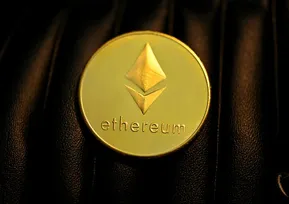
Photo by Shubham Dhage on Unsplash


Scalability and stability

Seoul Labs plans to actively utilize the mainnet’s core functions, such as its HAP-2 hypothesis acceptance verification algorithm and dual chain mechanism as well as its ability to solve storage space problems. In particular, the HAP-2 hypothesis acceptance verification algorithm is a more efficient method for generating blocks than the proof of Work (PoW) algorithm that is widely used in blockchain mainnets, significantly improving scalability.

According to the company, the layer 2 mainnet will implement an approach to becoming a node on the network without a graphics processing unit (GPU).

“By building the layer 2 mainnet, we will be able to build the SASEUL blockchain network into a stable and scalable platform,” said Dohee Jang, CEO of Seoul Labs.


Multifaceted solution

The project is also poised to become a solution to the excessive computing resources and electrical energy required to run blockchain networks that lead to environmental repercussions. In addition, the company is facilitating research and development for the implementation of central bank digital currencies (CBDCs) into the global economy. Notably, the South Korean government is also planning to launch a CBDC pilot project by 2024.

“Recently, central banks around the world have been promoting the integration of CBDCs, but they are facing various problems in terms of scalability and speed,” said an unnamed employee at ArtiFriends, the company behind the SASEUL mainnet. “Layer 2 mainnet is a stable and scalable platform suitable for CBDCs.”


More to Read
View All
Policy & Regulation·

Nov 07, 2023

Hong Kong regulators consider opening up crypto ETFs to retail

Hong Kong regulators consider opening up crypto ETFs to retailHong Kong regulators are now exploring the possibility of allowing retail investors to participate in spot crypto exchange-traded funds (ETFs).The CEO of Hong Kong’s Securities and Futures Commission (SFC), Julia Leung, was cited by Bloomberg on Sunday as having indicated that provided that the necessary regulatory approvals and checks are in place, the regulator may be open to the notion of retail participation where spot crypto ETFs are concerned. Leung emphasized the regulator’s openness to innovative technology that enhances efficiency as long as it addresses potential new risks.Photo by Markus Winkler on Pixabay‘Happy to give it a try’She stated: “We welcome proposals using innovative technology that boosts efficiency and customer experience. We’re happy to give it a try as long as new risks are addressed. Our approach is consistent regardless of the asset.”While both the United States and Hong Kong currently permit futures-based cryptocurrency exchange-traded funds (ETFs), the adoption of such instruments has been relatively modest in comparison to the broader fund industry.In Hong Kong, there are currently ETF listings for products like Samsung Bitcoin Futures Active, CSOP Bitcoin Futures and CSOP Ether Futures, with a total combined asset value of approximately $65 million. In June, Hong Kong’s largest ETF manager, Hang Seng, suggested that it too was considering a crypto product offering.In accordance with the SFC’s digital asset regulations, individual investors already have the opportunity to trade prominent cryptocurrencies like Bitcoin and Ether on licensed cryptocurrency exchanges since June 1. Presently, BC Technology Group Ltd.’s OSL and HashKey Exchange are the only platforms in Hong Kong with permits for cryptocurrency trading. Additionally, there are expectations that mandatory regulations concerning stablecoins will be introduced over the course of the next year.Prioritizing investor protectionLeung expressed the regulator’s cautious approach, stating:“As the crypto ecosystem evolves step-by-step to the point where we’re comfortable, then we’re happy to open up more access to the wider investing public.”Notably, Hong Kong also recently unveiled its Web3 plans, highlighting its commitment to embracing blockchain and decentralized technologies.Hong Kong introduced a specialized regulatory framework for virtual assets in June which are designed to attract businesses while prioritizing investor protection. That need to protect consumers has been underscored recently by the alleged fraud that has subsequently been uncovered involving HK$1.6 billion ($204 million) at the unlicensed JPEX cryptocurrency exchange in the city.Market reactionThe significance of such a move isn’t lost on crypto market participants. Taking to X, one wrote: “Seismic shift. Hong Kong’s play could reshape the Asian crypto landscape. #Bitcoin ETFs? A strategic move to anchor HK as the digital nexus of Asia.” Another claimed that this “might redefine the crypto landscape and fuel the next bull market.”A report published by the Hong Kong Stock Exchange in April found that crypto ETFs have the potential to play a significant part in the next phase of digital asset innovation in Asia.Leung emphasized the importance of a strong and comprehensive regulatory structure, highlighting the SFC's efforts to enhance transparency in processing license applications for virtual asset exchanges.Moreover, the Hong Kong Monetary Authority (HKMA), the Chinese autonomous territory’s central bank, is actively exploring the possibility of offering guidance to banks regarding the provision of digital asset custodial services. These services are considered vital for nurturing the growth of a digital asset ecosystem and ensuring investor security.

news
Web3 & Enterprise·

Jul 13, 2023

Internal Dispute Sees Co-Founder Depart 5ire

Internal Dispute Sees Co-Founder Depart 5ire5ire, the Dubai-based blockchain platform, is facing a departure of one of its co-founders, Vilma Mattila, due to an internal dispute with her fellow co-founders.In discussion with Tech in Asia, Mattila confirmed her upcoming resignation, stating that she disagreed with the management and financial decisions made by the other co-founders without her consent. The exact timeline of her departure was not disclosed.Photo by bady abbas on UnsplashIndian originsMattila, who was already recognized as an angel investor, co-founded 5ire alongside Indian nationals, CEO Pratik Gauri and CTO Prateek Dwivedi. The company gained attention last year after a successful series A funding round that valued it at a remarkable $1.5 billion, establishing its status as a blockchain unicorn.While the start-up project has established itself in Dubai, its origin story leads back to India. In 2022, 5ire entered into a partnership with the Indian government via Atal Tinkering Labs (ATL). ATL is running an initiative to create and promote a culture of innovation and entrepreneurship in India. As part of that program which is being run in more than 10,000 Indian schools, 5ire collaborated with ATL to provide a blockchain module.Although headquartered in Dubai, the project still maintains that it is “a network of local developer communities established in various cities across India.” It has also been active in the country that makes for its administrative home. Last month, Abu Dhabi University in the United Arab Emirates hosted its first 5ire Web3 and blockchain hackathon.The university had signed a Memorandum of Understanding (MoU) with 5ire in February, with a view towards strengthening blockchain education, research and entrepreneurship, while maintaining a focus on sustainability and accessibility.$100 million raiseIn July 2022, it emerged that 5ire had raised $100 million from the UK-based Sram & Mram Group, an international conglomerate that concerns itself with projects in South and Southeast Asia. It got $10 million on signing the deal, with other tranches to follow. As of January, it had called off $20 million of that funding.5ire is positioning itself as “the world’s first blockchain unicorn with sustainability at its core.” The project seeks to align itself with the Sustainable Development Goals (SDGs) set out by the United Nations. It’s a layer one EVM-compatible smart contract platform that focuses on the development of a for-benefit blockchain ecosystem, aligned with the United Nations SDGs.Working towards mainnet releaseThe company has been diligently working on the development of 5irechain, a blockchain designed around the principles of the “Fifth Industrial Revolution,” from which the company derives its name. The launch of its mainnet is anticipated to take place in the coming quarters. In November 2022, it launched its Thunder (Alpha) testnet. Testnet Thunder (Beta) went live in February of this year.As the departure of Vilma Mattila unfolds, the future direction and leadership of 5ire will come under scrutiny. It remains to be seen how this internal dispute will impact the company’s progress and reputation in the blockchain industry.

news
Policy & Regulation·

Jul 04, 2023

Thai SEC Implements Measures to Protect Crypto Investors

Thai SEC Implements Measures to Protect Crypto InvestorsIn response to the crypto lending crisis that unfolded in 2022, prompting companies like BlockFi and Celsius to declare bankruptcy, Thailand’s Securities and Exchange Commission (SEC) has introduced new regulations aimed at safeguarding investors in the digital assets space.Photo by Jakob Owens on UnsplashDisclosing risk warningsThe guidelines, issued on Monday, require digital asset service providers to provide comprehensive warnings that emphasize the risks associated with cryptocurrency trading. All platforms must prominently display a message stating: “Cryptocurrencies are high risk. Please study and understand the risks of cryptocurrencies thoroughly, because you may lose the entire investment amount.” Prior to utilizing the service, users must consent to and acknowledge the risks.Crypto lending prohibitionIn addition to the risk disclaimer, the new guidelines explicitly forbid service providers from using customer funds for lending or investment purposes. This ban on crypto lending services prevents platforms from offering any returns on deposited crypto to customers. By implementing these measures, the Thai SEC aims to enhance investor protection and shield investors from the risks posed by lending services. The regulations are scheduled to take effect at the end of the month.Today’s guidelines are the product of months of deliberation. Discussions surrounding investor protection regulations commenced on September 1, 2022, when the SEC acknowledged the necessity for security warnings by cryptocurrency businesses to disclose the risks associated with trading digital assets. The prohibition on digital asset operators offering deposit-taking and lending services was deliberated during meetings held on December 1, 2022, and May 11, 2023.Response to crypto platform failuresThe introduction of these investor protection rules follows a significant crisis in the crypto lending sector that unfolded during the bear market of 2022. Several crypto lending firms, which had collected billions of dollars in customer deposits by promising substantial returns, collapsed during this period. Prominent lending companies such as Celsius and BlockFi filed for bankruptcy, resulting in investors’ funds being trapped in lengthy bankruptcy proceedings.The Thai SEC’s proactive approach in implementing these regulations reflects the growing concern for investor welfare within the cryptocurrency industry. By requiring clearer risk disclosures and prohibiting the use of customer assets for lending and investment, the SEC aims to instill greater confidence and transparency in the digital asset service sector.Crypto academyThailand’s SEC has run other initiatives in efforts to better protect investors. In January the Commission launched the SEC Crypto Academy, an e-learning course. The objective of that initiative was to provide investors with a basic understanding of the digital assets space prior to investing. At the time of the launch of the course, the SEC said that “the more you know your investments, the less risk you will have.”These latest regulations not only serve as a protective measure for Thai investors but also set an example for other jurisdictions to evaluate and enhance their own regulatory frameworks. As the crypto industry continues to evolve, prioritizing investor protection becomes crucial in fostering a more sustainable and responsible ecosystem.

news
Loading