Top

Korean health management app leverages blockchain for iris-based solutions

Web3 & Enterprise·November 22, 2023, 9:28 AM

IRIS, a blockchain foundation focused on healthcare, announced on Wednesday (local time) the launch of a health management app developed in collaboration with Hongbog, a South Korean provider of iris-based biometric systems. This app offers services customized to each user’s health status and lifestyle.
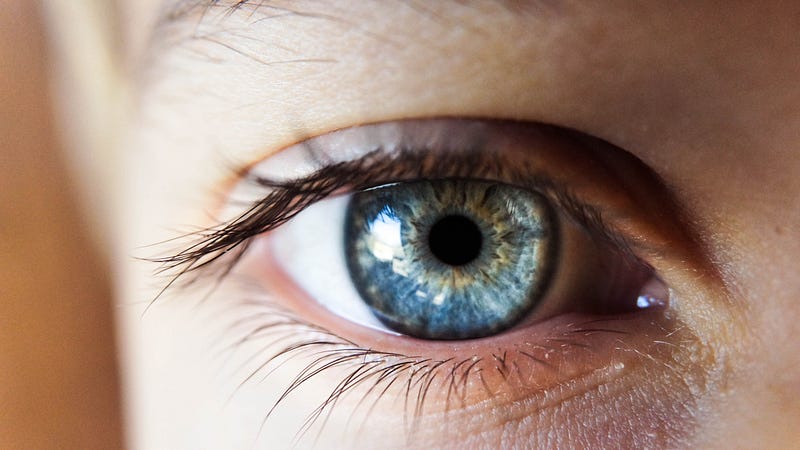
Photo by Kalea Jerielle on Unsplash


Iridology-based health analysis

Unlike other healthcare platforms that primarily focus on exercises, IRIS’ app offers long-term and periodic health trend analysis reports through iris photography. This approach is based on “iridology,” a concept used in traditional Korean medicine, and the app also recommends visits to specialized healthcare providers based on its findings.

The app instantly analyzes a user’s biometric information through artificial intelligence once a picture of their eyes is captured with a smartphone camera. Within 15 seconds, users can view their results, based on which the app recommends personalized exercises and nutrients.

This platform serves both personal disease management and prevention, and can also be utilized by public health centers for monitoring the health of local residents. Presently, it provides five health ratings for cholesterol, stress levels, and four specific organs: the brain, lungs, liver and kidneys. Future updates will optionally include information on an additional 15 organs, such as the heart, bronchi, pancreas and stomach.


Blockchain-powered privacy protection

A representative from IRIS conveyed that their goal in an aging society is to assist customers in preventing serious illnesses and promoting longer, healthier lives. They emphasized that the app enables regular measurement of health indicators, aiding in disease prevention and management. The representative also mentioned that by storing sensitive healthcare information on the blockchain, the service eliminates the risk of personal data leaks.


More to Read
View All
Policy & Regulation·

Apr 19, 2023

Korea’s DAXA Prohibits Relisting of Delisted Cryptos for a Year

Korea’s DAXA Prohibits Relisting of Delisted Cryptos for a YearThe Digital Asset Exchange Alliance (DAXA) in Korea will prohibit the relisting of cryptocurrencies delisted from its member exchanges for a year, according to Korean media outlet Edaily.©Pexels/Jan van der WolfDAXA’s arbitrary regulationSome criticize this regulation, arbitrarily created by DAXA, which consists of five major Korean cryptocurrency exchanges (Upbit, Bithumb, Coinone, Korbit, and Gopax), as this rule poses a significant impact on crypto issuers and investors.In fact, a blockchain industry insider said that when cryptos are designated by DAXA as a risky asset, their operators receive a notification from the group that relisting is possible after a year once delisted. So far, assets that have been delisted or designated as such are WEMIX, PCI, BASIC, SRM, and OMG.Coinone’s relisting of WEMIXDAXA added this stipulation, as it faced criticism for the absence of relisting regulations in its guidelines when Coinone, one of its members, exclusively relisted the WEMIX token. This raised doubts about the self-regulation of the industry because DAXA had decided the delisting of WEMIX on the grounds that the information on its circulation supply was unreliable.Crypto enterprises are complaining about DAXA’s devising of strict penalties when delisting processes are not transparent. DAXA has stated that a consensus has been reached for the first draft and it will be continuously revised.Stronger DAXA presenceThe Korean crypto industry forecasts that this regulation will empower DAXA’s presence in the crypto scene, considering that its members are responsible for 98% of the domestic trading volume.Experts note that DAXA needs to establish fairness and transparency in order for it to gain trust as a self-regulatory body. Park Yong-beom, Chairman of the Korea Society of Blockchain, said rules on listing and delisting have to be fair and transparent, and if market participants find them unconvincing, it would undermine the credibility and authority of the self-regulatory body.In an interview with Economic Review, Former KB Kookmin Bank CEO Lee Kun-ho suggested that DAXA should prioritize market vitalization and ecosystem strengthening. He believes that instead of focusing on market management and supervision, DAXA should concentrate on enhancing investor protection.

news
Markets·

Jun 27, 2023

Huobi Delists USDD Stablecoin Pairs

Huobi Delists USDD Stablecoin PairsHuobi Global, the Seychelles-headquartered cryptocurrency exchange, has made the decision to delist ten trading pairs, primarily involving tokens used in transactions with the USDD stablecoin issued by the TRON DAO Reserve.That’s according to an announcement published to Huobi’s website on Monday. These tokens are supported by TRON founder Justin Sun, who also acts as an advisor to Huobi. The delisting, effective from June 29, will impact several tokens, including the Cardano blockchain token ADA, Solana’s SOL, ApeCoin’s native token APE, MATIC from Polygon, FIL from Filecoin, and ETC from Ethereum Classic.Photo by Napendra Singh on UnsplashUnregistered securitiesAll of these tokens were offered on the Houbi platform in pairs with USDD. Additionally, trading pairs involving ARPA, GAS, QTUM, and ZKS with Bitcoin will also be removed from the platform. Huobi stated that these changes are aimed at providing users with an improved trading experience.Originating from China, Huobi has played a significant role in spot and derivatives trading for digital assets. The decision to delist these tokens follows their classification as unregistered securities in recent lawsuits by the US Securities and Exchange Commission against Binance and Coinbase. Prior to Huobi, Robinhood and eToro had already removed some of these tokens from their platforms.Stablecoins are designed to maintain a stable value by pegging them to less volatile assets like the US dollar. They achieve this by holding equivalent reserves of cash and cash-equivalent assets as collateral. Stablecoins are widely used by traders for transferring funds between exchanges and as a hedge against price volatility. This makes them some of the most heavily-traded tokens in the crypto space.USDD stabilityUSDD, the stablecoin at the center of this delisting, currently ranks as the eighth largest stablecoin by market capitalization, with approximately $750 million. Huobi is the primary exchange for buying and trading USDD, according to CoinGecko, a crypto market data provider. USDD is backed by various digital assets such as Bitcoin, Ether, and TRX, and it is issued by the TRON DAO Reserve. The TRON DAO Reserve operates as a decentralized autonomous organization (DAO), utilizing blockchain technology to automate voting and transaction processes.USDD is an algorithmic stablecoin, with the assets held in backing the coin over-collateralized to a level of 170%. Despite this, the stablecoin has had issues in maintaining its US dollar peg from time to time. The issue has been that the token is partly backed by the TRX token, the native token of the TRON ecosystem. If TRX backing is discounted, the stablecoin is only 49% backed.Reports indicate that Sun acquired a controlling stake in Huobi through a Hong Kong-based asset manager, reportedly paying around $1 billion in November. However, Sun hasn’t provided any details of any such ownership stake.Huobi’s decision to delist these trading pairs reflects the evolving regulatory landscape and the need for exchanges to ensure compliance with securities regulations. By removing tokens that have faced legal scrutiny, Huobi aims to maintain a robust and compliant trading environment for its users.

news
Web3 & Enterprise·

Nov 08, 2023

GDAC joins hands with Zodia Markets to cultivate global digital asset network

GDAC joins hands with Zodia Markets to cultivate global digital asset networkGDAC, a cryptocurrency exchange run by Korean blockchain-based fintech company Peertec, has signed a business deal with Zodia Markets, a European digital asset marketplace under the UK’s Standard Chartered Group. As key institution-first digital asset platforms in their respective regional markets, the two enterprises plan to work together to build a global digital asset and stablecoin network to drive innovation, with a focus on preventing money laundering and reducing financial costs.Photo by m. on UnsplashAbout Zodia Markets and GDACThe Standard Chartered Group established Zodia Markets in 2021 following approval from the UK’s Financial Conduct Authority (FCA). The group’s latest partnership with GDAC represents a step further into the Korean market, in which it is already a major player through its local branch, the Korea Standard Chartered Bank.GDAC has been making strides in cybersecurity by forging partnerships. The exchange teamed up with Genians, a cybersecurity firm listed on the KOSDAQ stock exchange, and attracted investments from it to accelerate the establishment of a global security network. In October, GDAC entered into a collaborative agreement with crypto wallet provider Bitgo, aiming to enhance the security of the exchange’s wallet services.The exchange serves not only profit-oriented corporations but also non-profit organizations, such as the Community Chest of Korea. It also runs the GDAC Fund Service, a digital asset management solution for corporate clients that it jointly founded with Woori Financial Group.Dedication to different client demographics“Through our partnership with Zodia Markets, a subsidiary of the UK’s Standard Chartered Bank, we look forward to providing even higher-value digital financial services to our corporate clients,” said Lee You-ree, CCO of GDAC. “We also plan to continuously launch helpful, high-liquidity digital financial services for individual customers as well through our work with a European digital financial platform.”

news
Loading