Top

RBI Governor: No place for ‘crypto mania’ in India despite U.S. ETF approval

Policy & Regulation·January 13, 2024, 10:54 AM

At the 16th Mint Annual BFSI Summit and Awards in Mumbai, Reserve Bank of India (RBI) governor Shaktikanta Das reiterated the central bank's cautious stance on cryptocurrencies, regardless of recent global developments.


During the event, which was held on Thursday, Das took to the stage. He was asked if the approval of spot bitcoin exchange-traded funds (ETFs) in the United States gives legitimacy to cryptocurrency.
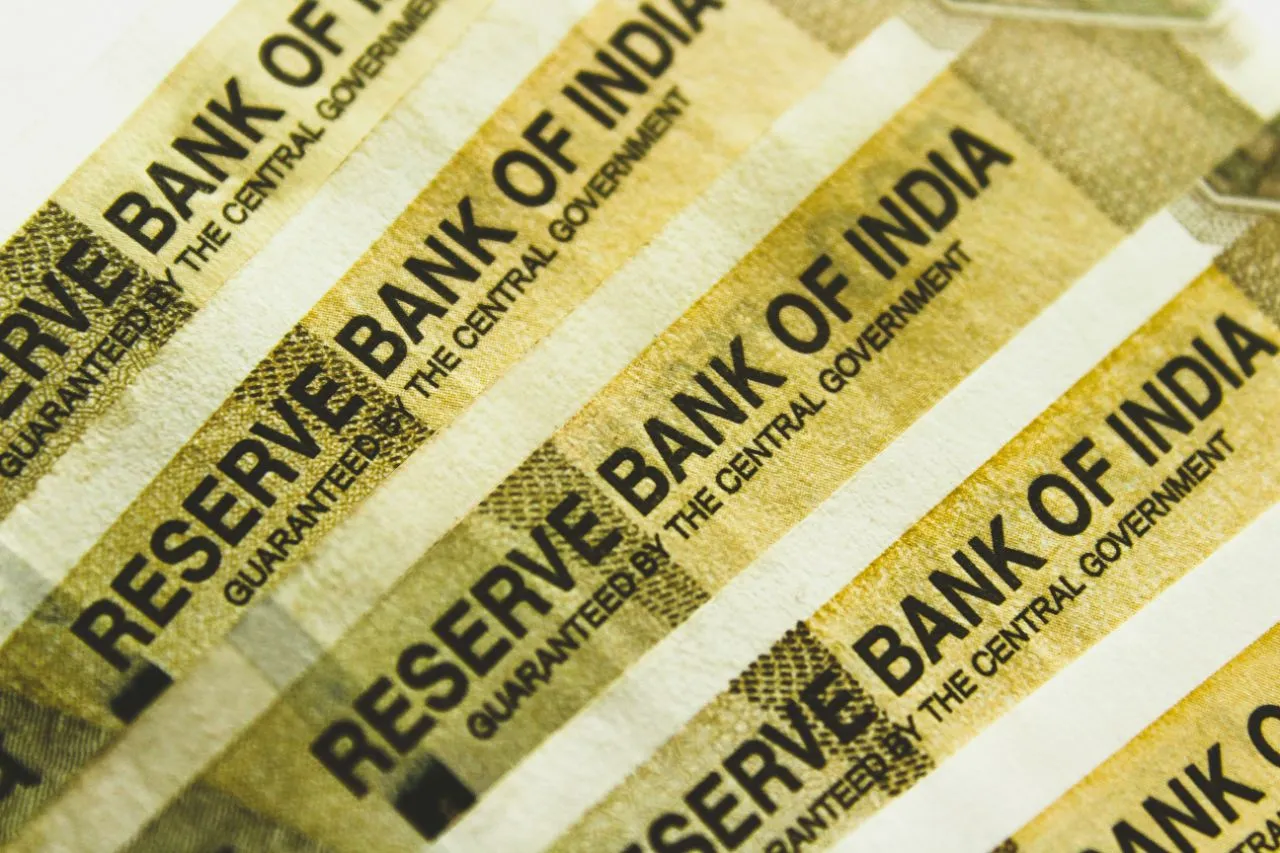
https://asset.coinness.com/en/news/8f406444c88214126a5f00df6058da92.webp
Photo by rupixen.com on Unsplash

Unwavering response

Das was unwavering in his response, maintaining that the RBI remains steadfast in its approach and opposition to cryptocurrencies. He stated:


"The way we look at crypto remains unchanged, irrespective of who does what." 


He emphasized that the RBI does not intend to emulate regulatory decisions made by other countries. Despite this global development, Das maintained the RBI's reservations, expressing concerns about the potential risks associated with venturing further into the cryptocurrency space.


Favoring a crypto ban

Last month, officials from the Indian central bank told the Hindustan Times that the RBI believes that the Indian government should impose an outright ban on cryptocurrencies in India. One unnamed official stated:

"The government cannot sidestep the RBI’s concerns while deciding on cryptocurrencies, as it is responsible for monetary stability in India and maintains price stability."


Das acknowledged the potential of blockchain technology, the foundation of cryptocurrencies, highlighting its versatility for various applications. Both the central bank and the Indian government have encouraged the development of blockchain rather than crypto. Last year, an RBI-led initiative, the National Payments Corporation of India (NPCI), recruited blockchain expertise to further develop that project.


However, he made it clear that the RBI's focus remains on strengthening governance and assurance in regulated entities, with an emphasis on early identification, close monitoring and effective management of risks.


Citing ‘Tulipmania’

Das cautioned against a “crypto mania,” drawing parallels to the historical tulipmania of the 17th century. He underscored the RBI's position that embracing cryptocurrencies could pose significant risks, echoing his previous warnings about the macroeconomic and financial stability risks associated with these digital assets.


The governor emphasized the importance of instilling an appropriate risk culture within organizations, with active involvement from the board and senior management. Das stated that the RBI expects top officials and board members to play a more proactive role in risk management.


India’s crypto community responded critically to the RBI governor’s comments. Ajeet Khurana, a Web3 growth investor, responded on social media, stating:

”Dear RBI governor, I respect you a lot, and I don’t mind that you don’t like Crypto. Diverse points of view are healthy. Yet, using words like 'tulip mania' only gives the impression that you are out of touch with what is happening in Web3. My request, Sir, is that you update yourself.”


Vivek Sen, the founder of Bitgrow Lab, wrote:

”Dear RBI, First, don't club Bitcoin with ‘Crypto’. Secondly, Tulips did not experience an 80% drop on four occasions, and they recovered each time.”

Despite opposition to cryptocurrencies in official circles in India, a report last year produced by Chainalysis found that India is leading the way in Asia in terms of grassroots adoption of cryptocurrencies.
 

More to Read
View All
Web3 & Enterprise·

Dec 27, 2023

WEMIX’s staked token listed on BitMart exchange

South Korean gaming publisher Wemade’s layer 1 blockchain WEMIX has announced the listing of stWEMIX — the tokenized form of staked WEMIX — on the global cryptocurrency exchange BitMart, according to an official announcement on WEMIX’s Medium page last Saturday. stWEMIX acts as a liquidity token of the native coin WEMIX that allows users to participate in trading, yield farming and borrowing.Photo by Maxim Hopman on UnsplashBitMart’s servicesEstablished in 2018, BitMart offers services like futures contracts and different types of trading, including currency, over-the-counter, decentralized and network-wide trading. The token was listed for trading on the exchange last Friday at 10 a.m. (UTC) and is currently priced at $3.48 as of this writing. Exclusive eventsThe exchange said that it is independently holding several events with the help of the WEMIX Foundation until Jan. 4 to celebrate the listing. This includes rewards in the form of stWEMIX, which will be distributed to new and existing users alike on BitMart who deposit or buy at least 100 USDT of stWEMIX. 50 users who record highest stWEMIX trading volume during the event period and those who participate in stWEMIX Fixed Savings will also receive rewards. BitMart’s Fixed Savings subscription is a system that pays interest on cryptocurrencies that are deposited during a designated period ranging from a week to one month. Users can redeem their funds only after the period is over, and both the principal and interest are paid to their spot wallets without extra fees.

news
Web3 & Enterprise·

Jun 16, 2025

KuCoin Thailand moves to full platform launch

Seychelles-headquartered global crypto exchange KuCoin has announced the full launch of its affiliate in Thailand. KuCoin Thailand was first presented by KuCoin back in April. The affiliate company emerged through a rebranding of local digital asset exchange, ERX. The renamed entity continues to be operated by ERX Company Ltd., while benefiting as a KuCoin affiliate from its global market presence and global exchange infrastructure.Photo by Bradley Prentice on UnsplashERX platform users onboardedSince that initial announcement, the exchange has been operated by onboarding users on an invite-only basis. All of the original ERX platform users have been ported across to KuCoin Thailand. In a statement published to its website on June 13, KuCoin Thailand pointed out that it is moving on from that invite-only phase to fully launch the platform.  It asserted that the platform is fully licensed by Thailand’s Securities and Exchange Commission (SEC) and it has now proceeded to full launch with no further access restrictions. In tandem with the full public launch of the platform, the company indicated that it was running a special rewards initiative with a prize pool of one million Thai Baht ($30,845) and introducing a new brand mascot named “Kuku.” In a press release, KuCoin claimed that “this marks the first fully regulated local digital asset exchange under KuCoin's brand,” contributing towards the company’s goal “to build fast, secure, and user-friendly infrastructure for crypto users” globally. Strengthening KuCoin’s presence in Southeast AsiaKuCoin CEO BC Wong described the launch as “a significant milestone in [the company’s] global compliance journey.” He added: “From being the first global exchange to register with India's FIU to now launching the first local compliant platform in Thailand, this marks a significant step toward strengthening our presence in the fast-growing markets of South East Asia.” In discussion with Cointelegraph, the KuCoin CEO provided an insight into how the company is approaching global growth while focusing on local market considerations. He stated: “While KuCoin Global supports a wide range of products for international users, we plan to expand locally in line with regulations and market demand.” Wong confirmed that the newly branded entity facilitates crypto spot trading for its users, with Thai Baht-based on and off ramps. Regulator & police enforcementThailand’s SEC moved to block five cryptocurrency platforms from accessing investors resident in Thailand late last month. The exchanges, OKX, Bybit, CoinEx, XT.com and 1000X.Live, were deemed to have been offering their services in Thailand on an unlicensed and unauthorized basis. In addition to blocking access, criminal complaints have been filed against all five exchanges. Thai police have also been busy recently with crypto-related enforcement. Last month, a Vietnamese woman was arrested on the basis of her alleged involvement in a crypto-related scam that saw 2,600 victims lose a total of $300 million. On June 12, Bangkok-based news platform Khaosod English reported that a Chinese man had been arrested in connection with a $6 million Bitcoin fraud case.

news
Web3 & Enterprise·

Aug 04, 2023

Nomura’s Laser Ventures Invests in Singapore’s Solv Protocol

Nomura’s Laser Ventures Invests in Singapore’s Solv ProtocolSolv Protocol, a Singapore-based DeFi startup, has revealed a significant stride forward with a $6 million funding round, drawing support from Laser Digital, the digital asset subsidiary of Japanese global financial services conglomerate Nomura.The project team provided details on the funding round via a blog post published to its website earlier this week. Accompanying Laser Digital in the funding round, Singapore’s UOB Venture Management also participated, alongside investors such as Matrix Partners, Bing Ventures, Mirana Ventures, Apollo Capital, Bytetrade Labs, and others.Photo by Towfiqu barbhuiya on Unsplash$14 million cumulative fundingThis injection raises its cumulative funding to an impressive $14 million. The innovative Solv Protocol has been developed to facilitate on-chain fund management within the realm of public blockchains.Delving into the intricacies of the Solv asset management protocol, Olivier Dang, COO of Nomura Securities’ wholesale digital office, expanded on its transformative potential, stating: “Solv has built a trustless institutional DeFi platform integrating brokers, underwriters, market makers, and custodians to create the first fund infrastructure on the blockchain to bridge DeFi, CeFi, and TradFi liquidity.”$100 million in trading volumeSolv Protocol is a DeFi infrastructure project that enables users to create and trade financial NFTs. The protocol concerns itself largely with ERC-3525, an Ethereum standard for semi-fungible tokens, the characteristics of which lend themselves well for financial use cases.At the heart of Solv’s business model lies a unique mechanism. Any fund utilizing its solution inherently allocates a portion of its assets under management. Inaugurated in the second quarter of this year, Solv has already facilitated over $100 million in trading volume.Semi-fungible token innovationThe origins of Solv are rooted in the pursuit of an optimal Ethereum token standard for effective fund management. Dissatisfied with existing standards, the founders, primarily Chinese technologists, forged an innovative path. Traditional ERC-20 fungible tokens weren’t deemed suitable due to the need for a new smart contract token for every customization. Similarly, non-fungible tokens (NFTs) posed limitations, being intrinsically designed as individual units not readily divisible, which is essential for issuing shares in a fund. The security token standard, ERC-1400, didn’t quite align either.Thus, Solv birthed the semi-fungible token through the development of ERC-3525, a groundbreaking solution to its unique challenge.While larger asset managers like Franklin Templeton and Ondo Finance have adhered to fungible tokens, a growing trend is emerging in the traditional asset management sector — a movement toward blockchain integration. UK-based Abrdn recently introduced a fund on the Hedera DLT network, while industry giant Schroders is exploring blockchain tokenization under Singapore’s Project Guardian initiative.It’s been an eventful week for Nomura’s Laser Digital. Alongside news of this investment, the company also announced its recent acquisition of a license from Dubai’s Virtual Asset Regulatory Authority (VARA). This regulatory green light bolsters its presence in the global digital asset sector.Nomura’s Laser Digital is amplifying its presence within the blockchain and digital asset domain, marking its sixth such investment within this year alone. Meanwhile, projects like Solv Protocol are pushing the boundaries of innovation through the development of semi-fungible tokens, extending the use cases of blockchain technology as it does so.

news
Loading