Top

LINE NEXT enters into a strategic partnership with ReadON

Web3 & Enterprise·February 20, 2024, 4:00 AM

LINE NEXT Inc, a U.S.-based Web3 subsidiary of messaging app giant Line Corporation, has made a strategic partnership with ReadON, a global Web3 content provider running a “Read to Earn (R2E)” app called “ReadON DAO.” The service helps users develop routine reading habits by providing tokens as rewards. 

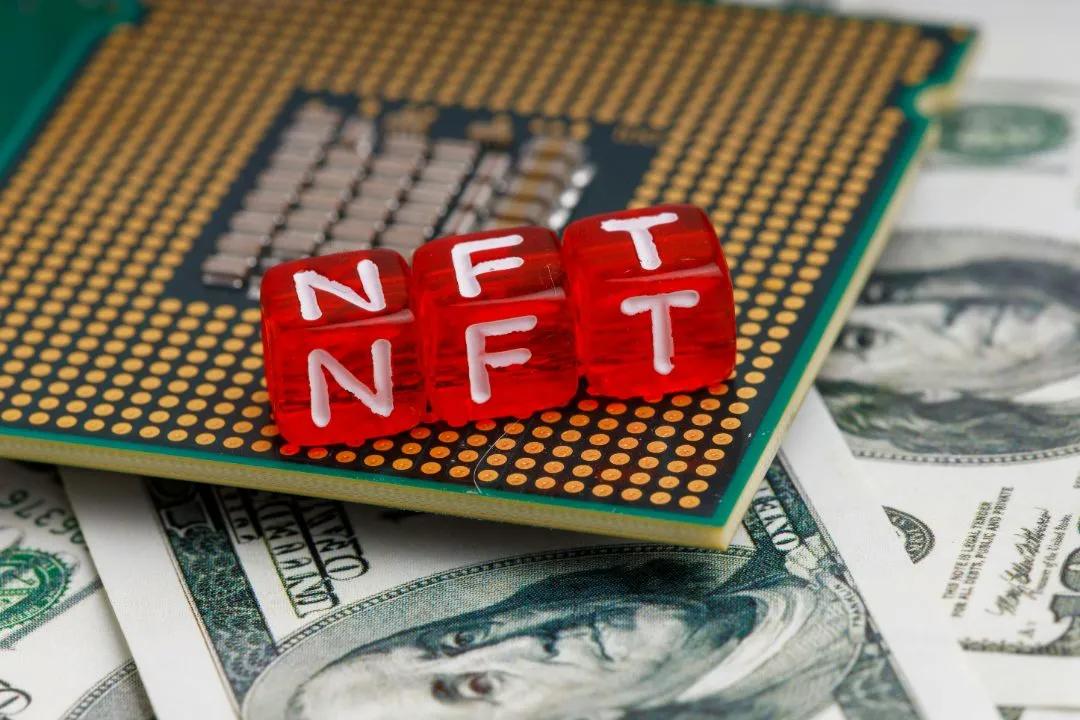
https://asset.coinness.com/en/news/3fa54e4b3fdcbdbc2f940d1062d8e5fe.webp
Photo by GuerrillaBuzz on Unsplash

This partnership will enable LINE NEXT to feature various digital products on its “DOSI,” a global digital commerce platform where users can freely create and trade digital items including NFTs. 


In cooperation with ReadON in the marketing and business sectors, LINE NEXT plans to offer a number of innovative products to over one million users of ReadOn. 


Various digital collaborative merchandise 

On Feb. 21, the two companies are scheduled to roll out digital collaborative merchandise inspired by “Catto,” the brand character of ReadOn, with a plan to introduce DOSI x ReadON pass tickets that benefit users of both platforms. Limited edition items offering exclusive perks and tokens that can be used on ReadOn will also soon be available for purchase.


ReadOn’s previous digital items have proven to be popular: items introduced in January were sold out within just 10 seconds after they were released, with other items also selling out within 30 minutes over four consecutive days. LINE NEXT is committed to collaborating with ReadON to launch more services that can reach a broader audience.


Initiative to make Web3 more accessible to the public

In a related development, LINE NEXT launched the official web and mobile versions of DOSI in January. Under the initiative to make Web3 more accessible to the public, LINE NEXT strives to expand the range of products available on DOSI.                                                                         


More to Read
View All
Policy & Regulation·

Oct 10, 2023

Hacking Attempts on Upbit Reach 160,000 in First Half of the Year

Hacking Attempts on Upbit Reach 160,000 in First Half of the YearThere have been approximately 160,000 hacking attempts on Upbit, Korea’s largest cryptocurrency exchange, in the first half of this year alone, according to a report submitted by Upbit’s operator Dunamu to lawmaker Park Sung-joong of the National Assembly’s Science, ICT, Broadcasting, and Communications Committee.“Cryptocurrency hacking incidents are increasing both domestically and internationally, and hacking attacks on exchanges such as Upbit, which have daily trading volumes exceeding KRW 2 trillion, are a serious issue,” Park said.Photo by Clint Patterson on UnsplashAn uptick in hacking attemptsThe data revealed that the number of cyber breach attempts in the first half of the year totaled 159,061–2.17 times higher than the number of attempts in the first half of last year, which stood at 73,249.Hacking attempts on Upbit have been steadily increasing in recent years, from 8,356 in the second half of 2020 to 34,687 and 63,912 in the first and second half of 2021, respectively. In the first half of last year, there were 73,249, and 87,242 in the second half. Notably, the exchange suffered losses of approximately KRW 58 billion (approximately $43 million) from a hacking attack in 2019.Ramping up securitySubsequently, Dunamu has taken action to enhance security by managing over 70% of its assets in cold wallets and operating hot wallets in a distributed structure instead of a singular one. Hot wallets refer to online crypto wallets, whereas cold wallets are crypto wallets that are offline and disconnected from the internet. Hot wallets offer the advantage of direct deposits and withdrawals, but they have weaker security levels — most known exchange hacks have thus occurred through this medium. On the other hand, cold wallets store private keys on offline sources like external hard drives and portable storage devices, making real-time trading difficult but providing better security and stability.“We have taken various preventive measures since the hacking incident in 2019, such as operating hot wallets in a distributed manner. There have not been any successful cyber breaches to date,” Upbit said.Regarding the role of the Ministry of Science and ICT in managing and overseeing crypto hacking incidents, Park pointed out that this still remains ambiguous. “The Ministry should conduct large-scale white-hat hacking tests and security assessments for crypto exchanges that are frequently faced with hacking attempts, as well as for hospitals and subway systems that manage large amounts of personal information,” he said.

news
Web3 & Enterprise·

Dec 28, 2023

Bithumb surpasses Upbit in 24h trading volume for first time in four years

The trading volume of South Korean cryptocurrency exchange Bithumb exceeded that of its competitor Upbit as of 10:30 a.m. UTC on Wednesday, as reported by the local news outlet Etnews, which cited data from CoinMarketCap. This shift occurred for the first time in four years. According to CoinMarketCap, as of the specified time, Bithumb's 24-hour trading volume reached KRW 4.93 trillion (approximately $3.8 billion), surpassing Upbit, which recorded a volume of KRW 4.37 trillion. Until 2019, Bithumb was the leading exchange in Korea. However, it ceded its top position to Upbit, which gained a competitive edge through its collaboration with the internet-only bank, Kbank.Photo by Pierre Borthiry - Peiobty on UnsplashZero trading fees and new crypto listingsEarlier in the year, Bithumb initiated a strategic plan with the objective of boosting its trading volume in order to increase its market share in the domestic market to 25%. To achieve this goal, the exchange implemented several key initiatives. One of the significant steps taken was the elimination of trading fees, aimed at attracting more users and increasing transaction volumes. Additionally, Bithumb broadened its cryptocurrency offerings by listing prominent cryptocurrencies such as Tether (USDT) and WEMIX.Questioned sustainability of strategiesIn anticipation of crypto winter giving way to crypto spring, trading platforms are gearing up for more intense competition to increase their market shares. However, there are concerns about the sustainability of strategies like implementing zero trading fees. Critics argue that such policies, while they may temporarily shift market shares, are unlikely to be successful in the long term. This skepticism is largely due to the fact that cryptocurrency exchanges heavily rely on trading fees as a primary source of revenue.  An industry expert has pointed out that unless the cryptocurrency exchanges currently lagging behind develop innovative, paradigm-shifting strategies capable of significantly impacting the market landscape, there's a high likelihood that the ranking order will revert to the previously established, entrenched market order.  In fact, at the time of this publication, Upbit upended Bithumb in 24-hour trading volume, recording KRW 4.4 trillion compared to Bithumb's KRW 3.2 trillion. This data underscores Upbit's strong position in the market, illustrating its continued dominance.

news
Policy & Regulation·

Jun 22, 2023

Ripple Receives In-Principle Approval From Singaporean Regulator

Ripple Receives In-Principle Approval From Singaporean RegulatorRipple, the blockchain-based payments firm, has obtained in-principle regulatory approval from the Monetary Authority of Singapore (MAS) to offer digital asset payments and token products in Singapore.Photo by Dids on PexelsODL service expansionThe approval, announced on Wednesday, will enable Ripple’s subsidiary, Ripple Markets Asia Pacific, to expand its On-Demand Liquidity (ODL) service. ODL facilitates the seamless transfer of the XRP cryptocurrency across borders without the involvement of traditional banking intermediaries.Ripple had applied for an institutional payment license under Singapore’s Payment Service Act to secure the regulatory green light. In response to the approval, Ripple CEO Brad Garlinghouse praised the MAS for its pragmatic and innovation-driven approach to cryptocurrency-related services.He expressed confidence that Singapore would serve as a prominent gateway for Ripple’s business operations in the Asia Pacific (APAC) region. On Twitter, Garlinghouse wrote: “As a major global financial center, Singapore led the way in taking a pragmatic, innovation-first approach to crypto — we’re incredibly proud @Ripple is one of a handful of firms (<20) to receive in-principle approval for a MAS MPI license for digital payment token services!”Stuart Alderoty, Ripple’s Chief Legal Officer, explained that the regulatory approval from MAS would enhance Ripple’s ability to support forward-thinking customers who are exploring the potential of blockchain and crypto technologies to create a more inclusive and borderless financial system.Growing APAC presenceRipple’s presence in Singapore has already been growing significantly. In 2022, the company doubled its number of employees at its Asia Pacific headquarters, with Singapore becoming a major hub for ODL transactions. The MAS, recognizing the potential of fintech firms in the digital money services sector, published its Purpose Bound Money (PBM) white paper on Wednesday, proposing standards for such firms operating in Singapore.While Ripple has made progress with regulatory compliance in Singapore, it has faced legal challenges in other jurisdictions. Since December 2020, Ripple’s legal team has been dealing with a lawsuit filed by the US Securities and Exchange Commission (SEC), accusing Ripple of conducting an unregistered securities offering with its XRP token.The case is expected to reach a verdict in the coming months. While the speculation is that the case has gone well for Ripple, it remains to be seen to what extent it can get the upper hand in taking on a cornerstone institution of the US establishment like the SEC.Either way, Ripple is moving to develop on a global basis. It has recently pursued further development in the Middle East via a Dubai expansion. In Hong Kong, it is collaborating with local regulators in trialing the use of its technology relative to real-world asset tokenization.The company has also established partnerships with central banks in Montenegro and Thailand, as well as numerous regional banks and financial institutions worldwide.The regulatory approval from MAS marks a significant milestone for Ripple, expanding its customer reach and positioning the company for further growth in the digital asset payment sector. Digital asset innovation is truly global and as many organizations are demonstrating, just as Ripple is in this instance, innovative curtailment in one region will simply manifest itself as greater development in another.

news
Loading