Top

OKX launches OKX TR in Turkey

Web3 & Enterprise·February 28, 2024, 3:50 AM

Leading global crypto exchange platform OKX has officially launched OKX TR, a specialized crypto exchange tailored to meet the needs of users in Turkey.


This unveiling, announced on Feb. 27, marks a significant stride in the company’s efforts to offer Turkish users greater access to cryptocurrency trading and decentralized finance (DeFi).

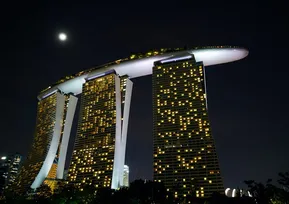
https://asset.coinness.com/en/news/513d2c2c57bb2fe6041c61e803a63924.webp
Photo by Engin Yapici on Unsplash

OKX Wallet integration

OKX TR has integrated OKX's Web3 wallet, providing Turkish users with access to a wide array of features. The wallet offers a user-friendly portal for trading non-fungible tokens (NFTs), utilizing decentralized applications (dApps). Noteworthy features of the OKX Wallet include multi-party computation (MPC) technology and account abstraction (AA), enhancing accessibility for users with varying levels of technical expertise.

OKX TR introduces localized features designed to cater specifically to Turkish users, including direct deposits and withdrawals in Turkish Lira, facilitated through strategic partnerships with banking institutions such as Fibabanka, VakıfBank, Ziraat Bankası, İş Bankası, Şekerbank and Türkiye Finans. The platform offers a range of major cryptocurrency pairs for trading, including USDT/TRY, BTC/TRY and ETH/TRY. 


Moreover, OKX TR prioritizes user experience by providing round-the-clock customer support in both Turkish and English, attempting to provide prompt assistance and comprehensive guidance whenever needed.


Crypto adoption backdrop

The platform’s arrival should contribute further towards the burgeoning crypto ecosystem in Turkey, a market boasting a close to 50% adoption rate for cryptocurrencies. A report by OKX rival platform KuCoin back in August of last year found that there had been a significant increase in crypto users in Turkey over the course of the previous 18 months. 

It’s believed that crypto adoption in Turkey is being driven partly by its role as a financial lifeline amid economic challenges. The country’s sovereign currency, the lira, has suffered from runaway inflation in recent years.


On social media OKX Chief Marketing Officer (CMO) Haider Rafique wrote that the new service offers “lightning fast signup and funding,” alongside the “lowest fees in the market.”


Mehmet Çamır, Chairman of OKX TR, outlined that the company had first announced expansion into Turkey in May 2023. Çamır set out the company’s intentions within the Turkish market, stating:

"The launch of OKX TR represents more than just an expansion; it signifies our pledge to equip users with a transparent, compliant and user-friendly gateway to the world of blockchain. . . . We can unlock the vast potential of the Turkish crypto community and pave the way towards a future where finance is more inclusive and transparent.”


Turkey is in the process of introducing a raft of crypto regulations, primarily with the intention of enabling it to be removed from the Financial Action Task Force’s (FATF) “grey list.” In December, Turkish President Recep Tayyip Erdogan appointed blockchain and cryptocurrency expert Fatma Ozkul to the Turkish central bank’s rate-setting committee.

Those moves demonstrate some positive progress from the point of Erdogan’s statement in 2021 when he declared “a war on crypto.”

 

More to Read
View All
Policy & Regulation·

Aug 04, 2025

Hong Kong taxis likely test case for stablecoin payments

With the Chinese autonomous territory of Hong Kong having introduced its new Stablecoins Ordinance on August 1 and local taxi operators required to facilitate two forms of digital payment from April 1, 2026, a case is being made that this eventuality lends itself to an ideal test case for stablecoin payments.Photo by The Transport Enthusiast DC on UnsplashA perfect test caseIn an opinion piece published by Bloomberg on Aug. 3, columnist Andy Mukherjee asserted that Hong Kong taxis would be “a perfect stablecoin test case,” suggesting that the timing is ideal for stablecoins, given that a new licensing regime has come into effect via the city’s Stablecoins Ordinance.  In an interview, Franz Bergmueller, CEO of Switzerland-headquartered crypto bank AMINA Bank, said that “stablecoins for me are a killer use case.” On social media, AMINA Bank claimed that it would be “a major step in the right direction” if Hong Kong taxis start to accept stablecoin payments from customers. It emerged last December that the city’s taxi drivers would be required to install both electronic payment facilities and navigation systems, based on a filing made to Hong Kong’s Legislative Council. The filing outlined that while some taxi drivers currently offer electronic payment options, many insist on cash payment. The city’s Transport and Logistics Bureau suggested that “drivers offer at least two electronic payment options, including both QR code and non-QR code methods.” Stablecoin payments overseasThere has been some limited use of stablecoins as a payment method by taxi services in places with unstable currencies such as Argentina and Venezuela. The world’s most popular ride-hailing service, Uber, is understood to be studying the feasibility of offering stablecoin-based payments. In 2024, Asian rival Grab commenced accepting crypto, including the USDT and USDC stablecoins, as a means of payment for ride-sharing and food delivery services in Singapore. Last month, it extended that facility to its platform users in the Philippines.In June it emerged that Tawasul Transport, a taxi service in Abu Dhabi in the United Arab Emirates (UAE), had partnered with Al Maryah Community Bank (Mbank) and Abu Dhabi’s Department of Municipalities and Transport to launch a pilot program implicating the use of AE Coin, a UAE dirham-pegged stablecoin, as a means of payment. Bloomberg’s Mukherjee suggests that for entities now applying for stablecoin licensing, this new digital payment requirement for Hong Kong’s taxi services could provide an immediate segue to onboard users and make a new stablecoin product popular. Mukherjee places specific emphasis in this regard on what actions Ant Group may take. It emerged recently that Ant Group, an affiliate of the Alibaba Group, intends to apply for stablecoin licensing across Asian markets, including Hong Kong. The company is already a leader in Asia in digital payments through Alipay, which serves 1.3 billion users.Although Ant Group is based in mainland China, Hong Kong would offer the company the opportunity to test the establishment of a stablecoin for retail payments.

news
Policy & Regulation·

Oct 13, 2023

Short-Term Crypto Investment Prevails Among Hong Kong’s Retail Investors

Short-Term Crypto Investment Prevails Among Hong Kong’s Retail InvestorsHong Kong’s retail investor interest in virtual assets has experienced a significant surge in recent years, albeit a recent survey suggests that most retail investors take a short-term investment view relative to crypto assets.Photo by Robert Bye on UnsplashIFEC studyThis newfound enthusiasm for virtual assets emerges from a recent study published by the Investor and Financial Education Council (IFEC), a subsidiary of the Securities and Futures Commission (SFC), Hong Kong’s securities regulator. The survey found that 6% of retail investors in the city had entered the virtual asset market in 2023, as compared to merely 1% in 2019.Conducted from June to July of this year, the study encompassed 1,000 individuals aged between 18 and 69. The survey uncovered a trend toward crypto investing among retail investors who’ve been enticed by the allure of the emerging asset class. Intriguingly, every single one of the digital asset retail investors in the study held cryptocurrencies in their portfolios. Non-fungible tokens (NFTs) and stablecoins, while still relatively niche, were also present in the portfolios of 6% and 2% of investors, respectively.11% to invest in crypto within 12 monthsAnticipating a further uptick in interest, the IFEC report posits that 11% of those surveyed have intentions to invest in virtual assets or related products within the next 12 months. This indicates that the allure of virtual assets continues to exert its magnetic pull on investors in Hong Kong.Despite the growing interest, a noteworthy finding in the survey is that 75% of retail virtual asset investors admitted to their primary motivation being the pursuit of short-term gains. Simultaneously, 74% of these investors perceived virtual assets as a prevalent investment trend, and 73% cited the fear of missing out on popular investment opportunities as a driving factor. These statistics underscore the need for enhanced investor education within the sphere of virtual assets.Lack of regulatory awarenessAnother interesting aspect of the data which emerged from the survey was the finding that only 47% of all surveyed investors are aware of Hong Kong’s recently introduced virtual asset trading regulations, which came into effect on June 1.An additional facet of this investor behavior study was illuminated by research conducted by the Department of Applied Social Science at Hong Kong Polytechnic University (PolyU). This research, based on data from a separate IFEC report that surveyed 501 people from November to December of last year, revealed that many retail investors in virtual assets exhibited overconfidence in their judgment.These investors were also found to have a proclivity to overemphasize past information, lean heavily on readily available and easily recalled information, and overestimate personal intuition.With that in mind, Eric Chui, Head of PolyU’s Applied Social Science unit, advised virtual asset investors to adopt a more deliberate and rational approach. Chui emphasized the importance of building financial literacy and collecting high-quality market information to make informed investment decisions, while steering clear of irrational investment behavior and biases.

news
Web3 & Enterprise·

Aug 14, 2023

Hana Securities to Accelerate Security Token Platform Development

Hana Securities to Accelerate Security Token Platform DevelopmentHana Securities, the securities arm of South Korean financial holding company Hana Financial Group, said Monday it will build a security token platform starting next month to expand its network and capabilities in digital assets in line with the ever-changing financial landscape.Photo by Shubham Dhage on UnsplashPursuing market dominanceThe company revealed that it will choose an external firm by this month to commission the construction of the platform. It also plans to dominate the market by applying to get the platform approved as an innovative financial service by the end of this year. The Innovative Financial Services system, operated by the Fintech Center Korea, is a system that offers special exemptions from regulation for unique and innovative financial services.This strategic move is poised to position Hana Securities as a pioneering force in offering financial services that circumvent conventional regulations, exemplifying its dedication to fostering innovation and originality.Cultivating collaborative synergiesHana Securities is also pursuing partnerships with digital asset enterprises to work on security token projects and platforms that allow for fractional investment in underlying assets. The firm has already entered into business agreements with key companies such as art gallery Print Bakery, tech solution provider ITCEN, and content distributor DANAL Entertainment to collaborate in various sectors, including art, precious metals like gold and silver, and mobile content.This multifaceted approach not only underscores Hana Securities’ versatility but also its commitment to fusing traditional and modern assets in the realm of security tokens.It will also expand collaboration models with companies running new asset platforms, such as those related to real estate funding for small businesses and digital content distribution.“Companies with various underlying assets are showing high interest in the issuance and distribution markets for security tokens,” said Choi Won-young, Head of Hana Securities’ Digital Division.“Through the enhancement of our business model and rapid platform development, we aim to connect various assets to security token products, supply them to the market, and provide customers with new investment experiences.”

news
Loading