Top

Coinbase Wallet and TransFi partnership expands crypto accessibility in Asia

Web3 & Enterprise·May 13, 2024, 3:14 AM

TransFi, renowned for its global payment solutions, is collaborating with Coinbase Wallet to streamline the process of purchasing cryptocurrencies, with a particular focus on enhancing user experience in Asia.

https://asset.coinness.com/en/news/4c73b012741997d2f315548f65c968dc.webp
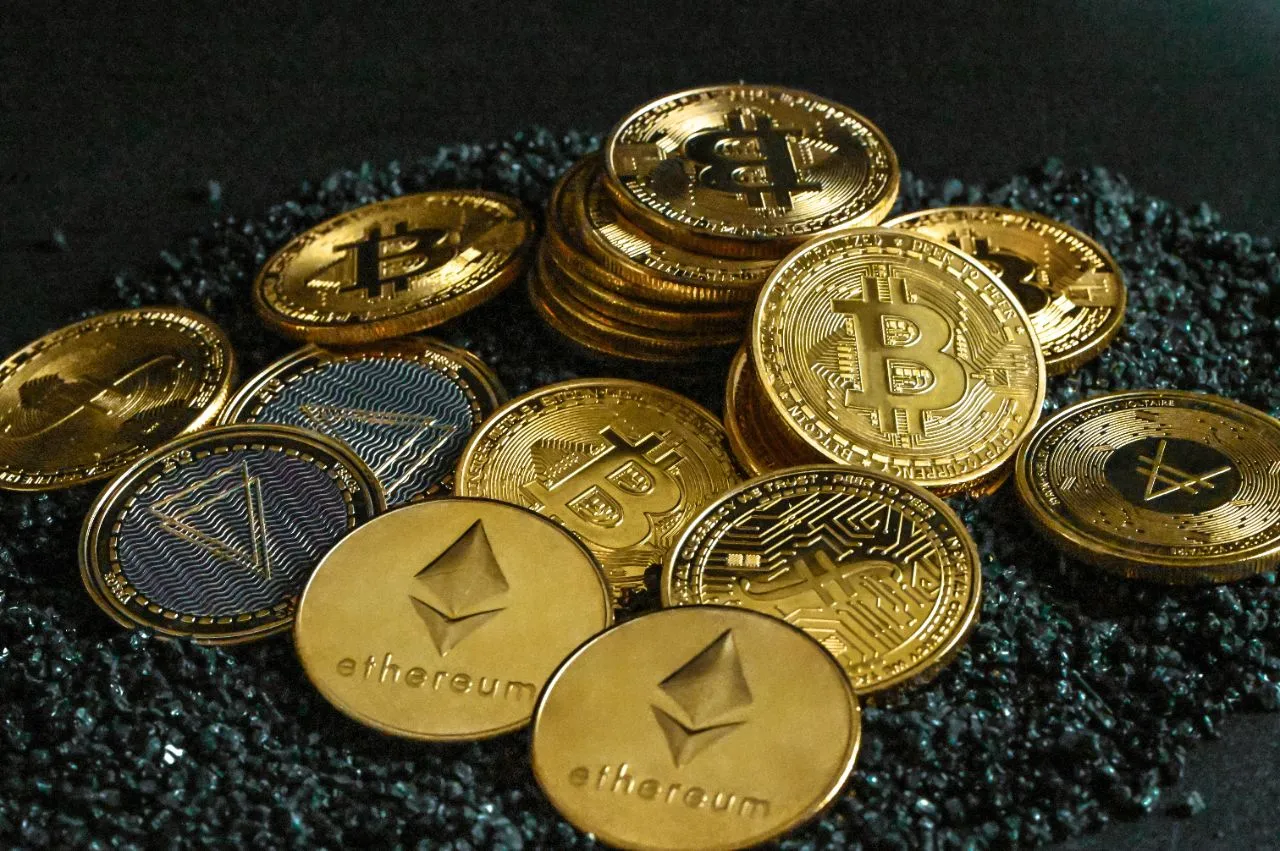
Photo by Traxer on Unsplash

Facilitating seamless onboarding

By integrating with Coinbase Wallet, TransFi aims to simplify the onboarding process for businesses and individuals, ultimately fostering greater adoption of cryptocurrencies in the region. This strategic integration is designed to eliminate barriers to entry and make cryptocurrency transactions more efficient and accessible.


Enhanced payment options across Asia

In a significant move, users in the Philippines, Vietnam and Indonesia now have access to expanded payment options through Coinbase Wallet. In the Philippines, GCash and PayMaya, popular digital payment platforms, have been integrated, while Vietnam sees the addition of Viet QR, Momo and Viettel Pay. Indonesian users can utilize OVO and Dana, leading payment apps in the country. These partnerships leverage existing, widely-used payment infrastructures to provide users with more convenient avenues for purchasing cryptocurrencies.


The expansion into the Asian market reflects the growing demand for cryptocurrencies in the region and highlights Coinbase's commitment to broadening its reach by collaborating with local payment services. This trend underscores the increasing integration between crypto platforms and local payment solutions, signaling a positive trajectory for cryptocurrency adoption across Asia.


More to Read
View All
Policy & Regulation·

Aug 21, 2024

Crypto sector mulls implications of appointment of new Thai PM

With Thailand just having elected its youngest-ever Prime Minister (PM), speculation has arisen within the crypto sector as to whether the new appointee will be bullish where digital assets are concerned. On Sunday, 37-year-old Paetongtarn Shinawatra was sworn in as the Southeast Asian country’s Prime Minister, having received two-thirds of the votes in a House of Representatives ballot on Friday. On Aug. 18, a pseudonymous crypto commentator, @martypartymusic, told his 109,000 followers on X that Shinawatra’s appointment was positive for crypto. He wrote:”She is a crypto bull. Her father was a crypto bull. IMO: Thailand could be next to adopt crypto as legal tender. Let’s watch it play out."Photo by Evan Krause on UnsplashDigital wallet programShinawatra has committed to continuing a similar approach to policy as followed by her predecessor, Srettha Thavisin. That will include an emphasis on pursuing economic reform and accommodating economic stimulus measures.  One crypto-related measure introduced by her predecessor is the digital wallet handout project. According to Nikkei Asia, the scheme has been burdened with both legal and budgetary challenges. Kasit Piromya, a former Thai Foreign Minister, is understood to have said that Shinawatra would be committing “political suicide” if she continues to drive that project forward.  It’s understood that she has indicated that the government will continue with the project but that it plans to take steps to ensure that the program can proceed in a financially sustainable way. Shinawatra’s Pheu Thai Party had first floated the notion of giving 10,000 baht in digital assets, at the time valued at $300, in April 2023, to Thai citizens above the age of 16. Further moves were made to progress that $14 billion project earlier this year. While insiders have reported that Shinawatra has been non-committal about the digital wallet project, she has been quoted as stating previously that “the digital wallet scheme is a project we intend to use as a major economic stimulus.” As various commentators speculate on her likely course of action, the reality is that these matters will remain unclear until such time as she appoints a cabinet and announces relevant policies. Tanawat Sutunthivorakoon, the CEO of Thai digital asset management platform Bitazza Thailand, expressed the view that this change in leadership will have very little impact on the development of digital asset regulation in the Southeast Asian country. Regulatory developmentThe country has seen a number of crypto-positive developments over recent months. Back in March, the country’s tax authority approved a crypto income tax exemption in an effort to incentivize crypto-based fundraising. The authorities had already made crypto trading VAT-free the previous month. Earlier this month, Thailand’s Securities and Exchange Commission (SEC) introduced a digital asset regulatory sandbox in an effort to foster innovation relative to the digital assets sector. The SEC allowed institutional investors in Thailand to access U.S. spot Bitcoin exchange-traded fund (ETF) products. In June, the regulator followed up by approving the country’s first spot Bitcoin ETF.

news
Web3 & Enterprise·

Dec 08, 2023

Digital wallet D’CENT and Astar Network team up to bring scalable wallet services to users

Digital wallet D’CENT and Astar Network team up to bring scalable wallet services to usersSouth Korean digital hardware wallet service D’CENT has partnered with Japan’s leading blockchain project, Astar Network, to offer users enhanced wallet scalability and seamless asset management, according to an official Medium post on Friday (local time). D’CENT will be integrated into Astar’s blockchain network.Photo by Shubham’s Web3 on UnsplashDriving blockchain innovationAstar Network is a layer 1 blockchain that supports Ethereum virtual machine (EVM) and WebAssembly (Wasm) smart contracts. Tailored to function as a centralized smart contract hub within the Polkadot blockchain ecosystem, it serves as a comprehensive platform for developers to create and deploy decentralized applications (dApps).Astar is revolutionizing blockchain for millions of users worldwide and is actively working with major South Korean companies to achieve this goal. Its newest partner, D’CENT Wallet, which currently provides cold wallet services for hundreds of users across the world, offers an easy-to-use, secure solution for managing digital assets. In particular, it boasts a convenient user experience (UX) that employs fingerprint authentication. Through the new partnership, D’CENT will become the first wallet to support Astar-zkEVM, Astar’s layer 2 scaling solution.Enhancing accessibility and interoperabilityThe two companies plan to work together to bring D’CENT’s unique services to Astar’s Japanese and global user base. Through its integration into Astar Network, the wallet now supports over 60 blockchain networks, 29 of which are EVM-compatible. Users can also store, manage and trade their ASTR tokens — Astar’s native token. This effectively removes the complicated process of managing assets across multiple blockchains.Beyond its role in asset management, the D’CENT wallet also serves as a gateway to the Polkadot ecosystem, where wallet holders can gain access to a plethora of dApps.Both D’CENT and Astar expect that their collaboration will contribute to shaping the future of blockchain transactions and fostering a more integrated blockchain ecosystem.

news
Web3 & Enterprise·

Aug 12, 2025

World Mobile & Protelindo team up to launch drone-based network

UK-headquartered decentralized mobile network project World Mobile has teamed up with PT Professional Telekomunikasi Indonesia, better known as Protelindo, to launch a blockchain-based 5G mobile network. Founded in 2003, Protelindo is an Indonesian digital infrastructure firm that specializes in fiber optic networks and telecommunications towers. It owns and operates a large network of these towers in Indonesia, leasing them out to various mobile service operators.  The two firms acquired Combined Space Technologies (CST) earlier this year as a joint venture. CST had been originally founded in Cambridge in the UK, backed by Deutsche Telekom to the tune of $70 million. Successful demos of its proprietary technology had been completed in conjunction with British Telecom (BT) and Deutsche Telekom before World Mobile and Protelindo decided to purchase the company.Photo by Alessio Soggetti on UnsplashWorld Mobile StratosphericIn a press release published on Aug. 8, World Mobile outlined that through CST, the two companies have launched World Mobile Stratospheric.  World Mobile asserts that the establishment of this stratospheric connectivity platform is “unprecedented.” The project implicates the use of fixed-wing drone aircraft, which it proposes to use to host 500,000 simultaneous 5G handset connections while flying at altitudes of up to 20,000 meters. World Mobile Group Chief Business Officer (CBO), Charles Barnett, told Cointelegraph that each drone can provide wireless network coverage over an area of 15,000 square kilometers. Each aircraft will host 450 individually steerable beams in order to deliver the service within a defined geographical area. Low latencyBarnett outlined that the technology can achieve just six milliseconds of total latency with the service having the capability of providing 5G service up to 18 times cheaper per gigabyte by comparison with other similar technologies. It’s thought that the service will compete with space/satellite-based telecoms systems such as Elon Musk’s Starlink. While Starlink has brought internet to corners of the globe that were otherwise underserved, it has been criticized in terms of its interference with astronomy, increased space debris and the potential for atmospheric pollution. Additionally, the low-earth orbit (LEO) satellite-based service has much higher overheads. In comparison with World Mobile Stratopheric’s six millisecond latency, Starlink is much higher at 47 milliseconds. The system delivers directly to the consumer’s device, whereas Starlink is delivered to a satellite dish with significant cost implications for the user. Stratomast, the hydrogen-powered drone aircraft, can stay up for between six and nine days and produces zero emissions. While Starlink and World Mobile Stratospheric may compete, Barnett believes that Starlink is the better choice when delivering service to remote areas that lack any cellular connectivity at all, whereas Stratospheric is the best option in areas with a higher density of mobile users. Micky Watkins, CEO of World Mobile, said that the partnership proves how blockchain can unlock new models for global connectivity. He added:“It aligns infrastructure deployment with community participation and makes decentralized telecom not just possible, but scalable.” Watkins believes that by combining advanced aerospace technology with token-driven economics, the project is building a network that connects more people, faster, in an economically efficient and environmentally sound manner. 

news
Loading