Top

USDT stablecoin receives full regulatory approval in Abu Dhabi

Web3 & Enterprise·December 16, 2024, 11:47 PM

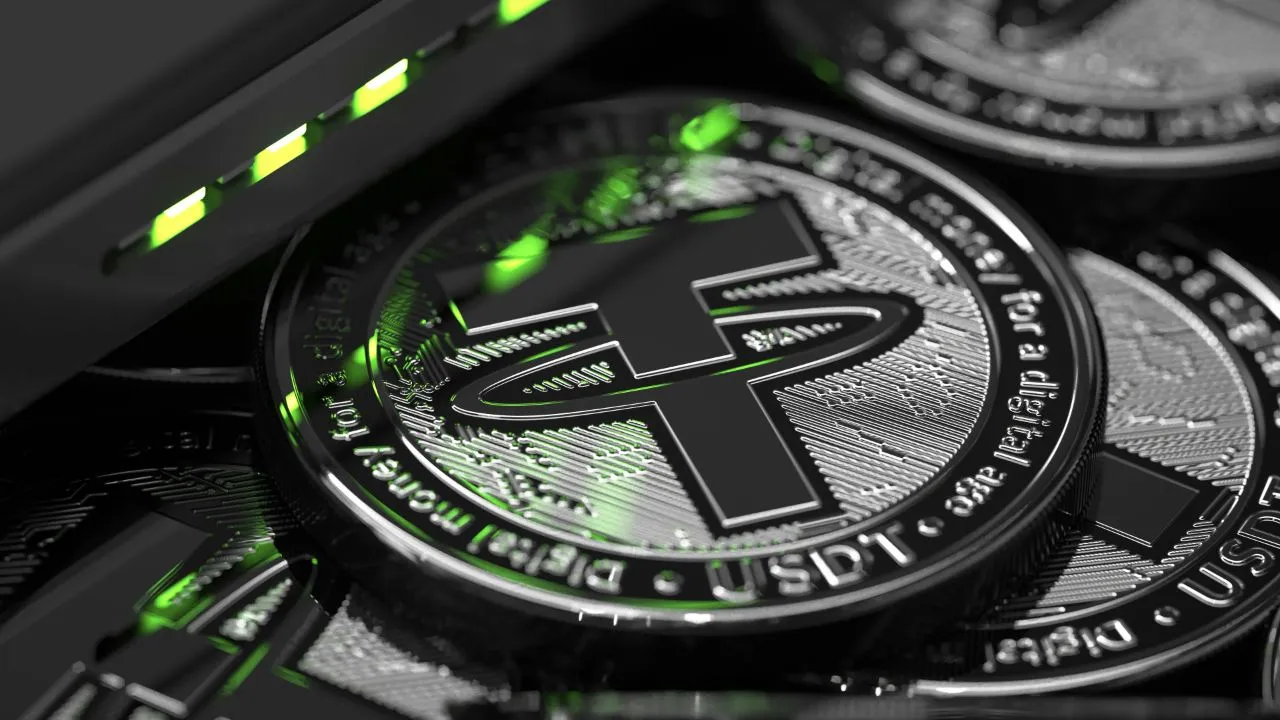
The Financial Services Regulatory Authority (FSRA), a regulatory body within the Abu Dhabi Global Market (ADGM) economic free zone and financial center in the United Arab Emirates (UAE), has fully approved USD₮, the world’s leading U.S. dollar stablecoin by market cap, as an accepted virtual asset (AVA).
https://asset.coinness.com/en/news/eaf08a1ad4bdf292be57387fe07c3323.webp
Photo by DrawKit Illustrations on Unsplash

Pre-approved USDT services

USDT issuer Tether publicized details of the approval via a statement published to its website on Dec. 10. The company outlined that the approval means that “Authorised Persons” operating and licensed by the FSRA can offer pre-approved services related to USDT.


The company stated that the approval facilitates the integration of USDT into regulated financial ecosystems in Abu Dhabi while also claiming that the move helps to advance the region’s leadership relative to digital asset innovation.


The FSRA has acknowledged acceptance of the leading stablecoin with recognition of its issuance on various blockchains including Ethereum, Solana and Avalanche.


Validating the importance of stablecoins 

With the ADGM regulator now fully accepting and recognizing the stablecoin, Tether CEO Paolo Ardoino said that the move goes beyond just “validating the importance of stablecoins as critical tools for modern finance,” as he believes it opens the door for collaboration and growth across the Middle East.


Stablecoins are increasingly playing a significant role in bridging the gap between traditional finance (TradFi) and the Web3 sector. In October, crypto asset fund manager Bitwise identified a number of key insights that point to the ongoing development and use of stablecoins. 


It outlined that the top five stablecoin projects are currently holding more U.S. Treasury bonds than some G20 countries. Tether recorded profits last year that surpassed those of BlackRock, the world’s largest asset manager. Bitwise identified that leading payments firms like Visa are adopting stablecoins and incorporating them into their platforms for the purpose of effecting transactions.


A month prior to that, Wall Street investment bank Bernstein highlighted the fact that stablecoins are playing an increasingly important role relative to the global financial system as a whole. 


It’s thought that this latest development in Abu Dhabi may act as a further driver of USDT’s market cap. At the time of writing, the stablecoin asset had a market cap in excess of $140 billion. Its inclusion as an AVA reinforces the crypto asset’s position as the most used stablecoin within the industry.


AE Coin licensing 

In a further boost for further roll-out of stablecoins in the Middle East, the Central Bank of the UAE (CBUAE) awarded the final license to fully approve AE Coin, a UAE dirham-denominated stablecoin. Commenting on the development, AE Coin General Manager Ramez Rafeek said, "AE Coin harnesses the speed and efficiency of blockchain technology, offering instant, secure, and cost-effective transactions. It simplifies transfers, making them faster and more seamless."


In an effort to bring about greater adoption of the stablecoin, the AE Coin project intends to engage in partnerships with payment gateways, financial institutions and technology providers going forward. Tether also has plans to launch a dirham-backed stablecoin, having recently partnered with UAE-based entities to bring that about.




More to Read
View All
Web3 & Enterprise·

Nov 09, 2023

Korean and Indonesian firms join forces to tokenize shipping assets

Korean and Indonesian firms join forces to tokenize shipping assetsCentralized decentralized finance (CeDeFi) platform NEOPIN said Wednesday that it has signed a business agreement with the Klaytn Foundation, South Korean juggernaut Kakao’s Layer 1 public blockchain, and Pelayaran Korindo, the shipping arm of Southeast Asian conglomerate Korindo, to tokenize real-world assets (RWAs).Photo by Andy Li on UnsplashRevolutionizing shipping financeThe three companies will first tokenize shipping-related assets owned by Pelayaran Korindo. This integration of digital assets into the maritime industry — which up until now has been under the umbrella of traditional finance — is expected to increase accessibility to shipping investments not only for institutional investors but also for individual investors.Pelayaran Korindo specializes in comprehensive shipping logistics mainly in Indonesia. Under the newest collaboration, the company plans to enhance the accessibility of its RWAs to Web3 companies as well as share its knowledge on localization and partner networks. It aims to play an essential role in the joint venture by leading the decentralization of traditional finance and promoting the widespread adoption of RWA tokenization.On the other hand, NEOPIN, along with the Klaytn Foundation, plans to leverage its expertise in CeDeFi to help Pelayaran Korindo digitize and liquify their assets while optimizing the plaform’s user inferface.Ushering in an era of RWA tokensThe partnership is also a part of the Klaytn Foundation’s efforts to expand its ecosystem through RWA-related endeavors. By tokenizing RWAs and producing certifications of digital ownership, the enterprise hopes to popularize blockchain and create value through real-world use cases. To achieve this, the foundation will work with RWA tokenization experts both in Korea and overseas to build a business model that is profitable, technologically feasible and regulatory compliant.“The Klaytn blockchain enables the construction of a digital asset trading platform with fast processing speed and low fees that can satisfy both token issuers and also regular users,” explained Seo Sang-min, Representative Director at the Klaytn Foundation. “The foundation has accumulated practical experience in the entire service construction process, from discovering promising RWA tokenization projects to launching real services. Moving forward, we will collaborate with Pelayaran Korindo and NEOPIN to actualize various global RWA tokenization initiatives, starting with maritime finance.”NEOPIN’s CEO Ethan Kim also mentioned the company’s intent to work with Pelayaran Korindo and the Klaytn Foundation to introduce attractive RWA investment products that are easy to navigate and have strong factors of appeal, thus leading the global RWA market in maritime finance.

news
Policy & Regulation·

Dec 07, 2023

Korbit relists blockchain gaming token WEMIX

Korbit relists blockchain gaming token WEMIXKorbit, a major fiat-to-cryptocurrency exchange in South Korea, is relisting WEMIX, a cryptocurrency issued by blockchain gaming company Wemade. Korbit’s decision follows in the footsteps of its local competitors, Coinone and Gopax, who have also recently reinstated WEMIX. The WEMIX token is used to pay transaction fees, stake and vote on governance proposals.Starting at 1:00 a.m. UTC on Dec. 7, Korbit users gained the ability to create a WEMIX wallet and deposit the token on the exchange. Trading and withdrawals of WEMIX will be enabled at 3:00 p.m. UTC on the same day.The Korbit exchange only accepts WEMIX deposits originating from the Wemix network. Deposits of WEMIX sent from other blockchain networks, including BNB Beacon Chain, Ethereum and Klaytn, may be processed improperly and carry the risk of becoming irretrievable.Photo by Asa E-K on UnsplashDecision reversal and underlying rationalesOver a year ago, the Digital Asset eXchange Alliance (DAXA), a coalition of the five Korean fiat-to-crypto exchanges — Upbit, Bithumb, Coinone, Korbit and Gopax — collectively decided to delist WEMIX from all their platforms. This decision was based on several concerns, including unreliable disclosure of the token’s circulating supply, provision of inadequate and misleading information to investors and inconsistencies in the data provided during the explanation period. These issues collectively eroded trust in the company.However, Korbit has determined that the previously identified issues with WEMIX have been addressed. The exchange observed that the circulating supply of WEMIX has been reduced to a level that aligns with the schedule initially submitted to DAXA. The launch of the WEMIX mainnet rectified the discrepancy where the circulating supply displayed on crypto data platforms like CoinMarketCap was twice the actual figure. Additionally, the collateral that Wemade had deposited in decentralized finance (DeFi) protocol Kokoa Finance has been recovered.The crypto trading platform also believes that Wemade has resolved the problem of providing misleading information to investors by making corrections to its third-quarter earnings report.Regarding data fallacies, Korbit holds the view that the game publisher has taken steps to address the inaccuracies in the data previously provided to the alliance. These efforts to reduce uncertainty and fulfill disclosure responsibilities include several measures: Wemade now live-updates the circulating supply of WEMIX and other pertinent details on its official blog. The gaming company has also entrusted the management of its non-circulating WEMIX supply to Ceffu, the sole institutional custodian for Binance, a global crypto exchange. Furthermore, Wemade now makes announcements about token movements whenever they occur.Restrictions imposed on GopaxMeanwhile, Korbit stated its commitment to complying with voluntary regulations and common listing guidelines established between DAXA members. This statement is particularly noteworthy in light of the recent developments with Gopax. Gopax faced the three-month suspension of its voting rights from DAXA, following the relisting of WEMIX.

news
Web3 & Enterprise·

Jul 21, 2023

Shinhan Bank and SCB TechX Succeed in Stablecoin Remittance Pilot

Shinhan Bank and SCB TechX Succeed in Stablecoin Remittance PilotSouth Korean banking institution Shinhan Bank, Thai Siam Commercial Bank’s tech arm SCB TechX, and a Taiwanese financial institution recently announced the successful completion of a proof-of-concept (PoC) pilot of stablecoin remittances. The PoC was built on the hashgraph consensus-based public ledger, Hedera. Hashgraph consensus is a technology that provides an alternative to the more commonly used blockchain consensus mechanisms.Photo by Lea L on UnsplashThree currenciesThe pilot test was conducted to assess the feasibility and functionality of a system involving real-time settlement and real-time foreign exchange (FX) rate integration. The test was successful in implementing these capabilities for three currencies: the Thai Baht (THB), the New Taiwan dollar (NTD), and the South Korean won (KRW). Since the PoC is compatible with the Ethereum Virtual Machine (EVM), EVM-based stablecoins should be able to join the PoC framework without significant modifications.More efficient and affordableIn November 2021, Shinhan Bank developed this PoC on the Hedera network in collaboration with an international bank outside Korea, employing stablecoins for cross-border remittances. The success of the subsequent pilot test this year represents a major achievement in the pursuit of more efficient and affordable cross-border payments, especially given that the financial industry has been increasingly recognizing the transformative possibilities of blockchain and distributed ledger technology.These banks expect that this stablecoin solution will allow individuals and organizations to conduct transactions in locally denominated stablecoins, benefiting from remarkably low fees.Kim Byung-hee, Chief of the Blockchain Division at Shinhan Bank, said, “The successful completion of this second PoC marks an important step forward in our efforts to make cross-border payments faster, cheaper, and more accessible to people around the world.”SCB TechX’s CEO Trirat Suwanprateeb echoed this sentiment, stating that this endeavor can help “increase financial inclusion and improve access to financial services for individuals and businesses in underserved communities.”

news
Loading