Top

South Korea sanctions North Korean tech workers for cybercrimes and crypto theft

Policy & Regulation·December 26, 2024, 11:11 AM

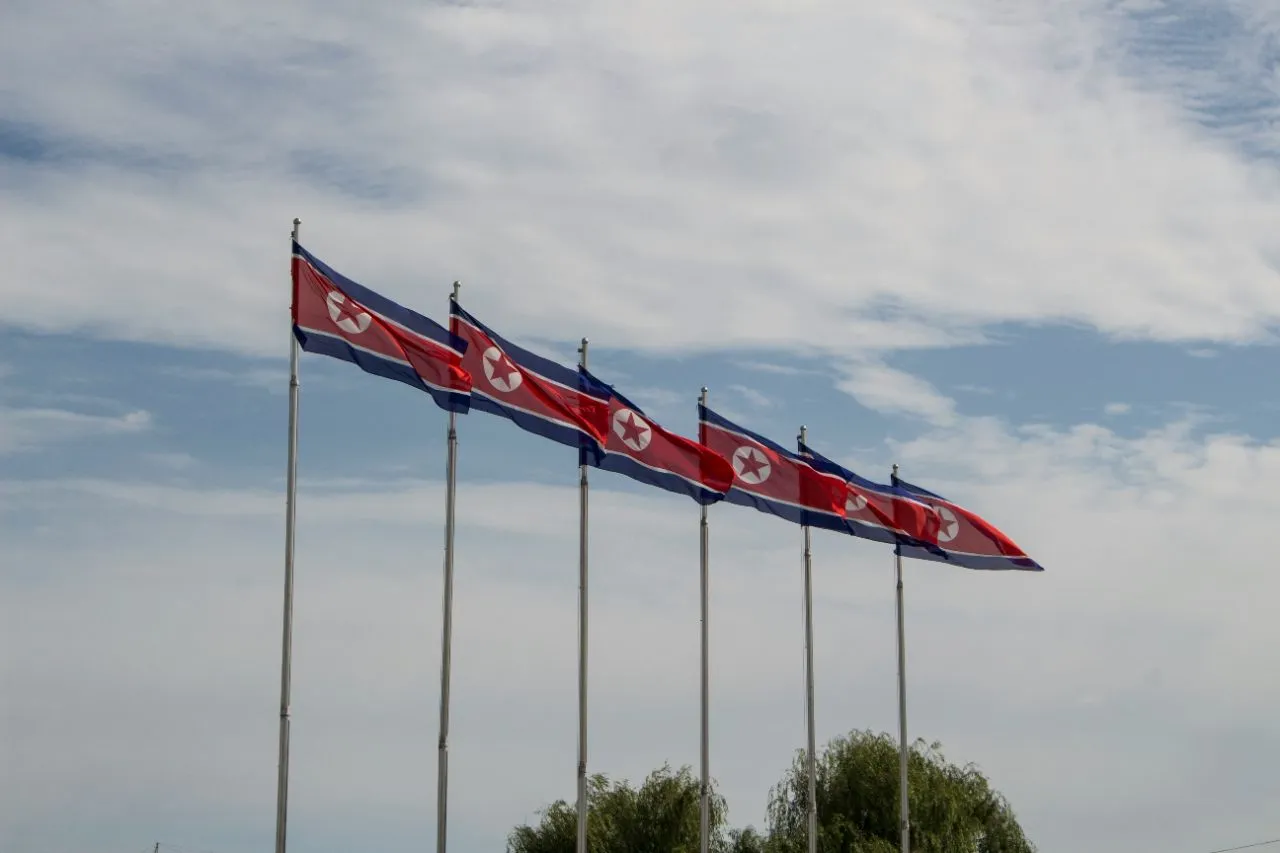
The South Korean Ministry of Foreign Affairs (MOFA) announced on Dec. 26 through an official website press release that it has imposed sanctions on 15 North Korean individuals and one institution for their involvement in illegal cyber activities, including cryptocurrency theft, to fund the country's nuclear and missile programs.
https://asset.coinness.com/en/news/ca16e8c10673807088db9eaedd16f416.webp
Photo by Micha Brändli on Unsplash

According to the MOFA, the sanctioned individuals have been stationed overseas as part of the 313 General Bureau of the North Korean Munitions Industry Department (MID), which is already subject to UN Security Council sanctions. The bureau is allegedly responsible for deploying North Korean tech personnel abroad and using the foreign currency earned to finance the development of nuclear weapons and missiles.


The sanctions, which will come into effect at 15:00 UTC on Dec. 29, will prohibit financial and foreign exchange transactions with the designated entities unless approved in advance by South Korean authorities. Violations of these sanctions may result in legal consequences under South Korean law.


North Korea behind 61% of 2024’s stolen crypto

The MOFA cited a recent report by blockchain analysis firm Chainalysis, which showed that North Korean crypto hackers took roughly $1.34 billion in 47 separate incidents in 2024. These thefts account for 61% of the year's total stolen crypto funds and 20% of all incidents. In 2023, they had stolen approximately $660.5 million over 20 incidents. It's believed these funds help finance North Korea's weapons of mass destruction programs.


The ministry further stated that North Korean tech personnel are often dispatched to countries such as China, Russia and nations in Southeast Asia and Africa, where they disguise their identities and secure work from global tech companies. Some of these individuals are also suspected of engaging in information theft and cyber attacks.


Emphasizing the threat these activities pose to cybersecurity and international peace, South Korea has vowed to continue its efforts to thwart North Korea's illicit cyber activities in cooperation with the international community.

More to Read
View All
Policy & Regulation·

Jun 22, 2023

Singaporean Regulator Proposes Framework for Digital Money Use

Singaporean Regulator Proposes Framework for Digital Money UseThe Monetary Authority of Singapore (MAS) has released a White Paper that outlines proposed standards for the use of digital assets. The aim is to establish a common protocol and conditions for the utilization of these assets.While the paper identifies the potential digital assets bring in streamlining transactions and promoting financial inclusion, it also outlines challenges that need to be addressed before digital money can be successfully implemented.Photo by Pixabay on PexelsPurpose Bound Money (PBM)MAS’s White Paper, which was published on Wednesday, provides requirements to protect the use of digital assets as a medium of exchange and offers a technical overview of Purpose Bound Money (PBM). PBM allows the sender of digital money to specify certain conditions such as validity periods or how the money can be spent.The covered digital monies include central bank digital currencies (CBDCs), tokenized bank deposits, and potentially well-regulated stablecoins, excluding digital assets that it considers volatile such as Bitcoin. These digital monies are generally pegged to real-world currencies, commodities, or financial institutions, making them more stable.MAS highlights that PBMs utilize a common protocol compatible with different ledger technologies and forms of money. This protocol enables money to be directed toward a specific purpose without requiring the money itself to be programmed. It functions as a secure two-layered delivery vehicle, with funds held as collateral in a “wrapper” until specific conditions are met for its release.Standardized formatThe standardized format outlined in the White Paper will allow users to access digital money using their preferred wallet provider. By establishing these standards, the prospects for digital money to become a significant component of the future financial and payments landscape are enhanced. Standardization and regulated use of PBMs can unlock economic value, facilitate efficient and inclusive digital transactions, and provide additional consumer protection.One notable application of PBMs is in protecting online payments, such as e-commerce transactions and prepaid packages. With PBMs, advance payments can be securely held until the service is fulfilled, ensuring that the product or service is delivered before funds are released. This benefits both consumers and merchants, assuring consumers of product delivery and allowing merchants to verify payment before delivering.PBMs can also aid businesses in mitigating risks associated with international trade transactions, ensuring secure and efficient payments while reducing the potential for fraud or non-payment.InteroperabilityTo ensure the safety and usability of digital monies, MAS highlights considerations that will impact PBM implementation. Interoperability across different platforms is crucial to avoid fragmentation and excessive fees. The choice of underlying digital currencies also affects usability and value, with CBDCs, tokenized bank liabilities, and stablecoins offering varying levels of guarantees and regulatory oversight. Additionally, privacy, digital readiness, and the impact on users need to be carefully assessed.MAS acknowledges that the regulatory landscape for digital monies is still evolving globally, which may lead to varying regulatory treatment of PBMs across jurisdictions. It believes that policy considerations should be thought through when designing PBM-based solutions, including decisions regarding issuance, distribution, and conditions for use.

news
Policy & Regulation·

Aug 16, 2023

Singapore Takes Lead in Regulating Stablecoins

Singapore Takes Lead in Regulating StablecoinsSingapore has taken a proactive step by finalizing regulations for stablecoins, solidifying its position as one of the first jurisdictions to do so on a global scale.The Monetary Authority of Singapore (MAS) has established a comprehensive framework that outlines essential prerequisites for stablecoin operations, according to an announcement made by the central bank on Monday.Key highlights include:Reserve Backing: Stablecoins must be backed by reserves consisting of low-risk and highly liquid assets. The value of these reserves should equal or surpass the circulating stablecoin value at all times.Prompt Redemption: Stablecoin issuers are mandated to return the par value of the digital currency to holders within five business days upon redemption requests.Transparency: Issuers must furnish users with “appropriate disclosures,” including audit outcomes of the backing reserves.These regulations will be applicable to stablecoins issued in Singapore that mirror the value of the Singapore dollar or any G10 currency, such as the US dollar. Stablecoins meeting all the requirements outlined by the regulations will receive recognition from the regulator as “MAS-regulated stablecoins.” This distinct categorization will differentiate them from tokens lacking regulation.Photo by CoinWire Japan on UnsplashKey roleWith a market valuation of approximately $125 billion, stablecoins have rapidly emerged as a significant force within the crypto space. Leading the pack are Tether’s USDT and Circle’s USDC, which together command around 90% of the market’s total value.Stablecoins play a key role in the crypto trading market. They allow traders to move in and out of various cryptocurrencies and back into fiat. However, despite their immense influence, stablecoins have largely remained unregulated across the globe. While their primary use has been in trading, stablecoin proponents assert their versatility in various applications, including remittances.Digital currency hubSingapore has been actively positioning itself as a hub for digital currencies, striving to attract foreign companies seeking refuge from the crypto industry’s apprehensions surrounding the current unwelcoming US regulatory approach.Despite their prevalence, stablecoin issuers have faced criticism regarding the transparency of their reserve holdings. Singapore’s regulatory measures aim to bring increased clarity to this sector.Ho Hern Shin, Deputy Managing Director of Financial Supervision at MAS, expressed that the framework’s purpose is to enable stablecoins to serve as a credible digital medium of exchange and bridge the gap between fiat and digital asset ecosystems.Positive industry responseLeading stablecoin firms, Tether and Circle, have applauded Singapore’s new regulations. Yam Ki Chan, Vice President of Strategy and Policy for APAC at Circle, stated that MAS is at the forefront of forward-looking regulators globally, establishing a transparent regulatory framework for stablecoins and digital assets. Paolo Ardoino, CTO of Tether, hailed the framework for providing a clear structure, accountability, and transparency in stablecoin operations within Singapore.The collapse of algorithmic stablecoin UST last year drew regulatory attention to this category of stablecoins. Unlike traditional stablecoins like USDT and USDC, UST was governed by an algorithm and lacked real-world assets as reserves.Singapore’s stablecoin regulations have placed it in a select group of jurisdictions pioneering such rules. Hong Kong is presently undergoing public consultation on stablecoins and plans to introduce regulations in the coming year.

news
Web3 & Enterprise·

Aug 08, 2025

Bakkt takes stake in Japanese textile firm in pivot to crypto treasury strategy

Bakkt, an American digital asset custodian and trading firm, has acquired a stake in Marusho Hotta, a Japanese textile firm, as part of a new crypto treasury strategy which the company adopted recently. The firm, which was established in 2018 and is 55% owned by Intercontinental Exchange, the owner of the New York Stock Exchange (NYSE), published a statement on its website on Aug. 6, outlining that it had acquired a 30% stake in Marusho Hotta. The textile firm, a publicly-listed company on the Tokyo Stock Exchange (TSE: 8105), is both a manufacturer and distributor of yarn and bedding, as well as Japanese and Western clothing.Photo by 🇸🇮 Janko Ferlič on Unsplash‘bitcoin.jp’As a result of the transaction, Bakkt International President Phillip Lord will become CEO of Marusho Hotta, and the company will be renamed as “bitcoin.jp.” Akshay Naheta, co-CEO of Bakkt, commented on the development, stating: "Japan's regulatory environment creates an ideal platform for a Bitcoin-centered growth business. We look forward to working with MHT's team to integrate Bitcoin into their operating and financial model and to establish MHT as a leading Bitcoin treasury company." Back in June, it emerged that Bakkt was working towards raising $1 billion from investors, providing the first indication that the firm was moving towards pursuing a crypto treasury strategy. A filing lodged with the Securities and Exchange Commission (SEC) at the time stated:“We may acquire Bitcoin or other digital assets using excess cash, proceeds from future equity or debt financings, or other capital sources, subject to the limitation set forth in our Investment Policy.” The company went on to outline that the timing and magnitude of any such crypto purchases would depend upon market conditions at the time, capital market receptivity, the firm’s business performance and other strategic considerations. Given the credentials within traditional finance of the company’s owners, the arrival of Bakkt in 2018 was seen as a significant event within the crypto sector. However, the firm’s journey has not been an easy one. It started out by trying to appeal to retail users and bring about real-world use of cryptocurrency. It established an app and a partnership with Starbucks, which looked to bring crypto into mainstream use in terms of everyday payments.However, that partnership fizzled out and in 2024 a filing lodged by the company with the SEC revealed that the company’s position was challenging, with it warning that it “might not be able to continue as a going concern.” When the business first launched, it aspired to bring Bitcoin to 401(k) retirement accounts in the U.S. It may have been ahead of its time in that regard as it had to contend with Donald Trump’s first term as president when he wasn’t particularly pro-crypto and a distinctly anti-crypto Biden administration immediately afterwards. It is only now, seven years after the founding of Bakkt, that the current Trump administration is finally moving to allow crypto investment to form part of 401(k) plans. More recently the firm had concentrated on catering to the needs of institutional investors but faced further turmoil earlier this year when it lost two customers who allegedly made up 73% of Bakkt’s revenue.

news
Loading