Top

Crypto.com launches institutional trading platform in the U.S.

Web3 & Enterprise·January 31, 2025, 12:15 AM

Crypto.com, the Singapore-based cryptocurrency exchange and digital asset brokerage, announced that it introduced an institutional trading platform in the United States.


In a statement published on its website on Jan. 21, the company outlined that U.S. institutional and advanced traders can now access the new platform. The firm believes that the offering complements its retail-facing Crypto.com app., which currently serves the U.S. market.

https://asset.coinness.com/en/news/14ad32bb6ba4d8c2be5717249017e1d4.webp
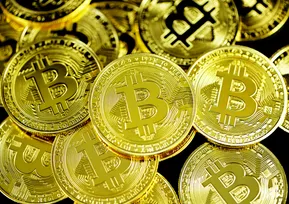
Photo by Joshua Hoehne on Unsplash

480 trading pairs

The institutional-grade platform will enable access to over 300 cryptocurrencies and 480 trading pairs. The product is likely to appeal to a similar market segment as those clients targeted by the Crypto.com Custody Trust Company, a digital asset custodian, which was established last month.


At that time, Crypto.com co-founder and CEO Kris Marszalek said that launching the digital asset custodian was the latest step on the company’s product roadmap, with a view towards building a business and a market presence within the U.S. and Canada. 


Responding to this latest product offering, Marszalek stated:


“We took the time to build the best possible product for institutional and advanced users around the world and we are now incredibly excited to fully introduce it in the market we continue to be bullish about – the U.S.”


Marszalek added that Crypto.com has invested heavily in the exchange’s technological capabilities and banking rails. The Crypto.com CEO believes that this investment has resulted in exponential global growth for the company, with the platform becoming a leading U.S. dollar-supporting exchange.


Regulatory tailwinds

Crypto.com’s bullishness regarding the U.S. market currently stands in contrast with developments in June 2023 when the company decided to shut down its institutional exchange offering, citing limited demand amid a bleak market landscape for crypto in the United States. 


At the time, the company was one of several to look towards opportunities outside of the U.S. Shortly afterwards, Crypto.com obtained a crypto trading license in Dubai. Competitors Gemini and Coinbase followed a similar strategy, looking at growth opportunities in the Middle East and Asia.


It’s clear that a regulatory crackdown in the U.S. at that time curbed the expansion plans of many cryptocurrency platforms. Many industry experts are of the belief that there will be a pro-crypto Securities and Exchange Commission (SEC) in the U.S. as part of the newly seated Trump administration. 


Regulatory clarity is necessary for institutional involvement in the digital assets sector. Last week, Mark Uyeda, Acting Chairman of the SEC, announced the formation of a crypto task force with the objective of creating a clear regulatory framework for crypto.


The U.S. is home to the world’s largest capital markets. A report produced by New York-headquartered blockchain analysis firm Chainalysis late last year identified that 70% of North American crypto transactions involved transfers that had a value in excess of $1 million, pointing to the level of institutional activity within that market. 


Earlier this month, Crypto.com added the ability for U.S. platform users to trade stocks and exchange-traded funds (ETFs).



More to Read
View All
Web3 & Enterprise·

Sep 23, 2024

Hashgraph ecosystem developer explores use cases in Qatar

The Hashgraph Association, a non-profit organization that focuses on building an ecosystem of startups and enterprises relative to the use of the Hedera Hashgraph public ledger, has announced that it intends to explore use cases for the technology in Qatar. Hedera Hashgraph was first created in 2015 by Leemon Baird and Mance Harmon. The network is designed such that anyone can transact using it and deploy applications on it. However, governance is separated from consensus, with a group of businesses overseeing the network protocol.Photo by Hongbin on UnsplashFive key use casesIn a LinkedIn post published on September 19, the Hashgraph Association outlined that within the next 12 months, it would explore the implementation of five key use cases relative to the Hashgraph network in Qatar, collaborating with stakeholders within the Middle Eastern country in order to do so. First on its list is the tokenization of equities. During the TOKEN2049 event in Singapore earlier this week, the HBAR Foundation, another entity which supports the creation of Web3 communities on the Hedera network, launched the Hedera Asset Tokenization Studio.  According to the HBAR Foundation, the initiative “enables the seamless issuance and management of tokenized bonds and equities on the Hedera network.” The move, when considered in the context of the Hashgraph Association’s intentions relative to the pursuit of the tokenization of equities as a use case in Qatar, demonstrates that the distributed ledger technology (DLT) network’s most prominent stakeholders are homing in on this particular use case in furthering the use of the network.  Dr. Sabrina Tachdjian, the HBAR Foundation’s head of fintech and payments, stated that the  Asset Tokenization Studio will lower technical barriers to the tokenization of bonds and equities, along with the recording of their underlying data on the ledger. Sukuk tokenizationOther use cases up for exploration in Qatar are real estate tokenization and sukuk tokenization. A sukuk is an Islamic financial certificate. It’s a bond-like financial instrument which is sharia-compliant. The world’s first tokenized sukuk, linked to a sovereign instrument, was created in Malaysia in 2023.  Fusang Exchange listed the product, as a digitized version of a sukuk issued by the International Islamic Liquidity Management Corporation (IILM), represented via an ERC-20 token. Shariah-compliant finance represents a $4 trillion opportunity. Additionally, the Hashgraph Association is looking to exploit the carbon credit sector as a use case, while also looking towards the use of the Hedera Hashgraph ledger for the purpose of consumer engagement and loyalty programs. Digital assets frameworkOn September 1, the Qatar Financial Centre (QFC) announced that the Qatar Financial Centre Authority (QFCA) and the Qatar Financial Centre Regulatory Authority (QFCRA) had launched the QFC digital assets framework. The Hashgraph Association believes that the regulations strengthen its role in “fostering innovation and trust within the digital assets ecosystem, further solidifying the region’s position as a global leader in fintech.” In May, the Hashgraph Association announced at the Qatar Economic Forum a $50 million partnership with the QFC, with the goal of creating a digital assets venture studio in Qatar to support solutions built on the Hedera network.

news
Markets·

Sep 21, 2024

Hong Kong leads East Asia in crypto transaction growth

An analysis of data recently published as part of Chainalysis’ Global Cryptocurrency Adoption Index demonstrates that Hong Kong has recorded a year-on-year crypto transaction value growth rate of 85.6%.  On that basis, the territory accounts for the sixth-largest crypto economy in the world. Furthermore, Hong Kong ranks 30th in terms of global crypto adoption. That’s an improvement of 17 places, as it was ranked 47th in 2023. Regulatory framework aiding crypto adoptionAn excerpt from the 2024 Geography of Cryptocurrency Report by Chainalysis was published on September 18. It found that the steps taken in the Chinese autonomous territory in terms of laying down a regulatory framework for digital assets has led to this uptick in transactional activity, due to the increased adoption of digital assets by institutions.  Over the course of the past eighteen months, Hong Kong has launched crypto trading licensing. Earlier this year, exchange-traded funds (ETFs) were given the green light, with the subsequent launch of Bitcoin and Ethereum ETF products.  On the topic of ETF’s, Kevin Cui, CEO of digital asset trading platform OSL said that “as market conditions improve, we are seeing indications of a growing institutional interest that could lead to increased capital inflows in the near future.” Meanwhile, the Chinese autonomous territory is working towards the establishment of regulations that cover the issuance and trading of stablecoins.lil artsy on PexelsHong Kong key to Chinese crypto resurgenceIn terms of crypto adoption, mainland China ranked 11th this year, dropping down one place by comparison with last year. The report notes the complicated history China has had with cryptocurrency in recent years, given that a crypto trading ban remains in place. However, last year’s report pointed to the strong usage of centralized crypto exchanges by mainland China residents, which suggests that the ban has either been ineffective or poorly enforced.  The Chainalysis report speculates that “Hong Kong may finally influence China to re-open its doors to crypto.” This is not the first time that Chainalysis has made such an assertion. In last year’s report, it made a similar claim, suggesting that the development of Hong Kong as a crypto industry hub would lead to a softening in the stance of mainland China towards crypto. This year’s report suggests that mainland China residents have turned to over-the-counter (OTC) platforms in order to access crypto as a means towards preserving their wealth. The report quoted Ben Charoenwang, associate professor of finance at the INSEAD Asia Campus as stating: “Nowadays, if you want to move money out of China through traditional unofficial means like using mules, fees can be as high as 25 to 30 percent. The increasing use of OTC crypto in China suggests that people are looking for faster options to move money.” The report finds that five of the top 50 grassroots adopters of crypto, South Korea, China, Japan, Hong Kong and Taiwan, are located in East Asia. South Korea leads the region in terms of the most crypto value transacted metric. Chainalysis suggests that South Korea’s strong interest in altcoins signals that it will remain a leader in the region from a cryptocurrency innovation perspective.

news
Markets·

Mar 14, 2024

DB Insurance and KISA recruit blockchain insurtech startups for incubation program

South Korean insurance companies, DB Insurance (DB) and DB Life Insurance (DB Life), are hosting the 2024 InsurTech Startup Incubation Program (ISIP) in collaboration with Korea Internet & Security Agency (KISA), local media Daily Korea reported.  Insurtech is a compound word of insurance and technology. This year, the ISIP focuses on recruiting blockchain-based insurtech startups with high potential that can contribute to the insurance business value chain, including activities such as product launch, marketing and customer service. The program is open to any insurtech startup with innovative technologies and services. Photo by Tierra Mallorca on UnsplashLaunched in 2020, the ISIP has been supporting insurtech startups with innovative ideas to expand their business in the insurance industry, aiming to create a robust and collaborative insurtech ecosystem. Over the past four years, the program has served as a mentor for 21 startups, supporting their product release, new technology verification and business pivoting.  Business growth opportunity for insurtch startups Startups selected for the ISIP are provided with the opportunity to receive mentorship – including mentoring services from insurance experts, business strategy advice and IR pitching coaching sessions – that will help facilitate their business growth.  In addition, selected startups will be eligible to apply for surety credit to the Korea Credit Guarantee Fund on favorable terms and gain opportunities to raise funds from venture capitalists. Those deemed profitable enough for commercialization will be able to have a chance to collaborate with DB and DB Life.  Application forms are available on the KISA’s website and can be submitted via e-mail between Feb.27 to March 27. Applicants should undergo document screening and a presentation test to join the ISIP.  

news
Loading