Top

StashAway opens access to Fidelity crypto ETFs in Malaysia

Markets·February 03, 2025, 5:26 AM

StashAway Malaysia, a Malaysian Securities Commission (SC)-licensed digital investment platform, has extended its market offering to include crypto exchange-traded funds (ETFs) within the Southeast Asian nation.


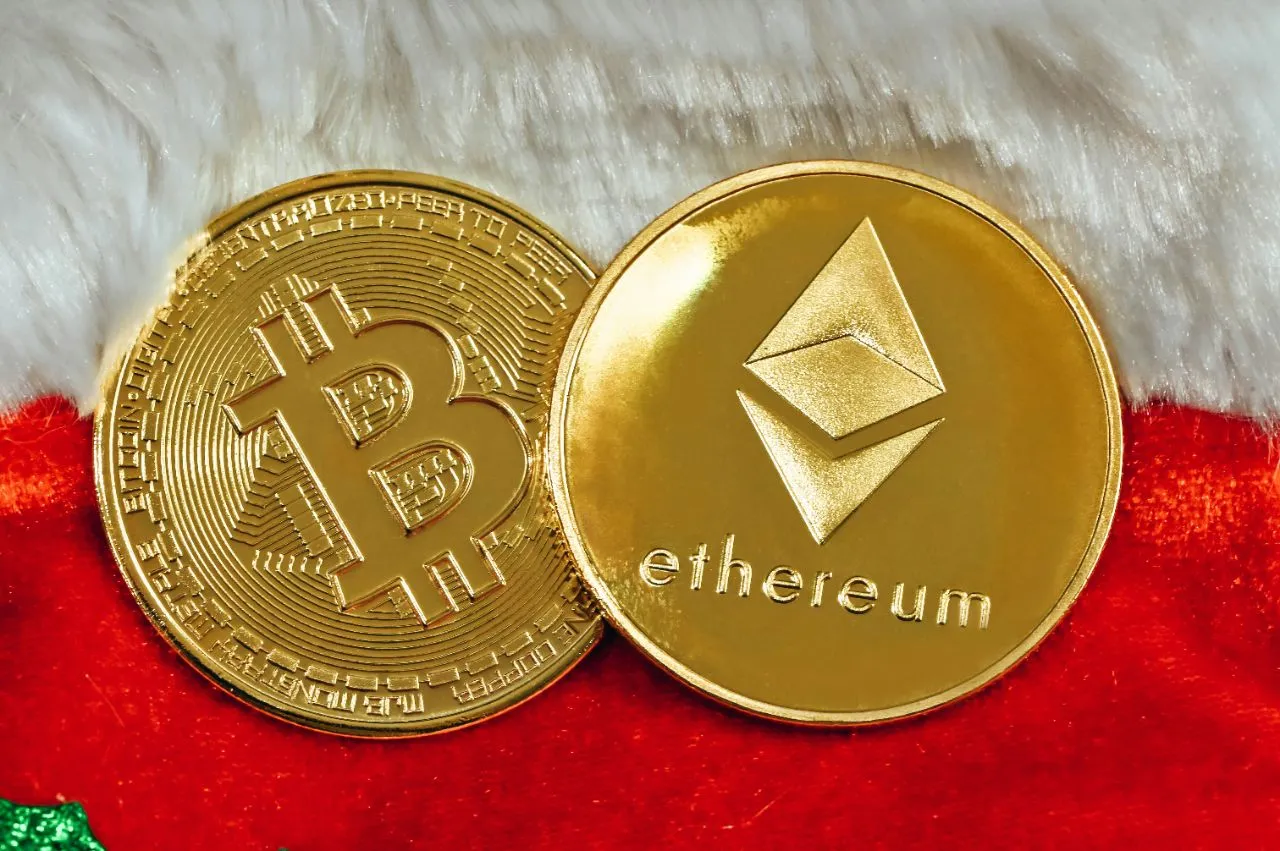
Malaysian daily English language newspaper the Sun reported on Jan. 22 that StashAway will enable Malaysians to invest in two top-tier cryptocurrencies, Bitcoin (BTC) and Ethereum (ETH), through its regulated platform.
https://asset.coinness.com/en/news/b3d65b012b23087826b8fa26858e0fd8.webp
Photo by Traxer on Unsplash

Fidelity products

The company is providing its Malaysian clientele access to crypto investment products offered by American multinational financial services company Fidelity Investments. These include the Fidelity Wise Origin Bitcoin Fund (FBTC) and the Fidelity Ethereum Fund (FETH).


StashAway Malaysia Country Manager Wong Wai Ken explained the company’s rationale in adding the two products. He stated:


“Many of our clients have expressed interest in the long-term potential of major cryptocurrencies like Bitcoin but have been hesitant because of security concerns or the complexities of navigating crypto exchanges. We’re now offering them a familiar and safe way to diversify their portfolios by incorporating crypto through a platform they already know and trust.”


On a previous occasion, Wong told the Sun that its role is to help investors to diversify their portfolios. Adding access to cryptocurrency fits that objective. The StashAway executive believes that while there may be growing mainstream adoption of cryptocurrency, many investors are turned off gaining exposure due to the risks involved with self-custody or the fees and counterparty risk involved with cryptocurrency exchanges.


StashAway charges management fees ranging from 0.2% to 0.8%. The Fidelity crypto ETF products will be offered with a 0.25% annual management fee. 


Last June, Malaysian commercial bank Affin Bank became the first entity to offer a crypto ETF in Malaysia. The bank partnered with local fund management company Cross Light Capital to launch the actively managed digital asset fund. Titled the “Performa Digital Asset Fund,” the product incorporates investment in Bitcoin and Ether exchange-traded products (ETPs), with the remaining third invested in blockchain-related equities.


The approval of eleven Bitcoin ETFs in the United States led to greater consideration for the approval and addition of such products internationally. However, in the first few months following the launch of these products, regulators, exchange platforms and asset management firms still remained cautious. 


In March of last year, Bursa Malaysia, Malaysia’s stock exchange, dismissed the notion of adding cryptocurrency to its multi-asset exchange. Within the region, regulators in Singapore and Thailand both dismissed the idea of enabling Bitcoin ETFs within their markets. 


Since then, Thailand’s regulator has moved closer in its consideration of such a product offering. In the case of Malaysia, earlier this month, the country’s Prime Minister, Datuk Seri Anwar Ibrahim, called for stakeholders such as the central bank to focus on cryptocurrency so that the Southeast Asian nation doesn’t get left behind.


StashAway is headquartered in Singapore. Besides Singapore and Malaysia, the company also serves investors in Thailand, the United Arab Emirates (UAE) and Hong Kong. The digital platform has 50,000 users in Malaysia, where it serves retail and accredited investors. The company was the first robo-advisor platform to acquire a Capital Markets Services License from the SC in Malaysia.


More to Read
View All
Policy & Regulation·

Jun 28, 2023

Korea’s Most Populated Province to Conduct Survey on Unfair Crypto Trading

Korea’s Most Populated Province to Conduct Survey on Unfair Crypto TradingGyeonggi-do, the most populated South Korean province that encircles the nation’s capital of Seoul, announced today a plan to conduct a survey among its residents later this year to assess their experiences with unfair cryptocurrency trading practices.Photo by mockupbee on UnsplashRising crypto-related complaintsThe decision to conduct this survey was prompted by the increasing number of residents experiencing unfair losses from cryptocurrency investments amid an economic slowdown. Last year, the consumer counseling center in Gyeonggi-do received 448 complaints related to crypto assets, which was more than triple the number in 2020.The objective of the survey, which will run from August to November, is to gather data on residents’ perceptions of crypto assets, their methods of accessing them, the types of investment victims, and the extent of investment losses. To obtain a comprehensive understanding of the current situation, Gyeonggi-do will also analyze complaints from the past three years and establish appropriate response measures.In-depth interviewsIn addition to the survey, Gyeonggi-do plans to conduct in-depth interviews with victims by making visits and phone calls. The provincial government aims to categorize each case into major groups such as illicit pyramid schemes, suspicious investment advice channels, illegitimate fund-raising activities, market manipulations, and fake crypto sales.Legislation in progressMeanwhile, the Virtual Asset User Protection Bill is currently undergoing the legislative process in the National Assembly. Gyeonggi-do is committed to devising appropriate consumer protection policies within its jurisdiction to safeguard residents and prevent further damages until the act becomes effective. Cases of unfair trading practices uncovered during the survey will undergo legal reviews and may result in fines or lawsuits.Heo Seong-cheol, the head of the Fair Economy Division at the Gyeonggi-do government, expressed the province’s dedication to minimizing financial losses incurred by consumers due to criminal activities in the crypto industry. He said the survey will provide valuable insights to the local government, enabling them to gain a comprehensive understanding of the current situation regarding unfair crypto trading practices and take necessary actions.

news
Web3 & Enterprise·

Nov 06, 2023

NuriFlex Holdings partners with Catalyx Exchange to explore security tokens and RWAs

NuriFlex Holdings partners with Catalyx Exchange to explore security tokens and RWAsNuriFlex Holdings Inc., the Canadian parent company of South Korean IoT solutions provider NuriFlex Co., Ltd., has recently signed a memorandum of understanding (MOU) with the Canadian cryptocurrency exchange, Catalyx. According to a report by the Korea Economic Daily, this collaboration is designed to facilitate both entities’ entry into the markets of security token offerings (STOs) and real-world assets (RWAs).Photo by Chris Liverani on UnsplashNuriFlex Group’s diverse portfolio and industry experienceWith a 30-year track record, NuriFlex Group has supplied global utility companies with robust software platforms designed for handling vast amounts of data. Beyond this, the group manages an array of services, including blockchain-based digital payments, a social dating metaverse known as NuriTopia and Web3 wallet services. Furthermore, NuriFlex Group has established a business network to support central bank digital currency (CBDC) initiatives in Central and South America as well as Africa. Leveraging its longstanding industry presence and extensive connections, NuriFlex Group strives to venture into the sectors of STOs and RWAs.Canadian crypto exchange since 2019Meanwhile, Catalyx Exchange, established in 2019 and headquartered in Calgary, Alberta, is known to have the management and technological expertise necessary to operate trading platforms for security tokens and RWAs.An official from NuriFlex Group conveyed their enthusiasm for the partnership, emphasizing their collective goal to lead the way in innovation. They intend to jointly launch a platform that is not only secure and efficient but also fully compliant with the laws and regulations of the country in which they operate.A representative from Catalyx also shared a positive outlook, noting that the exchange has been gearing up to branch out into the STO and RWA sectors for several years. They expressed their pleasure at having the opportunity to collaborate with NuriFlex Holdings on this venture.

news
Policy & Regulation·

Aug 02, 2023

Bankruptcy Judge Permits Terraform Labs to Subpoena FTX

Bankruptcy Judge Permits Terraform Labs to Subpoena FTXIn a significant development in the bankruptcy case of defunct crypto exchange FTX, a judge has granted Singapore-based Terraform Labs the authority to subpoena information related to its ongoing case brought by the United States Securities and Exchange Commission (SEC).Photo by Bermix Studio on UnsplashHack allegationsTerraform Labs, the blockchain company that developed the Terra blockchain and failed US dollar stablecoin UST, claims that the failures of its algorithmic stablecoin and governance token were the result of an attack from short-sellers, possibly involving Alameda Research (FTX’s sister company).The order, issued by Judge John Dorsey on Monday, allows Terraform Labs to serve subpoenas to FTX Trading and FTX US, aimed at collecting evidence to support its defense against the SEC’s allegations of fraud. According to court filings, lawyers representing the FTX Debtor have not formally objected to the court order.Terraform Labs’ request for subpoena power stems from its belief that short-sellers connected to FTX entities played a role in the failure of the algorithmic stablecoin and governance token, leading to the collapse of the crypto firm. The ability to obtain information from FTX through the subpoenas could be crucial in bolstering Terraform Labs’ defense against the SEC’s fraud charges.UST collapse falloutThe collapse of the UST stablecoin in 2022 contributed to a major market crash, resulting in a significant drop in the prices of many tokens. As a result, the company filed for bankruptcy in November 2022. The Co-Founder of Terra, Do Kwon, is currently serving a four-month sentence in a Montenegrin prison for using false travel documents. He may also face extradition to the United States or South Korea on fraud charges related to Terraform Labs.Motion to dismiss deniedIn a separate high-stakes ruling, US District Judge Jed Rakoff denied Terraform Labs’ motion to dismiss the securities fraud lawsuit filed by the SEC. The judge’s decision allows the SEC’s case against Terraform Labs and Do Kwon to proceed, rejecting defense arguments that the agency lacked jurisdiction and that Terraform’s TerraUSD stablecoin did not qualify as an unregistered security.Judge Rakoff’s ruling is a significant victory for the SEC as it intensifies its enforcement actions against crypto companies involved in allegedly unlawful token sales. He found the collapse of TerraUSD, which lost its dollar peg and incurred a $40 billion loss last year, plausible as a reason to consider the token as a security that should have been registered.Moreover, Rakoff dismissed Terraform’s claim that the SEC lacked the authority to regulate stablecoins without explicit Congressional authorization, asserting that the crypto industry was significant enough to warrant application of the “Major Questions Doctrine.” This doctrine limits agency overreach into major political issues but does not apply to the crypto asset markets.The judge also rebuffed Terraform Labs’ attempts to draw parallels between the Ripple case and its own. In the Ripple case, a different judge ruled that Ripple’s XRP token sales to retail investors did not violate securities laws due to the manner of purchase on secondary markets. Rakoff firmly stated that such distinctions did not apply under the legal Howey test governing whether crypto assets qualify as securities.

news
Loading