Top

Thailand’s SEC considers Bitcoin ETF approval

Policy & Regulation·January 20, 2025, 7:41 AM

Thailand’s Securities and Exchange Commission (SEC), the Southeast Asian nation’s securities regulator, is believed to be considering moving towards approving spot Bitcoin exchange-traded fund (ETF) products. 


In an interview with Bloomberg, the Thai SEC’s Secretary-General, Pornanong Budsaratragoon, said that the agency is weighing up whether to allow individual investors and institutions to access spot Bitcoin ETFs. Budsaratragoon stated:


“We have to adapt and ensure that our investors have more options in crypto assets with proper protection.”
https://asset.coinness.com/en/news/fa5dc38f4d85f8bb9af82a72616fc7b6.webp
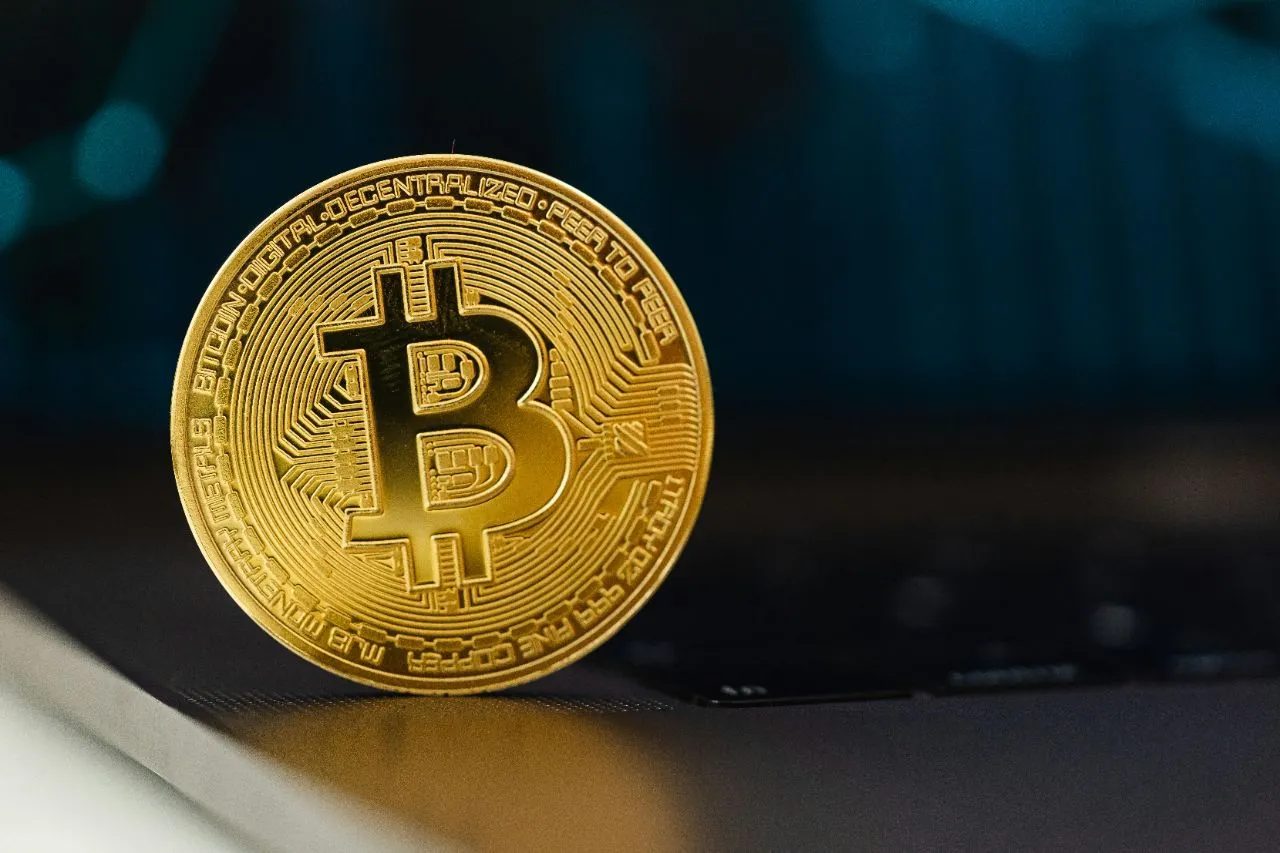
Photo by Photo By: Kaboompics.com on Pexels

Moving along with global crypto adoption

January 10 marked the first anniversary of the approval of spot Bitcoin ETFs in the United States. Given that the U.S. is home to the world’s largest capital markets, that decision has had an impact internationally. That reality is borne out by one of Budsaratragoon’s comments. She stated:


“Like it or not, we have to move along with more adoption of cryptocurrencies worldwide.”


While the SEC Secretary-General’s comment suggests that she feels a compulsion to move forward in line with developments elsewhere, that wasn’t the agency’s position in January 2024 following spot Bitcoin ETF approval in the U.S. 


Shortly afterwards, the regulator, alongside its regional counterpart in Singapore, outlined that it had no plans to approve the product in Thailand, stating: "The SEC has been following these developments closely but we do not have a policy to allow spot Bitcoin ETFs to be established in Thailand for the time being.”


Initial access to overseas products

In March of last year, the agency had warmed to the Bitcoin ETF product offering to a greater extent, by approving access to such products listed overseas to high-net-worth individuals and institutions. Off the back of that approval, One Asset Management (ONEAM) launched a fund of funds in June 2024, enabling Thai investors to gain exposure to Bitcoin ETFs which had been publicly listed overseas.


Back in October, Nirun Fuwattananukul, CEO of Binance Thailand, stated in an opinion piece published by the Bangkok Post that he felt that the Thai crypto market was moving from retail towards a focus on the institutions. He stated:

“By allowing more institutional funds to participate, the SEC is enabling a diverse range of investment strategies and helping digital assets gain broader acceptance in the mainstream.”


Fuwattananukul suggested that the local regulator had made some changes on Oct. 9, paving the way for institutional-grade mutual and private funds to invest in crypto products. The approval of locally listed Bitcoin ETF products would broaden investor access to digital assets in Thailand, particularly in relation to institutional investors, which is in line with the thinking of the Binance executive.


Earlier this month, Thailand’s Deputy Prime Minister, Pichai Chunhavajira, announced that a pilot program was being launched to help foreign tourists pay for goods and services using crypto within the Thai resort city of Phuket. 


Meanwhile, former Thai Prime Minister Thaksin Shinawatra expressed a bullish view on crypto in a speech he made in Bangkok last week. Shinawatra called on the country’s institutions to be more open to cryptocurrency, while citing regulatory developments in the U.S. relative to the emerging asset class.


More to Read
View All
Policy & Regulation·

Jun 28, 2024

Singer referred to Taiwan prosecutors over alleged links to JPEX

The Ministry of Justice Investigation Bureau in Taiwan has referred Nine Chen, a popular Taiwanese singer-songwriter and television program host, to the prosecutors' office in Taipei on suspicion of aggravated fraud and violations of banking laws for his alleged involvement in a fraud scheme linked to the JPEX cryptocurrency exchange. Local media publication the United Daily News reported on June 26 that as an outcome from an investigation into the matter, the authorities have established that Chen acted as a brand ambassador for JPEX in 2023, receiving 320,000 USDT in the process. While Chen has been referred on to the prosecutors’ office in Taipei, they have yet to press charges against him. Photo by Thomas Tucker on UnsplashOngoing sagaThe first public soundings of an issue in Taiwan relative to JPEX emerged in November 2023. At that time, the Taipei District Prosecutors Office (TDPO) requested that Chang Tung-ying be taken into custody amid allegations of fraud. Tung-ying was understood to have been chief partner at JPEX’s Taiwan office.  The previous month, the TDPO had called Chen in as a witness. The singer had informed local media that he was out of pocket for funds he had held in digital assets via JPEX, incurring a 15% loss.  At that time, the authorities in Taiwan arrested dozens of suspects related to what is believed to be a fraud to the value of approximately $205 million. Hong Kong investigationsJPEX garnered the most negative reaction in Hong Kong. In excess of 2,000 complaints were registered with local regulators within the Chinese autonomous territory relative to the cryptocurrency exchange.  Problems were first reported in September 2023 when the platform outlined that it had experienced a liquidity crisis. Losses in Hong Kong relative to the platform were understood to be in the region of $180 million.  In an effort to deal with the matter, JPEX proposed a plan in October 2023 to transition the business to a decentralized autonomous organization (DAO). Multiple arrests were made by the Hong Kong authorities, with a collection of assets being seized in an effort to gather up funds on behalf of platform customers who found themselves out of pocket. While JPEX hit the headlines in 2023 for questionable activity in Asian markets, the business is actually headquartered in Dubai in the United Arab Emirates (UAE). In September of last year, Dubai’s Virtual Assets Regulatory Authority (VARA) outlined that as far as it was concerned, JPEX wasn’t regulated in Dubai and hadn’t registered with the regulator.  Following the same pattern in Taiwan, JPEX had not registered with the Financial Supervisory Commission (FSC) relative to anti-money laundering (AML) regulations, which it requires crypto platforms to comply with. Taiwanese authorities have experienced issues with a number of crypto platforms over the course of the past 18 months. Aside from JPEX, the founder of ACE Exchange, David Pan, was arrested in January 2024. Charges of money laundering and fraud were brought against him. As with JPEX, there was a connection with Dubai in that Pan was also the founder of Dubai-based crypto exchange ZORIXchange. In November 2023, Bitgin, a local crypto exchange, found itself at the center of an investigation into money laundering.

news
Policy & Regulation·

Jul 26, 2023

Korea’s Intragovernment Group Launched to Thwart Crypto-Related Crimes

Korea’s Intragovernment Group Launched to Thwart Crypto-Related CrimesThe South Korean government has taken a significant step today in combating cryptocurrency crimes with the launch of a dedicated intragovernmental division. The newly established joint crypto-crime investigation division operates under the Seoul Southern District Prosecutors’ Office and comprises 30 skilled investigators from seven different government agencies.Photo by Daniel Bernard on UnsplashMulti-agency collaborationThese agencies are the Public Prosecutors’ Office, the Financial Supervisory Service (FSS), the Korea Financial Intelligence Unit (FIU) of the Financial Services Commission (FSC), the National Tax Service (NTS), the Korea Customs Service (KCS), Korea Deposit Insurance Corporation (KDIC), and Korea Exchange (KRX).The growth of the domestic crypto market in South Korea has been remarkable since the advent of cryptocurrency exchanges in 2014, attracting approximately 6.27 million individuals and reaching a valuation of 19 trillion KRW ($14.9 billion). Daily average trading volumes have surged to three trillion KRW, involving participants from various age groups, with individuals in their 30s and 40s constituting the largest share.Regulatory absenceHowever, the absence of adequate regulations has exposed customers to unfair practices in virtual asset trading. Although the recent passage of the Virtual Asset User Protection Bill at the National Assembly is encouraging, implementing comprehensive policies to safeguard crypto investors will take a significant amount of time.The risks associated with virtual asset investments are highlighted by the frequent delisting of cryptocurrencies from the nation’s top five exchanges. In the past two years, 1,053 cryptos have been delisted, and an additional 1,010 have been flagged as risky. The prevalence of unstable cryptocurrencies has resulted in high price volatility, incurring losses for investors. This volatile environment has also given rise to various crypto-related crimes, including unlawful listings, market manipulation, illegal foreign exchange trading, and pyramid schemes.Two teamsTo address these challenges, the joint crypto-crime investigation division is structured with two teams. The research and analysis team will study virtual asset issuers and distributors, identifying suspicious transactions. Virtual assets found to be fraudulent will be reported to the investigation team, which will then conduct thorough investigations and pursue legal action against problematic projects, while also recommending regulatory enhancements. Profits obtained through illegal means will be confiscated by the Seoul Southern District Prosecutors’ Office.The division’s main focus lies on virtual assets that have been rapidly delisted, those marked as risky, and those exhibiting significant price volatility. Committed to upholding fairness and transparency in the crypto industry, the joint crypto-crime investigation division will strive to protect market participants and make valuable contributions to the Korean economy.

news
Web3 & Enterprise·

Apr 24, 2023

SAI.TECH Consolidates Mining Product Offering

Singapore’s SAI.TECH, a bitcoin miner and mining infrastructure hardware developer, has chosen to consolidate its product offering. The company has simplified its product range by categorizing them as Ultiaas, Boltbit, and Heatnuc. Virtual annual conferenceThe company took the opportunity to host SAITIME 2023, a virtual corporate annual conference, using the event as a platform to announce its SAIHUB product consolidation.Ultiaas will focus on the development of hardware and software products alongside integrated solutions, in order to enable liquid cooling and heat reuse capabilities while attempting to achieve optimized energy efficiency. In practical terms, these products convert mining chip heat into reusable energy.The team behind the Ultiaas product line believes that the technology can have a significant positive effect on data centers through the harnessing of chip heat in commercial, residential, industrial and agricultural locations. The firm has thoroughly tested the product, with its first successful operation at its testing and distribution facility in Ohio in the United States. According to a press release, the company says that “we look to tap into the state’s vast reservoir of clean energy.” With that, it is already working on the construction of a second site.The green bitcoin mining specialist recycles 90% of the waste heat produced in the mining process, thanks to the technology that it has developed.Boltbit concerns itself with the provision of decentralized transaction system services and technical support. It focuses on blockchain and lightning network technology. Lastly, Heatnuc will focus on the research and promotion of small modular reactors. Unusual price actionThe company, which listed on the Nasdaq last year following a special purpose acquisition companies (SPAC) merger in 2021, was the center of some speculative interest last week. The firm’s shares surged by over 360% to a high of $7.42 in one day’s trading. A week on, the share price has calmed down, trading at $3.68 on Friday. The rationale behind the short-lived share price surge remains a mystery. Kazakhstan scale-backIn August of last year, SAI.TECH decided to scale back an active bitcoin mining site that it is involved in in Kazakhstan. A second phase of the project would have brought 90 MW online. It is still working on phase 1 which will bring 15 MW online.Kazakhstan had seen an influx of bitcoin miners in the wake of a China mining ban a few years ago. The sudden surge in energy consumption on the Kazakh energy grid upset the national power supply, resulting in protests and riots. The country then pushed back against the miners, disconnecting many projects from the grid. It was against this background that it’s understood SAI.TECH decided to scale back its plans in the landlocked Eurasian country.

news
Loading