Top

First stablecoins gain DFSA approval in Dubai

Policy & Regulation·February 28, 2025, 3:46 AM

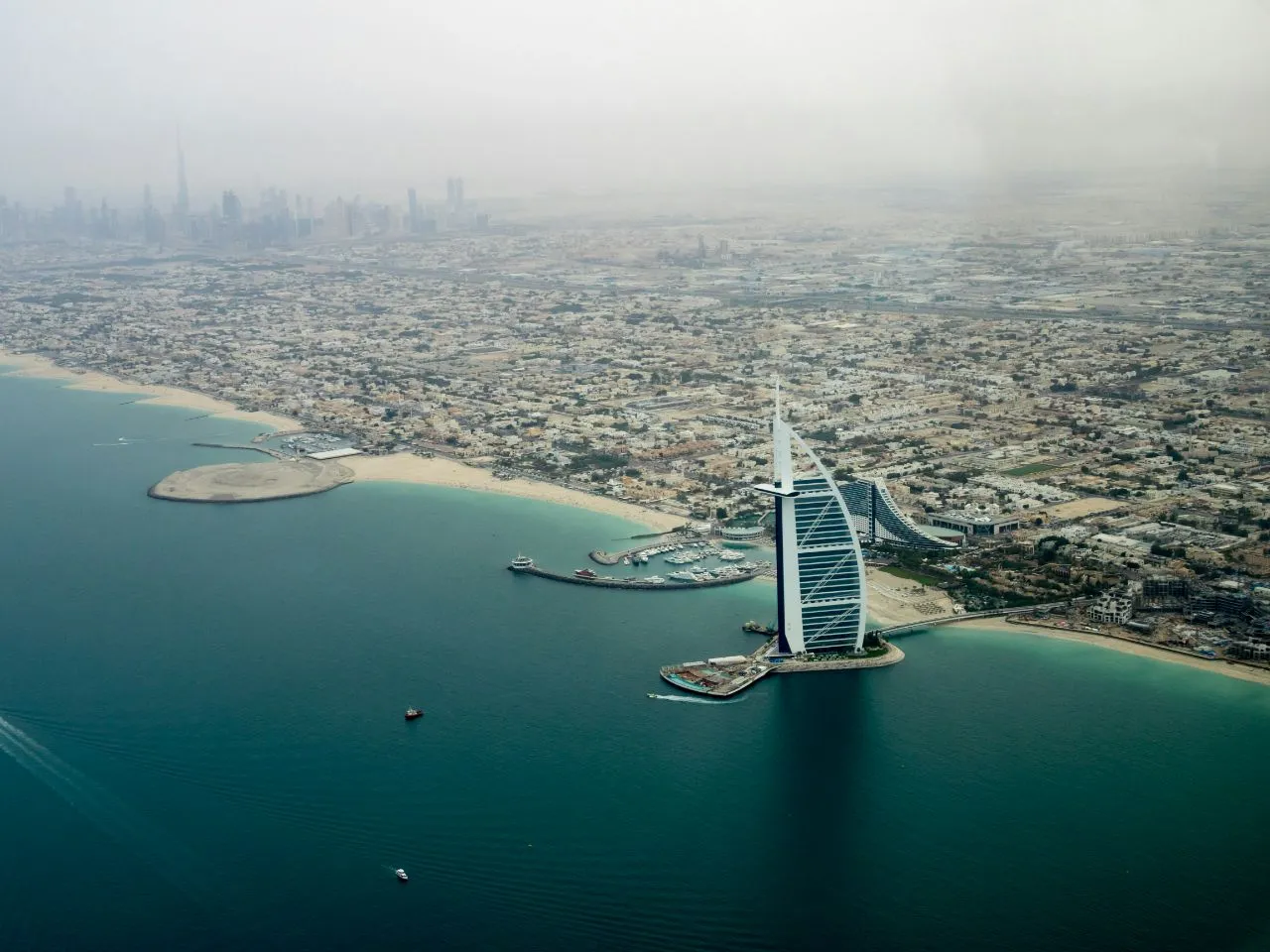
The Dubai Financial Services Authority (DFSA), the financial regulatory agency of the Dubai International Financial Center (DIFC), a special economic zone, has approved two stablecoins under its crypto regulatory framework.


The two stablecoins, USD Coin (USDC) and EURC, are both issued by blockchain-focused financial services firm Circle. While USDC is a U.S. dollar-backed stablecoin, EURC is a euro-backed stablecoin.


In a press release published on the Circle website on Feb. 24, the company announced details regarding the approval. The stablecoins are the first to be recognized and approved by the DFSA.
https://asset.coinness.com/en/news/83328bc0d2241759303e820c1de2a40e.webp
Photo by Christoph Schulz on Unsplash

Stablecoin integration

The development means that firms based in the DIFC are now free to integrate either stablecoin into digital asset applications and products focused on areas such as payments and treasury management.


A number of Circle executives took to social media to comment on the development. Circle Co-founder and CEO Jeremy Allaire outlined on X that the approval means that financial institutions in Dubai “are now able to transact in markets with USDC and EURC.” In legally recognizing the two stablecoins, Allaire pointed out that the DFSA had joined regulators in the European Union (EU) and Canada. 


Last Summer, Allaire announced that Circle’s stablecoins complied with the EU’s Markets in Crypto Assets (MiCA) regulation. In December, Circle became the first stablecoin issuer to meet Canadian listing regulations.


Dante Disparte, Circle’s chief strategy officer and head of global policy, pointed out that a trend is emerging requiring the pre-clearing of stablecoins prior to them entering into circulation or gaining regulatory approval. “In always-on finance, reciprocity is key,” he added. 


Meanwhile, the firm’s EU Strategy & Policy Director, Patrick Hansen, underscored the significance of the approval. Hansen pointed to the fact that the DIFC is home to 6,000 registered entities, including 800 authorized financial firms.


An ‘edge’ over Tether

Eugene Cheung, Chief Institutional Business Officer at Hong Kong-based digital asset platform OSL, said that the approval was “massive for institutional adoption,” while giving Circle an “edge” over Tether within the $157 billion stablecoin market.


While Circle has always taken a regulatory-compliant approach, competitor Tether has struggled with compliance. In Europe, 10 companies have been approved to issue stablecoins under MiCA regulations, but Tether is not among them. This has led to a number of exchanges delisting Tether’s USDT in Europe.


The DIFC was first established in 2004. The economic free-zone caters to firms operating within the Middle East, South Asian and African regions. The number of businesses registered within the free zone has increased by 25% since 2023.


In November 2022, the DIFC recognized Bitcoin (BTC), Ethereum (ETH) and Litecoin (LTC). The following year, it added Toncoin (TON) and Ripple’s XRP, together with ZETA, the native token of the ZetaChain network.


In 2024, the DFSA amended its crypto regulations to allow foreign funds to invest in recognized crypto tokens, while enabling domestic qualified investor funds to invest in unrecognized tokens.

Although the regulatory approach taken by the authorities in Dubai accommodates stablecoins, algorithmic stablecoins are prohibited.
More to Read
View All
Web3 & Enterprise·

Dec 05, 2023

Foblgate adds Ripple market for increased investor opportunities

Foblgate adds Ripple market for increased investor opportunitiesSouth Korean cryptocurrency exchange Foblgate has added a Ripple (XRP) market, where cryptocurrencies can be traded for XRP, according to an article published by South Korean news outlet Blockchain Today. This is the third crypto-to-crypto market on Foblgate along with Bitcoin and Ethereum, providing users with expanded investment opportunities and convenient trading options.Photo by Kanchanara on UnsplashThe Ripple market opened at 10 a.m. today (local time) with a transaction fee of 0.01% and a minimum order amount of 6.5 XRP. Currently, it supports trading for EOS and BNB. Foblgate plans to add more trading pairs in the future.Ripple’s rise in South KoreaThe exchange revealed that it decided to add a Ripple market due to the cryptocurrency’s fast transaction speed and low trading fees, along with its popularity in the South Korean market. The company also emphasized the widespread expansion of Ripple’s ecosystem based on its blockchain network, XRP Ledger, and active participation from the country’s Ripple community.Foblgate’s vision“We have always been sensitive to the demands of investors and market changes,” said Ahn Hyun-jun, the CEO of Foblgate. “The launch of our XRP market aims not only to provide new investment options but also to play a role in promoting the growth and innovation of the crypto industry.”

news
Policy & Regulation·

Apr 26, 2023

Korean Lawmakers Make Progress on Virtual Asset User Protection Bill

Korean Lawmakers Make Progress on Virtual Asset User Protection BillOn Tuesday, the subcommittee for legal deliberations under the South Korean National Assembly’s National Policy Committee reached a consensus during the first review of the Virtual Asset User Protection Bill, according to Yonhap Infomax.©Pexels/Andrea PiacquadioFirst review phaseThe bill is undergoing a two-phase review process before being legislated. During the first phase, the primary focus was on safeguarding customer assets and preventing unfair transactions. The second phase is expected to concentrate on market order regulations, including the issuance and disclosure of virtual assets.Application of Capital Markets ActSeveral stipulations were included in the approved draft of the Virtual Asset User Protection Bill during the initial review phase. These stipulations include prioritizing the application of the Capital Markets Act to virtual assets that are classified as securities, while excluding central bank digital currencies (CBDCs) from the definition of virtual assets to avoid any potential confusion. The bill also seeks to impose compensatory damages and penalties for any unfair trading practices, and establish a virtual asset committee responsible for investigating any unfair transactions in the digital asset market.The virtual asset committee will also engage in preliminary deliberations regarding the management, supervision, and monitoring of the digital asset market. The committee will carry out tasks assigned to it by the Financial Services Commission (FSC). Furthermore, the Bank of Korea has been granted the right to request data from virtual asset operators since virtual assets, although not currencies, are necessary to consider when establishing monetary credit and financial stability policies.No class action systemHowever, the introduction of a class action lawsuit system was not adopted, and details about inspecting virtual asset operators will be stipulated in a presidential decree rather than a law.Second review phaseFor the second review phase, the FSC will report several matters to the National Assembly. These will involve tasks such as establishing a regulatory framework for stablecoins, security tokens, and utility tokens. In addition, the agency will be responsible for creating a regulatory system for virtual asset valuation, advisory, and disclosure services, as well as an integrated computerized system that provides reliable and reasonable information on digital assets. The FSC will also explore ways to enhance the business conduct discipline of cryptocurrency operators by commissioning research from external organizations.Additionally, the FSC and the Financial Supervisory Service will work on supporting virtual asset exchanges to establish uniform standards for the circulation supply of virtual assets. The regulatory bodies will also enforce the requirement for transparent disclosure and strict internal control on virtual asset operators. Moreover, regulations will be developed to enhance virtual asset usability and remove any obstacles that may impede the development of innovative real-life services.

news
Policy & Regulation·

Mar 11, 2024

The 3rd Busan Blockchain Regulation-free Zone Steering Committee holds meeting

The local government of Busan, the second-largest city in South Korea, announced in a press release that it held the 3rd Busan Blockchain Regulation-free Zone Steering Committee (Committee) meeting at the Busan Eurasia Platform, a community center located near Busan Station.  The meeting took place last Thursday at 15:00 (KST), attended by 12 Committee members, including Busan’s Vice Mayor for Economic Affairs Kim Kwang-hee, Busan Technopark Chairman Kim Hyung-gyun, Busan International Finance Agency Chairman Lee Myung-ho and Busan Information Industry Promotion Agency Chairman Kim Tae-yeol.Photo by Finn on UnsplashThe meeting was intended to discuss strategies to revitalize the blockchain regulation-free zone (blockchain zone) and to attract new blockchain businesses to the region. Busan has been recently struggling with developing and attracting blockchain technology companies to the region, which has cast doubt on the city’s ability to retain its status as the regulatory sandbox zone.   New 24 members, new commitment to invigorating blockchain zone Established in October last year, the 3rd Committee comprises 24 new members who have expertise in blockchain technology. The Committee aims to raise awareness of the blockchain zone’s potential and foster the blockchain industry within the region.  Kim Sang-min, Vice CEO of healthcare company Erom, was appointed Committee Chairman at the meeting. Known as an expert in the blockchain ecosystem, Kim currently serves as a blockchain policy advisor for Busan and has experience in taking the lead in establishing the Busan Digital Asset Exchange (BDX) last year.  More meetings in store to become a blockchain hub The meeting focused on creating subcommittees in an effort to facilitate the Committee’s seamless operation. Moreover, members reached a consensus on holding meetings at any time when warranted, in both online and in-person formats.  During the meeting, Busan Vice Mayor Kim said the newly launched Committee will contribute to identifying innovative businesses with great potential that require both cutting-edge blockchain technologies and a regulatory sandbox environment. 

news
Loading