Top

Thailand’s SEC expands list of approved cryptocurrencies to include stablecoins

Policy & Regulation·March 11, 2025, 7:24 AM

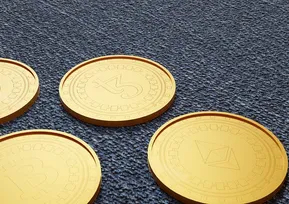
Thailand's Securities and Exchange Commission (SEC) has approved the leading U.S. dollar stablecoins USDT and USDC, expanding its list of approved cryptocurrencies within the Southeast Asian country.

https://asset.coinness.com/en/news/f8dc1340a273c68476b901172d49839b.webp
Photo by Tarun Ottur on Unsplash

Listing on regulated exchanges 

The approval was announced in a statement published on the SEC website on March 6. It means that Tether’s USDT and Circle’s USDC can now be listed on regulated exchanges in Thailand.


The regulator had arrived at its decision to add the two stablecoins following a public consultation process regarding regulatory changes. Those changes were finalized last month and will now proceed to go into effect on March 16.


The two stablecoins join five cryptocurrencies that had previously been approved. These include Bitcoin (BTC), Ethereum (ETH), Ripple (XRP) and Stellar (XLM). Certain cryptocurrencies are also being used for the testing of payment settlement through the Bank of Thailand’s Programmable Payment Sandbox.  


A regulatory sandbox is a controlled environment testing ground for products and services developed within the private sector. Back in June of last year, the Southeast Asian country’s central bank launched an enhanced regulatory sandbox focused on programmable payments. 


USDT issuer Tether responded to the addition of its stablecoin within the approved cryptocurrency list, stating:


“This approval enables USD₮ to be traded within the country, facilitating its listing on regulated exchanges and paving the way for USD₮ to be accepted for payments, which advances the region’s leadership in digital asset innovation.”


Tether CEO Paolo Ardoino said that the company sees value in the Thai market and with that, it intends to continue to explore ways to broaden its service offering within Thailand.


He added: 


“We are committed to supporting the long-term success and adoption of stablecoins in Thailand and look forward to contributing to the growth of the country’s digital asset ecosystem by fostering a strong and sustainable stablecoin infrastructure.”


Stablecoin market growth 

According to DeFi data aggregation platform DefiLlama, the stablecoin market now stands at $227 billion in terms of market capitalization. This represents a 68% increase by comparison with the size of the market in 2023.


It indicates that stablecoin adoption is on an upward growth trajectory. Digital assets are being used in many instances to facilitate international payments and remittances, particularly in emerging markets.


In Europe, American investment bank JPMorgan recently forecasted that the introduction of the Markets in Crypto-Assets (MiCA) regulation will drive euro-pegged stablecoin growth. 


Meanwhile, in the United States, S&P Global Ratings recently identified that a current lack of stablecoin regulation is acting as a barrier to broader institutional use. The company anticipates adoption growth once regulatory clarity has been achieved.


Vlad Tenev, CEO of commission-free investing platform Robinhood, stated last month on Yahoo Finance’s Opening Bid podcast that stablecoin legislation will be passed in the U.S. in 2025. Tenev believes that applying a 4% interest rate to stablecoins would lead to a greater rate of adoption.

More to Read
View All
Web3 & Enterprise·

Sep 11, 2023

Lillius and Crypto.com Team Up for NFT Collaboration and Global Marketing

Lillius and Crypto.com Team Up for NFT Collaboration and Global MarketingLillius, a Korean artificial intelligence (AI) sports challenge app, has signed a business deal with global crypto trading platform Crypto.com to collaborate on a non-fungible token (NFT) project and global marketing strategies. The two companies will work together to promote Lillius’ platform mainly by issuing and distributing NFT rewards within the app.Elevating fitness with AILillius, set to launch its open beta service this month, is a mobile app where users can participate in exercise challenges that use AI motion detection technology to analyze their form while doing the movements. After they complete a given challenge, they can receive rewards based on the score they earn. Some of these challenges feature lessons from Korean Olympic medalists like taekwondo athlete Lee Dae-hoon, fencer Nam Hyun-hee, and wrestler Jung Ji-hyun.Photo by Huckster on UnsplashTo grow its platform, Lillius has also minted NFT figurines for iconic athletes such as table tennis player Ryu Seung-min, swimmer Park Tae-hwan, and archer Joo Hyun-jung, among others.Unlocking global Web3 sports experiencesUnder the new partnership, Crypto.com will be responsible for leveraging its global infrastructure to support Lillius’ broader global expansion and various marketing endeavors.“Our partnership with Crypto.com will expand access to Web3-based sports experiences for users around the world and serve as an important milestone in advancing our Web3 sports ecosystem,” said Julia Kim, CEO of Lillius. “We plan to enhance Lillius’ global competitiveness and lead the Web3 sports industry.”Crypto.com has consistently been participating in sports-related marketing projects and investing in such businesses as well. In 2021, it signed a naming rights agreement to change the name of the world-renowned sports and entertainment arena, the Staples Center, to Crypto.com Arena. It also became the first virtual asset platform to sponsor the 2022 FIFA Qatar World Cup. Furthermore, the platform has worked with some of the world’s biggest sports associations such as the UFC and Paris Saint-Germain F.C., playing a key role in bridging the gap between blockchain and sports. Its latest business agreement with Lillius comes as part of more concentrated efforts to enter the Korean market.“Through this partnership, we will cultivate the merging of sports and blockchain technology by providing Crypto.com’s 80 million users with a unique sports-related consumer experience,” said Patrick Yoon, CEO of Crypto.com Korea.

news
Policy & Regulation·

Apr 11, 2023

Malaysia Looking to Wean Itself Off Dollar Dependency

Malaysia Looking to Wean Itself Off Dollar DependencyAccording to Prime Minister Anwar Ibrahim, China is willing to engage in discussions with Malaysia regarding the creation of an Asian Monetary Fund. This proposal, which has been circulating for decades, aims to decrease the dependence on the US dollar.©Pexels/Sergei StarostinAsian Monetary FundAnwar highlighted the necessity to minimize reliance on the dollar and the International Monetary Fund and proposed the establishment of this fund at the Boao forum in Hainan last week. He stressed that the fund would aid in diversifying the financial landscape of Asia and improving its resilience against economic challenges.Following a state visit to China last week, Anwar stated that “there is no reason for Malaysia to continue depending on the dollar.” The Prime Minister told the Malaysian parliament on Tuesday that China’s President Xi Jingping was receptive to the idea of an Asian Monetary Fund and welcomed further discussions on such a proposal.Anwar Ibrahim, serving as both the Finance Minister and Prime Minister of Malaysia, stated that the country’s central bank is already taking measures to allow for negotiations between Malaysia and China using their respective currencies, the ringgit and renminbi.The robustness of the US dollar poses a significant challenge for Malaysia and other Asian countries, particularly as Malaysia is a net importer of food. In September 2022, the Bloomberg dollar index reached an all-time high, leading to a decline in the value of the ringgit and other Southeast Asian currencies to levels not seen in decades.As a result, Anwar Ibrahim’s proposal for a shift towards bilateral trade negotiations with China using the ringgit and renminbi holds the potential to alleviate some of the region’s dependence on the dollar and reduce the impact of its fluctuations.International shift away from dollarThis development comes as other officials in the region, particularly Singapore, have been discussing strategies to manage the effects of a dominant US dollar that has weakened local currencies and been used as an instrument of economic power by the United States.There has been a raft of deals struck in recent weeks all pointing towards an international shift away from the US dollar as the global reserve currency. Russia has agreed with China to trade in renminbi. A major trade deal was struck recently between China and Brazil that will see the two countries trade in reals and renminbi. Major oil producer Saudi Arabia has made similar soundings and signed similar deals with Beijing.Bitcoin as a reserve currencyAll of this recent upheaval has brought further consideration of bitcoin acting as a reserve currency back into view. It’s expected that even if there is a shift away from the US dollar, the renminbi won’t be capable of acting as a single dominant global reserve currency. Taking to Twitter on Wednesday, Bloomberg Intelligence Crypto Market Analyst Jamie Coutts suggested that bitcoin’s performance in Q1, 2023 marks “a significant milestone in its ascendancy as a potential global reserve asset.”Coutts believes that it marks the first occasion that the leading cryptocurrency has acted as a safe haven asset during a liquidity crisis. Bitcoin remains at an early stage of development. Nobody expects that it could serve as the global reserve currency at this point. However, it is not unreasonable to anticipate it increasingly growing into a role as a reserve currency used for international trade and settlement. Especially so, as issues bubble over relative to banking and a desire to escape the clutches of US dollar domination.

news
Web3 & Enterprise·

Oct 06, 2023

HKEX Launches Blockchain-Based Settlement Platform

HKEX Launches Blockchain-Based Settlement PlatformHong Kong Exchanges and Clearing Limited (HKEX) has unveiled a blockchain-based settlement platform in a move that could potentially transform the landscape of international stock trading, bolstering transparency, efficiency, and operational security.Photo by Ruslan Bardash on UnsplashHKEX SynapseAccording to an announcement on Wednesday (local time), the new platform is called Synapse, and it is set to launch on October 9. The platform utilizes smart contracts developed in the DAML programming language, offering a range of benefits for market participants.Synapse’s primary objective is to streamline post-trade workflows, minimize settlement risks, and enhance transparency in the financial markets. It will be deployed on HKEX’s Stock Connect, a program that allows international investors access to over 1,000 mainland Chinese stocks through Hong Kong routing.With an average daily turnover of RMB 109.3 billion ($15.18 billion) in the first half of 2023, up 5% from the previous year, with a 50% increase from 2020 levels, Stock Connect has established itself as an important channel for international investment.DAML-based smart contractsOne of Synapse’s standout features is its use of DAML, an open-source smart contract language. DAML has the capability to synchronize data across both blockchains and centralized databases, which can significantly improve operational efficiency. By incorporating smart contracts into the settlement process, Synapse enables automatic generation of settlement instructions, reducing the time and manual effort required for trade confirmation. This not only reduces the likelihood of errors but also accelerates settlement, enhancing liquidity and boosting investor confidence.Additionally, Synapse facilitates concurrent processing by simultaneously generating settlement instructions for all parties involved in the trade. This near-instantaneous status update mechanism is especially crucial when connecting traders across different markets. HKEX’s connection to Hong Kong’s Depository Trust and Clearing Corporation via its Institutional Trade Processing service further centralizes cross-border transaction matching, creating a robust ecosystem for seamless trading.Synapse’s launch reflects HKEX’s interest in nurturing international participation where Mainland China’s equity markets are concerned. Glenda So, HKEX Group Head of Emerging Business and FIC, expressed her enthusiasm for the platform’s potential to strengthen both market and investor growth strategies. She believes that Synapse will not only enhance post-trade efficiencies but also contribute to building a more resilient financial ecosystem.Established interest in crypto/blockchainThis is not HKEX’s first expression of interest in blockchain-based technology. In a report it published earlier this year, the Hong Kong stock exchange concluded that crypto exchange-traded funds (ETFs) have the potential to play an important part in building the next phase of digital asset expansion in Asia. Trading in the first crypto ETFs commenced on the platform in December of last year.It’s worth noting that Hong Kong has been rapidly evolving into a hub for Web3 firms, further emphasizing the importance of platforms like Synapse to enhance the efficiency and security of financial transactions in this dynamic environment. While developments in the crypto space are ongoing, Synapse’s blockchain-based settlement platform represents yet another milestone in the evolution of crypto and blockchain-centric financial infrastructure in the region.

news
Loading