Top

Metaplanet surpasses 4K Bitcoin following stock split

Web3 & Enterprise·April 02, 2025, 2:52 AM

Metaplanet, the Tokyo-headquartered Bitcoin corporate treasury firm, has purchased an additional 696 BTC, following a stock split, bringing its total Bitcoin holding to 4,046 BTC.
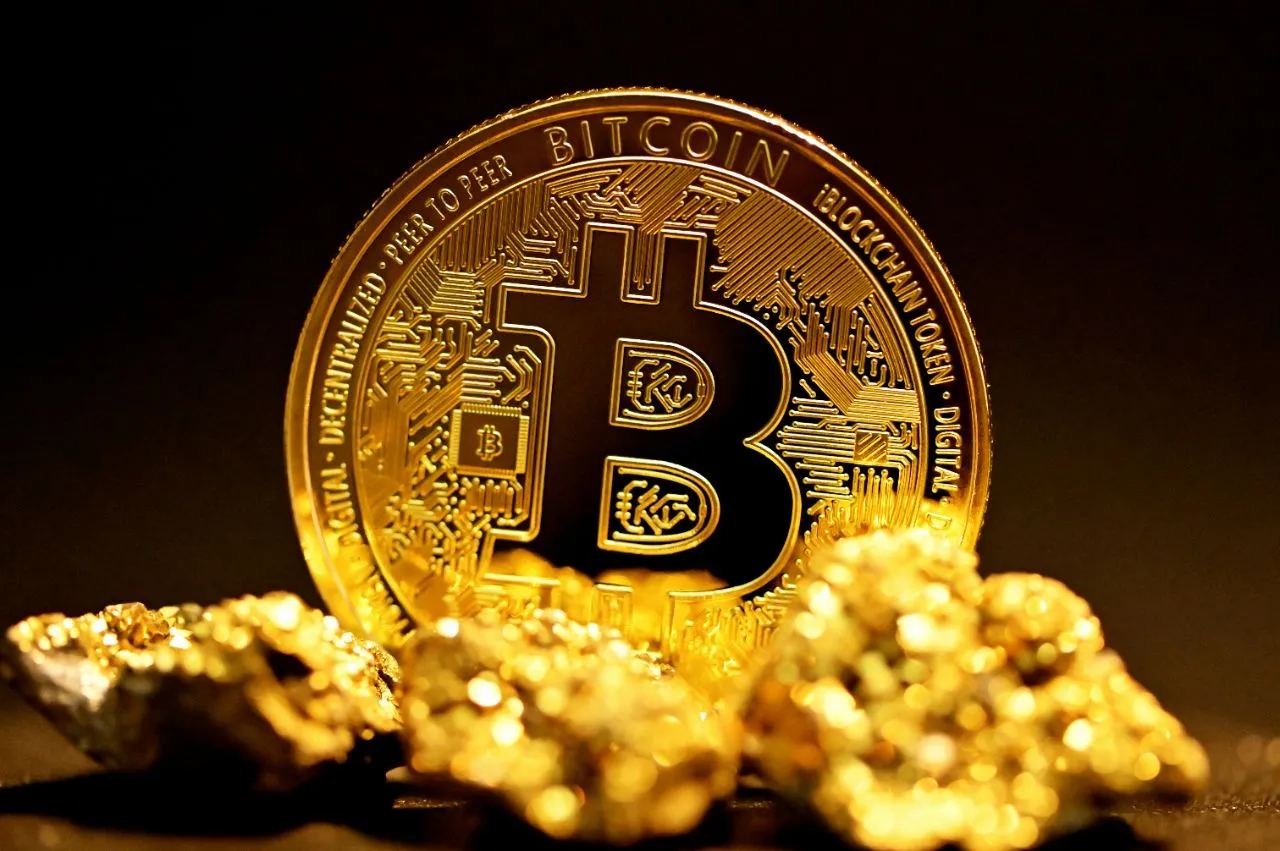
https://asset.coinness.com/en/news/a0422ee7fdf4524247bbec6658b16cf2.webp
Photo by Kanchanara on Unsplash

$341 million in Bitcoin

The company publicized details of its latest Bitcoin purchase on X on April 1. It outlined that funding of this purchase was enabled through the allocation of cash held by the firm as a consequence of the sale of put options. 


The average purchase price of the 696 BTC was 14,586,230 yen ($97,694). The average price the firm has paid per Bitcoin in relation to its entire holding of the leading digital asset is 12,943,181 yen ($86,689). Its overall Bitcoin holding has a total value of approximately $341 million.


Taking to X, the firm’s CEO, Simon Gerovich, said that Metaplanet’s Bitcoin Income Generation business achieved 770 million yen ($5.2 million) in Q1 revenue, while year-to-date its Bitcoin yield has reached 95.6%.


Stock split & bond issuance

This purchase follows both a stock split and the issuance of bonds worth 2 billion yen ($13.3 million). On March 31, Metaplanet filed a disclosure outlining details of the bond issuance. The company issued the zero interest bonds via its Evo Fund. Buyers will be permitted to redeem the newly issued bonds at face value by Sept. 30. 

In an X post, Gerovich suggested that the bond issuance was being implemented in order to facilitate the company “buying the dip,” taking advantage of a downturn in the Bitcoin unit price over recent weeks.


In a notice filed on Feb. 18, Metaplanet outlined details of its 10-to-1 stock split. The company described how it executed a reverse 10-to-1 stock split last August. This has created a problem for investors as in the interim, the stock price has increased significantly. Consequently, the share price is unwieldy, placing a substantial financial burden on investors.


On that basis, the latest stock split will enable greater investor accessibility and improved liquidity. Arising from that, Metaplanet expects that it will gain a broader investor base.


On March 30, Gerovich reported that Metaplanet stock is now a component within Betashares’ Crypto Innovators ETF. Betashares is an Australian asset manager with over $50 billion in assets under management. 


The Metaplanet CEO suggested that the development pointed towards “growing interest from institutional investors,” while expressing his satisfaction with Australians now having access to Metaplanet’s Bitcoin First Strategy via the Australian Securities Exchange (ASX).


The ‘Asian MicroStrategy’

Metaplanet is being regarded by many industry commentators as the “Asian MicroStrategy,” referring to the American Bitcoin treasury firm that recently rebranded to Strategy, having pioneered a particular approach to building a position in Bitcoin within a corporate treasury.


Metaplanet appears to have adopted the same Bitcoin playbook. In an appearance on the Coin Stories Podcast recently, Metaplanet’s Gerovich said that he encourages his friends to put “100% of their net worth into Bitcoin.”


Last month, the company confirmed that it was pursuing a strategy to accumulate 10,000 Bitcoin in 2025 and 21,000 Bitcoin by 2026. The firm is now ranked ninth in the world as a corporate Bitcoin holder. Within Asia, it is the leading corporate holder of the world's largest digital asset.


More to Read
View All
Policy & Regulation·

Oct 26, 2023

Korean Financial Authorities to Provide Support for Security Token Market

Korean Financial Authorities to Provide Support for Security Token MarketAmid growing calls for accelerating the growth of the emerging security token (ST) market, the South Korean government is preparing to introduce supportive measures. The security token market is powered by blockchain technology which allows fractional investment in real world assets (RWAs) such as real estate and artwork.Security tokens are digital assets that represent securities generated through a process called security token offering (STO). These tokens, backed by RWAs, can be traded similarly to traditional securities. Investors can use these tokens to obtain shares, voting rights, interest, or profits.Photo by Philip Jang on UnsplashSupport measures for security token IndustryNext month, the Financial Services Commission (FSC) will draw up support measures and policy improvement plans to bolster the nascent security token industry. An FSC representative mentioned that the agency intends to work with the National Assembly to finalize the legislation of security token-related bills by November. Furthermore, the government official said the FSC will actively seek input from industry stakeholders to formulate strategies for enhancing policies designed to promote the growth of the security token market.To align with the national objective titled “The Establishment of Digital Asset Infrastructure and Regulatory Framework,” the FSC revealed regulatory guidelines for security token issuance and distribution in February. These new guidelines are centered around the establishment of institutions responsible for account management and entities engaged in over-the-counter (OTC) trading. Subsequently, in July, lawmaker Yun Chang-hyun, a member of the National Assembly’s National Policy Committee, proposed a bill to amend the Electronic Securities Act and the Capital Markets Act with the aim of ensuring that these Acts are consistent with the new regulatory guidelines.Security token market’s growth potentialWith growing anticipation that the security token market could rival the size of the exchange-traded fund (ETF) stock market, securities firms, banks, and blockchain companies have been eager to carve out a niche for themselves since the start of the year. However, their progress has been hindered by a potentially extended period of higher interest rates in the US and the slow advancement of security token-related legislation. While these organizations tried to explore opportunities through the financial regulatory sandbox, their endeavors proved more or less fruitless. An official from a securities firm voiced concerns over the escalating costs of setting up security token infrastructure, especially with legislative delays.On this matter, the Korea Financial Investment Association (KOFIA) has emphasized the urgent need to pass security token legislation to clear up regulatory ambiguities. They’ve also called for measures to stimulate market growth, such as relaxing regulations related to token issuance and distribution and increasing investment caps.At a seminar hosted by the Korea Capital Market Institute, Ahn Hyuk, Head of the Platform Division at Korea Investment and Securities, highlighted that the rigorous review of security registration applications by the Financial Supervisory Service (FSS) might impede the security token market’s growth. Responding to this, Jang Young-shim, Head of the Corporate Disclosure Department at FSS, said that both the FSC and FSS will carefully listen to industry feedback, addressing a range of topics from regulatory relaxation to investor protection.

news
Policy & Regulation·

Feb 29, 2024

HashKey OTC scores in-principle approval in Singapore

HashKey OTC, the over-the-counter (OTC) trading arm of the Hong Kong-headquartered HashKey Group, has reached a regulatory milestone with the acquisition of a major payment license in Singapore.Photo by Mike Enerio on UnsplashEnabling digital asset service offeringIn a recent announcement via the firm’s official blog, HashKey Group revealed that HashKey OTC has secured in-principle approval from the Monetary Authority of Singapore (MAS) for its Major Payment Institution (MPI) license application. This approval positions HashKey OTC to offer regulated digital payment token services in Singapore, representing a significant stride in the firm’s efforts towards regulatory compliance. CEO of HashKey OTC, Li Liang, emphasized the company's steadfast commitment to regulatory adherence, considering it a pivotal step towards providing comprehensive and regulated over-the-counter trading solutions for its clients. Liang highlighted the significance of the in-principle approval, expressing the company's vision to furnish a wide array of digital payment tokens and fiat currencies in a regulated environment. The approval has generated optimism within the global crypto market community, particularly amidst prevailing uncertainties surrounding crypto regulations worldwide. Expansion initiativesHashKey OTC's attainment of the MPI license aligns with its strategic expansion initiatives, building upon its earlier success in securing a capital markets services license for fund management in Singapore. This achievement reflects the company's desire to operate within legal frameworks while delivering innovative crypto solutions to its clientele. Furthermore, HashKey OTC's regulatory triumph mirrors the broader regulatory landscape in Singapore, where crypto firms navigate stringent requirements to establish credibility and trust within the market. MPI approvalsThe exchange's milestone mirrors similar successes achieved by other industry players. Recent months have seen a raft of digital asset industry enterprises achieve a similar milestone. In January, American digital asset custodian BitGo acquired in-principle MPI approval. Last November, Taipei-headquartered crypto exchange business XREX achieved a similar outcome. Other entities who had been successful in pursuing MPI licensing earlier in 2023 include crypto exchange Upbit Singapore, crypto trading firm GSR, American crypto exchange platform Coinbase and enterprise blockchain firm Ripple. Despite Singapore's reputation as a crypto-friendly jurisdiction, recent decisions by MAS have demonstrated a cautious approach towards certain crypto products. While spot bitcoin exchange-traded funds (ETFs) received approval in the United States, MAS has opted against permitting the listing of such ETF products for retail investors, citing concerns over the asset's volatility and suitability for retail investment. HashKey is one of only two entities to have secured similar licenses in Hong Kong. Last month, affiliate company HashKey Capital, a Singapore-based crypto fund manager, launched a series of indices designed to track cryptocurrencies in a collaboration with FTSE Russell. Also in January, the Hong Kong business partnered with crypto derivatives platform OKX with the objective of advancing compliant virtual asset innovation. HashKey OTC's acquisition of a major payment license in Singapore, amid a backdrop of similar businesses pursuing similar licensing in various jurisdictions recently, signifies a significant advancement in regulatory compliance within the crypto industry. The approval underscores the exchange's desire to provide regulated over-the-counter trading solutions while navigating the evolving regulatory landscape in Singapore and beyond.

news
Web3 & Enterprise·

Jan 08, 2024

Fingerlabs moves into Busan’s Blockchain Offshore Firm Development Center as corporate tenant

South Korean digital marketing company FSN’s subsidiary Fingerlabs has been selected as a tenant of the city of Busan’s Blockchain Offshore Firm Development Center. The company confirmed that it moved in recently on Jan. 2.Photo by Héctor J. Rivas on UnsplashFostering growth and collaborationThe Blockchain Offshore Firm Development Center is part of a project conducted by the Korea Internet & Security Agency (KISA) and the Ministry of Science and ICT and operated by Busan to create a special corporate cluster of blockchain firms, thus revitalizing the blockchain industry and nurturing a sustainable industrial ecosystem. "We are excited to be a new tenant at the Blockchain Offshore Firm Development Center,” said Kim Dong-hoon, CEO of Fingerlabs. “We will share our business know-how with other tenants and commit to joint growth. We will also actively participate in various programs provided by the center to contribute to Busan's leap into becoming a digital economy city." Various companies operating blockchain-related businesses outside of Busan were selected to be a part of the development center after a comprehensive overall evaluation of factors like technological facets, marketability and contributions to innovation. Corporate residents have access to various infrastructure and benefits, including facilities and programs at the Busan Blockchain Venture Convention, also dubbed “b-space”. Fingerlabs plans to participate in various programs led by the public sector such as councils, seminars and conferences to help Busan – notably the first regulation-free special zone for blockchain businesses in South Korea – foster its digital economy based on its expertise in the field of Web3.  Innovating Web3 solutionsFingerlabs has grown to become one of the country’s major blockchain companies through its varied services and products, which are provided to corporate clients like SK Planet, Lotte Home Shopping and SK Networks. In particular, it recently launched Bling, a participatory Web3 membership platform that allows businesses to create and manage NFTs that are linked to membership-only benefits. The company also operates a Web3 content distribution hub called Xclusive and Favorlet, an NFT wallet and customer management service. 

news
Loading
