Top

Metaplanet issues more bonds to buy Bitcoin & opens U.S. subsidiary

Web3 & Enterprise·May 07, 2025, 12:17 AM

Japanese Bitcoin treasury firm Metaplanet has opened a U.S. subsidiary company in Florida while also issuing 3.6 billion Japanese yen ($24.7 million) in bonds for the purpose of buying more Bitcoin.
https://asset.coinness.com/en/news/946f7c120d3324c08ba0ea58b0d39489.webp
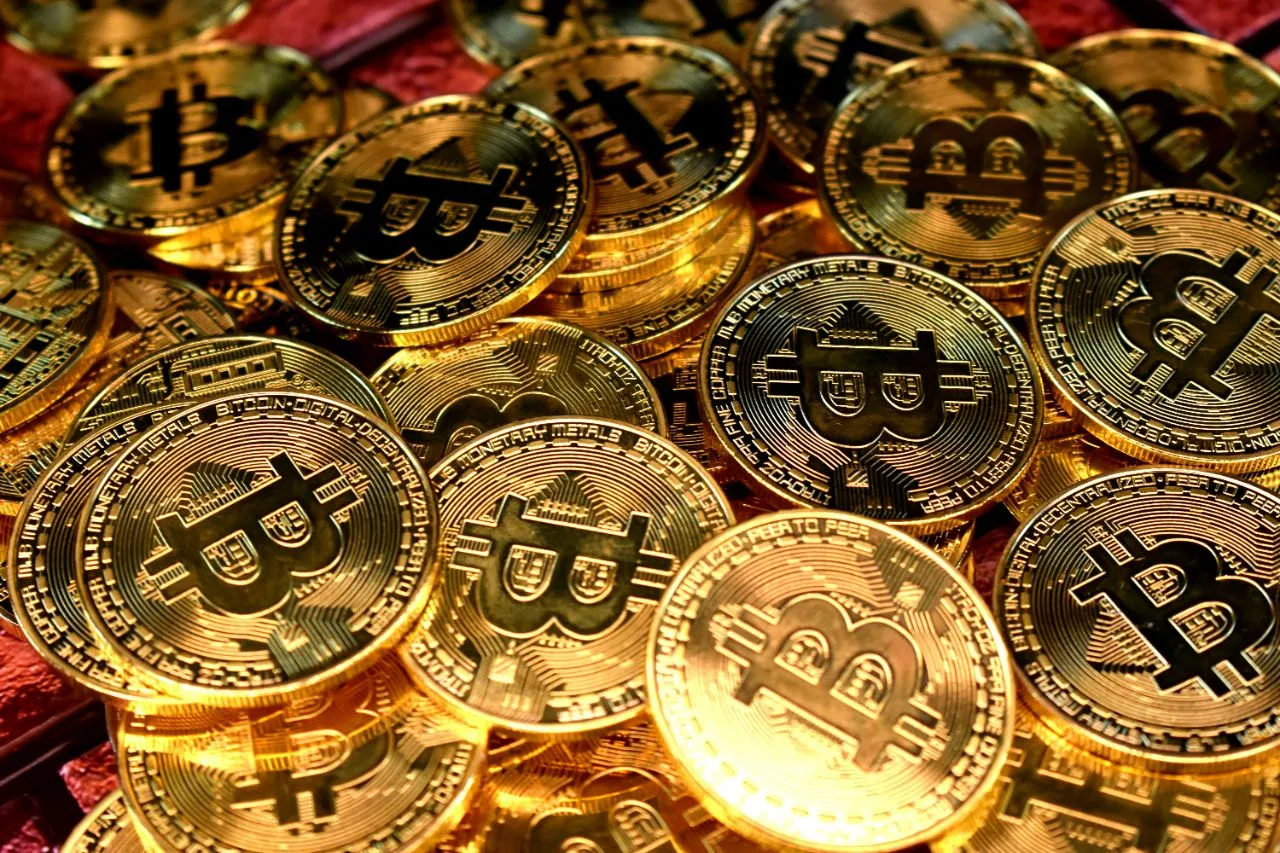
Photo by Kanchanara on Unsplash

Accelerating the Bitcoin strategy

In an announcement on May 1, the company outlined that it had established Metaplanet Treasury Corporation in Miami, Florida. The firm cited the purpose of the subsidiary as a means through which it can accelerate its overriding strategy of accumulating more Bitcoin.

Metaplanet CEO Simon Gerovich commented on X on the rationale behind locating the U.S. subsidiary in Florida, stating:

”The reason for choosing Florida is clear: the state is rapidly emerging as a global hub for Bitcoin innovation, corporate adoption and financial liberalization.”


Gerovich added that the newly formed company will enhance Metaplanet’s “around-the-clock operational capabilities across time zones.” The Metaplanet CEO sees the development as part of the firm’s evolution as a global Bitcoin treasury company. 


$250 million capital raise

The company stated that it had already established a corporate entity in the British Virgin Islands (BVI), with the U.S. addition enhancing the company’s ability “to respond to market dynamics with speed and precision.” 


Metaplanet intends to raise $250 million in funding through the Miami-based entity, having launched it with initial capital of $10 million. It’s envisaged that the U.S. subsidiary can act as a vehicle to attract institutional investment. 


Back in March it was reported that Metaplanet was investigating the idea of listing its stock in the U.S. At the time, Gerovich stated that the firm was “considering the best way to make Metaplanet shares more accessible to investors around the world.” As part of that process, Gerovich met with officials from the New York Stock Exchange (NYSE) and the Nasdaq. 


In further U.S.-related developments, the company appointed Eric Trump, second son of U.S. President Donald Trump, to its strategic board of advisors in March. Last week, Metaplanet appointed David Bailey, CEO of Bitcoin Magazine, to its strategic board of advisors.


Bond issuance

In a separate development, Metaplanet has issued 3.6 billion Japanese yen ($24.7 million) in 0% ordinary bonds to purchase additional Bitcoin. The company used its EVO FUND as the mechanism through which it issued the bonds. 


It has set out a goal of accumulating 10,000 BTC by the end of the year. Currently, the company holds 5,000 BTC. One community member believes that Metaplanet could hit this target as early as July on the basis of ongoing share dilution.

Appearing on The Bitcoin Treasuries Podcast earlier this year, Metaplanet’s Director of Bitcoin Strategy, Dylan LeClair, described how prior to adopting its Bitcoin treasury strategy in 2024, the firm was a “zombie” on the Tokyo stock exchange with the pandemic having had a negative impact on the company’s fortunes. 


He outlined that the company consolidated and dealt with some debt issues, but at that point it lacked a clear strategy. It then set out to replicate the success of U.S. Bitcoin treasury pioneer, Strategy (formerly MicroStrategy).


On May 1 Gerovich posted on X that the company had achieved unrealized gains on Bitcoin exceeding six billion yen ($41.68 million). 
More to Read
View All
Web3 & Enterprise·

Aug 08, 2023

Newly Published CoinGecko Index Tracks Alleged Crypto Securities

Newly Published CoinGecko Index Tracks Alleged Crypto SecuritiesKuala Lumpur-based crypto data aggregator CoinGecko has unveiled a ground-breaking index spotlighting prominent cryptocurrency tokens that the US Securities and Exchange Commission (SEC) has earmarked as potential securities.Through its “Top Alleged Securities Coins by Market Cap” page, the Malaysian aggregator categorizes a spectrum of cryptocurrency assets based on their market capitalization. At the forefront of this classification stands BNB, the native token of the Binance exchange and the BNB blockchain. It is closely followed by other prominent names such as Cardano, Solana, and Tron.Photo by Shubham Dhage on Unsplash$90 billion in valueThe alleged securities amount to a whopping $90 billion in value according to their combined market capitalization right now. Putting this in context, the overall market capitalization of the entire crypto market currently stands at $1.2 trillion, of which Bitcoin accounts for over half a trillion dollars. This estimation paints a vivid picture of the immense scale of the cryptocurrency market and the potential reverberations of regulatory interventions.CoinGecko’s index came to fruition in the first week of August, meticulously pooling the tokens that the SEC has previously classified as securities during legal proceedings. The decision to consolidate these tokens into a single index underscores the increasingly intricate interplay between the cryptocurrency market and regulatory frameworks.Lack of clarityWhen project teams and other market participants have asked for explicit clarity, SEC Chair Gary Gensler has frustratingly indicated that people need to make a simple determination based on the Howey Test — a historic securities case that has been used in the US to determine what constitutes a security. The case dates back to 1946, long before the onset of digitization let alone digital currencies.Another issue is that the SEC is simply expressing an opinion based on its interpretation of existing securities law and securities case law. Without legislation in the US, clarity can only be provided in the courts. This is a flawed approach, as market participants have to wait for actions taken by the SEC against crypto entities to be adjudicated in the US courts in order to get a better understanding of the legal standing of these assets.This comprehensive analysis provided by CoinGecko’s new index presents invaluable insights into the dynamic terrain of cryptocurrency regulation. It underscores the intricate dynamics between the digital currency market and the regulatory bodies that seek to govern it.Taking the regulation of derivatives as a case in point, their emergence led to a very messy process of arriving at regulatory clarity. The very same thing is playing out with digital assets. While it is imperfect, there is no doubt that clarity will eventually be reached.In the meantime, as the US fumbles where digital assets are concerned, regional authorities in East Asia and the Middle East are capitalizing on US regulatory shortcomings, implying that we will likely see further growth in crypto and Web3 in these locations until the US recovers.

news
Web3 & Enterprise·

Oct 05, 2023

Ripple Expands in Asia-Pacific with Full License to Operate in Singapore

Ripple Expands in Asia-Pacific with Full License to Operate in SingaporeEnterprise blockchain firm Ripple announced on Wednesday (UTC) that it has secured a full license to operate in Singapore, where it has established its Asia-Pacific headquarters since 2017.Photo by Sergio Sala on UnsplashFrom outline to full approval in 4 monthsThis development marks another step in Ripple’s strategic expansion within the Asia-Pacific region, known for its rapidly growing cryptocurrency market. Ripple’s journey to obtaining this full license began less than four months ago when the Monetary Authority of Singapore (MAS) granted it an initial in-principle approval in June. With the newly acquired full license, Ripple is now authorized to offer regulated cryptocurrency payment services in Singapore, a key financial hub in the region.Brad Garlinghouse, the CEO of Ripple, expressed his enthusiasm for the company’s continued growth in Singapore, stating:“We have hired exceptional talent and local leadership, doubling headcount over the past year and plan to continue growing our presence in a progressive jurisdiction like Singapore.”Global expansion strategyThe company also highlighted the fact that over 90% of Ripple’s business occurs outside the United States, making the Asia-Pacific region, and Singapore in particular, a vital part of its global expansion strategy.Monica Long, President of Ripple, explained in a recent interview with CNBC that the Singapore office has seen substantial growth in the past year due to the booming business opportunities in the Asia-Pacific region. This expansion aligns with Singapore’s leadership in crypto regulation in the region. The introduction of the Payment Services Act, which has been in effect since January 2020, has played a large part in that, regulating payment services and crypto services to the public.Singapore’s regulatory framework also includes requirements for crypto service providers to safeguard customer assets in statutory trusts by the end of 2023 and restrictions on facilitating lending or staking of retail customers’ assets. These measures ensure consumer protection and responsible growth in the crypto industry.Praising SingaporeGarlinghouse commended Singapore’s regulatory approach, stating, “Under MAS’ leadership, Singapore has developed into one of the leading fintech and digital asset hubs, striking the balance between innovation, consumer protection and responsible growth.” Ripple’s experience in Singapore differs entirely from the ongoing legal battle it has found itself in in the United States with the Securities and Exchange Commission (SEC).Both Ripple and Coinbase have found themselves embroiled in lawsuits with the regulator in the US. In Ripple’s case, the firm and its founders have been accused of unlawfully selling their native cryptocurrency XRP without registering it with the SEC. However, a landmark ruling in July determined that XRP, as a token, may not necessarily be classified as a security.Long spoke to the contrasting experiences the firm has encountered between the United States and Singapore. Long stated:”Being in Singapore a couple weeks ago felt like night and day compared to the US in terms of open dialogue with regulators, and thus being able to build innovative *and* compliant products.”Ripple, along with Coinbase and several other crypto firms, has criticized the lack of regulatory clarity in the US and has even considered relocating operations due to the SEC’s stringent regulatory stance. Notably, Coinbase also recently announced its successful acquisition of a major payment institution license in Singapore, following its in-principle approval obtained about a year ago.

news
Web3 & Enterprise·

Aug 03, 2023

KuCoin Halts Bitcoin and Litecoin Mining Pools Amidst Strategic Shift

KuCoin Halts Bitcoin and Litecoin Mining Pools Amidst Strategic ShiftIn an announcement on Tuesday, Seychelles-based cryptocurrency exchange KuCoin revealed its decision to temporarily suspend its Bitcoin and Litecoin mining pools, effective from 16:00:00 on August 15, 2023 (UTC).Photo by Traxer on UnsplashChanging business strategyThis move is attributed to KuCoin’s evolving business strategy, although specific details remain undisclosed. The exchange expressed its regret for any inconvenience caused and extended gratitude for users’ continued support.It appears that the company wants to focus on core business activities and for that reason, it’s terminating its mining pool activity. That said, the discontinuation was described in its statement as being “temporary” although that has been left open-ended with no indication of if or when it would bring the service back into operation.The company is open to the idea of revisiting the facilitation of mining pools in the future. “We will see if it is needed to restart based on the market and users’ demand in the future,” a spokesperson for the company told The Block.To ensure miners’ uninterrupted earnings during the suspension, KuCoin advised users engaged in cryptocurrency mining to transition their Bitcoin (BTC) and Litecoin (LTC) miners to alternative mining pools before the specified suspension date. Additionally, the exchange emphasized the importance of backing up and preserving mining records and related data, recommending users complete these actions before August 27.Presently, the KuCoin Bitcoin mining pool maintains a hash rate of 9.08 exahash per second (EH/s), while the Litecoin pool operates at 3.90 terrahash per second (TH/s). These figures contribute to the broader hash rate landscape, where the entire Bitcoin network boasts a hash rate of 349.19 EH/s, compared to the Litecoin network’s 792.16 TH/s.Workforce reductionIt is clear that the company is in the process of adjusting to current market conditions. Last week, rumors surfaced of a plan to effect a workforce reduction. That prompted KuCoin’s CEO Johnny Lyu to respond, clarifying that the exchange’s operations are running smoothly. Dismissing layoff speculation, Lyu highlighted the exchange’s steady expansion and strong growth as demonstrated by the H1 2023 report. The report showcased an increase in users and new listings, underscoring the platform’s vitality and development.Mandatory KYCIn recent months, KuCoin has also implemented mandatory Know Your Customer (KYC) requirements, obligating users to undergo verification processes. Existing customers who fail to complete KYC procedures will be unable to make deposits. With over 20 million registered accounts, the exchange felt that it needed to improve on its level of regulatory compliance and security measures.It’s highly likely that an action taken by authorities in New York in the United States in March prompted KuCoin’s decision to tighten up on KYC. At that time, the New York Attorney General said that action was being taken against KuCoin due to its failure to register as a securities and commodities broker-dealer.As KuCoin undergoes these changes, the suspension of its mining pools raises questions about the broader implications for its business strategy and the potential impact on miners within its ecosystem. That said, the firm is not alone in making changes, with most crypto exchanges having had to adjust to a business and regulatory environment that has changed considerably since the 2021 crypto bull run.

news
Loading