Top

Korean crypto exchanges list Trump-linked cryptocurrencies

Web3 & Enterprise·September 02, 2025, 5:25 AM

Cryptocurrencies tied to the family of U.S. President Donald Trump began trading on South Korea’s major exchanges on Monday.


Upbit, the country’s largest exchange, listed WLFI—the native token of World Liberty Financial, a DeFi platform backed by the Trump family—and World Liberty Financial USD (USD1), a stablecoin the platform says is pegged 1:1 to the U.S. dollar and backed by dollars and government money market funds. Bithumb also listed both WLFI and USD1, while Coinone listed WLFI only.
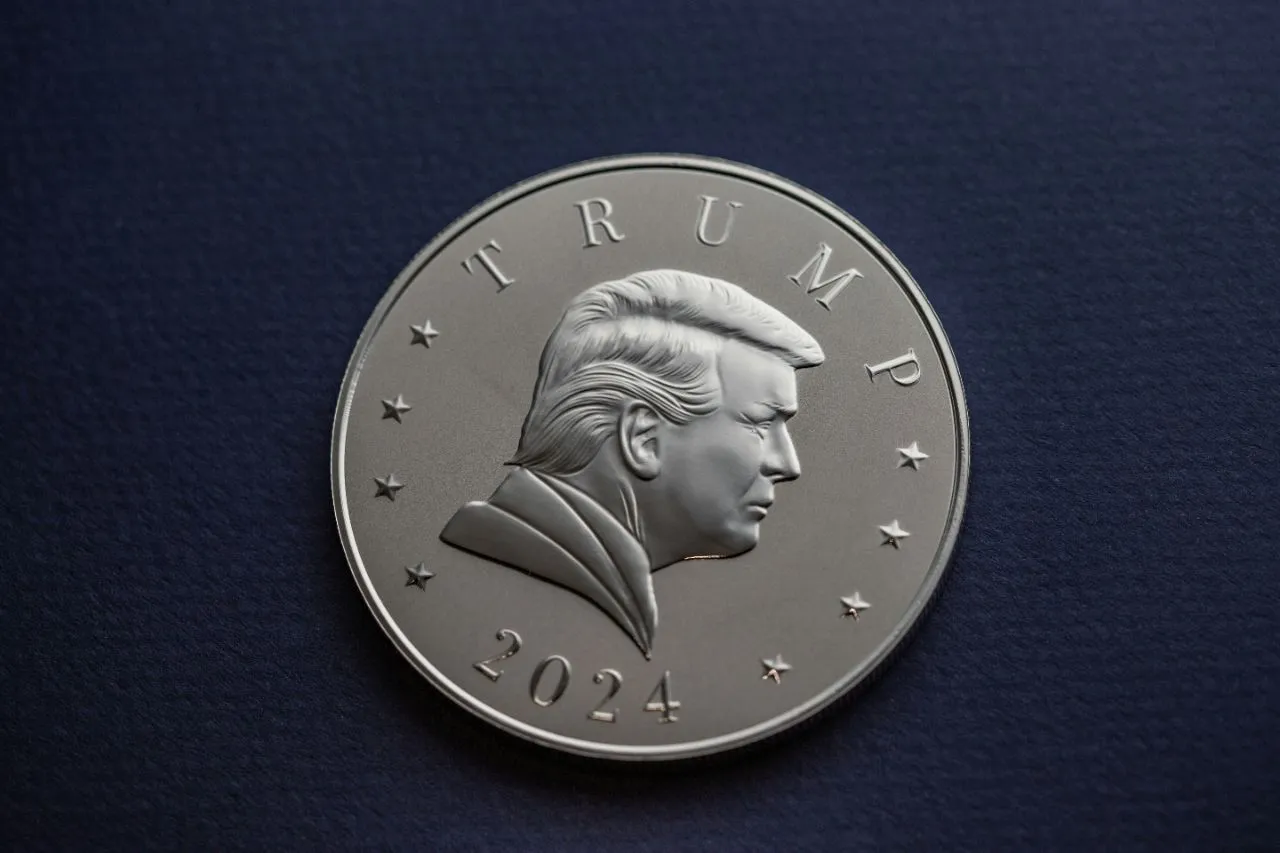
https://asset.coinness.com/en/news/8cdbcae8b4a6a0aad470e9f5784ab395.webp
Photo by Scottsdale Mint on Unsplash

From global listings to a volatile debut

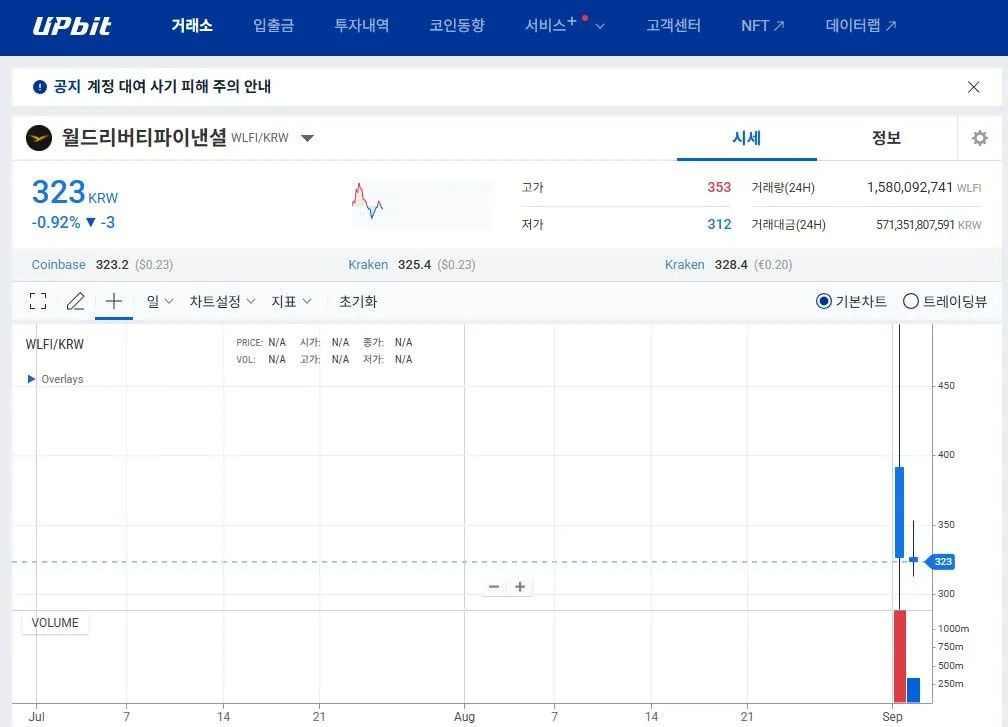
WLFI’s first session was volatile. It opened on Upbit at a floor price of 433.76 won ($0.31) and, roughly 17 hours later, was down about 25% at 323 won ($0.23) at the time of publication.
https://asset.coinness.com/en/news/ddebe18a850dcbf79d22ca0153c03238.webp
Source: WLFI/KRW spot trading pair on Upbit

The Korean launch comes alongside listings on major global venues, including Binance and Coinbase. Until its exchange listings, WLFI holders had been unable to trade their tokens. The Wall Street Journal estimated the Trump family’s holdings, representing less than a quarter of the supply, to be worth close to $5 billion after the listing. Trump’s three sons are named as co-founders of World Liberty, which says tokens allocated to founders and team members will remain locked. President Trump is described as the project’s “co-founder emeritus.”


Political controversy over crypto and holdings

The project has drawn criticism from those who argue it could serve as a conduit for influence, with partners and investors seeking political favor. In April, Democratic lawmakers Senator Elizabeth Warren and Representative Maxine Waters warned the U.S. Securities and Exchange Commission that the family’s stake posed “an unprecedented conflict of interest” in oversight of the crypto industry. Later, White House press secretary Karoline Leavitt said, “Neither the President nor his family have ever engaged, or will ever engage, in conflicts of interest.”


Controversy over public officials’ crypto exposure is not new. Recently, it was reported by The Chosun Ilbo that as of Aug. 14, Lee Eog-weon, nominee to chair South Korea’s Financial Services Commission (FSC), held 10 shares of Strategy, a Nasdaq-listed Bitcoin treasury company with 632,457 BTC in reserves. The disclosure indicates no legal violation because the holdings predate his nomination, but it highlights tension with his public views. In a letter to parliament ahead of his confirmation hearing, Lee questioned crypto’s intrinsic value and argued its volatility undermines its utility as a store of value or medium of exchange.


If Lee were not seeking a government post, his holdings of crypto-related stocks would hardly surprise South Koreans. According to Money Today, citing data from the Korea Securities Depository (KSD), Korean investors increased purchases of crypto-related U.S. equities amid expectations of U.S. rate cuts. Bitmine Immersion Technologies—a Bitcoin miner that also accumulates Ethereum as a treasury asset—was the second-most purchased U.S. stock by Koreans in August, with net buys of $252.77 million, or 7.6% of all purchases among the top 50 U.S. stocks. Stablecoin issuer Circle ranked 10th at $92.62 million, and the GraniteShares 2x Long COIN Daily ETF, which delivers twice the daily price movement of Coinbase, ranked 11th at $90.74 million. In total, crypto-related stocks and ETFs accounted for 30.4% of the top 50 U.S. equity holdings by value.


South Korea weighs spot ETFs amid investor surge

Policy is moving in tandem with market interest. Spot crypto ETFs have recently been elevated to South Korea’s national agenda, opening the door to potential approval. Analysts say such products could repatriate demand that has been flowing overseas. Kim Jin-young of Kiwoom Securities argues that expanded regulatory approval could reshape Korea’s capital market by widening investor access, drawing in institutional capital, stabilizing prices, and diversifying available crypto-linked products.

 

More to Read
View All
Web3 & Enterprise·

Aug 31, 2023

Binance Japan Sets Out Market Vision

Binance Japan Sets Out Market VisionDuring a virtual business discussion recently led by Takeshi Chino, the Head of Binance Japan, the firm provided insights into its vision within the Japanese market.Photo by David Edelstein on UnsplashIntegrating international version featuresSince its recent launch, Binance Japan has primarily been offering cryptocurrency spot trading and its “Simple Earn” crypto lending service. Expansion into leverage trading is on the horizon, aligning with the international version once regulatory requirements are met.Other key services that Binance has been offering on an international basis include its Initial Exchange Offering (IEO) platform “Launchpad” for emerging projects, staking services, and an NFT marketplace. While the exact timeline for introducing these services in Japan remains undisclosed, Chino assured attendees that there would be a gradual roll-out in compliance with local regulations.The vision that has been set out will see a particular focus being placed on potential collaborations involving stablecoins. Elaborating further on the company’s plans, Chino outlined that domestic expansion would encompass equities management, leverage trading, and the integration of features present in Binance’s global version.In reporting on the event, local crypto media outlet Coinpost explained that Chino further expressed Binance Japan’s ambition to establish connections between its ecosystem and Japanese private entities and government bodies, going beyond the scope of crypto transactions.Focusing on stablecoinsCentral to this vision is the integration of stablecoins into the existing financial infrastructure, with active partnerships leveraging Binance’s technology stack and track record.Chino recognizes the recent regulatory developments regarding yen-based stablecoins as a positive development for business expansion. While Japan’s stablecoin issuance framework remains stringent, collaborations for joint developments are being considered. The potential of yen-backed stablecoins for trade settlements and programmable payments is also being explored.Expanding crypto asset offeringBinance Japan has already made a significant mark by managing 34 equities since its inception, establishing itself as a leader in the Japanese equities landscape. Notably, Binance’s native BNB (Build and Build) token and the Algorand ALGO token have made successful entries into the Japanese market.In its take on the online briefing, Bloomberg outlined that Chino has an initial target of one hundred crypto assets. The global version of the company offers in excess of 350 assets to its users. In adding new assets, a focus will be placed on those particular digital assets that resonate with Japanese market preferences.Other short-to-mid-term goals include facilitating Security Token Offering (STO) payments through stablecoins, merchant onboarding for “Binance Pay,” educational initiatives, among others.Binance Japan emerged following the acquisition by Binance of Sakura Exchange Bitcoin (SEBC), a local crypto exchange, in November of last year. A regulatory backlash following a number of high profile crypto platform failures in 2022 led to Japanese regulators issuing Binance with a warning letter for failing to attain full registration.A response to past difficulties in Japan, in particular relative to the failure of Mt.Gox in 2014, meant that crypto market traders were protected better by comparison with market participants overseas.

news
Policy & Regulation·

Dec 08, 2023

Bitzlato co-founder to pleads guilty in US to illicit funds processing

Bitzlato co-founder to pleads guilty in US to illicit funds processingAnatoly Legkodymov, the co-founder and majority owner of Hong Kong-registered virtual currency exchange Bitzlato, entered a guilty plea in a U.S. court on Wednesday in relation to illicit funds transfer activity.Photo by Max Sandelin on UnsplashNew York court appearanceAccording to a Department of Justice press release, Legkodymov, a Russian national, appeared before U.S. District Judge Eric Vitaliano for a “criminal cause for pleading,” signaling a guilty plea.Legkodymov, 41, was arrested in Miami on Jan. 17 and has been held at the Metropolitan Detention Center (MDC) in Brooklyn since then. U.S. authorities accused him of processing approximately $700 million in illicit funds through Bitzlato, a platform headquartered in Hong Kong.The charges related to operating the platform as an unlicensed money exchange business. Allegedly, he engaged in significant cryptocurrency swaps with Hydra Market, described as a marketplace involved in drugs, stolen financial information and money laundering services.United States Attorney for the Eastern District of New York, Breon Peace stated:“Legkodymov’s guilty plea today confirms that he was well aware that Bitzlato, his cryptocurrency exchange, was being used like an open turnstile by criminals eager to take advantage of his lax controls over illicit money transactions.”The Department of Justice maintained that Bitzlato becoming “a haven for criminal proceeds and funds intended for use in criminal activity” was as a result of its “deficient know-your-customer (KYC) procedures.”Website taken downBitzlato’s website has been replaced by a notice stating that the service was seized by French authorities as part of an international law enforcement action coordinated with U.S. and German law enforcement shutting down Hydra Market in April 2022.This guilty plea is the latest development in U.S. law enforcement’s broader efforts to crack down on fraud and illicit financial activities within the cryptocurrency markets. In recent cases, FTX founder Sam Bankman-Fried was convicted for stealing billions from customers, while Binance agreed to a $4.3 billion settlement, with CEO Changpeng Zhao (CZ) pleading guilty to violating U.S. anti-money laundering laws. Binance was identified as one of Bitzlato’s top counterparties by U.S. authorities.Russia calls for Legkodymov’s releaseDespite calls from Russia’s embassy in Washington for Legkodymov’s release and an embassy visit to him in jail, the U.S. State Department confirmed that Russia rejected a proposal for the release of two Americans, including Wall Street Journal reporter Evan Gershkovich. This follows Russia’s denial of a U.S. embassy request to visit Gershkovich. The diplomatic exchanges underscore the international dimension of the case and the geopolitical tensions surrounding the detention of individuals in both countries.As U.S. law enforcement continues its efforts to combat cryptocurrency-related crimes, the anticipated guilty plea of Bitzlato’s co-founder highlights the regulatory scrutiny and consequences faced by those involved in illicit financial activities within the crypto industry.

news
Policy & Regulation·

Sep 26, 2023

Many Countries Are Welcoming Traditional Financial Institutions Into Crypto — When Will Korea…

Many Countries Are Welcoming Traditional Financial Institutions Into Crypto — When Will Korea Catch Up?Although overseas traditional financial institutions are gradually expanding their reach into the crypto market by launching related services and products, this remains challenging for institutions in South Korea, where it is difficult for them to even invest in virtual assets.Photo by NASA on UnsplashMajor developments in other countriesAccording to industry sources, traditional financial companies such as Japan’s largest investment bank and brokerage group Nomura Group, and New York-based investment banking company Citigroup are starting to bring new crypto-related services and products to the market.Laser Digital, the asset management unit of Nomura Group, launched a Bitcoin adoption fund targeting institutional investors, according to an official press release from last Tuesday (local time), which will provide institutional investors with direct and secure access to investments in Bitcoin.Similarly, Citigroup’s Treasury and Trade Solutions (TTS) is piloting its new crypto-based cash management and trade finance service dubbed Citi Token Services, which caters to institutional clients by utilizing blockchain and smart contract technology to provide digital asset solutions. “Digital asset technologies have the potential to upgrade the regulated financial system by applying new technologies to existing legal instruments and well-established regulatory frameworks. The development of Citi Token Services is part of our journey to deliver real-time, always-on, next-generation transaction banking services to our institutional clients,” said Shahmir Khaliq, Global Head of Services at Citi.Earlier this summer, several asset managers in the US, including BlackRock, applied for a spot-traded Bitcoin exchange-traded fund (ETF) with the US Securities and Exchange Commission (SEC), drawing the interest of the industry as a whole. The SEC has been delaying its decision regarding approval for the ETF and will likely do so until its allotted 240-day review period is over, but industry experts predict that the approval will go through for several reasons including BlackRock’s implicit influence as the world’s biggest asset manager and the SEC’s former court loss against Grayscale for its review of the firm’s spot Bitcoin ETF.These developments are made possible through the commonly held opinion that the involvement of traditional financial institutions in the crypto sphere is beneficial for the industry due to their ability to increase liquidity by moving much larger amounts of capital than the crypto market alone.Moreover, many countries around the world already allow institutions to invest in virtual assets. For instance, the US Nasdaq Stock Market has already listed crypto futures-based ETFs such as Bitcoin and Ether, and there are trust products on the market like Grayscale’s Bitcoin Trust that target qualified investors. Countries like Hong Kong have also gradually begun to allow individual investments in virtual assets again, while institutional investment has always been permitted.Roadblocks in KoreaIn contrast, it remains impossible for institutional or corporate investors in Korea to invest in virtual assets, let alone offer virtual asset fund products. Although local asset managers like Mirae Asset Global Investments and Samsung Asset Management have listed Bitcoin-related ETFs in the US and Hong Kong, such products do not exist in South Korea.Korean authorities also banned financial institutions from holding, purchasing, or investing in virtual assets back in 2017 on the grounds that their investment in cryptocurrencies could stimulate investor sentiment. Also, shadow regulation after the enactment of the Act on Reporting and Using Specified Financial Transaction Information in 2021 practically bars local corporations and institutions from using crypto exchanges, though there is no provision that explicitly prohibits opening corporate bank accounts on crypto exchanges.In response to this situation, an anonymous industry insider highlighted the need for a nationwide drive to support virtual assets and Web3 technology. “This is the time to push emerging industries, and we should not overlook industry trends. The current situation is somewhat frustrating,” they said. “Japan was the most conservative country in this regard, but it has recently opened up and subsequently gained momentum. Korea should also take a more progressive approach.”

news
Loading