Top

U.S.-sanctioned Huione Group suspected of supporting crypto transactions in Korea

Policy & Regulation·October 24, 2025, 6:50 AM

A Cambodia-headquartered financial group recently cut off from the U.S. financial system is suspected of having operated in South Korea, raising fresh questions about cross-border crypto and currency flows tied to the group.


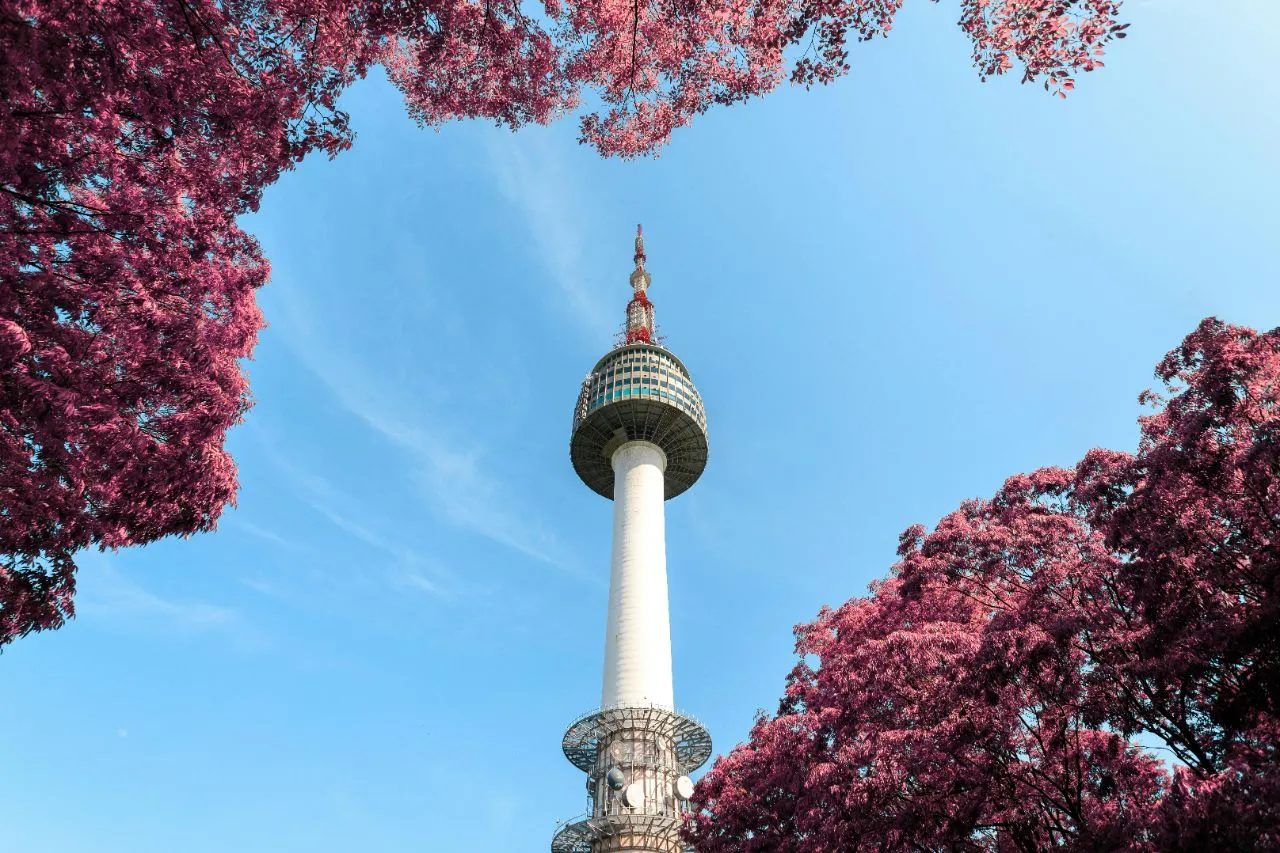
According to the Dong-A Ilbo, which cited data from the Korea Customs Service (KCS), Huione Group—now sanctioned by the U.S. Treasury Department’s Financial Crimes Enforcement Network (FinCEN)—appears to have run a currency exchange in Seoul from 2018 to July 2024. The outlet reported that a banner on the premises displayed a logo identical to Huione’s, prompting suspicions about its ownership and control.
https://asset.coinness.com/en/news/35f95dfbbdf768ffb64249b09916e707.webp
Photo by Aleksandar Pasaric on Pexels

Ties to North Korean hackers

The exchange reported conducting roughly $20,000 in annual currency conversions during that period, excluding cryptocurrency transactions. The timeline overlaps with a period in which Huione Group reportedly received $150,000 in cryptocurrency from the North Korean hacking group Lazarus. 


Connections also extend to Cambodia. Panda Bank—a local lender that shares a building with Huione subsidiaries—supports USDT transactions originating from South Korea. Panda Bank director He Yanming is listed as the owner of Huione Crypto, a virtual asset service provider (VASP), suggesting potential links between operations in Seoul and Phnom Penh.


These developments come against the backdrop of a U.S. investigation disclosed in May, in which FinCEN said Huione’s business networks, including payments arm Huione Pay, collectively laundered at least $4 billion in illicit proceeds between August 2021 and January 2025.


Crypto used in $2.6B illegal conversions

Meanwhile, recent KCS data also shows a rise in illegal currency conversions involving cryptocurrency by foreign nationals. The Korea Economic Daily reported conversions totaling 432 billion won ($302 million) in 2021, climbing to 836 billion won ($584.5 million) in 2023 and 956 billion won ($668.4 million) last year. Over the past eight years, the total amount involved in such cases reached 3.7 trillion won ($2.59 billion) across 28 instances. By value, Chinese nationals accounted for 84.1% of the total, followed by Australians (11.1%), Vietnamese (3.2%), and Russians (1.6%).


The growing prevalence of cryptocurrency in illicit activity parallels a broader surge in crypto investment within the country. Many South Koreans have turned to digital assets, often with home ownership as a long-term goal. Trading on local exchanges, Bloomberg reported, is heavily skewed toward more volatile altcoins, which make up more than 80% of total volume. 


That stands in contrast to global markets, where investors largely focus on Bitcoin and Ethereum, which together make up more than half of overall trading. The momentum in local crypto investment intensified after Donald Trump’s U.S. presidential victory, with crypto trading in Korea reaching $27 billion in December 2024, about 80% of turnover on the KOSPI stock index.


The investigation underscores the growing challenge for regulators in tracking and containing cross-border financial networks that rely on cryptocurrency and informal money transfers. As crypto adoption deepens in South Korea and scrutiny widens abroad, authorities find themselves navigating an increasingly intricate intersection of financial opportunity, enforcement, and risk.


 

More to Read
View All
Policy & Regulation·

Aug 24, 2023

Thailand’s Incoming Prime Minister Signals Crypto Embrace

Thailand’s Incoming Prime Minister Signals Crypto EmbraceIn a recent parliamentary decision on August 22, real estate magnate Srettha Thavisin emerged as Thailand’s forthcoming Prime Minister. Thavisin, acclaimed for his prior role as the CEO of Sansiri — one of Thailand’s major real estate developers — has a history entwined with the cryptocurrency sector, hinting at potential ramifications for the nation’s crypto landscape.Photo by Markus Winkler on UnsplashParliamentary selection winThe appointment came under the banner of the Pheu Thai Party, with Thavisin securing 482 votes out of 747 in the parliamentary endorsement.Thavisin’s ascent to power could potentially herald a significant shift in Thailand’s approach to cryptocurrencies, leveraging his involvement with Sansiri’s foray into the digital asset domain. Departing from his role as Sansiri’s CEO in April, Thavisin relinquished his 4.4% stake in the company, setting the stage for him to pursue a career in politics.Crypto firm investmentSansiri, under Thavisin’s leadership, undertook active participation in the country’s digital asset arena. Notably, in 2021, the company participated in a substantial $225 million fundraising round for XSpring Capital, a crypto-friendly investment management firm. This strategic partnership paved the way for XSpring to launch a fully integrated cryptocurrency trading platform in 2022, with aspirations to establish a presence among the top crypto exchange companies by 2025.Thavisin’s impact on the crypto sector goes beyond investment. His company also introduced the “SiriHub Token” via XSpring in 2022, presenting a real estate-backed initial coin offering (ICO) that extended 240 million tokens to the public. This duality of involvement from crypto firm investment to token issuance, demonstrates that the new Thai premier has not been afraid to get involved with crypto innovation at an early stage.Crypto airdrop proposalIt appears that Thavisin’s affinity for cryptocurrency transcends corporate endeavors, as his political affiliation with the Pheu Thai Party, which he joined in November 2022, introduced a novel proposition. The party proposed disbursing 10,000 Thai baht (approximately $300) to citizens, executed through digital currency transactions. The synergy between his cryptocurrency background and this proposal raises questions about the potential influence of his past on Thailand’s future crypto policies.As Thavisin’s administration prepares to assume office by the end of September, the extent to which his crypto engagement shapes the nation’s policies remains a topic of speculation. However, the confluence of his real estate expertise and cryptocurrency ventures offers a unique blend of experiences that might foster innovative approaches.Notably, Thavisin’s journey isn’t the sole instance of Thailand’s government engaging with the crypto industry. Earlier in 2023, Thailand’s cabinet introduced tax breaks for companies issuing investment tokens. These measures, announced in March, aim to generate 128 billion baht ($3.7 billion) from investment token offerings over the next two years.Political importanceThavisin’s perceived embrace of cryptocurrency in Thailand comes at a time when crypto and blockchain innovation is being supported by political candidates in multiple jurisdictions. In the United States, the Republican Party is holding a debate on Wednesday between its eight candidates for the presidential nomination, with several of them being pro-crypto.On the Democratic Party side, Robert F. Kennedy is pro-bitcoin, having recently stated that bitcoin is an exercise in extending civil liberty. Meanwhile, in Argentina, Javier Milei, a libertarian pro-bitcoin candidate, topped the poll in the country’s recent presidential primary.

news
Web3 & Enterprise·

Aug 11, 2023

Rotonda and Bithumb META to Co-Host Next Block 2023 Conference for Web3 Collaborations

Rotonda and Bithumb META to Co-Host Next Block 2023 Conference for Web3 CollaborationsRotonda, a subsidiary of Korean crypto exchange Bithumb and the operator of the Web3 Burrito Wallet, and Bithumb META, the exchange’s metaverse subsidiary, said Friday they will jointly host the Next Block 2023 conference. The conference’s main objective is to explore new business collaboration opportunities in building a new ecosystem for accelerating Web3 projects.“We are pleased to offer a space for interaction where virtual asset exchanges, wallets, and NFT marketplaces — which constitute the core infrastructure of the Web3 industry — can work together to set the stage for an innovative future of blockchain business,” a representative from Burrito Wallet said.Photo by CHUTTERSNAP on UnsplashExploring Web3 and industry insightsThe inaugural Next Block conference is scheduled for September 4 at Amoris Hall in Yeoksam GS Tower located in Seoul.Bithumb is the main sponsor of the conference, and more than 15 companies from various sectors including decentralized finance (DeFi), Play-to-Earn (P2E) gaming, venture capital, and securities are set to attend. A total of ten companies will pitch business ideas, deliver keynote speeches, and participate in panel and networking sessions. Topics to be covered for the event include transitioning to Web3 and discovering new opportunities and paradigms through blockchain.Junbo Yang, investment manager at Hong Kong’s HashKey Capital, and Kim Do-hyung, CEO of blockchain-based investment banking platform Finhaven, will deliver the keynote speeches, discussing the various perspectives of investment and security tokens. Companies like Property Heroes, Oasis, Mineral Hub, and more will participate in the panel discussions.Key business opportunitiesIn particular, the companies that give business pitches will have the chance to present their business models directly to venture capitalists and key industry figures. They can subsequently gain access to broader networking and promotional possibilities.

news
Web3 & Enterprise·

Jun 27, 2023

Netmarble’s Blockchain Platform Plans Tokenomics Overhaul for MBX Token

Netmarble’s Blockchain Platform Plans Tokenomics Overhaul for MBX TokenNetmarble, a South Korean gaming company, announced today that its blockchain subsidiary MARBLEX revealed a plan to revamp the tokenomics of its native MBX token.Fate of 670 million MBXAs part of this overhaul, MARBLEX will conduct a vote to determine whether to burn 670 million MBX tokens, which do not belong to the distribution plan. The total number of issued MBX tokens amounts to 1 billion.The vote will be held on its Discord channel and the decentralized governance platform Snapshot. Participants eligible to vote are holders of Marbleship NFTs and MBX tokens. The final decision will be reached on July 10. If consensus is reached to burn the tokens, the specific burn schedule will be disclosed at a later date.Photo by Sergio Vilches on UnsplashEnhancing MBX utilityStarting from the third quarter of this year, MARBLEX plans to introduce an improved token burn policy and system. The aim is to expand the utility of the MBX token and establish an ecosystem that is sustainable, transparent, and reliable.MARBLEX is a gaming blockchain ecosystem that offers users the opportunity to play games while earning and trading cryptocurrencies. The platform currently supports games such as A3: Still Alive, a battle royale MMORPG; Ni no Kuni: Cross Worlds, a fantasy MMORPG; and The King of Fighters ARENA, a fighting game.According to Coinmarketcap, the MBX token is listed on six centralized cryptocurrency exchanges (Bithumb, Huobi, Bybit, Gate.io, MEXC, and Indodax) and Klayswap, a Klaytn-based decentralized exchange. Klaytn is an open source public blockchain developed by Korean social media giant Kakao Corp.

news
Loading