Top

Rotonda and Bithumb META to Co-Host Next Block 2023 Conference for Web3 Collaborations

Web3 & Enterprise·August 11, 2023, 9:09 AM

Rotonda, a subsidiary of Korean crypto exchange Bithumb and the operator of the Web3 Burrito Wallet, and Bithumb META, the exchange’s metaverse subsidiary, said Friday they will jointly host the Next Block 2023 conference. The conference’s main objective is to explore new business collaboration opportunities in building a new ecosystem for accelerating Web3 projects.

“We are pleased to offer a space for interaction where virtual asset exchanges, wallets, and NFT marketplaces — which constitute the core infrastructure of the Web3 industry — can work together to set the stage for an innovative future of blockchain business,” a representative from Burrito Wallet said.
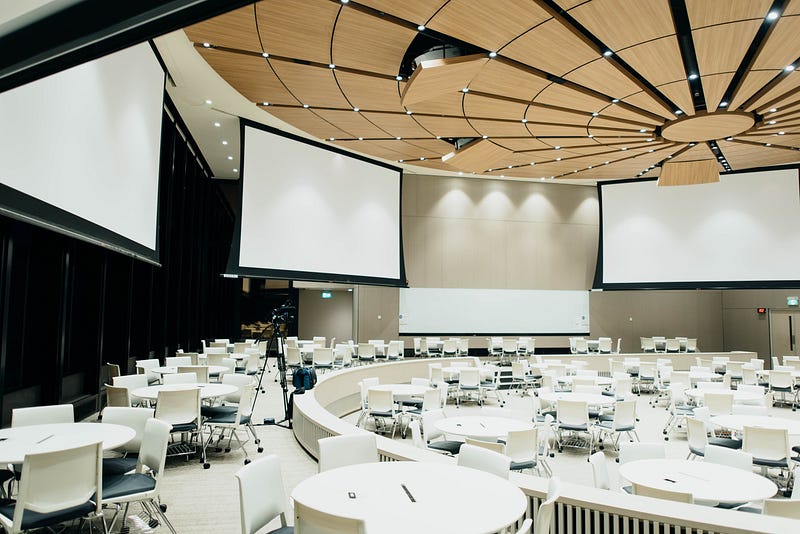
Photo by CHUTTERSNAP on Unsplash


Exploring Web3 and industry insights

The inaugural Next Block conference is scheduled for September 4 at Amoris Hall in Yeoksam GS Tower located in Seoul.

Bithumb is the main sponsor of the conference, and more than 15 companies from various sectors including decentralized finance (DeFi), Play-to-Earn (P2E) gaming, venture capital, and securities are set to attend. A total of ten companies will pitch business ideas, deliver keynote speeches, and participate in panel and networking sessions. Topics to be covered for the event include transitioning to Web3 and discovering new opportunities and paradigms through blockchain.

Junbo Yang, investment manager at Hong Kong’s HashKey Capital, and Kim Do-hyung, CEO of blockchain-based investment banking platform Finhaven, will deliver the keynote speeches, discussing the various perspectives of investment and security tokens. Companies like Property Heroes, Oasis, Mineral Hub, and more will participate in the panel discussions.


Key business opportunities

In particular, the companies that give business pitches will have the chance to present their business models directly to venture capitalists and key industry figures. They can subsequently gain access to broader networking and promotional possibilities.

More to Read
View All
Policy & Regulation·

Dec 13, 2024

Iran acts to regulate crypto to counter sanctions

Rather than restrict or ban crypto, the Iranian government appears to have taken on a more positive approach, moving towards embracing the new asset class and regulating it.Photo by Lara Jameson on PexelsRegulatory frameworkOn Dec. 7, Iran’s Nour News Agency reported Minister of Economic Affairs and Finance Abdolnaser Hemmati as saying that Iran is moving towards managing and eliminating the adverse effects of digital currency on the economy and instead harnessing its positive effects, with a regulatory framework being brought in to ensure that positive outcome. Hemmati went on to confirm that digital money falls under the oversight of Iran’s central bank. The minister stated that he hopes that cryptocurrencies would be developed with the objective of boosting youth employment levels and boosting economic assets held within the Islamic Republic of Iran, while helping to nullify sanctions and aligning Iran’s activities in this respect with the global economy. Circumventing sanctionsThe United States first imposed sanctions against Iran in 1979. The Islamic Republic had been the most sanctioned country in the world up until February 2022 when Russia surpassed Iran due to Western opposition to Russia’s special military operation in Ukraine. Sanctions were lifted in 2016 as part of a deal on the limiting of Iran’s nuclear program. That deal was scrapped during U.S. President-elect Donald Trump’s first term in office, with the latest sanctions imposed on entities involved in the transportation of Iranian oil last week. At a BRICS summit held in Kazan, Russia in October, Russia added cryptocurrency to the agenda with a view towards discussing with Iranian and other BRICS country representatives its potential use to bypass sanctions. In July the Bank of Russia set out a recommendation to Russian businesses to use crypto in order to reduce the impact of Western sanctions. Up to $50B in crypto held by IraniansA subsequent report from Nour News Agency on Dec. 8 had good news for Hemmati relative to his aspiration to boost economic assets held within Iran. The report cited Iranian economist Sadegh Alhosseini, who claims that crypto assets to the value of between $30 billion to $50 billion are controlled by Iranians.  The economist provided the estimate after Iranian finance ministry and Central Bank of Iran (CBI) officials outlined that they are looking to make the crypto market in Iran more transparent. If Alhosseini’s estimate is accurate, it would mean that Iranians hold crypto assets to the equivalent value of one-third of the entire gold market in Iran. Alhosseini outlined these findings within a report published by the CBI which provided a summary of proposed upcoming policies relative to cryptocurrencies. The main objective of these proposed policies is to aid crypto traders to remain compliant with anti-money laundering (AML) regulations and local taxation requirements. The CBI has also been working towards launching the digital rial, a central bank digital currency (CBDC). The CBDC project has been running since 2018 and relies upon Hyperledger Fabric, an enterprise blockchain framework that was originally developed by the Linux Foundation. Having been locked out of the SWIFT financial messaging network, Iran has launched ACUMER as an alternative which it hopes to use for trade purposes with Asian partners. Direct payments between Russian and Iranian banking systems have also been enabled. 

news
Policy & Regulation·

May 31, 2023

Korean Financial Authority Installs Report Center to Counter Crypto Scams

Korean Financial Authority Installs Report Center to Counter Crypto ScamsThe Korean Financial Supervisory Service (FSS) announced today that it has installed a dedicated report center aimed at combating investment fraud related to virtual assets. From June 1 through to the end of this year, the report center will run a reporting campaign.Photo by Katrin Hauf on UnsplashSurge in crypto fraud casesWhile the National Assembly is working on the legislation of the Virtual Asset User Protection Bill, there has been a surge in fraudulent activities exploiting regulatory loopholes. According to the FSS, the number of reported cases of crypto fraudulent activities in Korea surged by 67.2% last year, reaching 199, compared to the previous year’s 119.In a proactive response to this rising concern, the FSS has set up a report center, designed to staunch the escalating tide of fraud.Coordinated efforts against financial fraudUnder the guidance of the Anti-Financial Fraud Office, the report center will operate collaboratively with other relevant departments, such as the Consumer Finance Department and the Asset Management Examination Department. Reports can be filed either via landline or through the FSS website.Swift actions on detected fraudAs part of its policy, the FSS will swiftly inform investigative agencies, like the prosecutors’ office, if an issue raised via the report center is deemed severe or contains specific facts that necessitate further scrutiny.The financial watchdog emphasized its commitment to issuing financial consumer warnings whenever potential fraud is detected and poses a risk to investors. This strategy is designed to safeguard investors and impede the spread of damages.

news
Web3 & Enterprise·

May 26, 2023

Renault Korea Establishes Metaverse Space for Car Enthusiasts

Renault Korea Establishes Metaverse Space for Car EnthusiastsRenault Korea Motors made an announcement on Friday that it will establish the Renault Korea Hub, an immersive automotive experience located within a metaverse, according to a report by Korean news media Dailian. The company intends to commence operations of this unique venture in the upcoming autumn season.Photo by Richard Horvath on UnsplashThe Sandbox and Korean brandsThe Renault Korea Hub will operate within K-verse, a designated area of Korean brands within The Sandbox, a metaverse platform based on blockchain technology.The Sandbox metaverse has recently announced its latest Korean brand partners, and as part of this development, a land sale event is being organized where their adjacent land will be raffled off. The event is named “Hallyu Rising.” Hallyu or the Korean Wave is a cultural phenomenon that has experienced a significant surge in global popularity since the 1990s, mainly thanks to its pop songs and TV shows.During the land sale event, users have the chance to acquire land adjacent to various prominent brands associated with Korean culture. This will be made possible through raffles and auctions facilitated by the metaverse platform. Other notable partners besides Renault Korea are Channel A, a TV broadcasting network; Netmarble, a game publisher; and CJ ENM, an entertainment company.Unique experiences for car enthusiastsThe Renault Korea Hub, the first of its kind in Korea, will provide a unique space for automobile enthusiasts to indulge in a diverse array of experiences and games. As per the automaker’s announcement, visitors will have the chance to engage in activities like developing their own vehicle designs.Visitors will have the opportunity to experience Renault Korea’s vehicles in voxel form, allowing them to explore the technology, design philosophy, and stories associated with each vehicle. A voxel can be understood as a 3D counterpart to a 2D pixel, representing a value on a regular grid in 3D space.Renault Korea CEO Stéphane Deblaise stated that the carmaker intends to continue its pursuit of diverse Web 3.0-based activities centered around metaverses and non-fungible tokens (NFTs). He said the automaker’s projects aim to establish a connection between customers’ mobility experiences and their digital lives. Deblaise also highlighted that these projects will undergo further development through the integration of artificial intelligence (AI) technologies.Storytelling contestEarlier this month, Renault Korea introduced the storytelling contest titled “create your SM6,” which concludes today. This campaign inspires customers to utilize emerging AI technologies to design their own SM6 vehicles and transform them into NFTs. The SM6, Renault Korea’s midsize sedan, initially debuted in 2016 and has undergone subsequent facelifts to enhance its features and aesthetics.The top ten performers in the storytelling contest, who create captivating renditions and stories featuring the SM6, will be rewarded with utility NFTs and KLAY, the native token of the Klaytn network. The first-place winner will receive a prize package consisting of 1 million KRW ($750) worth of KLAY, along with six SM6 NFTs.The announcement of the winners is scheduled to take place between May 31 and June 9. Following the announcement, the airdrop of rewards will be conducted from June 30 to July 7.

news
Loading