Top

Bitmain Planning Mining Equipment Support For Aleo Blockchain

Web3 & Enterprise·October 25, 2023, 12:30 AM

Bitmain, the leading Beijing-headquartered crypto mining rig manufacturer, is set to bolster the proof-of-work (PoW) blockchain network of Aleo with its upcoming Antminer release.

The firm announced its intentions via a social media post which was published on WeChat on Monday. The move follows Bitmain’s recent introductions of Filecoin and Kaspa mining machines and its latest series of Bitcoin miners.
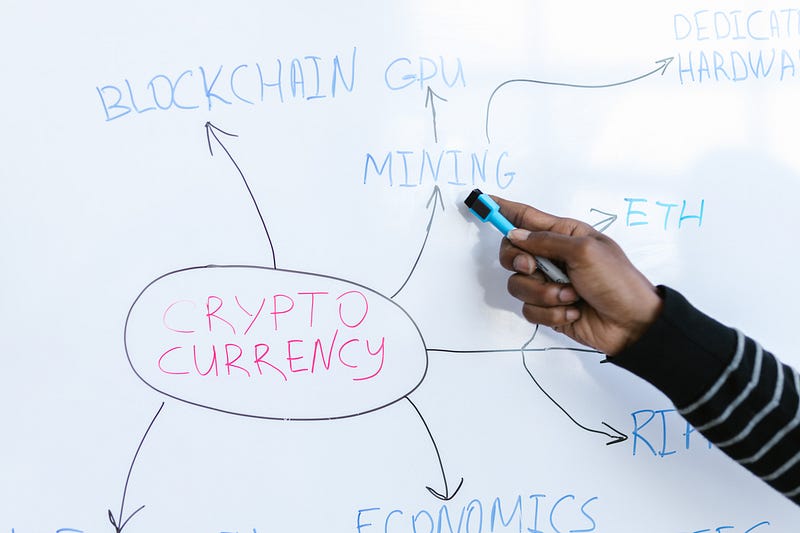
Photo by RDNE Stock project on Pexels


Enhanced privacy through zk proofs

Bitmain plans to unveil a miner compatible with the forthcoming Aleo blockchain network which is currently in testnet mode. Aleo’s PoW blockchain promises to bring enhanced privacy through zero-knowledge (zk) proofs while retaining programmability. Zk proofs represent a cryptographic advancement insofar as they can verify data while it remains encrypted and undisclosed to the verifying party. The blockchain network adopts a statically typed programming language inspired by Rust, known as Leo.

Aleo has been gaining significant attention in the crypto space, much like other venture capital-backed layer 1 blockchains, including Solana, Aptos, and NEAR, before their respective debuts. In April 2021, Aleo’s team successfully secured $28 million in a Series A funding round, with Andreessen Horowitz (a16z) leading the way.

Aleo’s journey reached new heights in February 2022 when its Series B funding round raised a substantial $200 million, pushing the project into unicorn status. This funding round was jointly led by Softbank Vision Fund 2 and Kora Management LP, with participation from a16z, Tiger Global, Sea Capital, Slow Ventures, and Samsung Next.


Latest in series of product launches

Bitmain’s announcement is part of a series of product launches in recent months. In July, the company unveiled a mining rig designed for Filecoin (FIL). The following month marked the shipment of Bitmain’s Kaspa (KAS) mining machines. Shortly after the Kaspa deliveries, Bitmain revealed plans for an August release of a Monero (XMR) mining rig. Most recently, Bitmain introduced two next-generation Bitcoin (BTC) miners from the S21 series.

The Chinese crypto mining equipment manufacturer has faced financial challenges in recent times. In April, it emerged that the company had been fined by the Chinese authorities for tax irregularities.

Earlier this month, reports suggested that the company was experiencing liquidity issues. It failed to pay some of its employees although it later resolved the matter. Reports of staff payment difficulties surfaced two weeks ago. Arising out of that episode, the company subsequently fired three employees for posting information about salary payment issues on social media.

Nevertheless, the firm managed to secure two contracts with US-based mining operations following those reports. In these contracts, Bitmain sold a combined 5.8 exahash per second (EH/s) of its new S21 Antminers to Iris Energy and Cleanspark. In September, Bitmain finalized a deal with troubled crypto miner Core Scientific that will see the firm supply the restructured company with 27,000 Bitcoin miners.

The company has been blighted by internal conflicts going back a number of years between co-founders Jihan Wu and Zhan Ketuan. Subsequently Wu went on to found Singapore-headquartered crypto cloud mining platform Bitdeer.

More to Read
View All
Web3 & Enterprise·

Dec 12, 2023

Google Cloud becomes a Volunteer Validator for gaming blockchain XPLA

Google Cloud becomes a Volunteer Validator for gaming blockchain XPLAXPLA, a gaming blockchain guided by Korean cultural content company Com2uS Holdings, revealed in a blog post on Tuesday (local time) that Google Cloud has joined as a validator for its blockchain network.Through their collaboration, Google Cloud will take on the role of the first Volunteer Validator for the XPLA blockchain. This partnership enhances the network’s security and governance, as validators are responsible for maintaining the integrity of a blockchain network by validating and relaying transactions.Photo by engin akyurt on UnsplashLayer-1 mainnetXPLA is a layer-1 mainnet that features a diverse group of network participants from the Web3 space. This includes notable enterprises such as Oasys, Animoca Brands, Yield Guild Games (YGG), Blockdaemon, gumi and LayerZero, all contributing to the ecosystem.Commenting on this initiative, Jack Buser, Google Cloud’s director of game industry solutions, said, “We are pleased to take on a role as a Volunteer Validator for the XPLA ecosystem.” According to South Korean news outlet Etoday, Buser expected that the cloud computing services provider’s robust infrastructure will contribute to driving rapid growth and fostering innovation within the realm of Web3 gaming.Better Web3 experiencesPaul Kim, Leader of the XPLA team, echoed similar sentiments as he welcomed Google Cloud’s participation in their project. He mentioned their shared aim to deliver innovative and appealing Web3 experiences to gamers worldwide within a transparent Web3 ecosystem. Kim said, “Through this collaboration, XPLA can secure advanced IT technology and insights into future industries.”

news
Policy & Regulation·

Sep 19, 2023

Kazakhstan Launches NPC With CBDC Implementation by 2025

Kazakhstan Launches NPC With CBDC Implementation by 2025Kazakhstan’s National Bank (NBK) has unveiled the National Payment Corporation (NPC), a dedicated entity responsible for spearheading the development and launch of the country’s central bank digital currency (CBDC), known as the digital tenge.In a press release published last Friday, the NBK set out that the launch of the NPC is effectively a restructuring of the Kazakhstan Center for Interbank Settlements. The new entity has been entrusted with overseeing the national payment system.This mandate includes overseeing critical functions like interbank clearing services, facilitating money transfers, and managing digital identification. However, the NPC’s central mission revolves around establishing a robust “digital financial infrastructure” with a primary focus on realizing the digital tenge.Photo by Uladzislau Petrushkevich on Unsplash2025 targeted launch dateThe journey toward the digital tenge began in February of this year, with an ambitious launch date set for 2025. Deputy Governor of the NBK, Berik Sholpankupov, initially articulated a vision centered on a “collaboration between traditional finance and DeFi,” aimed at significantly improving financial inclusion and strengthening international trade.As of now, the CBDC pilot in Kazakhstan has advanced to a controlled environment pilot phase involving actual consumers and merchants. One of the key partners in this venture is Binance, the world’s largest cryptocurrency exchange. Binance is actively supporting the pilot through its technical solution, BNB Chain, marking a convergence between traditional financial institutions and the blockchain-based cryptocurrency sector.Kazakhstan’s pursuit of CBDCs aligns with a global trend as numerous countries worldwide explore the potential of CBDCs. An astounding 105 countries, representing a substantial 95% of the global gross domestic product (GDP), are currently exploring the concept, highlighting the collective recognition of the transformative potential of digital currencies in shaping the future of finance.Last week it emerged that the NBK had entered into a collaboration with the global financial messaging service SWIFT relative to the beta-testing of a CBDC.Attracting global exchangesIn a move that bolsters the development of crypto in the central Asian country, Binance launched a regulated digital asset platform in collaboration with the local Freedom Finance Bank. Around the same time, Bybit secured in-principle approval to trade within the country from the local regulator.Kazakhstan’s proactive stance toward cryptocurrency is also evident in its taxation policies. In 2022, the government collected approximately $7 million in tax payments from cryptocurrency mining entities following the implementation of revised regulations governing the fiscal responsibilities of cryptocurrency mining.Additionally, the government introduced legislation aimed at curbing excessive energy consumption by domestic crypto miners, instituting licensing requirements, and making minor adjustments to the taxation framework.Kazakhstan’s steps in establishing the National Payment Corporation and venturing into the realm of CBDCs reflect the country’s interest in embracing the digital era and staying at the forefront of financial innovation. As the industry looks on, Kazakhstan’s digital tenge project could serve as a model for others seeking to bridge the gap between traditional finance and the exciting possibilities of DeFi.

news
Policy & Regulation·

Sep 26, 2023

Tether Alters ToS in Singapore Restricting USDT Redemption

Tether Alters ToS in Singapore Restricting USDT RedemptionTether, the issuer of the world’s largest stablecoin, USDT, has made substantial revisions to its Terms of Service (ToS), which may have a significant impact on its user base in Singapore.News of the change emerged on Monday, with Dr. Julian Hosp, CEO of Cake Group, the project team behind Singapore-based Cake DeFi, taking to social media and providing a copy of an email from Tether’s Compliance Department, confirming the change. That notification read:”Tether has changed its terms of service to, among other things, restrict its onboarding standards. Corporates controlled by; another entities, directors, shareholders residing in Singapore are no longer permitted to be Tether customers.”In his commentary, Hosp stated that he wouldn’t be in a position to confirm “if redeeming $USDT into $USD is actually possible, due to being in #Singapore.”Photo by DrawKit Illustrations on UnsplashToS Change in ContextWithin the cryptocurrency ecosystem, eyebrows have been raised regarding the timing of Tether’s ToS change, as it has coincided with a major instance of crypto-related money laundering. Conversely, some argue that the issue could be specific to Cake DeFi. The DeFi protocol had been flagged for enhanced due diligence (EDD), suggesting that the modification in Tether’s ToS might potentially be a result of a partnership issue between the two entities.Stablecoins like USDT play a pivotal role in the digital asset ecosystem, serving as a bridge between the volatile world of cryptocurrencies and the stability of traditional fiat currencies like the US dollar. Any disruption in their usage can trigger a domino effect in the crypto markets.The cryptocurrency sector is grappling with regulatory uncertainties worldwide, and Singapore is no exception. The Monetary Authority of Singapore (MAS) has been actively reviewing and updating its crypto-related regulations to align with international standards and mitigate risks to financial stability.The precise motive behind Tether’s decision to restrict USDT redemption for specific customers in Singapore remains unclear. Notwithstanding that, Tether’s Chief Technology Officer (CTO) Paolo Ardoino expressed the view that the matter is being misunderstood. He tweeted:Spreading FUD”Before spreading FUD [fear, uncertainty and doubt] it would be great if you guys did take a look at webarchive… This is Jan 2022…. And if you open the link below: Last updated: May 12, 2020… Again, take a moment to search and verify information before YOLO [you only live once] posting.”Clearly Ardoino is making the point that the ToS change is consistent with existing compliance policy which has been in place since 2020. Notwithstanding that, in reviewing related records, media outlet Protos found that USDT issuance and redemption after May 2020 demonstrate that the firm continued to do business with Singapore-based entities. The publication cited UQPAY specifically, a Singapore-based payments processor. It was found to have issued USDT between May 14 and May 18 in 2020.

news
Loading
