Top

Kazakhstan Launches NPC With CBDC Implementation by 2025

Policy & Regulation·September 19, 2023, 1:30 AM

Kazakhstan’s National Bank (NBK) has unveiled the National Payment Corporation (NPC), a dedicated entity responsible for spearheading the development and launch of the country’s central bank digital currency (CBDC), known as the digital tenge.

In a press release published last Friday, the NBK set out that the launch of the NPC is effectively a restructuring of the Kazakhstan Center for Interbank Settlements. The new entity has been entrusted with overseeing the national payment system.

This mandate includes overseeing critical functions like interbank clearing services, facilitating money transfers, and managing digital identification. However, the NPC’s central mission revolves around establishing a robust “digital financial infrastructure” with a primary focus on realizing the digital tenge.
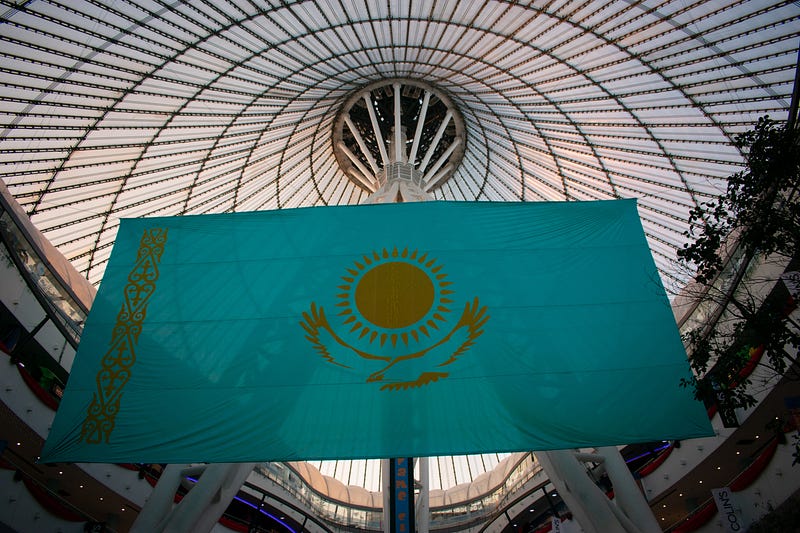
Photo by Uladzislau Petrushkevich on Unsplash


2025 targeted launch date

The journey toward the digital tenge began in February of this year, with an ambitious launch date set for 2025. Deputy Governor of the NBK, Berik Sholpankupov, initially articulated a vision centered on a “collaboration between traditional finance and DeFi,” aimed at significantly improving financial inclusion and strengthening international trade.

As of now, the CBDC pilot in Kazakhstan has advanced to a controlled environment pilot phase involving actual consumers and merchants. One of the key partners in this venture is Binance, the world’s largest cryptocurrency exchange. Binance is actively supporting the pilot through its technical solution, BNB Chain, marking a convergence between traditional financial institutions and the blockchain-based cryptocurrency sector.

Kazakhstan’s pursuit of CBDCs aligns with a global trend as numerous countries worldwide explore the potential of CBDCs. An astounding 105 countries, representing a substantial 95% of the global gross domestic product (GDP), are currently exploring the concept, highlighting the collective recognition of the transformative potential of digital currencies in shaping the future of finance.

Last week it emerged that the NBK had entered into a collaboration with the global financial messaging service SWIFT relative to the beta-testing of a CBDC.


Attracting global exchanges

In a move that bolsters the development of crypto in the central Asian country, Binance launched a regulated digital asset platform in collaboration with the local Freedom Finance Bank. Around the same time, Bybit secured in-principle approval to trade within the country from the local regulator.

Kazakhstan’s proactive stance toward cryptocurrency is also evident in its taxation policies. In 2022, the government collected approximately $7 million in tax payments from cryptocurrency mining entities following the implementation of revised regulations governing the fiscal responsibilities of cryptocurrency mining.

Additionally, the government introduced legislation aimed at curbing excessive energy consumption by domestic crypto miners, instituting licensing requirements, and making minor adjustments to the taxation framework.

Kazakhstan’s steps in establishing the National Payment Corporation and venturing into the realm of CBDCs reflect the country’s interest in embracing the digital era and staying at the forefront of financial innovation. As the industry looks on, Kazakhstan’s digital tenge project could serve as a model for others seeking to bridge the gap between traditional finance and the exciting possibilities of DeFi.


More to Read
View All
Policy & Regulation·

Apr 07, 2023

Korean Financial Regulator to Inspect Non-Fiat Crypto Trading Platform

Korean Financial Regulator to Inspect Non-Fiat Crypto Trading PlatformThe Financial Intelligence Unit (FIU) under the Korean Financial Services Commission (FSC) plans to launch a comprehensive inspection on crypto trading platform Fobl (previously known as Foblgate) from March 11.©Pexels/김 대정Unlike other major Korean crypto exchanges, such as Upbit or Bithumb, which allow trading between fiat currencies and cryptocurrencies, Fobl only offers trading between cryptocurrencies.Inspection on non-fiat exchangesThe FIU’s inspection of Fobl is a follow-up to the regulator’s inspection of GDAC, another Korean non-fiat crypto exchange. This suggests that the FIU will focus on inspecting non-fiat exchanges in the first half of this year.Many in the cryptocurrency industry have been paying attention to the FIU’s move after its first inspection of GDAC, as it could signal the direction in which the regulator would take. Earlier this year, the FIU announced that it would conduct inspections not only on non-fiat crypto exchanges but also on wallet solutions, custodians, and staking service providers. It is known that the FIU has been reviewing anti-money laundering (AML) systems and asset management statuses of these crypto enterprises.Fobl’s possible addition of fiat tradingThe Korean crypto industry suspects Fobl might transform itself into a fiat crypto exchange, considering the FIU’s notice that it will prioritize examining non-fiat exchanges that are preparing to support fiat trading.Fobl CEO’s take on the marketPrior to this news, Fobl CEO Ahn Hyun-joon said in a recent interview with Etnews that the platform is in talks with multiple banks to acquire real-name bank accounts and is complying with all the regulations required by the authorities. During the interview, he also raised concerns about the uncertainty that faces non-fiat crypto trading platforms, pointing out that 97% of the crypto trading in Korea is being carried out in crypto exchanges that support trading of Korean won.In Korea, the financial regulator requires virtual asset service providers (VASPs) offering trading in Korean won to hold real-name registered accounts at domestic banks as a measure to prevent money laundering.

news
Policy & Regulation·

May 03, 2023

VCs Say US Crypto Crackdown Opportunity for Asia

VCs Say US Crypto Crackdown Opportunity for AsiaA couple of Hong Kong-based venture capitalists told Bloomberg TV in an interview that aired on Tuesday that the current crypto crackdown in the United States is a boon for Asia and particularly for Hong Kong in establishing itself as a global crypto hub.© Pexels/lalesh aldarwishMartin Baumann, Managing Partner and Co-Founder of CMCC Global, one of Asia’s first VC funds focused purely on blockchain and crypto, said that “Hong Kong has always been a financial capital of Asia and we believe in this location.”Golden opportunityWhile the fund has a global mandate, it believes that investor focus is shifting away from North America towards Asia. Baumann’s colleague, CMCC Global Managing Partner and Co-Founder Charlie Morris said that “the US has been quite negative from the regulatory perspective and it really seems to us that the US is shooting itself in the foot with a machine gun.”Morris elaborated, stating that the US crypto crackdown is handing a golden opportunity to other world regions to lead on blockchain and crypto. Baumann chimed in to clarify that one third of all blockchain equity deals are currently being done in Asia. He maintains that most of the investment community in the West doesn’t appreciate the extent to which capital is being committed into the space by Asian entities.Morris expanded further: “We see places like Hong Kong having a real opportunity at this point in time to bring those firms and entrepreneurs to the city.”Launching $100M blockchain fundAgainst that backdrop CMCC Global is launching a $100 million fund, where funding will be allocated to blockchain projects. Specifically the duo are targeting crypto and blockchain firms at Series A and Series B funding stages. Baumann believes that in tandem with the fact that there’s a lot of innovation emerging in Asia, “there’s plenty of capital sitting on the sidelines waiting for the right entry valuations to pull the trigger.”While Baumann and Morris are majority stakeholders in CMCC Global, the Winklevoss twins (Cameron and Tyler Winklevoss) also have an equity stake in the business. Founders of the Gemini crypto exchange platform, they are investors alongside Hong Kong based Richard Li, who has a net worth estimated to be in the region of $4.6 billion.VC investment into crypto slowed down considerably since the onset of the most recent crypto winter. However, that activity has still been ongoing, something that is entirely different to the 2018 bear market when investment came to a complete standstill. In April, CMCC partnered with Switzerland-based Syz Group with the objective of establishing a funding vehicle with a minimum $50 million fund earmarked for crypto-centric hedge fund investment.Meanwhile, in speculating on the prospects of bitcoin, the CMCC duo expressed the view that double digit gains are well within reach. Morris envisages a Bitcoin unit price of $40,000 in 2023. From a long term perspective the CMCC co-founder suggested that “I can easily see us breaking all time highs and easily breaking $100,000 for bitcoin.”

news
Policy & Regulation·

Jul 31, 2023

Busan City Houses Two Foreign Financial Firms on the Road to Becoming Blockchain, Fintech Hub

Busan City Houses Two Foreign Financial Firms on the Road to Becoming Blockchain, Fintech HubThe city of Busan said Monday that it has chosen two financial companies, UIB Korea and Lina One, as the new occupants of Decacorn-Space — an office space on the 63rd floor of the Busan International Finance Center (BIFC) — in an effort to position the southern port as the nation’s blockchain and fintech hub.Busan has been running an open call for foreign financial institutions to move into the recently renovated space since June. After a rigorous two-step evaluation process, UIB Korea and Lina One were selected, the city said.This comes as part of Busan’s efforts to further develop the BIFC and become a major financial powerhouse in Korea.“We have been relocating public financial institutions, fostering financial experts, and exploring new growth drivers such as fintech, blockchain, and digital innovation,” the city’s mayor Park Heong-joon explained.Photo by Minku Kang on UnsplashAbout UIB Korea and Lina OneUIB Korea, or UIB Insurance Brokers, is the Korean branch of UK-based UIB Group — a global insurance broker that offers risk management advisory services. In particular, the firm is set to work with other domestic companies such as DB Insurance and Meritz Fire & Marine Insurance to establish a consortium for providing insurance products and consulting services.Meanwhile, Lina One is the Korean branch of Chubb Group, the world’s largest publicly traded property and casualty insurance company. One of the firm’s major goals is to promote the insurance information technology market in Busan.Notably, both companies aim to leverage their digital capabilities, experience, and competitiveness to achieve similar goals, which include digitizing insurance for various partners, ranging from maritime and industrial companies to regional banks, fintech companies, and individuals. In turn, their efforts are expected to expand Busan’s network with the larger global financial community and present the city as an ideal spot for international conferences.On the road to becoming a financial hubDespite considerable challenges such as the withdrawal of foreign financial institutions from Korea and the impact of COVID-19 on international travel, the city has continuously made efforts in collaboration with the Busan Finance Center to attract international financial institutions through events like investor relations meetings and local networking activities.To support the successful landing of these companies in Busan, the city will also offer one-stop services such as business model development support and residential settlement consultations.Once settled, UIB Korea and Lina One are expected to generate significant synergy with partner firms such as local financial holding company BNK Financial Group during the third phase of the development of the BIFC whose objective is to house innovative financial workspace by 2025.“It is crucial for us to attract more competent domestic and foreign financial institutions that will have a great impact on the city’s financial economy,” Mayor Park emphasized.

news
Loading