Top

Incheon Partners with Daehong to Implement Web3-Driven Urban Marketing Strategy

Web3 & Enterprise·October 11, 2023, 7:23 AM

Incheon Metropolitan City, renowned for its international airport in South Korea, has partnered with Daehong Communications, a marketing solutions subsidiary of the country’s retail giant Lotte Group, to leverage Web3 technology for the purpose of promoting the city.

Daehong has established an extensive global network within the blockchain industry. Among its notable partners are layer 1 blockchain Aptos, Metaverse company Animoca Brands, and decentralized social protocol CyberConnect. One of Daehong’s primary initiatives is the NFT project associated with Bellygom, a pink bear character of Lotte Homeshopping, a media commerce affiliate of Lotte Group.

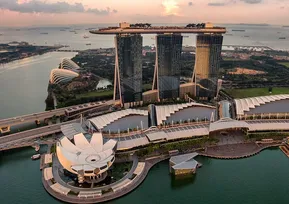
Photo by Daesun Kim on Unsplash


Harnessing blockchain for city promotion

Through this collaborative effort, Incheon aims to harness blockchain technology to explore innovative ways of promoting the city and building stronger connections with its residents.

Incheon has recently been very dedicated to Web3 initiatives in promoting the city. Last month, it worked with The Sandbox, the virtual gaming platform of Animoca Brands, to create a metaverse representation of the Incheon Landing Operation to commemorate the 70th anniversary of the Korean War Armistice Agreement. More recently, the city unveiled its NFT membership program named “Incheon Heroes,” demonstrating its commitment to pioneering its unique path in the era of Web3.


Daehong’s role in Web3 adoption

In the private sector, Daehong has been working towards the widespread adoption of Web3. The marketing firm introduced business models that integrate NFTs into areas that have significant public engagement, such as ticketing, memberships, and brand characters. Daehong has been actively working to facilitate many brands’ entry into the Web3 space.

Lee Se-woong, Brand Manager of Incheon City, anticipates that the collaboration with Daehong will serve as a fresh catalyst for Incheon, expressing excitement about the potential synergies between Incheon’s public infrastructure and Daehong’s industrial expertise.

Incheon is set to initiate a range of projects by leveraging the Incheon Heroes NFT membership program and the Incheon Universe, a virtual space that allows visitors to immerse themselves in various facets of the city. Furthermore, the city is in the process of establishing collaborations with enterprises, brands, and artists who share a common interest in promoting the sustainability of both the planet Earth and the city itself.


More to Read
View All
Policy & Regulation·

Aug 01, 2023

Bank of Korea Explores Jeju, Busan, and Incheon for Citizen-Centric CBDC Pilot Test

Bank of Korea Explores Jeju, Busan, and Incheon for Citizen-Centric CBDC Pilot TestThe Bank of Korea (BOK) is reportedly reviewing three potential locations for a pilot test of a citizen-centric payment system utilizing the Korean Won central bank digital currency (CBDC). Instead of choosing Seoul, the nation’s capital city, the BOK is considering Jeju, Busan, and Incheon for the pilot. That’s according to local tech news outlet IT Chosun.The three cities have been selected as possible testbeds, and discussions with commercial banks are ongoing to move the project forward. Once a city is chosen, the BOK will collaborate with local retailers, including hypermarkets, to test the CBDC payment and distribution system.Photo by Ethan Brooke on UnsplashRegional currency modelThe CBDC test will be limited to a specific area, operating similarly to regional currencies issued by municipal governments to stimulate local economies. The CBDC wallet app will be available to all citizens, but its usage will be restricted to retailers in the designated area. Presently, Jeju, Busan, and Incheon already have their own regional currencies managed by local banks and financial institutions.However, implementing the CBDC system poses technical challenges. In remote tests last year, the BOK discovered that transaction speeds for small transfers were slower compared to traditional payment processing providers in regions outside the Seoul Metropolitan Area.Against this backdrop, the BOK seeks to recruit an unusually large number of tech experts in order to build a large-scale system for small payments. The bank has been actively hiring individuals for this purpose since the beginning of the year.CBDC test next yearWith the test scheduled for next year, the BOK aims to promptly select the test destination based on the system’s expected performance, estimated user numbers, and potential economic impact.While Busan is more or less shunned due to its large population, Jeju is emerging as a preferred choice. However, the final decision has been tentatively postponed due to internal issues within the BOK.Following the pilot test results, the BOK may gradually broaden the scope of the CBDC system. Meanwhile, in a similar development, China began its CBDC pilots in 2020 and has now expanded its CBDC use to 26 cities across 17 provinces.According to a BOK official, the Korean central bank is making seamless preparation for the test and engaging in discussions with commercial banks to explore their operating models and devise effective implementation strategies.

news
Web3 & Enterprise·

Apr 19, 2023

Lackluster Nasdaq Debut for Bitdeer

Bitcoin miner Bitdeer Technologies Group’s stock had a rough debut on the Nasdaq exchange, losing almost 30% of its value shortly after market open on Friday. The Singapore-based firm, which is one of the largest bitcoin miners in the world, had delayed its listing several times and saw a lukewarm reception from investors. Bitdeer’s merger with a special-purpose acquisition vehicle called Blue Safari Group Acquisition Corp was approved on Tuesday, paving the way for the listing. Mining across six sitesBitdeer has six mining sites across Washington state, Texas, Tennessee, and Norway, with a total energy capacity of 775 megawatts as of the end of 2022. It has a hashrate or computing power of 16.2 exahash per second (EH/s), second only to bankrupt miner Core Scientific and higher than Riot Platforms and Marathon Digital Holdings. Around one-quarter of the hashrate is used for self-mining, while the rest is given out for cloud mining, which means that customers rent the machines and reap the rewards.Despite the company’s impressive size and scale, Bitdeer’s financial performance deteriorated in 2022, which was partly due to worsening market conditions. The company reported revenue of $330.3 million and a loss of $62.4 million for the year, compared with $394.7 million in revenue and a profit of $82.6 million in the previous year. The company’s listing comes at a better time than last year, as market conditions have improved, and bitcoin has passed the $30,000 mark. Mining equities have also outperformed the digital asset in percentage growth. Differentiation of mining operatorsHowever, Bitdeer’s listing was not received as positively as expected, and the stock was halted several times for volatility shortly after the market opened. Other crypto mining stocks saw single-digit upticks in their share value at the same time. The market is beginning to shift from operators with the biggest scale to operators with the best unit economics, said investment bank Stifel Nicolaus’s analyst Bill Papanastasiou.This shift may explain why investors were not too keen on Bitdeer’s debut, as the company’s financials are not as strong as those of its competitors. Despite Bitdeer being larger than Marathon and Riot, based on its current share price and valuation, it is priced at a third of the value of its two industry peers.Bitdeer was born out of the world’s largest rig manufacturer, Bitmain, following a spat between the two co-founders. The firm is not the only cloud mining firm affiliated with Bitmain that is going public via SPAC, as BitFuFu is also in the process of going public, but has delayed its listing. Bitdeer’s stock debut may have been lackluster, but the company remains one of the largest bitcoin miners in the world.Shares in the newly quoted public company opened at $9.70, sliding to $6.30, before ending the first day’s trading at $7.03.

news
Policy & Regulation·

Jul 04, 2023

Singapore Looks to Prohibit Crypto Lending and Staking

Singapore Looks to Prohibit Crypto Lending and StakingIn a move to bolster investor protection and maintain financial stability, the Monetary Authority of Singapore (MAS) is introducing new guidelines for cryptocurrency platforms operating in the country.Details of the measures were published by MAS on Monday. According to its statement, the measures “will mitigate the risk of loss or misuse of customers’ assets, and facilitate the recovery of customers’ assets in the event of a DPT [Digital Payment Token] service provider’s insolvency.”The proposed guidelines outline several key measures. One such measure is the daily reconciliation of customer assets, which will help prevent discrepancies and safeguard against potential losses.Photo by Hu Chen on UnsplashHolding assets in trustAdditionally, the custody function, responsible for holding and safeguarding client assets, will be operationally separated from other business divisions to minimize the risk of mismanagement or unauthorized use. By the end of this year, it’s understood that crypto platforms will be required to store client assets in trust accounts, ensuring enhanced security and accountability.DisclosuresFurthermore, licensed cryptocurrency service providers will be mandated to provide explicit disclosures to customers, clearly outlining the risks associated with holding and trading digital payment tokens (DPTs). Recognizing the speculative nature of digital token trading, the MAS acknowledges that regulations alone cannot fully protect consumers from potential losses.To further protect retail investors, the MAS intends to prohibit cryptocurrency service providers from facilitating lending or staking activities. Lending and staking, where digital tokens are loaned or pledged to earn profits, are considered unsuitable for the general public due to their complex and high-risk nature.These measures come as part of Singapore’s efforts to strengthen its regulatory environment for digital assets. The consultation process began last year, following the collapse of FTX, a cryptocurrency exchange.Singaporeans suffered disproportionately with the collapse of FTX as previously, MAS had banned global crypto exchange Binance from operating within the city-state. That led to Singapore having more FTX customers than many other world regions. To compound matters, state-owned global investment firm Temasek, was an investor in the fraudulent crypto exchange.MAS had called for feedback and proposals, with a focus on enhancing investor safeguards and promoting responsible trading practices. While the regulations aim to provide a safer environment for investors, the MAS also emphasizes the importance of individuals exercising caution when engaging in digital token trading.Contrasting approachesWhile Singapore is taking steps to tighten regulations, other cities like Hong Kong are adopting a more inclusive approach to the crypto industry. Hong Kong Legislative Council member Johnny Ng has voiced support for the local crypto business and has encouraged prominent exchanges like Coinbase to establish operations in the territory, aiming to foster greater engagement and growth within the sector.As the crypto industry continues to evolve, regulatory frameworks play a crucial role in ensuring investor protection and maintaining market integrity. Singapore’s proactive approach to strengthening its regulatory environment reflects its commitment to striking a balance between fostering innovation and safeguarding the interests of investors.

news
Loading