Top

Bitmain Pays Employees Following Salary Suspension

Web3 & Enterprise·October 11, 2023, 12:59 AM

Bitmain, the Beijing-based Bitcoin mining equipment manufacturer, has somewhat resolved its cash flow issues, having recently suspended employee salaries in response to ongoing financial struggles and sluggish progress in its mining operations.
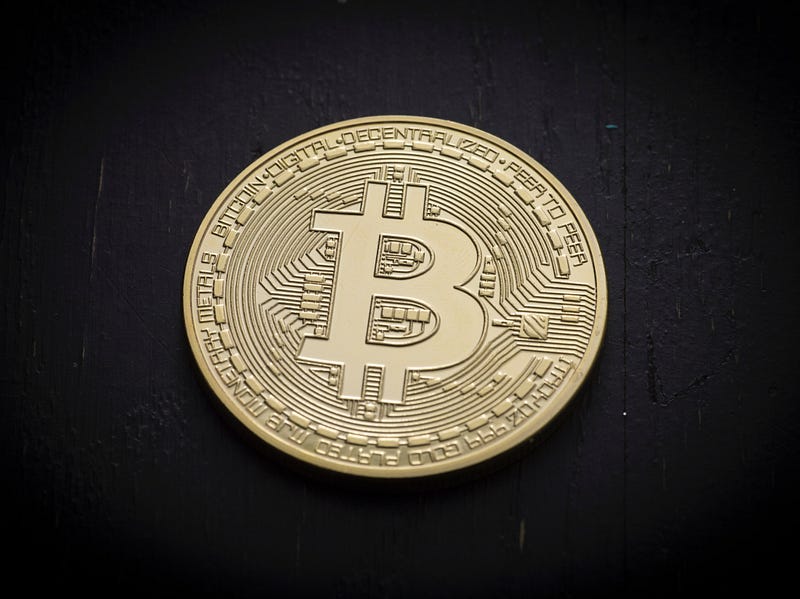
Photo by Thought Catalog on Unsplash


Cash flow challenges

News of the payment issue emerged via employee reports online on Monday. The suspension encompassed both performance-based and basic wages, affecting all Bitmain personnel. The dire situation has marked a critical juncture for the ASIC manufacturer, which once held a commanding 70% share of the global Bitcoin mining machine market.

Chinese crypto reporter Colin Wu had also outlined the firm’s difficulties on social media. In a subsequent post on X (formerly Twitter), Wu stated:

”On the afternoon of October 7, Bitmain has repaid September wages, and stated that it only did not pay the performance salary of some people. It has also been repaid, and the basic salary has been released normally on September 30.”

More recent reports by local news media in China indicated that the firm has proceeded to pay part of its staff salaries.


Internal conflicts

Bitmain’s financial woes are not new. The company has been plagued by internal conflicts between its co-founders, Wu Jihan and Zhan Ketuan, resulting in a debilitating power struggle that severely eroded its market dominance. Earlier efforts to restore financial stability included a restructuring of employee compensation in the first quarter of this year. Under this reform, the original fixed salary was divided into a basic salary and a performance-based component linked to rank.

Regrettably, these measures have proven insufficient to reverse Bitmain’s fortunes. In a company announcement issued in September 2023, Bitmain acknowledged that its operating cash flow had plunged into negative territory, and the performance of its mining machines fell short of expectations.

Consequently, the company suspended employee salaries, with the prospect of resuming payments contingent upon developments after the October 7 holiday.

It emerged in April that the firm had been fined for tax code violations in China.


Core Scientific deal

In August, Bitmain explored the possibility of acquiring an equity stake in Core Scientific, a prominent North American crypto-mining company, as part of Core Scientific’s bankruptcy restructuring plan. This proposed agreement, pending final documentation and court approval, entails Bitmain acquiring 27,000 S19j XP Bitcoin miners from Core Scientific.

The Core Scientific deal represents a potential lifeline for Bitmain. Nevertheless, the suspension of employee salaries underscores the prevailing uncertainty surrounding the company’s future. Whether the completion of the Core Scientific transaction will usher in the much-needed financial turnaround for Bitmain remains uncertain as the company grapples with its ongoing financial challenges.

Bitmain’s decision to suspend employee pay highlights the gravity of the situation and the urgency of finding a sustainable solution to its financial woes. The outcome of the Core Scientific deal could determine Bitmain’s fate as it strives to regain its once-dominant position and secure its financial stability. In the meantime, the firm continues to develop the latest generation of Bitcoin mining equipment.


More to Read
View All
Web3 & Enterprise·

Oct 11, 2023

Report by Xangle and Tiger Research Explores Indonesia’s Web3 Potential

Report by Xangle and Tiger Research Explores Indonesia’s Web3 PotentialIn partnership with South Korean crypto data platform Xangle, Web3 consulting firm Tiger Research has released a report focusing on the Web3 market in Indonesia. This collaborative project also featured contributions from Jakarta-based blockchain game provider Avarik Saga and Hong Kong-headquartered metaverse company Animoca Brands.In the process of crafting this paper, teams from Tiger Research, Xangle, Avarik Saga, and Animoca Brands spent a week in Indonesia, conducting interviews with local experts.Photo by Nick Agus Arya on UnsplashPositive factorsThe report assesses Indonesia’s Web3 market as having significant potential. It highlights factors such as the country’s status as the world’s fourth-largest population, a youthful demographic with a median age of 30, political stability, and favorable policies towards Web3 technologies. The Indonesian government has adopted a favorable approach to the Web3 industry, providing a range of incentives to boost the growth of the Web3 gaming sector. Additionally, they have taken the initiative to establish a dedicated committee for the blockchain sector within the Indonesia Financial Services Authority (OJK).Crypto exchanges driving growthAs per the report, the Indonesian market is primarily propelled by cryptocurrency exchanges, with over 30 exchanges currently in operation. These exchanges serve a customer base of approximately 10 million individuals, which accounts for around 4% of the country’s population. This is comparable to the number of investors on the Indonesia stock exchange.Several challengesMeanwhile, the paper also highlighted several areas where the world’s largest archipelagic state faces challenges. One of these challenges is its non-fungible token (NFT) market, which has seen a consistent decline in recent months, hitting an all-time low. It was found that most individuals prefer global NFT marketplaces over local ones. Furthermore, concerning the development of the Web3 ecosystem, the shortage of blockchain developers has prompted startups to seek development services overseas.

news
Web3 & Enterprise·

Jun 09, 2023

Animoca Brands Expands Focus to Non-US Markets

Animoca Brands Expands Focus to Non-US MarketsHong Kong-based Web3 and blockchain unicorn, Animoca Brands, is shifting its attention to markets outside the United States following the Securities and Exchange Commission’s (SEC) classification of its $SAND token as an unregistered security.This move comes after the SEC named $SAND, along with other tokens like Solana and Polygon, in lawsuits against major exchanges Binance and Coinbase Global. The labeling of these tokens as securities by the SEC poses legal risks for companies involved in their sale.Photo by Zulian Firmansyah on UnsplashNavigating regulatory challengesAnimoca Brands, led by Co-Founder and Chairman Yat Siu, has long embraced a global approach rather than focusing solely on one territory. Siu clarified the firm’s response to the latest regulatory development to the South China Morning Post (SCMP) via email on Thursday.He emphasized that while the SEC concentrates on the US, Animoca Brands operates in more progressive jurisdictions such as Hong Kong and Japan, where $SAND is widely available and accepted. In response to the recent blockchain-hostile climate in the US, the company has proactively started emphasizing other markets, reducing its reliance on the US market and mitigating potential risks associated with regulatory actions.Exchange business impactWhile Coinbase CEO Brian Armstrong has declared that his company has no intentions of delisting tokens labeled as securities by the SEC, this decision poses challenges for other exchanges less committed to selling these tokens. Dan Gallagher, Chief Legal Compliance and Corporate Affairs Officer of Robinhood Markets, expressed concerns about listing tokens due to regulatory rules and the uncertainty surrounding tokens created by organizations outside the US.These developments could have a chilling effect on exchanges, prompting crypto firms to consider moving away from the US market due to perceived uncertainty and the associated legal risks. As a demonstration of that, in a bankruptcy court hearing on Thursday, it emerged that the FTX Debtor is talking with bidders with a view to restarting the international business but restarting the US-based business is less certain.Animoca’s Middle East ventureIn a further display of its commitment to expanding outside the US, Animoca Brands announced plans in March to make significant investments, worth tens of millions of dollars, in the Middle East. This move reflects the company’s proactive strategy to tap into non-US markets and leverage the growth potential offered by progressive jurisdictions.Animoca Brands’ decision to prioritize non-US markets and reduce its reliance on the US market aligns with its global operating approach. The SEC’s classification of $SAND as a security has prompted the company to shift its attention to more progressive jurisdictions where $SAND remains widely accessible.As other firms, including Ripple, also explore growth opportunities outside the US, the global landscape of the crypto industry is evolving. By navigating regulatory challenges and expanding into promising markets, Animoca Brands aims to position itself for continued success and mitigate potential risks associated with the SEC’s actions in the US market.

news
Policy & Regulation·

Jan 26, 2024

Dramatic crypto tax take decline recorded in Indonesia

Indonesia witnessed a striking decline in cryptocurrency tax revenue for the year 2023, according to local media. 63% decreaseA report by Indonesian business and financial publication Kontan detailed a tax take drop to $31.7 million (Indonesian rupiah 467.27 billion). That tax collection is in sharp contrast to the partial collection period in 2022 when the crypto tax regime was initially introduced. It represents a drop of around 63%. The decline is part of a broader tax reform targeting the "digital economy" implemented in 2022, with the Indonesian government expressing the expectation that the reform would enhance tax collection, fostering a "healthy and fair taxation system."Photo by Nick Agus Arya on UnsplashDeclining transaction volumesDespite bitcoin's impressive surge of approximately 160% throughout 2023, the dip in crypto tax revenue was notable. The decrease is closely tied to a drop in transaction volumes over the same period compared to 2022. A report by CoinDesk Indonesia last week put that trading volume decrease at around 60%. Crypto transactions in Indonesia face dual taxation – a 0.1% income tax and a 0.11% value-added tax (VAT). Additionally, local crypto exchanges are subject to a special tax of approximately 0.04%, contributing to the national digital asset bourse. Disadvantaging local exchangesLocal exchanges in Indonesia, including prominent ones like Indodax, have voiced discontent with the high tax rates, contending that these levies are driving users towards unregulated offshore exchanges. Earlier this month Indodax CEO Oscar Darmawan called on the Indonesian government to review crypto tax rates. Darmawan highlighted that the cumulative taxes on crypto transactions often surpass the trading fees paid by users, posing a risk of users seeking more cost-effective alternatives. Local exchanges suggest that crypto transactions should only be subject to income tax, eliminating the VAT component. This proposal comes as Indonesia's Financial Services Authority (OJK) prepares to implement cryptocurrency regulations in early 2025. The aim is to align the taxation of cryptocurrencies with their market nature, possibly redefining them more as securities than commodities. Inadequate tax regulation can lead to a decline in local market activities, potentially resulting in capital flight to more favorable jurisdictions. Indonesia's situation serves as a reminder of the crucial need for policies that understand and adapt to the dynamic nature of the cryptocurrency sector. India is being similarly challenged. Local exchanges there have also complained of punitive taxation, which resulted in Indian users migrating to offshore exchanges. That scenario led indigenous exchanges to lobby the government to take action. The authorities have duly acted, flagging a number of global exchanges for operating illegally within India. It’s not all bad news for the development of digital assets within Indonesia. The country still ranks highly in terms of crypto adoption within the Asian region. Crypto was also floated as an election issue recently by Gibran Rakabuming Raka, a vice-presidential candidate in the upcoming election. The politician expressed his commitment to accelerating the country's position as a leader in the digital revolution. 

news
Loading