Top

Report by Xangle and Tiger Research Explores Indonesia’s Web3 Potential

Web3 & Enterprise·October 11, 2023, 3:54 AM

In partnership with South Korean crypto data platform Xangle, Web3 consulting firm Tiger Research has released a report focusing on the Web3 market in Indonesia. This collaborative project also featured contributions from Jakarta-based blockchain game provider Avarik Saga and Hong Kong-headquartered metaverse company Animoca Brands.

In the process of crafting this paper, teams from Tiger Research, Xangle, Avarik Saga, and Animoca Brands spent a week in Indonesia, conducting interviews with local experts.
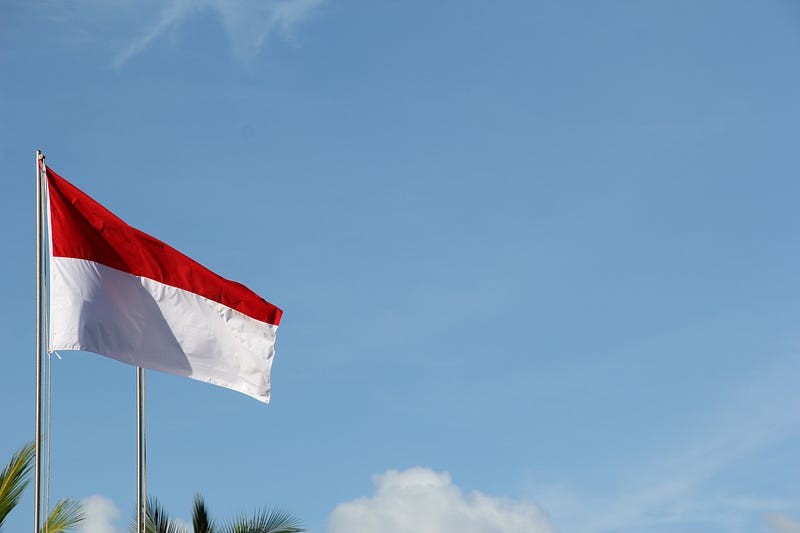
Photo by Nick Agus Arya on Unsplash


Positive factors

The report assesses Indonesia’s Web3 market as having significant potential. It highlights factors such as the country’s status as the world’s fourth-largest population, a youthful demographic with a median age of 30, political stability, and favorable policies towards Web3 technologies. The Indonesian government has adopted a favorable approach to the Web3 industry, providing a range of incentives to boost the growth of the Web3 gaming sector. Additionally, they have taken the initiative to establish a dedicated committee for the blockchain sector within the Indonesia Financial Services Authority (OJK).


Crypto exchanges driving growth

As per the report, the Indonesian market is primarily propelled by cryptocurrency exchanges, with over 30 exchanges currently in operation. These exchanges serve a customer base of approximately 10 million individuals, which accounts for around 4% of the country’s population. This is comparable to the number of investors on the Indonesia stock exchange.


Several challenges

Meanwhile, the paper also highlighted several areas where the world’s largest archipelagic state faces challenges. One of these challenges is its non-fungible token (NFT) market, which has seen a consistent decline in recent months, hitting an all-time low. It was found that most individuals prefer global NFT marketplaces over local ones. Furthermore, concerning the development of the Web3 ecosystem, the shortage of blockchain developers has prompted startups to seek development services overseas.


More to Read
View All
Web3 & Enterprise·

Nov 01, 2023

HKMA reflects on retail CBDC pilot phase one completion

HKMA reflects on retail CBDC pilot phase one completionHong Kong’s Monetary Authority (HKMA), the Chinese territory’s central bank, recently released a report following the completion of phase one of its central bank digital currency (CBDC) pilot, highlighting the potential benefits of a retail CBDC, commonly referred to as e-HKD (digital Hong Kong dollar).Photo by Ruslan Bardash on UnsplashUndecided on full implementationIn a press release published by the HKMA on Monday, the authority clarified that the report underscores that while a retail CBDC could bring value to the payments ecosystem and unlock new economic transaction possibilities, in-depth investigation and evaluation are essential before considering large-scale implementation.At this stage, Hong Kong’s central bank has not committed to introducing an e-HKD, but the report sheds light on the prospects and challenges associated with such a move. The region has been signaling its intent to position itself as a hub for virtual assets, evident in the regulatory framework introduced in June and the granting of licenses to crypto trading platforms in August.Project e-HKD, initiated by the HKMA in 2021, is a significant step toward assessing the feasibility of a digital Hong Kong dollar. The pilot program was launched in November 2022 as part of the HKMA's “Fintech 2025” strategy. However, the HKMA remains cautious, as reflected in the comments of HKMA CEO Eddie Yue earlier this month. Yue told the South China Morning Post that the central bank is still waiting for greater clarity when it comes to the technological, legal and societal aspects of full implementation.Three core attributes identifiedThe report identifies three primary areas where an e-HKD could provide value: programmability, tokenization and atomic settlement. These attributes could lead to faster, more cost-efficient and more inclusive transactions. However, it’s essential to note that the 14 pilot programs conducted with 16 participating firms during phase one were executed on a small scale within a controlled environment.The phase one review highlights that the true potential and prerequisites for implementing an e-HKD on a larger scale depend on market developments and further investigation. It acknowledges that minor issues identified during the pilot phase could become more prominent or even unacceptable in a production environment.Gearing up for phase twoPhase one of the pilot program delved into various aspects, including full-fledged payments, offline payments, tokenized deposits, programmable payments and the settlement of Web3 transactions and tokenized assets. Hong Kong is now gearing up for phase two of the pilot, with plans to explore new use cases for an e-HKD and engage in more focused pilot initiatives. The goal is to understand how the e-HKD can facilitate innovative methods of transacting goods and services while maintaining financial stability.The HKMA’s stance on a retail CBDC places it at the center of a global debate. While the U.S. remains undecided on the issue, with the topic becoming contentious in presidential elections, India has forged ahead with plans for a retail CBDC. Meanwhile, Thailand’s central bank commenced a pilot project for a retail CBDC earlier this year.

news
Policy & Regulation·

Jul 21, 2023

Korea’s FSC Embarks on Developing Regulatory Framework for VASPs

Korea’s FSC Embarks on Developing Regulatory Framework for VASPsThe South Korean Financial Services Commission (FSC) has taken a step towards the development of a virtual asset regulation system by seeking external parties to undertake a research project in this area, according to local news agency News1.Photo by Joshua Miranda on PexelsSecond phaseEarlier this month, the National Assembly passed the Virtual Asset User Protection Bill, aimed at protecting investors and preventing unfair trading practices. This legislative accomplishment, scheduled to go effective in July next year, is referred to as the “first phase” of virtual asset regulations. Building upon this foundation, the FSC has now shifted its focus to the “second phase,” which involves the regulation of virtual asset service providers (VASPs).Regulating VASP operationsOne primary concern regarding VASPs is the potential for conflicts of interest arising from their involvement in the issuance and distribution of virtual assets. In response, the FSC is determined to design a regulatory framework that covers a wide range of virtual assets, including stablecoins, security tokens, and utility tokens.In addition to this, the FSC intends to establish a system that governs advisory and disclosure businesses, which will play a crucial role in disseminating information about asset prices and disclosures.Moreover, the regulatory system will include guidelines for holding parties accountable in case of incidents and for overseeing the operations of VASPs to maintain a safe and fair market environment.The FSC acknowledges the significance of aligning policies with international standards. To achieve this, the commission will conduct an examination of virtual asset regulatory approaches taken by different countries and international organizations. Through this study, the FSC aims to integrate global best practices and approaches into Korea’s own regulatory framework for virtual assets.Once the study is complete, the FSC has to report the result to the National Policy Committee of the National Assembly by July 2024 before the Virtual Asset User Protection Bill goes into effect.

news
Web3 & Enterprise·

Sep 01, 2023

Woori Bank Joins Forces with Samsung Securities and SK Securities to Pioneer Security Token Market

Woori Bank Joins Forces with Samsung Securities and SK Securities to Pioneer Security Token MarketWoori Bank has recently forged a memorandum of understanding (MOU) with Samsung Securities and SK Securities, aiming to swiftly venture into the security token market in anticipation of the forthcoming institutionalization of security tokens in South Korea, according to local news outlet Dailian.Photo by Anna Evlanova on UnsplashKorea’s regulatory pathway for security tokensIn February, the Financial Services Commission unveiled guidelines for regulating the issuance and distribution of security tokens. This initiative aligns with the South Korean government’s broader goal of driving innovation in digital finance. Following this, the National Assembly conducted a public hearing on the proposed legislation. Additionally, the Financial Supervisory Service organized an informative session discussing the updated application procedure for investment contract securities and the corresponding examination protocols. As a result, the outlines of the regulatory framework are beginning to take on a more defined form.Compliance with regulatory frameworkWoori Bank President Byung-Kyu Cho, Samsung Securities President Chang Seok-hoon, and SK Securities CEO Kim Shin were present at the signing ceremony. During this event, the three financial institutions agreed to embark on their collaborative efforts to explore business models for security tokens in compliance with the regulatory framework. Their aims include constructing the infrastructure for security tokens and validating distributed ledgers, as well as forming Finance 3.0 Partners (F3P), a collaborative consortium dedicated to formulating investor protection measures.Three entities’ individual endeavorsWoori Bank has undertaken extensive preparations to make its foray into the security token market. In an effort to swiftly adapt to the changing legal dynamics surrounding security tokens, the bank has established a dedicated division and is operating a task force responsible for devising strategic approaches, with participation from Woori Financial Group’s affiliates. By partnering closely with the securities firms, Woori aims to leverage its wealth of corporate finance expertise to identify innovative business models.Samsung Securities has successfully concluded its own functional verification of the security token platform. Furthermore, the company has secured the technology necessary to connect blockchain wallets and securities accounts. These efforts will contribute to providing stable services. Samsung is also anticipating the utilization of security tokens as a fresh avenue for financing, collaborating with various enterprises to discover their practical applications. Through these endeavors, the company intends to offer attractive and stable investment products to its clientele.SK Securities stands out as the sole Korean securities firm to have established an account management system for security tokens, with the intention of seeking designation as an innovative financial service by the Financial Services Commission. Initiatives chosen as innovative financial services are granted regulatory exemptions. SK Securities has partnered with a variety of fractional investment firms to spearhead the research and development of security token issuance and distribution systems. It also plans to collaborate with experts in the domains of finance, technology, and content. This joint effort aims to build the infrastructure necessary to create a financial ecosystem that welcomes diverse participants and creates new value.An F3P official highlighted that this tripartite partnership would facilitate the alignment of their members’ security token products with regulatory guidelines. The person also mentioned their commitment to swiftly establishing a top-notch platform and ecosystem that will help position them as market leaders.

news
Loading