Top

Upcoming Regulatory Framework in Taiwan Sees Crypto Exchanges Unite

Policy & Regulation·September 27, 2023, 1:08 AM

In preparation for the impending arrival of a regulatory framework for cryptocurrencies in Taiwan, nine prominent cryptocurrency firms have announced their collective efforts to establish an industry association.

The nine exchange businesses announced the development via a press release which was published on Tuesday. The move comes in anticipation of Taiwan’s Financial Supervisory Commission (FSC) releasing comprehensive guidelines on cryptocurrency trading and payments by the end of September.

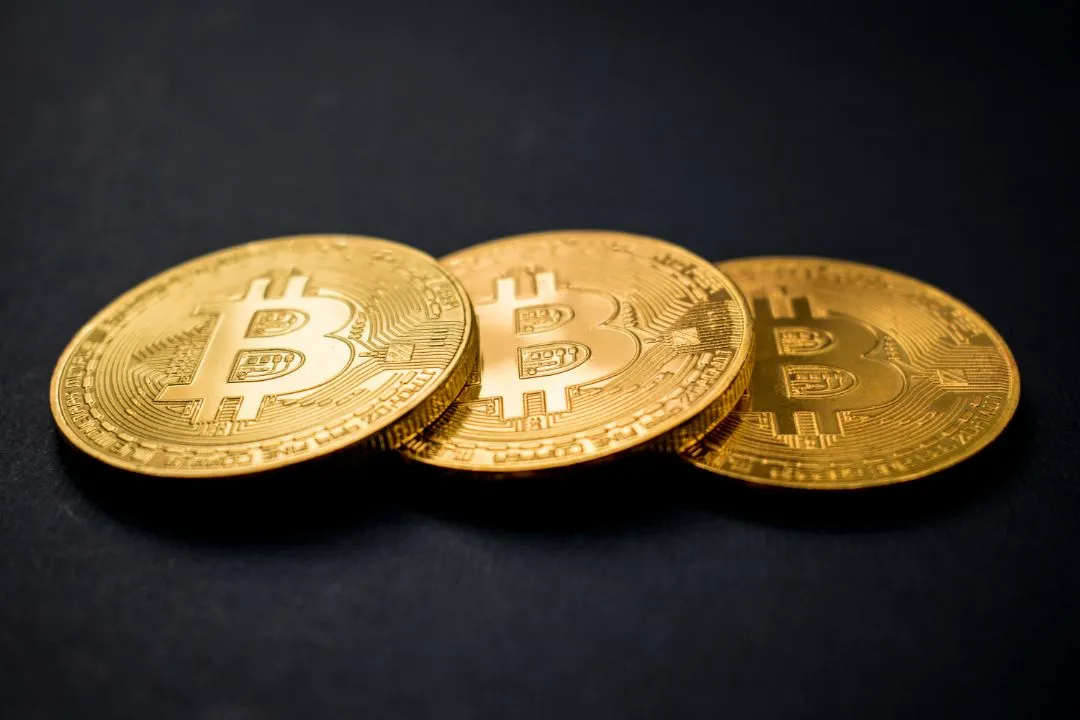
Photo by Timo Volz on Unsplash


Developing regulatory environment

The industry body will include participation from native exchanges such as MaiCoin, BitoGroup, and ACE. While Taiwan has been behind the regulatory curve until now where crypto is concerned, the one measure that the FSC had already taken steps to mandate was that virtual asset services providers (VASPs) in Taiwan must adhere to the country’s anti-money laundering (AML) regulations. However, numerous other intricacies unique to the cryptocurrency industry still require careful consideration and regulation.

Authorities in Taiwan have also put forward ten guiding principles for VASPs, designed to protect Taiwanese consumers.

The forthcoming guidelines aim to address these concerns by introducing a comprehensive set of rules inspired by the VASP licensing framework in Hong Kong. One of the primary focuses of these proposed guidelines is consumer protection. They advocate for specific hot and cold wallet ratios for customer deposits with cryptocurrency exchanges, a measure designed to safeguard customer funds. Additionally, the guidelines suggest mandatory insurance against user losses to further enhance consumer confidence.

Moreover, the FSC’s guidelines intend to prevent offshore cryptocurrency exchanges from operating onshore in Taiwan without proper compliance registration. This step aims to ensure that all participants in Taiwan’s cryptocurrency market adhere to uniform standards.

In a bid to stabilize the Taiwanese financial system and prevent deceptive advertising practices, the guidelines also propose a ban on stablecoins linked to the Taiwanese dollar and impose restrictions on foreign exchange advertising within the country.


Enabling self-regulation

Regulators have also proposed the classification of crypto regulations within their own novel business category. As part of that initiative, officials expressed an interest in fostering self-regulation. The formation of this industry group could be deemed to be an encouraging sign relative to that aspiration.

The nine cryptocurrency firms forming the industry association have established a working group led by Winston Hsiao, Co-Founder of XREX. This group aims to expedite the development of self-regulatory rules based on the forthcoming FSC guidelines.

Wayne Huang, another Co-Founder of XREX, expressed his hope that the new FSC guidelines will provide the cryptocurrency industry with legitimacy, oversight, a clear growth trajectory, and an accelerated path to earn public trust.

The formation of this industry association, coupled with the impending release of the FSC’s comprehensive regulatory guidelines, marks a significant milestone for Taiwan’s cryptocurrency sector. As the industry evolves, these proactive measures seek to ensure its stability, security, and compliance with international standards.

More to Read
View All
Markets·

Oct 31, 2024

HKEX to launch digital asset index with real-time pricing within Asian time zone

Hong Kong Exchanges and Clearing Limited (HKEX), the operator of the Hong Kong stock exchange, has announced plans to launch a digital asset price index. The index which the company is marketing as the HKEX Virtual Asset Index Series, will aim to provide for the developing asset class, while complimenting Hong Kong’s overarching efforts to transform itself into a regional digital assets hub. The company announced details of the new product offering in a press release published to its website on Oct. 28. HKEX indicated that the product will go live on Nov. 15, outlining that the product “provides investors with transparent and reliable benchmarks for Bitcoin and Ether pricing in the Asian time zone.”Photo by Kanchanara on UnsplashReference index for Bitcoin (BTC) and Ether (ETH)The firm claims that the Index Series will include a Reference Index for Bitcoin (BTC) and Ether (ETH) while providing a Reference Rate for the two leading digital assets. The Reference Index will be formulated using a 24-hour volume-weighted reference spot price, with that pricing coming from leading virtual asset exchanges. The Reference Rate has been devised with the settlement of financial products in mind. As a result, it will be calculated on a daily basis at 16:00 Hong Kong time. From a compliance perspective, the product complies with the European Union’s (EU) Benchmark Regulation (BMR), being the first such product to be developed in Hong Kong. Additionally, the Index Series will be administered by CCData, a UK-headquartered data and index solutions firm formerly known as CryptoCompare.  Taking to the X social media platform, CCData outlined that the product is underpinned by its data selection process, leveraging its “Exchange Benchmark methodology to provide highly robust real-time and EOD  [end-of-day] reference rates.” The firm added that the offering will introduce “essential benchmarks for the Asian market,” while enhancing transparency and reliability within the digital assets sector, broadening opportunities for market participants across the region. Enabling informed investment decisionsHKEX CEO Bonnie Chan said that the company was pleased to introduce the HKEX Virtual Asset Index Series to meet the region's growing demand for this fast-emerging asset class. “By offering transparent and reliable real-time benchmarks, we seek to enable investors to make informed investment decisions,” she added.Like many other financial services firms in TradFi, HKEX has been getting itself acquainted with the blockchain and digital assets sector. In October of last year, the firm launched a blockchain-based settlement platform called Synapse. The platform relies upon DAML-based smart contracts. Earlier this year, a number of asset management firms launched spot Bitcoin and Ethereum exchange-traded funds (ETFs) on the exchange. In April, a report published by HKEX suggested that the true potential of crypto ETFs had yet to be fully realized, pointing out that a number of regulatory tweaks would be necessary to better support digital asset-based products. HKEX itself could have a greater role to play in the expansion of the digital assets sector in Hong Kong. Last month Hong Kong Legislative Council member Lee Wai-hung called on the platform to expand its range of derivatives, including crypto derivatives.

news
Web3 & Enterprise·

Jan 05, 2024

BingX signs sponsorship deal with English Premier League club

Singapore-based cryptocurrency trading platform BingX has secured a sponsorship deal as the new sleeve sponsor for Premier League football club Chelsea.Photo by Chaos Soccer Gear on UnsplashJanuary 9 debutThe arrangement, spanning the next six months, is expected to debut during Chelsea’s Carabao Cup semi-final first-leg match against Middlesbrough on Jan. 9. As part of this sponsorship, BingX will prominently feature on the front of Chelsea’s training kits for the upcoming 2024/25 season. Meanwhile, the current shirt sponsor, Infinite Athlete, will transition to a training sleeve sponsorship starting next season. While details about the fate of Chelsea’s training kit deal with Trivago, an online hotel booking site, remain uncertain, the club is navigating sponsorship changes in the wake of owner Roman Abramovich’s prior ownership and UK government sanctions. Corporate rebrandEstablished in 2018, BingX operates as a cryptocurrency exchange headquartered in Singapore, catering to a user base of over 10 million in Southeast Asia and North America. In November, the company announced that it was rebranding the business. Part of that process was understood to involve an overhaul of BingX’s visual identity, with the introduction of a streamlined logo. Sponsorship within the English Premier League is a high profile marketing move that will undoubtedly bring more visibility to that brand. Crypto marketing spend reboundThe marketing spend of crypto firms relative to high profile sponsorship deals has recovered significantly in recent months. Such sponsorship deals peaked at the top of the crypto market in 2021. That period saw profligate spending by many of the large crypto platforms. A standout example was provided by the $135 million sponsorship deal signed by fraudulently run crypto exchange FTX for the Miami Heat stadium naming rights in the United States. While that opulent sponsorship spending subsided during the bear market, it appears that there has been a modest resurgence as market conditions have improved. Seychelles-based crypto platform OKX has ongoing marketing relationships with the McLaren Formula One racing team and Manchester City Football Club. In March, U.S.-based crypto exchange Kraken announced a marketing partnership with the Williams Formula One racing team. Earlier this week it emerged that crypto gambling platform Stake.com had signed a sponsorship deal with the Sauber Formula One team. 18 of the 20 English Premier League clubs are now understood to have agreed sponsorship deals at one time or another with crypto companies. This demonstrates the growing trend of cryptocurrency platforms associating with high-profile sports partnerships, enhancing their visibility and influence in the market. Chelsea is actively seeking a front-of-shirt sponsorship deal, considering potential collaborations, including discussions with Saudi national carrier Riyadh Air. It’s understood that the BingX deal has been agreed for in excess of £10 million ($12.7 million) per season.

news
Policy & Regulation·

Jun 08, 2024

Turkey considers limited tax on crypto transactions, not profits

Turkey has decided not to tax profits from stocks and cryptocurrencies but is considering implementing a “very limited” tax on transactions, according to Treasury and Finance Minister Mehmet Şimşek. In a recent interview in Ankara, Şimşek stated the government's intention to ensure every financial sector contributes to the national revenue without specifying the size of the potential tax. He emphasized that the approach aims to enhance fairness and effectiveness in the taxation system. Historically, in 2008, Turkey lowered its tax rate on stock market profits from 10% to 0%, promoting investment in the stock market. Despite earlier reports from Bloomberg suggesting new taxes on gains from stock and cryptocurrency trading, the government has clarified its position to only consider transactional taxes.Photo by Engin Yapici on UnsplashCrypto tax regulationsCurrently, Turkey lacks specific regulations for taxing cryptocurrencies but is actively working to establish a comprehensive legal framework for digital assets. A bill introduced by Turkey’s ruling party on May 16 mandates crypto businesses to obtain licenses and adhere to international standards. This includes regulation by capital markets boards and mandatory revenue collection from crypto service providers. The bill also aims to ban foreign crypto brokers, fostering a locally regulated ecosystem and addressing concerns from the Financial Action Task Force (FATF) to remove Turkey from its "gray list." According to a report by Chainalysis, a blockchain analytics firm, Turkey ranks fourth globally in cryptocurrency market activity, with an estimated trading volume of $170 billion between July 2022 and June 2023, surpassing countries like Russia, Canada and Germany. Since 2021, Turkish regulations have prohibited the use of cryptocurrencies for payments, reflecting a cautious approach towards the integration of digital assets into the financial system.   

news
Loading